Sauter au contenu principal
electrocd

Blogue

37 résultats
  • 1
  • 2
  • 3
  • 4
  • 5
  • 6
  • 7
  • Yawar Fiesta dans Chain DLK

    «Review», Stuart Bruce, Chain DLK, 12 juillet 2017
    mercredi 12 juillet 2017 Presse

    Though I’m reviewing it in old-fashioned stereo, Yawar Fiesta is a 7.1 surround sound extravaganza. Chain DLK doesn’t currently have an entry for “Blu-ray Audio” as a known format, so I’ve had to pick “Laser Disc” as a cludge, but please be assured this is Blu-ray.

    Unconfined by the duration limitations of vinyl or CD, this is a work just shy of 90 minutes dominated by operatic vocal snippets, long drones and hums, and waves of both distant and close percussive vocal noises that attack and decay in a way that’s leisurely at times, but never comfortable. Sourcing the majority of the sonic ingredients from the voice — with a particular favouring of masculine bass operatic tones and throat singing, but not without feminine and spoken word moments too — but without actually using a singer, brings us frequently into bizarre arrangements akin to choral arrangements gone wrong — at times quite Ligeti-like. Much of the time the elements are multi-layered, keeping everything hectic and relentless throughout. Electronic glitches, tape-style effects, pitch shifts and flangey panning (isn’t that a type of cake?) are thoroughly modern and digital and give the work an extra twist.

    The work is ostensibly an opera — the press release describes a piece in multiple acts that’s a hybrid of actual storytelling and the name-dropping of broad themes into something that’s frankly very difficult to follow. But the result definitely has distinct scenes, and when holding your attention, is like listening to the most off-the-wall opera re-work you’ve ever heard.

    After the bewildering 44-minute journey of Condor (La veillée), second track Taureau (Le défi) doesn’t perhaps represent enough of a shift. The addition of traffic noises and horns gives the sonics a different hint, as does the heavier use of discernible French language sources, but the core arrangement is essentially half an hour more of the same experimental opera.

    Monologue final is also consistent rather than contrasting, but with fewer operatic elements and more emphasis on digital processing such as layering offset copies of the same sample at different speeds, and with sound effects akin to alien rocket launches and monstrous whispers tilting it more in the direction of sci-fi. The sound of rolling stock evokes the spirit of the KLF towards the very end.

    It’s an unusual buffet, sometimes reminiscent of 60’s avantgarde choral works, sometimes the spacier sound of 90’s ambient house, sometimes very contemporary and sharp-sounding digital electronic frippery. It’s got a unique quality to it that demands attention, even though at 87 minutes long it perhaps can’t hold that attention throughout.
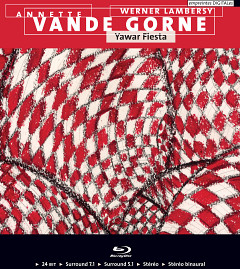
    … the most off-the-wall opera re-work you’ve ever heard.

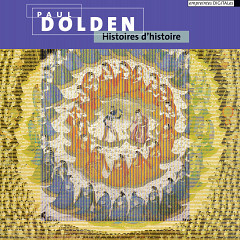
    Histoires d’histoire dans Chain DLK

    «Review», Stuart Bruce, Chain DLK, 21 juin 2017
    mercredi 21 juin 2017 Presse

    Unusually for this genre, the press release on Histoires d’histoire is sparse — a simple list of titles, durations, dates and credits. There’s no written rationale or post-justification with heavy use of adjectives — the music will justify itself. And it really does.

    It’s a collection of long, expansive and ambitious avantgarde classical pieces that combine ‘proper’ modern classical in the style of Ligeti or Bartók with a range of more Eastern-sounding percussive instrumentation, and gentle and occasional use of post-production, re-processing and resampling at unexpected moments. The histories being squared here are not purely Western, not purely any tradition, perhaps a history from a universe parallel to our own.

    Music Of Another Present Era is the main work, in five distinct and individually named parts. After the warm overture of Marsyas’ Melodies, Shango’s Funkiness is a percussive workout, at times sounding like an improvised drum workshop descending into either confusion or ennui before repeatedly recovering. Shortest piece Entr’acte is the most Ligeti-esque, bursts of long and then short string sustains flirting with cacophony, segueing into Air of The Rainbow Robe and Feathered Skirt which has a similar attitude with a broader, more operatic palette. It evolves further as The Cosmic Circle Dance treats the same ingredients with an extra spark of spontaneity, before twisting into a kind of bizarre alt-jazz in the final third — an obtuse way to wrap up.

    Two further long pieces, each a few years old, fill the CD almost to its brim. The eighteen-minute BeBop Baghdad is, despite the name, practically prog rock — long noodling guitar notes playing over sporadic percussion, like a kind of subdued and Eastern-influenced Yes or Robert Fripp piece in parts. The sixteen-minute Show Tunes in Samarian Starlight is similarly adventurous, but with the central instrument switched from Maurizio Grandinetti’s electric guitar to Łukasz Gothszalk’s layered-up B-flat trumpet, bringing proceedings back into the weirder suburbs of out-there jazz.

    It’s an extensive 80-minute journey through a whole heap of ideas, sounds and moods, a real patchwork quilt of organic ideas arriving and departing with plenty of energy and a hint of frivolity. That playfulness and slight shortage of coherence disempowers it somewhat from being a really ‘wow’-inducing listening experience, but it’s a very out-there listen.

    … the press release on Histoires d’histoire is sparse […] the music will justify itself. And it really does.

    Avant dans Voir

    «Chronique disques», Réjean Beaucage, Voir, 15 juin 2017
    jeudi 15 juin 2017 Presse

    Poursuivant leur projet amorcé l’année dernière avec le disque 1948 (Kohlenstoff Records), qui saluait le travail des pionniers de l’époque de l’invention de la musique concrète par Pierre Schaeffer, les deux bad boys de la musique actuelle nous arrivent avec un enregistrement en concert à Québec dans le même esprit, c’est-à-dire très noise. On est au cœur du glitch; l’aiguille du tourne-disque de Tétreault est au beau milieu de l’égratignure et le laptop de d’Orion, saturé à souhait, mord la poussière. Ces deux-là ont raffiné le produit depuis un bout de temps et leur noise est épuré; raison de plus pour regretter que le tout ne fasse guère plus de 25 minutes.

    On est au cœur du glitch; l’aiguille du tourne-disque de Tétreault est au beau milieu de l’égratignure et le laptop de d’Orion, saturé à souhait, mord la poussière.

    Allusions sonores dans Musique Machine

    «Review», Duncan Simpson, Musique Machine, 26 avril 2017
    mercredi 26 avril 2017 Presse

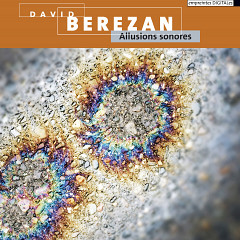
    Canadian David Berezan has since 2003 been director of the Electroacoustic Music Studios and the Manchester Theatre of Sound (MANTIS), both based at The University of Manchester, UK. His work tends towards a radicalising of the aesthetic and techniques first pioneered by Pierre Schaeffer and the GRM during the first wave of Musique Concrete. He describes his music as acousmatic and has travelled extensively collecting material for his compositions. Allusions sonores appears to be the first collection of his recorded works to be released.

    There are five compositions presented here, each being around the ten minute plus mark in length, affording ample opportunity for the listener to lose themselves in the density of Berezan’s sound. The first piece is Buoy (2011) which builds its sound world around the characteristics and environment of sea buoys. Digital processing has affected a quantum leap in possibility for the composer of acousmatic music. Comparing the tape cutting techniques of Schaeffer and Henry to the array of digital tools available now is like holding up a stone axe to an eye surgery scanning laser. Berezan makes the most of his apparatus, contorting the signature bells and whistles atop of buoys into squealing artefacts of unidentifiable origin. The piece oozes atmosphere whether in the form of creaking metal or actual waves which frame the more abstract and uncanny sounds.

    The most impressive piece for me — as it’s constructed via a highly limited range of sources, is Thumbs (2011). Spawned out of a single plucked sound from a Balinese thumb piano the composition is nevertheless layered with multiple manipulations and iterations of that same sound. It’s almost hard to believe that every click or drawn out intonation is derived from a single source. Where the fixation on such a limited pallet might have yielded to a sterile formalism (Schaeffer’s early studies are sadly a prime case in point) Berezan succeeds in drawing out the textural and harmonic complexity from his subject, weaving each derivation around the next and providing a fine example of how technical virtuosity rather than masses of sounds are key to this form of composition.

    The last three pieces are perhaps more aptly described along the lines of Luc Ferrari’s anecdotal music, if only for the fact that each attempts through field recordings to capture something of a specific time and place. The first, Badlands (2008), uses material recorded in Berezan’s native Alberta, Canada evoking the environment of the prairie landscape. For such a seemingly pastoral image the music here is oddly alien sounding, full of drones, swirling swampy electronics and ghostly half-heard sounds. It invites comparisons with the darker corners of Roger Doyle’s Babel project or Bernard Parmegiani’s most out-there productions. Galungan (2010) takes us back to Bali, Indonesia where the minimalist pallet of sources from Thumbs is fully fleshed out into a sound world containing multiple timbres of Balinese instruments and voices. The composer took his microphones out into the rice paddies recording sounds of everyday work life as well as religious ceremonies. The result is a contemplative rather than exuberant study of tone and cultural soundscaping (as Hein Schoer might call it) where recognisable human elements are rather fleeting and the sounds in-between people and things are amplified.

    Finally it’s Nijō (2009) that completes the set, taking us to Japan to explore the idea of “nightingale floors”. These are wooden floors in high status homes that cause a squeaking or chirping sound when walked upon, and acting like a primitive security system. There are some cracking (literally) processed sounds derived from wood in which splinters seems to fly off around the listeners ears, while huge tree roots grind against each other. There are more percussive elements here and there as is the occasional sonorous gong. But it’s the sudden passing of a bullet train that brings the piece into the 20th century along with some brief fragments of chanting, incidental speech and crowd noise that appear during the last quarter of the piece.

    Berezan is clearly a virtuoso of this kind of electroacoustic music. Hopefully more of his work will become available as it’s a rare treat to experience such compositional and sonic depth in what can be quite a stuffy field.

    Berezan is clearly a virtuoso of this kind of electroacoustic music. Hopefully more of his work will become available as it’s a rare treat to experience such compositional and sonic depth in what can be quite a stuffy field.
  • 1
  • 2
  • 3
  • 4
  • 5
  • 6
  • 7