Sauter au contenu principal
electrocd

Blogue

31 résultats
  • 1
  • 2
  • 3
  • 4
  • 5
  • 6
  • Corazón Road dans Le Jour

    «Critique», Yannick Bourg, Le Jour, no 77, 28 juin 1993
    lundi 28 juin 1993 Presse

    Le monde de sensations offert par Corazón Road est plus impressionnisle qu’expressionniste. Peu ou pas de musique — au sens populaire où nous l’entendons — composée par Kristoff K.Roll (couple mixte), mais des sons piqués et recomposés lors d’un périple en Amérique centrale de 1990 à 1992. Hommage aux faiseurs de sons, c’est un univers pas si différent de la production de l’imagination quand elle travaille au tri acoustique du dehors.

    Corazón Road dans Montreal Mirror

    «Cartes postales sonores», Andrew Jones, Montreal Mirror, no 9:3, 17 juin 1993
    jeudi 17 juin 1993 Presse

    “It’s a mix of two cultures, but not a fair one, because one is over the other,” explains a disembodied Mexican voice in Juan et Cecilio. “In this case, it’s the European culture over ours.” The point raised is as old as Columbus, but it takes on a new significance considering the voice (Juan or Cecilio?) was captured, sampled, and spliced into a new electroacoustic work, Corazón Road, by the French electroacoustic duo, Kristoff K.Roll.

    When David Byrne and Brian Eno sample a Southern preacher, a muezzin signing the Koran and other ethnic sources in their landmark 1980 recording My Life in the Bush of Ghosts, the juxtaposition of the bush and the ivory tower opened up a theoretical can of worms previously untouched in the annals of pop music. This was no longer a matter of Elvis copying R&B singners. It sparked an ongoing discussion about the ethics of blatantly appropriating the music of indigenous cultures to serve western compositionals ends.

    Byrne and Eno’s methods seem crude, almost passé, given today’s consumer eclectism and studio technology. Everyone from the high-profile WOMAD organization in England — who record Qawwali signer Nusrat Fateh Ali Khan with western studio musicians — to the little-known Italian composers Roberto Musci and Giovanni Venosta — who deftly dovetailed Ravel with choral singing from Zimbabwe on their record for the ReR Megacorp label — freely partake on the wealth of indigenous world music available to them, creating new forms of music that inevitably decontextualise the original sources in the process.

    Kristoff K.Roll’s Corazón Road is neither an exemple of ethnological forgery nor a subjective soundtrack. Shooting for, as they put it, “The poetry of everyday life,” Carole Rieussec and Jean-Christophe Camps began reaserch for their sprawling work during a trip to Mexico City in 1990. Ovr the next year, they made a circuitous path through Central America, recording everything from a New Year’s celebration in Guatemala City to cascading waterfalls to a morning stroll in Uxmal to young rappers in Belize. Hours of field recordings and notes resulted in a work in three “tableaux” with interludes.

    Corazón Road is the latest adventurous release for SONARt, a subsidiary of Montréal’s flagship electroacoustic label, empreintes DIGITALes. Where empreintes DIGITALes concentrates on textbook electroacoustic works, having released works by Francis Dhomont, Alain Thibault, Robert Normandeau, Daniel Scheidt, SONARt borders more on “musique actuelle.” Their first release was Michel-Georges Brégent’s radiophonic creation, Atlantide, followed by Alain Thibault’s science-fiction opera for folo soprano, Ne blâmez jamais les bédoins.

    Corazón Road opens with an electroacoustically-derived pulse, a heartbeat with samples of children laughter, religious ritual, circus hurlyburly and rustling papers mixed in with the beating sounds. Troughout the recourding, the present intrudes on the past. A deep cultural rift runs through the idyllic countryside in Aqui en Yucatan. You can hear it in samples of a carnival’s calliopes and laughter, kids selling Coke and in the bullhorns of police directing the bus ride to Belize.

    A few young rappers in Belize City have their raw rimes distorted and treated, a document of life in a large port charged with the tense atmosphere of films like A touch of Evil and Under the Volcano. A collage of hip-hop and reggae blaring from a radio gives way to recordings of the river and muted airplanes motors in Guatemala, wich employs repetitive voice loops like Zoviet France. Corazón Road ends where it began: with the primordial pulse of the sea as the waves crash against Pacific coastlines.

    The sonic topology of Corazón Road triggers the other senses. You can hear, smell and taste the cofee, cigarettes, oranges, firecrakers and saltwater breezes. Troughout the work the liquid, shifting sonorities conjure up that curious sense of suspended time and dislocation we feel when we are in the grip of a totally unfamiliar place far from our home.Think of it as the soundtrack Godfrey Reggio should have had for the powerful images of the Third world in his film Powwaqatsi, instead of Philip Glass’s static minimalism. Corazón Road functions much like a mnemonic device: It has the power to evoke, yet leaves the listener to fill in the rest.

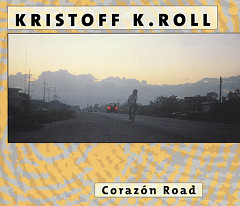
    The sonic topology of Corazón Road triggers the other senses.

    Les corps éblouis dans La Lettre du musicien

    «Le concert du soir», La Lettre du musicien, 14 juin 1993
    lundi 14 juin 1993 Presse

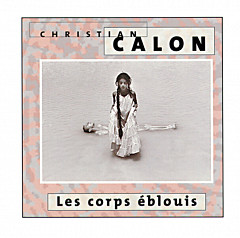
    Les corps éblouis de Christian Calon sont une pièce strictement acousmatique où tout se joue dans la continuité, la fluidité. Guère de rupture mais un long fleuve (en apparence tranquille mais parsemé d’une quantité d’événements). On est d’emblée surpris par la richesse de cette trame sonore, et la synthèse parfaitement réussie entre ces fines ciselures et une impression d’ensemble parfaitement lisse. En fait, la pièce est musicalement parlant, presque traditionnelle, hantée par les hauteurs repérables, et l’on pourrait parfois en préciser la tonalité. Des notes, des accords pivots viennent souvent lui donner forme, et la matière même de la texture demeure précise et cohérente, à la manière d’une partition d’orchestre. Et comme toute bonne partition, la pièce «tient la route» parce qu’elle est ramassée, qu’elle ne se gaspille pas en tous sens, que sa structure est lisible, construite très progressivement avec, dans le dernier quart une densification régulière de la matière et, pour terminer un très classique diminuendo. De cette rigueur naît une impression de plénitude et de maturité, notamment dans la maîtrise de l’espace.

    … une impression de plénitude et de maturité…

    Corazón Road dans La Marseillaise

    «Critique», Gabriel Vialle, La Marseillaise, 23 mai 1993
    dimanche 23 mai 1993 Presse

    Carole Rieussec

    Ce jeune compositeur, collaboratrice de Luc Ferrari, a fondé, avec Jean-Christophe Camps le groupe Kristoff K.Roll dont on découvre ici Corazón Road, carnet de voyage musical à travers l’Amérique centrale. Sept mouvements, comme dans une «Suite» d’autrefois, pour dire, évoquer, suggérer la chaleur, l’orage, l’attente, la joie, la surprise. Un beau travail technique, plein d’inventions, d’excellente initiation à la musique électroacoustique.

    Sept mouvements […] pour dire, évoquer, suggérer la chaleur, l’orage, l’attente, la joie, la surprise.

    Corazón Road dans Le Monde de la Musique

    «Voyage électronique», Michel Thion, Le Monde de la Musique, 1 mai 1993
    samedi 1 mai 1993 Presse

    Sous le pseudonyme de Kristoff K.Roll, Carole Rieussec et Jean-Christophe Camps, musiciens électroacousticiens que l’on avait déjà entendus notamment au sein du groupe Elektrojen, viennent de publier Corazón Road chez SONARt/la Muse en circuit.

    Journal de voyage reconstitué en studio, d’après un périple en Amérique centrale, c’est un beau poème dramatique, la recréation d’un paysage à la fois sonore, sentimental et politique; un vrai theatre musical à écouter dans l’obscurité pour que la chaleur, les odeurs y soient mieux perceptibles (I CD Imso 9303 — Distribué par i MéDIA).

    … un beau poème dramatique, la recréation d’un paysage à la fois sonore, sentimental et politique…

    Ne blâmez jamais les bédouins dans Montreal Mirror

    «Review», Andrew Jones, Montreal Mirror, no 8:38, 4 mars 1993
    jeudi 4 mars 1993 Presse

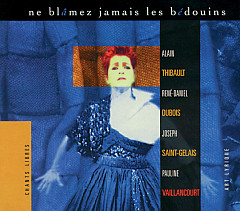
    A chamber opera for solo soprano with a cast that includes Santa Claus and Stalin, René-Daniel DuboisNe blâmez jamais les bédouins is the first recorded effort of Chants Libres, a Québécois group dedicated to contemporary opera. Alain Thibault’s remarkable and schizophrenic musical score draws on both Burroughs’s cut-up method and Raymond Queneau’s mathematical wordplay, diftly juggling linear and vertical story lines that soprano Pauline Vaillancourt carves poetry from in her tour-de-force performance. Bracing and original.

    … tour-de-force performance. Bracing and original.
  • 1
  • 2
  • 3
  • 4
  • 5
  • 6