Sauter au contenu principal
electrocd

Blogue

101 résultats
  • 9
  • 10
  • 11
  • 12
  • 13
  • 14
  • 15
  • 16
  • 17
  • Monique Jean, Christian Zanési dans Le Devoir

    «Deux extrêmes du spectre électroacoustique», François Tousignant, Le Devoir, 20 février 1999
    samedi 20 février 1999 Presse

    Deux extrêmes du spectre électroacoustique ont fait résonner les premiers concerts de la cinquième édition de Rien à voir: des classiques datant des annees 60 comme des œuvres récentes, voire des créations. Mercredi, Monique Jean proposait un concert relativement costaud qui rendait hommage à Pierre Henry en diffusant quelques extraits de son Apocalypse de Jean. Cette musique se base beaucoup sur le texte, qui sert de pré-texte à la composition. Le geste — en dépit de ce qui, aujourd’hui. il faut bien le noter, a un peu vieilli — reste encore théâtral et assez efficace. Ce qui a gêné, c’est sa diffusion. Malheureusement, Monique Jean n’a pas encore acquis la souplesse nécessaire pour que le maniement de la console soit autre chose sous ses doigts qu’un exercice technique assez raide. Pour ceux qui ont déjà eu la chance d’entendre une belle interprétation de cette pierre de touche du catalogue d’Henry, ce fut assez décevant.

    Dans ses propres œuvres, on sent que Monique Jean éprouve le même malaise à laisser sortir sans raideur son message. Car message il y a, ne serait-ce que par les propos revendicateurs des textes qu’elle utilise. Si, chez Henry, les écrits de Jean servent d’amorce à une musique qui transforme et actualise le propos, chez Monique Jean, il sert trop de contexte. Le verbe écrase alors son enrobage musical, et la composition, au lieu d’offrir une vision du monde se contente d’être une carte postale. J’entends par là que lorsqu’on en reçoit une, la photo est souvent jolie, mais ce qui intéresse davantage, c’est le message, même un peu convenu, qu’un ami a noté au verso.

    La musique de Monique Jean laisse entrevoir un certain feu, mais sa pudeur un peu gauche et la sonorisation défaillante en empêchent encore l’épanouissement. Lueur d’espoir, sa dernière composition, Danse de l’enfant esseulée, qui fut créée. Le geste s’affirme, la rhétorique s’assouplit, une réflexion sur le matériau et la composition s’amorce.

    Le petit BIG BANG de Marcelle Deschênes, tout joli qu’il soit avec ses effets maîtrisés, oblige à un constat général dans le répertoire: celui de la construction des œuvres. Alors que les acousmaticiens excellent généralement dans les longues fresques Iyriques ou les miniatures concentrées, cet art tâtonne encore pour résoudre le problème de la forme moyenne, celle dont la durée va de cinq à quinze minutes environ. Ou bien on délaye trop le matériau (miniature artificiellement gonflée), ou bien on n’arrive pas à en articuler les potentialités auditives (fresque avortée); il y a, dans cette tranche de temps à organiser, comme un seuil critique dont les compositeurs semblent être conscients, eux qui écrivent surtout pour cette plage temporelle, actuellement, et qu’ils tentent de résoudre.

    La preuve en est le répertoire proposé jeudi par le Français Christian Zanési. Son Grand Bruit, œuvre renversante et prenante, nous a fait découvrir non seulement un compositeur original et fort, dominant son matériau et l’amenant dans ces régions où il nous parle intimement, mais encore un sonorisateur de grand talent. Cette musique prend le temps de prendre le temps, de l’ériger en poème (ce qui signifie lui ouvrir des zones de sens inhabituelles) et de le mettre en espace avec intelligence, sans redondance d’effet.

    Pendant vingt bonnes minutes, il nous tient captif de ses arabesques et de ses trouvailles. À partir de la plus banale experience — un déplacement en métro pour aller du studio à la maison — il atteint à la grandeur et à la beauté. Après une telle réussite, les deux autres pièces furent légèrement plus minces, même si on a apprécié son art de la diffusion.

    Coup d’éclat le Poème électronique, de Varèse, entendu sur l’orchestre de haut-parleurs. Que cette musique prend une autre dimension dans l’espace! Curieusement, malgré certains tics d’époque qui vieillissent, sa force reste toujours aussi moderne; le génie de Varèse sonne toujours aussi irréductiblement neuf. En ce cas, on aurait apprécié un peu plus d’audaces dans la sonorisation (c’est-à dire l’interprétation). Une tiède réserve face au plaisir entendu.

    Francis Dhomont dans La Presse

    «La série Rien à voir accueille Francis Dhomont», La Presse, 18 février 1999
    jeudi 18 février 1999 Presse

    Rien à voir (5). Réseaux présentent Rien à voir (5), concerts de musique acousmatique présentés sur un ensemble de 20 haut-parleurs, les jeudi 18, vendredi 19 et samedi 20 février à 19het à 21 h, et le dimanche 21 février à 14 h, 19het 21 h, au Théâtre la Chapelle (3700, rue Saint-Dominique). Œuvres de Francis Dhomont, Monique Jean, Christian Zanési et Paul Dolden. Entrée: 14$, 7$, 5$. Rens.: 514 843-7738

    Musiques naïves dans Vital

    «Review», MP, Vital, no 161, 10 février 1999
    mercredi 10 février 1999 Presse

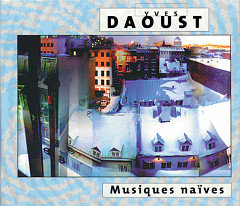
    Yves Daoust released the CD Anecdotes on this same label several years ago, and now there’s this [(Musiques naïves)], in the nifty [OPAK] cardboard packaging which I have come to associate with excellent electroacoustic music. (Before I get to the aural content, full marks for the absolutely gorgeous photo-collage [by Luc Beauchemin] on the cover.)

    The CD opens with Impromptu — the most recent piece on this collection — in which Yves dissected Chopin’s Fantasie-Impromptu in C sharp minor, Op. 66, by recording it note-by-note and treating it inside a computer. It starts with a nervous, tentative piano chord, which unexpectedly fluctuates drastically in pitch setting the tone for the rest of this excellent composition. It slowly builds into a seething deluge of notes, attack is forcibly seperated from release and the threatening distortion is cooled towards the end by by a slight shower. It made me think of the composition Return by our chum Morton Subotnick (thanks for the responses to last week’s review, all of you who did), which was executed on reasonably horrid Yamaha synthesizers by Yamaha sequencers and was “a distillation of the piano works of Scarlatti” (or something like that), according to Morton himself. Return, by the way, was composed as a celebration of the Halley’s Comet periodic flyby a couple of years ago.

    Next on Musiques naïves is a piece titled Il était une fois… (conte sans paroles) which is a soundtrack to a dream, lingering ‘somewhere between the narrative and the musical’ with sounds that caress, floating like weightless feathers and others that leap out in joyful surprise. No danger here. This is followed by Mi bémol, a three minute piece composed for the first empreintes DIGITALes compilation Électro clips, which was also my introduction to this label — an absolutely brilliant CD, which was followed by a similar compilation in 1998, Miniatures concrètes — a celebration of 50 years since musique concrète’s ‘invention,’ which I own but have not fallen so rapidly under the spell of.

    The fourth track Résonances was constructed from church bell sounds. Again the individual sounds are split into tinier and tinier fragments creating shimmering cascades of bells which gradually smear back into their original shape and pitch, now tight, then loose. Sustain is stretched — faint reflections and scattered points of sound bounce off drifting clouds of dust motes in ancient buildings. Water Music was inspired. like so many pieces, electroacoustic and otherwise, by the element water. (Check out Annette Vande Gorne’s release Tao [and Musiques naïves by Yves Daoust] on this same label for a superb piece around this theme.) Perhaps it’s because the rich palette of frequencies and moods inherent in water can evoke and inspire any emotion, feeling or memory. The final track Fantaisie was constructed from radio archives and was commissioned to commemorate the 50th anniversary of French production on the state radio network.

    Once again, empreintes DIGITALes have produced a musical gem, no easy listening or background sounds here, but a demanding and rewarding journey through the topography of Yves Daoust’s imagination. Sublime!

    {colcat:imed_9802}

    Oh Yes! I nearly forgot to mention Robert Normandeau’s definitive CD Lieux inouïs, which is perhaps my favourite CD on this label, can I have a copy please, sir.

    {colcat:imed_9920}

    His other full-length CD on empreintes DIGITALes, Tangram, was made [originally] available as a double CD of the same track, the second CD was recorded from a multiple speaker performance master (if I remember correctly?) and was also a gem.

    Once again, empreintes DIGITALes have produced a musical gem…

    Aérosol dans Vital

    «Review», MP, Vital, no 160, 3 février 1999
    mercredi 3 février 1999 Presse

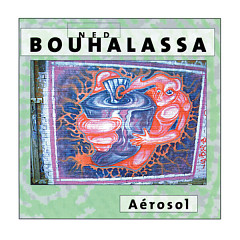
    Ned Bouhalassa’s work is far more angular; sounds are sourced from a much wider palette than Copeland’s and are combined in volatile, unpredictable compositions. This CD is also a release in the [compact-compact] ‘short duration’ series and is a reverse-order retrospective (1998-1990) of some of his work. He also had tracks included on the … of Drones series and is himself closely connected to San Francisco’s Sound Traffic Control, “a media arts assemblage that features a unique real-time matrixed spatial audio system through which musicians, engineers, conductors, DJ’s, and sound sculpture form an interwoven surround sound orchestra” (Phew! Their definition—wotta mouthful! I think it means something like: They’ve got a hifi and maybe a working mixer!).

    Aérosol opens with his latest work titled Jets and is based on movement away from… Some sounds scurry off, darting and casting nervous, uneasy glances, others hurl themselves violently towards the edges of the audio field. Also included is the track Move 1, which appeared in another, shorter version on The Swarm of Drones 2CD compilation released in 1995 (Asphodel, again). This piece is ‘based on an idea of representing animal/human movement through sound, and explores the possibilities of generating rich evolving textures from single samples.’ Headphones recommended!

    The track Constamment (autoportrait) dating from 1997 contains sound elements which represent various aspects of Ned’s past and present, and includes several nods and a wink in the direction of what has come to be known amongst the young and frivolous as ‘techno music’—y’know: racy drums which boom, boom for a while and then there’s a whoosh, maybe a girl yells something about shakin’ yer booty and then boom, boom one mo’ ’gain.

    These CDs have been created by two inspired and highly innovative young composers of electroacoustic music. If you’ve not got anything released on this peerless Canadian label, then this is an excellent place to start. If you’re already familiar with their releases, then these two CDs with surely augment your collection. Absolutely brilliant.

    Absolutely brilliant.

    Rendu visible dans Vital

    «Review», MP, Vital, no 160, 3 février 1999
    mercredi 3 février 1999 Presse

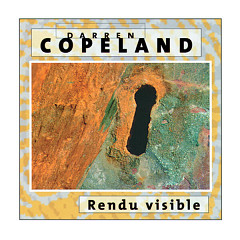
    I first heard Darren Copeland’s music on the Storm of Drones a 3CD released by Asphodel in 1995 — he contributed two excellent tracks, which captured his unique sound. (The first of these three CDs was dedicated to pieces previously released on empreintes DIGITALes, and exposed this label and its music to a wider audience.) The pieces on this new release, another in the series of ‘CDs of short duration for half the price’ by empreintes DIGITALes, are of a similar ilk. (empreintes DIGITALes, if you’ve just tuned in, [is] one of my favourite labels, and consistently release amazing music. By now, it could probably be considered the foremost label of electroacoustic discoveries.)

    Copeland works exclusively with recordings of environmental sounds, and is a true sound-ecologist (along with, amongst others, Hildegard Westerkamp—one of my heroes—listen to [her] full-length CD Transformations on this same label). Back to Darren: Rendu visible contains 3 tracks composed between 1993 and 1996. All of them consist of carefully blended, sometimes heavily processed environmental sounds. However the original sources remain quite recognisable—all part of Copeland’s intention to stimulate visual imagination.

    Most of us have been to a beach and listened to the sea, but where in the head are the shores we hear in his music? The gulls are confined in a huge reverberant shell, the human voices swirl as if spinning on a silent merry-go-round.

    The terrain shifts and shakes continually like a slow, jittery film shot through the shuddering heatwaves rising off a hot road, which weaves through a strange land. Twisted, asthmatic animals loom large, then recede, only appearing to quicken the pulse. Space creases the speakers and buffets the room. Doors open and reveal long corridors where lights flicker staccato and suggest weird, familiar forms—dream apparitions trailing luminous gossamer veils.

    empreintes DIGITALes […] consistently releases amazing music.

    Ding Dong de luxe dans Splendid E-Zine

    «Review», Andrew Magilow, Splendid E-Zine, 1 février 1999
    lundi 1 février 1999 Presse

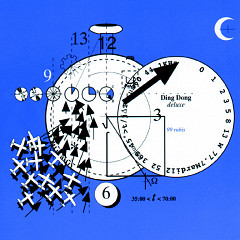
    Taking a massive swan dive off of the proverbial “experimental diving board” this short sound compilation disregards anything conventional. Ranging from a few seconds to a few minutes, everything from French accented babbling to everyday environmental sounds are on this 99 track undertaking, producing a bit of mayhem and a lot of sheer eccentricity. While different from most releases, Ding Dong Deluxe is sometimes a bit too disconnected, lacking a resilient, full bodied fluidity due to the variety of artists exposed. Or perhaps it’s Ding Dong’s determinedness to keep things unconventional, irrational and high strung that propels me to play it repeatedly!

  • 9
  • 10
  • 11
  • 12
  • 13
  • 14
  • 15
  • 16
  • 17