Sauter au contenu principal
electrocd

Blogue

195 résultats
  • 4
  • 5
  • 6
  • 7
  • 8
  • 9
  • 10
  • 11
  • 12
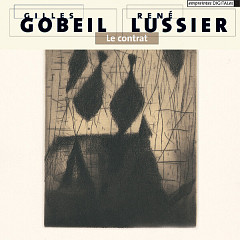
  • Le contrat dans Revue & Corrigée

    «Critique», Pierre Durr, Revue & Corrigée, no 60, 1 juin 2004
    mardi 1 juin 2004 Presse

    Œuvre de longue haleine, Le contrat est fixé ici dans une ultime version — par essence évolutive — après plusieurs versions proposées lors de perfonnances publiques. Les deux musiciens québécois se sont associés dans ce projet pour traduire, à leur manière, l’incontournable Faust de Goethe . En effet, tout en se basant sur la structure du récit, les deux compères réalisent plutôt une série de tableaux sonores, sans réelle continuité narrative, sinon dans la forme, combinant guitare, daxophone, voix, percussions, bruits divers, échantillonnages et clins d’œil à d’autres traductions sonores de l’œuvre. À vrai dire, le lecteur de Goethe ne manquera pas d’être profondément bousculé par cette transcription qui s’apparente davantage à un environnement sonore dans lequel il peut — sans obligation aucune — faire évoluer les personnages du drame, qu’à un récit: bruissements, coassements, piaillements, voix humaines ou bruits de pas mis en écho côtoient quelques phrases d’orgue, des riffs de guitare et parsèment l’enregistrement d’un bout à l’autre. D’une certaine manière, Le contrat n’est donc qu’un prétexte, certe omniprésent, pour un travail en collaboration entre Gilles Gobeil et René Lussier lesquels réalisent ici un bien bel ouvrage.

    … un bien bel ouvrage.

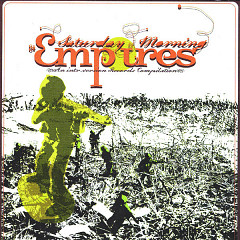
    Saturday Morning Empires dans e/i magazine

    «Review», Heath K Hignight, e/i magazine, no 3, 1 juin 2004
    mardi 1 juin 2004 Presse

    Electronic experimentalist Mitchell Akiyama began Intr_version in Montréal back in 1999, just as things were starting to really cook in North America’s most European city. When the experimental electronic festival Mutek kicked off the next year, Montréal (and Intr_version) found itself coming under international scrutiny among those who hold Scape, Orthlorng Musork, Ritornell and Mille Plateaux in high esteem. The fix came in and soon just about anything digitale et Québécois snapped up the interest of IDM heads worldwide; that’s when things started to take off for Akiyama and his label. Since that time, Intr_version has released a bevy of solid atmo-glitch electronic records to significant critical acclaim, with Tomas Jirku taking a lion’s share of the spotlight. Now with Saturday Morning Empires, it’s clear to see that Jirku, though quite talented at producing chill micro dub, is hardly the label’s only star. No, we have to include Ghislain Poirier, who with 300 000 Enfants Soldats proves that the glacial downtempo and static melodies of his Sous le manguier LP on Intr_version was no fluke. The up-and-coming Montréal outfit Vitamins for You kicks out Pole-styled echo dub on Luxury and Hope, building the theme in spurts of melodic invention. Of course other Montréal artists are represented on the comp, including treated guitar by Tim Hecker and Akiyama’s own breed of sparse electronics and vocals on Clouded Upon, making Saturday Morning Empires come across as much an ode to Montréal’s vibrant electronic music scene as it is catalog for Intr_version’s recent and forthcoming output.

    … an ode to Montréal’s vibrant electronic music scene…

    Sous le manguier dans e/i magazine

    «Review», Alan Lockett, e/i magazine, no 3, 1 juin 2004
    mardi 1 juin 2004 Presse

    If Ghislain Poirier’s debut, Il n’y pas de sud, turned heads, this second album will make them spin. Here a similar elemental landscape is revisited, with greater ambience and confidence. Dub plays around at the edges, not in its rhythms, more in its obsessive deployment of the textures and resonance of reverb-delay technologies. But technology is not foregrounded. At its deepest level, the music here is somehow primordial, almost devotional. There are shades of the ritual ethno-ambient of the likes of Jorge Reyes, updated for the post-electronica generation. Trails of languid melodies unravel, lightly fizzing around the edges with the distortions and microtones of effect transformations, attended by occasional subdued beats. The oneiric L’hiver neige sets the tone, pulsating brasslike drones and low-end kalimba gently warped with an effect halo quickly establishing the keynote trancelike state. After a slow motion drift through recontextualised Basic Channel/R&S sonics on Se reprendre, we embark on the central part of this collection-a series of pieces all inhabiting roughly the same sonic territory. Ti-a soliloquy of stretched out baliphone tones employing delay to explore the architectures of attack and decay-segues into Torpinouche — a cavernous resonance of phased pluckings insistently returning to a tonal center. And successive pieces employ a similar timbral template. The sounds of actual or simulated kalimbas and baliphones enact meditative instrumental incantations, teasing out a desertified hypnography which is not so much blissed out as sunstruck. Color-bleached, out of focus, this is a haunted, sometimes almost mournful, otherworldly music that somehow occasionally recalls, of all things, Seefeel’s dislocated gauzy guitar derangements (circa CH-Vox). Sous le manguier leaves the abiding impression of a suite of tone poems creating an imaginary soundtrack for certain exotic topographies of distant folk memory.

    … a suite of tone poems creating an imaginary soundtrack for certain exotic topographies of distant folk memory.

    Quality Hotel dans e/i magazine

    «Review», Christopher Murphy, e/i magazine, no 3, 1 juin 2004
    mardi 1 juin 2004 Presse

    The second in a series of live recordings produced during Montréal’s Mutek Festival, Quality Hotel features the combined talents of Stephan Mathieu, Radboud Mens, Janek Schaefer and Timeblind flexing their collective sonic muscle. Recorded in Mens’ hotel room, the scene was a solid mass of cabling, four artists linked umbilically as they coaxed their machines to life, gently easing sound into the atmosphere of a sunny June morning. Listening to the album arouses memories of warm summer days in Montréal: friends meeting and exchanging ideas freely, music trickling from laptops into an overworked mixing desk, Schaefer manipulating his twin-armed turntable and simultaneously adjusting settings whilst Chris (Timeblind) Sattinger struggled to get his recalcitrant laptop to co-operate. The result: 48 generous minutes of warm melodies occasionally surfacing above a sea of hesitant and gentle static. The tracks, numbered after the hotel’s floors, are a series of calm meditations, a suite of crystalline studies that unfurl gently, bearing all the characteristics of the artists’ trademark sounds, a perfect balance resulting from rich improvisatory dialogue, After a gentle opening, Fourth Floor sees staccato pulses emerge from a gently wielding hiss before fading to the machine hum of Seventh Floor, a growing chord punctuated by low-end grumble and shimmering pinpricks. By Ninth Floor we’re in full flow, elegiac chords drifting momentarily before collapsing into an ocean of sibilance-old vinyl at its glorious best. The closing track, Eighteenth Floor, sees a distant melody dissolving amidst a spacious digital landscape of pulses and glitches, its 16 minutes easing gently out to create a silently embracing void. Mathieu, Mens, Schaefer and Timeblind coax their machines into a beautiful display of restraint and mutual respect. The results are spectacular and, one hopes, not the last of these spontaneous hotel room encounters.

    The results are spectacular…

    Bleak 1999 dans e/i magazine

    «Review», Tobias C van Veen, e/i magazine, no 3, 1 juin 2004
    mardi 1 juin 2004 Presse

    Bleak 1999 is a historical document of minimal techno, referencing from its opening chords and depressed tempo the pathos of Plastikman’s Consumed, an overwhelming heaviness of being that, for the most part, was shunned by critics, signalling the death knell of minimalism and its sparse questioning of techno’s shotgun marriage with rave culture. Given the negativity of 1999 and its ill-formed critique of inquisitive and emotional moves by the underground practitioners of experimental-leaning electronic music, Jirku’s Bleak 1999 couldn’t have been released at a better time. When Thomas Brinkmann reformulated Plastikman’s Conceptual ashes, adding a playful, acidic funk to the silence, he chose to leave half-buried the unassimilable elements: the somber tred of speaker casualties, the sobriety of sinewave masochism, the mindfuck of high volume sadism. It is with all the sweet charm of a gravedigger that Jirku sifts through his own psychoarcheology of minimalism’s past, remapping our memory as the tomb of the present. In 2003, the dusky grit of roughshod glitches over low hums and pulses slowly pace, back and forth, over beats of a dub tempo, yet bearing none of the conventions of dub’s over-appropriated echo-response. In 2003 we are led back to 1999, that apocalyptic year of dot-com bubbling. The triggers of memory aside, Jirku’s album suffers from his usual weaknesses: a stock beat and often, monogamous percussion. But what drifts forth as unique are the drones and the textures, the sediments weaving layer upon layer of drifting palor, the high ambient paths weighted by their earthly embodiment in the soil of history. Bleak 1999 is a memorial to what has been and what is now today, which makes its intrigue every bit a byte from the future.

    … what drifts forth as unique are the drones and the textures, the sediments weaving layer upon layer of drifting palor, the high ambient paths…

    We Remain Faded dans e/i magazine

    «Review», Tobias C van Veen, e/i magazine, no 3, 1 juin 2004
    mardi 1 juin 2004 Presse

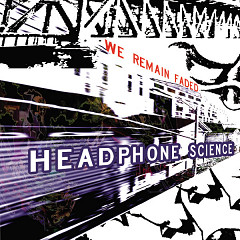
    No Type has blossomed from one of the first Net-based labels to a solid platform for experimental music, touching upon minimalist and improvisational electronics, noise, musique actuelle, renegade electro-acoustics — and with Headphone Science, sliced and diced hip-hop. Exploring cut-and-paste, rough-hewn beat tangents that bear reference to the sampledelia of Scott Herren (PreFuse 73), the slices of Anticon and the dark surrealism of Sixtoo (and possible other Spooky DJs as well), the Science (Dustin Craig) nonetheless also nods to the emotive feel that governs Boards of Canada. Craig recombinates classical melodies with contemporary digital techniques. Microscopic particles are embedded deep within rumbling breaks while traditional piano melodies hold the refrain, a hard-hitting approach that buoys its melancholia. Comparisons in this case are futile, and unnecessary — the Science expands upon sonic directions that are bubbling in the air today, and performs it well enough that the disc fades not, etching into one’s head with repeated listenings. That said, We Remain Faded crossfades its uniqueness into the vagaries of its predecessors and thus orbits the same demons and inspirations that guide the genre’s conventions. Breakout begins to rumble in the Science’s treatment of low, basstone-lines and the use of microsound and inventive percussion. Larcenous demonstrates flashes of inspiration with complicated programming and abstract samples, while the opening instrumental establishes the disc’s watermark. But it is To Dine in Distance that is the soft risk, incorporating a guy-girl break-up conversation alongside acoustic guitar. What saves Craig from indulgence is the supremely disjointed dub-treatment to the instruments and delicate trumpet — a successful experiment.

    … the disc fades not, etching into one’s head with repeated listenings.
  • 4
  • 5
  • 6
  • 7
  • 8
  • 9
  • 10
  • 11
  • 12