Sauter au contenu principal
electrocd

Blogue

64 résultats
  • 3
  • 4
  • 5
  • 6
  • 7
  • 8
  • 9
  • 10
  • 11
  • Matériaux composés dans La Folia

    «Review», Grant Chu Covell, La Folia, 1 avril 2010
    jeudi 1 avril 2010 Presse

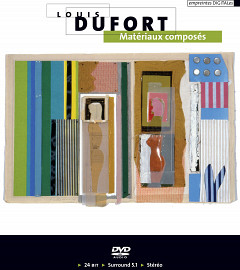
    Dufort’s chartered tour is more like a night drive through the bad part of town. Several pieces convert mechanical and ambient sounds into noise, as in Grain de sable’s opening and the flashes that whip through Gen_3. Enfant d’obus (“Bomb child”) conjures destruction with shattering glass and spluttering fire. Grain de sable marks the aftermath of the December 2004 tsunami that hit Thailand, with drowning as one of its themes. Dufort’s bewildering development of ideas occurs without apparent cohesion, as in the Matério_ trilogy, the parts of which appear to contemplate consistent sources — something squeaking, something dipped in water, something crunching, mechanical noises, etc. Dufort isn’t consistently apocalyptic, witness Gen_3’s humorous borrowings from, among others, Francis Dhomont, Pierre Henry and that venerably ancient, Billy Machaut. Hi_Res feels like a video game.

    Dufort’s chartered tour is more like a night drive through the bad part of town.

    Époque de l’eau dans La Folia

    «Review», Grant Chu Covell, La Folia, 1 avril 2010
    jeudi 1 avril 2010 Presse

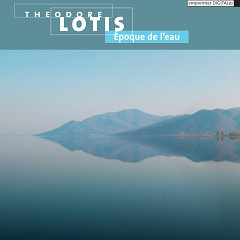
    Wind and water provide the background for Lotis’ dreams. Most of the music operates in the treble range and uses precisely positioned pitched sounds, rarely with noise or distortion. Beneath the gauzy surface lies a complexity not immediately apparent. Arioso Dolente / Beethoven Op. 110 eventually reveals a piano; however, the piece’s subject is Beethoven’s disposition. The sinister edge of Sibylla’s Voice occurs by way of processed violin sounds simulating the sibyls’ grim pronouncements. The recent 2002 South Wind will Bring the Sand and Underwater Theories suggest that Lotis now prefers concealing complexities under smoothly changing surfaces. Without notes or title I wouldn’t have guessed that the two-part La mer is about the sea. Lotis manipulates bee sounds to simulate water in La mer’s first movement.

    Beneath the gauzy surface lies a complexity not immediately apparent.

    Études pour Kafka dans De:Bug

    «Kritik», TCB, De:Bug, no 141, 1 avril 2010
    jeudi 1 avril 2010 Presse

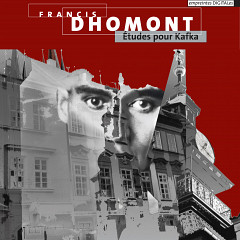
    Neues vom Mann mit der Augenklappe. Francis Dhomont, einer der ältesten lebenden Vorreiter der Elektroakustik, zeigt auch mit 83 Jahren keinerlei Ermüdungserscheinungen. Sein jüngstes Album mit drei Skizzen zu Kafka ist denn auch nur eine Auswahl von Vorarbeiten für ein monumentales Projekt über den Schriftsteller, an dem er seit zwölf Jahren arbeitet. Die drei “Etüden für Kafka“ lassen keine Altersmilde erkennen, von einer Rückbesinnung auf die tonale Musik, wie sie Musique-Concrète-Pionier Pierre Schaeffer gegen Ende seines Lebens zumindest theoretisch einforderte, will Dhomont überhaupt nichts wissen. Bei ihm regiert die Abstraktion, sein einziges Arbeitsmaterial sind weiterhin Tonbänder, bei denen man kaum erahnen kann, welchen Ursprungs die Klänge sind. Von allen Seiten flirrt und sirrt es unbehaglich. Konkret wird er allenfalls im “Brief an den Vater“, dessen Text von einem Sprecher rezitiert, dabei allerdings immer wieder verfremdet und zerstückelt wird. Die Angst des Schreibenden wird als paranoide Entfremdung des Sprechenden von seinen eigenen Worten und seiner eigenen Stimme inszeniert, ohne je plakative Effekte zu bemühen. Eine kongeniale Vertonung, die gespannt auf den Gesamtzyklus macht.

    La notte fa dans Wonderous Stories

    «Stadi di Ulteriore Follia», Vincenzo Giorgio, Wonderous Stories, no 17, 1 avril 2010
    jeudi 1 avril 2010 Presse

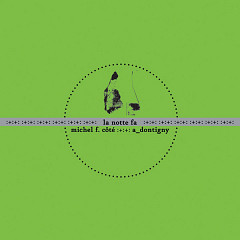
    Ne La notte fa (ovvero l’incontro tra due percussionisti (sic) “inquieti assai”, Michel F Côté e a_dontigny) viene preso in considerazione un substrato elettro-rock trasfigurato da un fitto uso di elettronica destrutturante (ad esempio Ritmi di oggetti ma anche le più soffuse Unlisted Card Number e soprattutto Paxil Origami Club) il tutto filtrato da una propensione addirittura “punk” (Bounce Dat ARN). Molto interessanti gli apporti degli ospiti Alexandre St-Onge (basso), Alexander MacSween (batteria) l’immancabile Bernard Falaise (chitarra) e soprattutto Jean René alla viola.

    La medesima etichetta (&records) pubblica Sainct Laurens di Philippe Lauzier e Pierre-Yves Martel, opera di abbacinante introspezione timbrica dove i fiati (Philippe) e gli archi (Pierre-Yves) vengono dolcemente molestati da un’elettronica diffusa e soffusa. Nascono così piccole gemme come Brazos, Adda e Alz. Tre parole sussurrate nella penombra elettroacustica.

    Andrew Lewis dans The Guardian

    «Bangor New Music Festival», Rian Evans, The Guardian, 29 mars 2010
    lundi 29 mars 2010 Presse

    Bangor New Music festival, held under the auspices of the university’s School of Music, celebrated its 10th anniversary with its most ambitious programme to date, and no concert signalled the event’s energy and range better than the one given by the BBC National Orchestra of Wales and featuring three firsts.

    The school boasts three notable composers – Pwyll ap Siôn, Andrew Lewis and Guto Puw – and works by them made up the challenging first half.

    Ap Siôn’s Gwales, dating from 1995, pays homage to the late William Mathias, under whose aegis music flourished at Bangor. Building on fragments quoted from Mozart’s Requiem, the work depicts a journey towards the mythical island of Gwales.

    In the first of the new pieces, Andrew Lewis also took us on a journey, this time in and out of consciousness. Number Nine Dream explored the first movement of Mahler’s Ninth Symphony through the hazy veil of the contemporary electroacoustic sound-world, making for an absorbing aural experience.

    Hologram, by Guto Puw, BBCNOW’s resident composer, exists emphatically in the present, with his ascetic approach to structure balanced by a sensuous engagement with sound. It was delivered with startling clarity by the conductor Grant Llewellyn.

    Wales is the spiritual home of the composer Adrian Williams, and the contemplative, questioning vein that its landscape has permitted him to articulate was reflected in his Cello Concerto, premiered here by Raphael Wallfisch. The concerto seeks to reconcile in its single long span an introverted, blues-inflected expressiveness with a freer, unselfconsciously flowing idiom. It was indicative of Williams’s instinctive ability to communicate directly that this was so warmly received by the audience.
  • 3
  • 4
  • 5
  • 6
  • 7
  • 8
  • 9
  • 10
  • 11