Sauter au contenu principal
electrocd
  • This website is also available in English.

Blogue

2899 résultats
  • 116
  • 117
  • 118
  • 119
  • 120
  • 121
  • 122
  • 123
  • 124
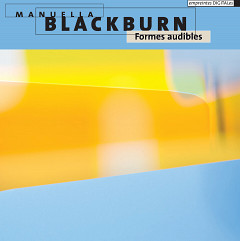
  • Formes audibles dans Nonpop

    «Kritik», Andrew Korsch, Nonpop, 22 janvier 2013
    mardi 22 janvier 2013 Presse

    Die aus England stammende Manuella Blackburn hat an der Universität Manchester studiert. Ihr Schwerpunkt ist die elektroakustische Musik. Doch ihr musikalisches Schaffen reicht weit über dieses spezielle Gebiet hinaus. Instrumental-Kompositionen, Arrangements für Laptop-Ensembles, elektronische Improvisationen und dergleichen mehr zählen ebenso in ihren Wirkungsbereich. Ein Mutitalent. So verwundert es sicher auch nicht, dass sie im Laufe der Zeit immer wieder mit Preisen bedacht wurde. Da wären zum Beispiel der „Grand Prize in Digital Art Awards“ (Japan 2007) und der erste Preis der „Concurso International de Composicao Electroakustica Musica Viva“ (Portugal 2006 und 2009).

    Die nun vorliegende erste Solo-CD der Komponistin „Formes audibles“ besticht durch klare und doch komplex angeordnete Strukturen. Sechs Titel, die die Bezeichnung moderne Elektroakustik tatsächlich verdienen. Neben allseits bekannten, klassischen Musikinstrumenten verwendet sie elektronische — auch eine E-Gitarre, was dem Ganzen mal etwas Rockiges und mal etwas Jazziges verleiht. Doch das Instrumentarium umfasst wesentlich mehr. So hören wir nicht nur das Kratzen bzw. Reiben der Finger über die Saiten einer E-Gitarre oder allgemein präparierte Saiteninstrumente, sondern auch Glockenspiele, Klanghölzer, Becken und elektronisch generierte Sounds, die spielerisch zwar, aber sehr dicht und mit einem dynamischen Freiraum, der vom kaum hörbaren Einzelinstrument bis in die Mehrstimmigkeit reicht, die Komplexität der einzelnen Stücke verdeutlichen. Leichtfüßig, ja luftig kommen die einzelnen Titel daher. Immer mit dem richtigen Gefühl dafür, wann es Zeit ist, ein Thema abzubrechen, um es neu aufzubauen oder mit einem neuen zu verbinden.

    Der erste Titel beginnt dann auch gleich mit einer E-Gitarre. Hier geht es um die Möglichkeiten eines Spieles damit. Manchmal hat man dabei sogar den Eindruck, dass jeden Moment ein Schlagzeug einsetzt, was allerdings gänzlich ausbleibt. Doch das Kratzen, der dynamische Anstieg und die Dichte des Gespielten erinnern daran, d.h. an schon klassisch zu nennende Muster der Rockmusik, an das Gleich eines Refrains. Allgemeiner ausgedrückt kann hier von einer Anleihe bzw. Reminiszenz an die klassischen Strukturen der tonalen Musik gesprochen werden. Andererseits werden die hörbaren Formen der Manuella Blackburn dann aber modern organisiert, d.h. der Bruch und nicht der lineare Fortgang von einer Idee zur nächsten bekommt hier den Raum, den dieser benötigt, um sich zu entfalten, um gleichzeitig zu enden und neu zu beginnen.

    Palimpsestes dans Chain DLK

    «Review», Vito Camarretta, Chain DLK, 21 janvier 2013
    lundi 21 janvier 2013 Presse

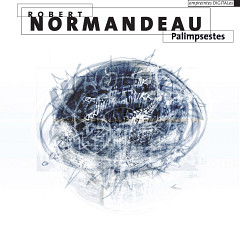
    Many followers of electroacoustic music and fans of one of the most renowned imprint, the Canadian label empreintes DIGITALes, were asking themselves about this skilled performer Robert Normandeau, who already signed a plenty of “movies” for the ears according to the way many reviewers described his art, but after listening to his long-awaited album — his last release on the label was Puzzles, which came on the unlucky DVD-Audio format —, I could say it’s worth the wait. The initial title-track Palimpseste is an amazing collage of hubbubs, gargles, sniggers, grumbles, soughs, wheezes, snorts, pants and other bizarre expression of human voice, whose opening “disorganization” seems to get gradually organized so that they looks like staging a sort of gargantuan machine in the second part of the track, while the following Murmures is an interesting acousmatic sample, where Robert seems to amplify metallic, plastic and gummy noises in order to render a certain sense of perceived mechanical degradation, whose incessant sinister swarming sounds constantly transposed from urban to natural settings. On Jeu de langues, he manages to render flushed and flustered sides of the nocturnal hot dreams he grabs and the subtle flutes he added vividly depict the worming of wantonness and tempting reveries which silently sneak into a bed. The following track Anadliad — the one I like most — has been named after a Gaelic word, which means breath and inspiration, and the great work he made by combining the sound of a bagpipe and a pigborn, a Welsh wind instrument, and the strong winds and intense storms of that lovely place of the planet could let you feel like a particle, which get pushed out of the drones to meet the violent electric energy of thunders outside before getting inhaled again into bagpipe’s bag, a listening experience which anticipates the final Palindrome, a mesmerizing track, where various sonic elements seems to overwhelm listeners after wrapping them up by a series of eruptions which feed a persisting mental strain.

    … mesmerizing…

    Quelques reflets dans The Sound Projector

    «Miniature Candies», Ed Pinsent, The Sound Projector, 6 janvier 2013
    dimanche 6 janvier 2013 Presse

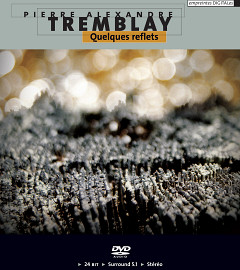
    […] Pierre Alexandre Tremblay is one of many Canadian electroacoustic composers showcased on the empreintes DIGITALes label who enjoys having their work presented as a 5.1 surround sound experience [and] in stereo, pressed on a DVD for improved audio quality. Quelques reflets (IMED 11109) contains a number of his meditative and philosophical musings in sound form, of which I most enjoyed the tripartite opening number Reflets de notre société crépusculaire, with its title highly suggestive of an unpublished Edward Gorey book. Tremblay endeavours here to express his feelings of powerlessness in today’s world. Similar ethical dilemmas are expressed on the other works. […]

    … meditative and philosophical musings in sound form…

    À l’ombre des ondes dans Essmaa

    «Critique», Essmaa, 5 janvier 2013
    samedi 5 janvier 2013 Presse

    La nuit a commencé à tomber, il y a déjà près de deux heures. On ne devine plus qu’une vague d’un sombre bleu, à l’horizon. Pourtant les volets sont déjà baissés. La télé du voisin diffuse des témoignages, mais je n’entends que «partiellement».. Les sonorités s’estompent dans les murs.

    Ce disque est composé de trois compositions structurées sur la mise en son(s) de récits de rêves. Textures sonores, fil narratif, les suspensions de la parole laissent l’auditeur prendre le temps de l’espace. Le temps de s’évader dans son propre univers, en semi-conscience. Car les propos ici ne sont qu’un «prétexte» pour laisser libre cours à notre faculté de réinvention. Une invitation à «partir aussi».

    Il fait désormais nuit. Il n’y a plus vraiment de bruits. Seulement un long sifflement. Les pensées s’envolent. Je n’aurais sûrement pas voulu être ailleurs qu’ici. Dans cette bulle.

    Les pensées s’envolent. Je n’aurais sûrement pas voulu être ailleurs qu’ici. Dans cette bulle.

    À l’ombre des ondes dans Stradda

    «Chronique», Julie Bordenave, Stradda, no 27, 1 janvier 2013
    mardi 1 janvier 2013 Presse

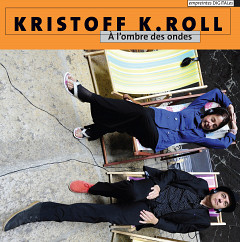
    Depuis [quelques] d’années, le duo formé par J-Kristoff Camps et Carole Rieussec imagine des siestes audioparlantes, «pièces é[éctroacoustiques pour une posture inclinée»: ces «compositions instantanées issues du paysage} pour 80 corps allongés» appellent un ailleurs restitué par casque dans un lieu propice à l’imaginaire (La Friche de la Belle de Mai à Marseille, les bords du lac de Neuchâtel, le jardin du château de Castries, la cour de l’ancien manège de La Chaux-de-Fonds…). [Un] précédent opus, Corazón Road transportait l’auditeur en Amérique centrale. À l’ombre des ondes convie à une plongée intime, «dans un monde, trouble à la temporalité floue» sereine, envoûtante, l’expérience nous embarque dans des récits de rêves loufoques, des «histoires» de villes plates et de Brigitte Bardot, des sons spatialisés, la fureur d’un train, des rires d’enfants ou un pas cadencé dans le gravier… Le duo entame actuellement une réflexion sur le théâtre sonore, à écouter sur le site kristoffk.roll.free.fr

    À l’ombre des ondes convie à une plongée intime…

    Avant ailleurs dans Vital

    «Review», Frans de Waard, Vital, no 863, 1 janvier 2013
    mardi 1 janvier 2013 Presse

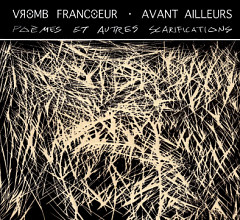
    […] Along similar lines — electronic music and texts read in the French language is to be found on the release by Vromb and Lucien Francoeur. Vromb we obviously know from his various releases on Ant-Zen, but also from Hushush from his home town Montréal. He has quite a following I am told. Lucien Francoeur is a writer from Montréal, who has been active since the mid 60s. In his performances of the past he worked with musicians from the world of improvisation and as such has released a couple of LPs. Here we have twelve pieces, and unlike the release by Bruyas/Julliard, it’s not easy to escape from it; one can not play this a nice backdrop. The voice of Francoeur is more demanding in it that it is more present, and perhaps also because he skips occasionally back and forth between French and English, so you pick up sometimes something. The electronic music by Vromb is also more present and up front. Not in a disturbing way loud or anything, but more piercing at times and also more demanding. He has sustaining, insect like sounds, pulsating beats of a minimal nature, and throughout the music is spooky and mysterious. Certainly indeed one that requires full attention but if you fail to speak the language, like I do, it’s also a bit more complicated to grasp. We may return to what I said about the CD by Petit/Robinson in Vital Weekly 858: “it’s also something that I like to hear once or twice, but would not return to all too easily. Now I was thinking: maybe this is perhaps something to be seen live, seated in the dark and let it all come? I could imagine that would do well.” Especially this spooky stuff would do well in such places.

    … sustaining, insect like sounds, pulsating beats of a minimal nature, and throughout the music is spooky and mysterious.
  • 116
  • 117
  • 118
  • 119
  • 120
  • 121
  • 122
  • 123
  • 124