Sauter au contenu principal
electrocd

Blogue

2899 résultats
  • 157
  • 158
  • 159
  • 160
  • 161
  • 162
  • 163
  • 164
  • 165
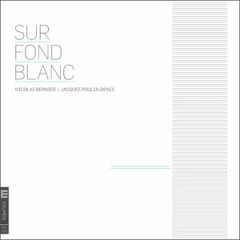
  • Sur fond blanc dans Vital

    «Review», Frans de Waard, Vital, 5 mai 2009
    mardi 5 mai 2009 Presse

    The follow up to Étude no 3 pour cordes et poulies by Nicolas Bernier and Jacques Poulin-Denis is Sur fond blanc, and its also a piece of music they recorded for a dance piece, which, according to the press text “explores the themes of interior space, emptiness and absence”. Bernier and Poulin-Denis are boys with laptops, but also a keen interest in using acoustic sounds, and, what makes this release even more interesting: there is an extensive use of voice material. They whisper most of the time, and add a feeling of absence and loneliness to the play. The music itself is quite nice, but not spectacular. There are lots of drone like sounds, micro glitch material, processed guitars and all the common place from the world of microsound and lowercase, mixed with a bit of clicks and cuts. But its the use of voice material that keeps this interesting, almost in a Hörspiel like manner. Hard to say what it is about, the voices or the music, but even without the dance its quite nice. Nothing new here under the sun, and Bernier and Poulin-Denis perform their music with great care and style, no doubt, but I couldn’t help thinking I heard and saw it before.

    … what makes this release even more interesting: there is an extensive use of voice material. They whisper most of the time, and add a feeling of absence and loneliness to the play.

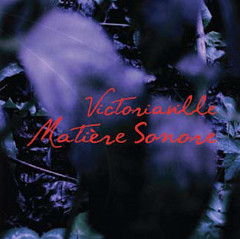
    Victoriaville matière sonore, Zürich-Bamberg dans The WholeNote

    «Sampling Soundscapes», Ken Waxman, The WholeNote, no 14:8, 1 mai 2009
    vendredi 1 mai 2009 Presse

    Creating musical sounds without instruments has become widespread ever since the availability of first the portable tape recorder and then the lap top computer. Melding oscillations created with software plus amplifications of so-called found sounds, often re-mixed, these soundscapes are notable for their subtle mixture of foreground and background.

    Canadians — especially Québécois — have been particularly proficient in this sort of composing, as these CDs demonstrate. So have Europeans, which is why Habitat (Creative Sources CS 105 CD), by the German dis.playce duo provides an interesting contrast to the Canadians’ work. For comparison, both that CD and Victoriaville matière sonore (Victo cd 0113) created by eight sound designers — Francisco López, Louis Dufort, Chantal Dumas, A_Dontigny, Steve Heimbecker, Mathieu Lévesque, Hélène Prévost and Tomas Phillips — are audio portraits of specific places.

    Geographical reflection is also involved in Bill Gilonis’ and Chantale Laplante’s Zürich-Bamberg (AD HOC 22) and Éric Normand’s Vente de bagages — Volume un (Tour de Bras TDB 3001), but these collaborations expose another electronic music variant. Montréaler Laplante and Londoner Gilonis, then living in cities which give the disc its title, collaborate on sound collages by tweaking individual audio files sent to one another. Rimouski-based Normand follows the collaborative pattern, although the found sounds he alters originated in different European cities and in Montréal.

    Hélène Prévost, one of Normand’s audio pen-pals, is the only person represented on two CDs; and that’s appropriate. One of the doyennes of auditory creation, her contributions fit individual situations in which they are placed. Matière sonore’s VSM for instance, suggest a story line with muffled male and female voices, a ticking clock and sirens intermingling with rumbling hisses, blurry rustles and reverberated intonation traceable back to computer programming.

    On Vente de bagages however (www.tourdebras.com), the bed track of static intonation and hiss from her side is reconfigured with audio effects and stutters created and equalized by the noises produced with a microphone held in Normand’s mouth. This overt physicality and evident sonic building blocks is what distinguishes Normand’s sound postcards from the other discs. On another track, his circular cackles, cries and cock-a-doodle-doos expand the quicksilver squeaks and tremolo flutters produced by the brass mouthpiece and valves manipulation of Toulouse-resident Sébastien Cirotteau.

    Organized by Spanish sound artist Francisco López to create an audio portrait of Victoriaville, Quebec, Matière sonore’s soundscape is more anonymous and selfless (www.victo.qc.ca). Sequentially panning across the aural landscape of the city which hosts an annual experimental music festival, private and public spaces are exposed and transformed. Particular starting points are mixed electronically and are simultaneously linked and divorced from sources. Louis Dufort’s Matério_***, for example, features snatches of gull caws and dog yelps, followed by slithery organ-like riffs and otherworldly shrills, and preceded by ring modulator echoes, plus swelling blurry thumps. Meanwhile Chantal Dumas tells her story on s/t w/t 2 with intonation from spectral railway-crossing peals, thunder claps and people shouting, plus radio dial twisting that locates and loses snatches of recorded music. She ends with door slamming sounds.

    Coincidentally Zürich-Bamberg (www.chantalelaplante.com) begins with the sounds of a door opening, follow by quivering piano strings. Completed by a couple of tracks of solo Laplante that alternate prolonged silences with fortissimo, stop-time abrasions and echoes, the CD’s key manipulated collages are These 12 Minutes and the title track. Undulating, intermittent oral gasps top an undercurrent of foot steps on the former. Eventually the textures are redirected together as backwards-running beats. Slivers of English, French and German phrases stud the title track as these disembodied voices philosophize, hector and promote. Also audible are intercut disconnected waves of melodic, hard-rock and Arab music that occasionally reveal simple guitar licks or drum patterns. Surmounting this are further processed sounds which originate in falling rain, whistling birds, draining sinks and idling engines. The result is both descriptive and disconcerting.

    … these soundscapes are notable for their subtle mixture of foreground and background.

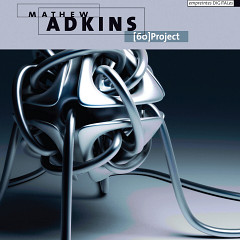
    [60]Project dans Earlabs

    «Review», Jos Smolders, Earlabs, 23 avril 2009
    jeudi 23 avril 2009 Presse

    Anniversary release to commemorate the 60th birthday of concrete music. Adkins collated the contributions of 60 artists into 8 segments, not following the categorization of the originator Pierre Schaeffer.

    The disc contains music that was contributed by over 60 sound artists. It celebrates the 60th birthday of musique concrète in [2008]. Mathew Adkins, a veteran at Empreintes Digitales was invited to mix the sound contributions together. The result is a beautiful 74 minutes of electroacoustic music. Adkins diligently categorized all the contributions before setting to work with a mix. That way three major sections are created, each divided into two or three different sequences, each with its own sound character. To give you an impression: the first section is based on abstract electronic sounds, the second section uses concrète and ‘anecdotal’ material. The final balances between these two extremes.

    The first section is nice but at the same time a little dull; too nice and cozy. The abstract electronics offer many chances for slowly developing scapes. And actually Adkins keeps his foot on the brakes for quite a long time. Only occasionally are we served with harsh sounds, with sudden dynamical rifts. Schaeffer, the founding father of musique concrète, had quite a different approach. His musical structure often refered heavily on classical structures, like the suite, the symphony. Of course, these are different times. Schaeffer created his music from within his own personal context.

    Adkins works from a different perspective in a different age. These are more democratic times. Perhaps that’s why so many different artists (Hecker, Chartier, López, Jonty Harrison, Fennesz, Roden, just to name a few) were invited to contribute. The mixes are most times blends of different layers, no juxtapositions, bumps or crashes. Well, not until track 7, that is. But that one lasts only 2’43”…

    7.5 / 10

    The result is a beautiful 74 minutes of electroacoustic music.

    La face cachée dans France Musique

    «Tapage nocturne», Éric Serva, France Musique, 16 avril 2009
    jeudi 16 avril 2009 Presse

    «Sur le même label [Empreintes Digitales] je vous propose d’écouter un extrait du dernier album de David Berezan, musicien d’origine canadienne installé au Royaume-Uni en tant que directeur des studios de musiques électroacoustiques de Manchester. David Berezan a étudié à la faculté de Birmingham les musiques électroacoustiques auprès de Jonty Harrison, il a composé des œuvres pour instruments solos et ensembles, pour électroniques et instruments et pour électroniques solo, ainsi que des œuvres interdisciplinaires en collaboration. Il a remporté de nombreux concours et à reçu une liste très impressionnante de prix à travers le monde. Son nouvel album s’intitule La face cachée puisqu’il souligne deux facettes de la personnalité du compositeur qui se sont heurtées ou complétées dans son processus de création sonore. Une œuvre introspective, riche et particulièrement plaisante.»

    Une œuvre introspective, riche et particulièrement plaisante.

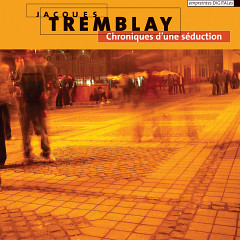
    Chroniques d’une séduction dans France Musique

    «Tapage nocturne», Éric Serva, France Musique, 16 avril 2009
    jeudi 16 avril 2009 Presse

    «De l’autre côté de l’Atlantique et basé à Montréal, le label Empreintes Digitales édite depuis bientôt 20 ans des albums de références en matière de musiques électroacoustiques, acousmatiques et concrètes.»

    «Chroniques d’une séduction est une œuvre de Jacques Tremblay conçue autour du principe d’altérité. Une altérité aux facettes multiples dans laquelle la notion d’acceptation et de reconnaissance de l’autre dans sa différence a été vécue par ce musicien alors qu’il était en pleine séance de composition et que sa concentration à été troublée par des passants, des bruits divers de choses et de gens. Une expérience banale qui conduit souvent à l’agacement mais de troublée, l’écriture musicale de Jacques Tremblay, sera très vite inspirée, nourrie et enrichie. Cette prise de conscience deviendra le thème même de ce nouvel album judicieusement intitulé Chroniques d’une séduction. Je vous propose de nous retrouver autour de la machine à café, lieu de rencontres et d’échanges et qui peut devenir, pour les plus sages d’entre nous un lieu propice à l’altérité.»

  • 157
  • 158
  • 159
  • 160
  • 161
  • 162
  • 163
  • 164
  • 165