Sauter au contenu principal
electrocd
  • This website is also available in English.

Blogue

2899 résultats
  • 311
  • 312
  • 313
  • 314
  • 315
  • 316
  • 317
  • 318
  • 319
  • liberum arbitrium, morceaux_de_machines dans Splendid E-Zine

    «Review», George Zahora, Splendid E-Zine, 25 juillet 2002
    jeudi 25 juillet 2002 Presse

    This is one of the most disorienting and abrasive CDs I’ve ever heard.

    That’s not an award I hand out lightly. I’ve heard more than my share of noiseartsoundsculpture stuff in the last few years, and while many memories of those listening sessions have been reduced to panic-stricken hindbrain rantings (“Ears Hurt. Brain Hurt. What Noise? Why Loud? Why Hurt? Must Run Away!,” etc.), I’d like to believe that I’m as capable of finding beauty in eardrum-bursting cacophony as anyone can reasonably be expected to be. But I don’t recall having heard any other “improvised computer music” that’s as disjointed, disassociate and relentlessly disquieting as the work of Érick d’Orion and Aimé Dontigny.

    Imagine listening to three different CDs on three different portable CD players at the same time. Now imagine doing it while falling down an endless flight of stairs, the tracks cutting in and out, overlapping and merging as you tumble arse-over-tip. That’s cut-up, liberum arbitrium’s opener, and one of the disc’s most benevolent moments.

    Looking for something a little more invigorating? Try multivisión espacial, a thirteen-minute epic that sounds like nothing so much as a welding torch fight in a jack-in-the-box factory. Or if you’d like something a little more immediate, try the jolting sonic jabs, needle-sharp noise bursts, overmodulated white noise and excessive reverb of spencer; listen carefully, and you’ll discover a catchy little rock rhythm in the depths of the mix… unless you have an aneurysm first.

    If prime shake is a gentle lullaby sung by a solid steel whale to its aluminum and polycarbon children, métal scrap might be an auditory close-up of the sound your car’s engine makes when you don’t change the oil for 30,000 miles. But if you really want to up the ante, skip straight to the closer, digisex. What does it sound like? Imagine a backhoe pushing a combination kitchen garbage disposal/56K modem into a giant glass cistern full of razor blades and styrofoam packing peanuts — oh, and you’re watching and listening to it over a 28K video stream. Makes you want to run right out and buy the disc, doesn’t it?

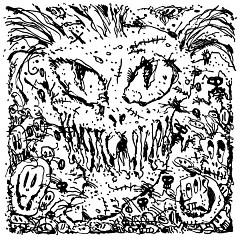
    The mad thing is, it actually might. If you’ve ever taken a whack at creating improvised processed-noise pieces on your home computer, you know that making them interesting — even making them painful for an extended period of time — takes some serious thought and real creativity. It’s one thing to turn the distortion and the reverb all the way up and leave the room for half an hour; it’s another matter entirely to sit there, in the eye of the storm, fine-tuning the wind and the rain and the lightning. Once you’ve made it through liberum arbitrium a few times, assuming you accomplish such a feat, you’ll develop a legitimate appreciation for d’Orion and Dontigny’s work; they rip sounds apart at an almost genetic level, scrunching them and tearing them and twisting them and hacking at them and carving them into little potato-peeler-curlicues with the ravenous relish of sonic serial killers.

    Realistically, though, there aren’t many people who’ll buy a disc like this, and even fewer who’ll listen to it on a regular basis. This is one of those albums that defines one of the polar “ends” of your record collection. It can’t be listened to casually; simply withstanding it eats up far more mental CPU cycles than the average active listening experience. You can’t ignore it, and you certainly can’t tune it out.

    I figure there are three types of people who’ll buy it:

    1. Academic, wire-rimmed-spectacle-wearing intellectual types who grew up on death metal and have spent their later years seeking out increasingly extreme thrills, attempting to trump other members of their social circle in the difficult listening stakes;
    2. People seeking sonic armament. For instance, I’d love to play digisex at 5:00 a.m., at very high volume, for the cocksucker with the weapons-grade subwoofer who drives past my house with his car stereo blaring at 3:00 a.m., or for the workmen at the town home development down the street who fire up their earth-moving equipment at 6:30 to get a head start on the day;
    3. Random buyers attracted by the cover art and Latin title.

    Regardless of which category suits you, rest assured that you’ve never heard computers make noises like these before (no, not even when you tried to play the OS X install CD). There’s something so resolutely non-musical about liberum arbitrium — despite the brief, unrecognizable song snippets (i.e. the one at the beginning of digisex) that bleed through its pink-noise shell — that its most intractable moments will be like siren songs to those musical explorers who are driven to the polar extremes of sound. You can’t sing along to it, you sure as hell can’t dance to it — hell, you can barely think to it — but you need to hear an album like liberum arbitrium at least once in your life, if only to define your boundaries.
    … they rip sounds apart at an almost genetic level, scrunching them and tearing them and twisting them and hacking at them with the ravenous relish of sonic serial killers.

    Humeur de facteur, Cycle du son dans De:Bug

    «Kritik», ASB, De:Bug, 23 juillet 2002
    mardi 23 juillet 2002 Presse

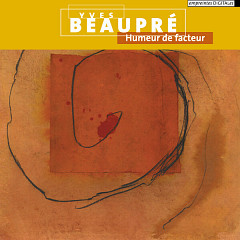
    Das kanadische Label empreintes DIGITALes beschäftigt sich mit Elektroakustik, Musique concrète und Audio Art. All diese Musiken verarbeiten neben den Klängen von Musikinstrumenten auch konkretes Tonmaterial wie Alltagsklänge und gefundene Geräusche. Der Kanadier Yves Beaupré ist nicht nur Cembalo-Bauer und -Spieler, sondern auch Klangsammler. So finden sich auf seinem Debüt neben Saiteninstrumentensounds auch im Rechner bearbeitete Klänge von Holz und Holzwerkzeugen. Francis Dhomont ist Pionier der elektroakustischen Musik und Schüler von Pierre Schaeffer. Die Herkunft der in „Cycle du son“ verwendeten Originalsounds ist im Gegensatz zu Beauprés Musik durch die elektronische Bearbeitung nicht mehr festzustellen. Bei allen Unterschieden im Umgang mit dem Klangmaterial ergeben sich zwei sehr dichte und spannende Hörstücke zwischen abstrakten Soundcollagen und instrumentalem Hörspiel. Oder einfach „Kino für die Ohren“, wie Francis Dhomont seine Musik nennt. 4/5

    4/5

    Podweek dans Voir

    «Critique», Étienne Côté-Paluck, Voir, 18 juillet 2002
    jeudi 18 juillet 2002 Presse

    Frédérick Blouin, alias Oeuf Korreckt, aurait commencé à produire de la musique dans sa ville natale de Québec en parodiant avec des amis les musiques techno, hardcore et gabber. Quelques années plus tard, il présente sur disque ses compositions plus sérieuses (sic) avec Podweek, un amalgame de techno saccadé et de pièces plus lentes, presque aliénantes. C’est d’ailleurs dans cette dernière classe qu’il excelle, répétant béatement des sonorités aux harmonies doucement troublantes (voir entre autres Alright Well Okay). Bien qu’un peu simpliste, le produit fini demeure un pertinent mélange d’inspirations de l’étiquette Warp et de vieux techno. Réunissant des pièces de 1995 à aujourd’hui, il semble tout de même que Podweek fasse office d’exercice de style plutôt que d’album-concept. Une série d’essais tout de même fort singuliers et prometteurs.

    David Turgeon, No Type dans Convergence

    «Rencontre du troisième type», Jean-François Perreault, Convergence, no 2:7, 15 juillet 2002
    lundi 15 juillet 2002 Presse

    Après quatre ans d’expérimentation sur le Web, No Type, une étiquette de musique électlonique avant-gardiste qui se spécialise dans les MP3, sort de l’ombre. Porté à boût de bras par le jeune David Turgeon, le projet notype.com rassemble une communauté d’artistes hors normes et prolifiques qui viennent de publier leurs premiers disques compacts. C’est du solide.

    Il y a quatre ans, bien avant que le tsunami des MP3 ne déferle sur le continent, David Turgeon, de Québec, faisait déjà partie de ceux qui croyaient en ce format, si bien qu’il fonde sur le Web notype.com, une étiquette virtuelle de disques 100% virtuels… De Montréal, où il vit maintenant, David Turgeon heberge les œuvres de 70 projets et artistes différents. Ceux-ci exposent leurs «albums», des pages Web artistiques qui étalent des sélections de chansons et de pièces, classées selon toutes sortes de concepts, allant de la propagande anti-McDonald aux essais graphiques, simples et complexes. Tout ça, sous format MP3 et téléchargeable gratuitement. «J’aime que nos univers se recoupent, dans ce côté minimaliste, un peu naïf.»

    Quand vient le temps d’expliquer notype.com, David Turgeon parle d’un «repaire de magiciens du son réputés trop louches pour l’industrie du disque. No Type a contribué à lancer des musiciens tels que Tomas Jirku, Books On Tape, Dick Richards, Claudia Bonarelli et Headphone Science», dit-il. «Le site est une collectivité orsanisée, un espace où les artistes peuvent partager leurs créstions», poursuit David Turgeon. Grâce à la collaboration de DIFFUSION i MéDIA, pilier important de la communauté électroacoustique et expérimentale du Québec, le label No Type se lance dans l’impression de «vrais» disques en faisant son entrée dans le catalogue de DIFFUSION i MéDIA, qui produit également les disques de l’étiquette empreintes DIGITALes. Tout comme la plupart des disques produits et imprimés par cette dernière, les disques de No Type ont aussi droit au traitement «i MéDIA», qui se distingue avec ses pochettes artisanales, un peu fragiles, mais ingénieuses.

    Contrairement à la plupart des artistes qui côtoient DIFFUSION i MéDIA, No Type, en disque comme en MP3, n’explore pas l’électroacoustique, mais plutôt l’électronique expérimentale, le «glitch», le «noise» et toutes autres expériences de laboratoire tripatives qui plaisent aux oreilles de David Turgeon. De Magali Babin (Chemin de fer) à Oeuf Korreckt (Podweek), en passant par le projet morceaux_de_machines (liberum arbitrium) et une compilation d’artistes internationaux et québécois (The Freest of Radicals), le jeune directeur artistique a jugé bon d’enregistrer ceux qu’il préfère: «c’est difficile de définir mes critères, je penche pour ceux qui démontrent un certain sérieux dans leur démarche et qui s’impliquent beaucoup», raconte-t-il. En fait, s’il est soucieux d’une chose, c’est de ne respecter aucune règle de genre, en évitant autant que possible de sombrer dans le nombrilisme.

    La tribu de No Type est composée de musiciens de Montréal, Québec, Vancouver, Baltimore, Brooklyn, Los Angeles, San Francisco et Saskatoon! Comme pour n’importe quelle étiquette qui se respecte, David Turgeon se permet de faire une sélection des gens qu’il veut voir évoluer dans sa communauté, en leur donnant les «clés» du site. Le site est gratuit et ne rapporte pas d’argent aux artistes qui y participent. David Turgeon n’ouvre tout de même pas les vannes à n’importe qui.

    David Turgeon ne s’assoit pas sur ses lauriers, depuis la publication de ses quatre premiers CD. Il planifie déjà le lancement de trois disques vinyles de 12 pouces, destinés aux DJs intéressés à faire tourner la musique des artistes Books On Tape, Headphone Science et Claudia Bonarelli dans leurs «sets», d’ici la fin de l’été. Un autre disque compact est également prévu pour le groupe de Baltimore, themoonstealingproject, en novembre. On a déjà hâte d’entendre la suite!

    Cache 2001 dans Splendid E-Zine

    «Review», Luke Martin, Splendid E-Zine, 8 juillet 2002
    lundi 8 juillet 2002 Presse

    Cache 2001 is a compilation disc with a difference. Rather than many labels’ “here’s some of our artists and their friends” approaches, this disc is a collection of works that were submitted to the Canadian Electroacoustic Community for inclusion in their JTTP project and competition. Moreover, they’re the cream of submissions, having been winnowed by an international jury that met via the web to decide what was worth including. This is, truly, cutting-edge stuff.

    The music on offer here is superbly atmospheric. Nicolas Basque’s album-opener has some Atari-sounding beats that give an impression of time blurred, before giving way to what sounds like a flock of angry ducks. Guillaume Coutu-Dumont’s Arianne Secret is a soundtrack to a whispering gallery: half-heard whispers and a hissing suggesting a kettle or an overworked boiler create spy-images and mystery that’s matched by the remainder of the track’s Neubautenesque circular noisemaking. Robin Davies’ contribution sounds like a psychotic’s version of Pink Floyd’s Alan’s Psychedelic Breakfast — all Angel Heart menace and running-on-stones urgency. This is just a sample — the rest of the compositions are equally accomplished, making it hard to choose between them. Indeed, Cache 2001 has a sense of flow that’s unexpected in a compilation format.

    Each piece is at least four minutes long, so there’s plenty of time to be absorbed into the worlds they create. For the most part, the subtlety and just-off-station tuning that seems present in some other artists’ works is present here. There are hints of things unsaid, vaguely-machinistic sounds that echo across landscapes with steam-pressed tension. As a portrait of modern life, the disc is terrifying, with only Martin Marier’s Matmos-like Avec ou sans parapluie lightening the mood.

    What makes Cache 2001 more enthralling is the idea that all of the works here were, initially, designed for performance, not recording. The pieces were composed with live, concert-hall renditions in mind, and it’s intriguing to imagine exactly how some of these pieces would be played in public, without recourse to extensive preparation time and cut-and-paste technological solutions. This, perhaps, is what sets the pieces here apart from other electroacoustic or experimental discs I’ve heard: there’s no sense of chopping-for-chopping’s-sake. It’s natural, no matter how stuttered the tracks may become through evolution, whatever’s here makes sense.

    If you’re looking to see where the next generation of electroacoustic composers are headed, then Cache 2001 is your disc. The possibilities suggested by this material are breathtaking.

    The possibilities suggested by this material are breathtaking.

    Obstacle dans Vital

    «Review», MR, Vital, 4 juillet 2002
    jeudi 4 juillet 2002 Presse

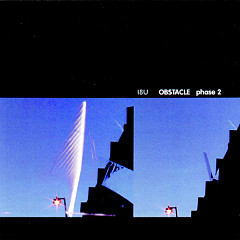
    Obstacle Phase 2 is actually a work of sound, video and animation, but this CD only presents the sound part. One long track of flowing, mostly dark sounds, with an occasional rhythm. The piece evolves quite slowly and has an ambient feel, but on close listening, one can hear subtle things that are not very ambient at all. Despite the dark sounds, the piece doesn’t have a gloomy atmosphere, it has a pretty concrete character. That’s what sets it apart from regular ambient. The rhythmic elements are very minimal, so there is no danger whatsoever of the track becoming flat or cheesy. The slow development of the work does not cause loss of attenttion, on the contrary: the tension is kept so well, that the whole piece is very captivating. I’m very sorry I missed the performance with the visuals, because if that was anywhere as good as this, it must have been a great show.

    … the tension is kept so well, that the whole piece is very captivating.
  • 311
  • 312
  • 313
  • 314
  • 315
  • 316
  • 317
  • 318
  • 319