Sauter au contenu principal
electrocd

Blogue

2899 résultats
  • 349
  • 350
  • 351
  • 352
  • 353
  • 354
  • 355
  • 356
  • 357
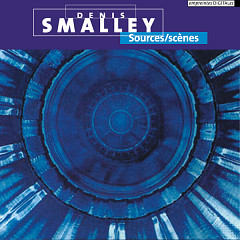
  • Sources / scènes dans Prospective Music Magazine

    «Review», Jukka Mattila, Prospective Music Magazine, 1 juillet 2001
    dimanche 1 juillet 2001 Presse

    Denis Smalley is an electroacoustic composer from New-Zealand, on this album concentrating on sound source material, featuring recordings based on metal and water sounds as well as sounds recorded in empty vessels. Smalley succeds in transforming the raw sound source material into very intriguing textures which often leave their abstract guise and take upon a calm, even a soudscape and ambiant form. The works here originate from 1984, 1997 and 2000, yet coming together as an accomplished, whole creation. One for large spaces and loud volumes. (9/10)

    One for large spaces and loud volumes. 9/10

    Sonars, Robert Normandeau dans Absorb

    «Review», Philip Raffaele, Absorb, 1 juillet 2001
    dimanche 1 juillet 2001 Presse

    Highly acclaimed Canadian electronic composer Robert Normandeau makes his rephlex debut with Sonars, keeping in line of general weirdness from the label, but not truly fitting into the braindance category. Instead, it is a highly experimental composition that relies on the concept of “sound” and every possible distortion available, all orchestrated into a bizarre soundscape of random click-click-clicks to sweeping echoes, and then cluminating in loud waves of sound. Like I said, this is highly experimental, in a way that might not please the ears of Rephlex’s general audience. A lot of the more experimental releases that Rephlex prides itself on all maintain some semblence of actual music, in that there lies some kind of structure, no matter how “out there” it is. But there is no such structure on this release, it is more of a sound photograph, a way of listening to life, in various applications.

    Boasting a huge discography, and an incredible list of awards and commissions, Normandeau is definitely in the canon of musicians that rely on heavy experimentation and abstract musique concrète pieces. After listening for a while, the most bizarre thing about the album, is the fact that it’s on Rephlex at all. So began the deliberations whether or not the man really exists; it could be an experiment in sound perpetrated by one of the Rephlex crew, but after some careful investigations, Normandeau is in fact legitimate.

    It is difficult to judge a disc like this, by what criteria does one compare or contrast it to? It exists on its own plane of weirdness, that calls for a very specific time and place for listening. Perhaps this marks the maturation of Rephlex as a label, and its desire to branch out and showcase other types of electronic talent. So the fine line of electronic composition becomes a little wider here, where Sonars lies at the polar opposite end of the spectrum to what is generic mainstream electronic music, and I suppose that Rephlex lies somewhere in the middle, when compared to Normandeau.

    Sonars lies at the polar opposite end of the spectrum to what is generic mainstream electronic music…

    Sonars, Robert Normandeau dans Splendid E-Zine

    «Review», Eric Cook, Splendid E-Zine, 25 juin 2001
    lundi 25 juin 2001 Presse

    Canadian composer Robert Normandeau comes from a distinctly academic background, with degrees in Electroacoustic Composition, a fistful of international “contemporary music” prizes and a CV filled with commissions and residencies. But Normandeau is also no stranger to crossing the invisible membrane between the world of university appointments and composer conferences and the more challenging side of pop culture electronic music, getting involved with Asphodel Records’ Recombinant festival some years back and now releasing this collection of “acoustimatic” compositions on the Rephlex label. Perhaps that’s because Normandeau seems to have mastered a challenging feat — combining truly exploratory sound manipulation, creation and compositional structures into works that are still engaging outside of their theoretical frameworks. In other words, they’re actually interesting to listen to.

    Sonars collects six works, spanning fourteen years, from 1985 to 1999. Despite the wide time frame in which Normandeau created these compositions, the CD is surprisingly coherent and unified. Each piece is a seamless continuum between dramatically artificial and dislocated organic sources. You’re continually confronted with roiling cascades of chiming synthetics — sounds that seem entirely unnatural at first listen. With closer attention, the layers of artificiality and resynthesis are peeled away, revealing the source material (in many of these pieces, wordless vocalizations and mouth sounds). Carefully calculated, this play between the natural and the synthetic draws you deeper into each piece, inviting you to listen and analyze each fragment. The earlier works on this collection seem more self-consciously dramatic (Le cap de la tourmente, for example). While this is not necessarily disappointing, they’re not as subtle, layered or perhaps internally referential as some of the more recent pieces. 1999’s Ellipse is especially satisfying, creating a mysterious soundscape of half-defined scraping and scratching, suggesting strings, contact microphones, late night movement in your walls…

    Each piece is nonlinear, self-sustaining and self-propelling — they’re consistent in their sonic language, and attentive listeners will hear and sense the progression and development in the composition without Normandeau ever stooping to draw an explict line from one to the next. These aren’t simple works, however, and they’ll not be for everyone. Normandeau doesn’t entirely shy away from rhythmic construction like some in academic electroacoustic music, but listeners seeking the more explictly beat-oriented material of Rephlex, or more traditional song structures, will be left scratching their heads. Dispense with those expectations and you’ll be richly rewarded by Normandeau’s universe of familiar yet foreign tones — a “cinema for the ear” which will lead you down unexpected paths.

    … a “cinema for the ear” which will lead you down unexpected paths.

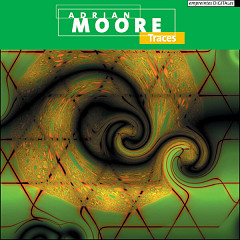
    Traces, Adrian Moore dans Voir

    «British Connection», Réjean Beaucage, Voir, 17 juin 2001
    dimanche 17 juin 2001 Presse

    Ayant trouvé sa voie alors qu’il assistait à un concert de Denis Smalley, Adrian Moore a été l’élève de Jonty Harrison. Nous avons pu goûter son très grand talent pour la diffusion sonore lors de son passage à Montréal, au début avril, pour la neuvième édition de la série Rien à voir. On serait tenté ici de dire ici que l’élève dépasse ses maîtres. Ceux qui veulent comprendre les possibilités musicales qu’offre l’électroacoustique seraient avisés d’écouter sa pièce Study in Ink, où la seule source sonore est le frottement d’un crayon feutre sur un tableux blanc. Le genre d’étude qui n’exclut pas l’humour. Very British indeed!

    On serait tenté ici de dire ici que l’élève dépasse ses maîtres.

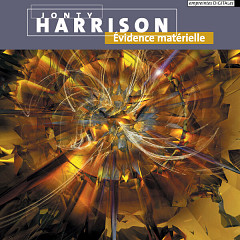
    Évidence matérielle dans Voir

    «British Connection», Réjean Beaucage, Voir, 17 juin 2001
    dimanche 17 juin 2001 Presse

    C’est par l’étiquette de disques bien de chez nous empreintes DIGITALes que nous arrive, après celles de Wolfe, des Beatles, des punks et de l’électronica une nouvelle «invasion britannique». Électroacoustique, celle-là. Deux disques lancés en avril nous ramènent les musiques de Denis Smalley et Jonty Harrison, tandis qu’un troisième nous fait découvrir celle d’Adrian Moore. Smalley et Harrison ont des approches du son assez semblables, qui produisent pourtant des résultats bien différents. Alors que le premier utilise des sons concrets pour les agrandir et leur donner la taille d’un paysage dans lequel l’auditeur peut pénétrer, le second se tient au plus près de l’objet et nous fait voyager à sa surface. C’est le deuxième disque chez empreintes DIGITALes pour ces deux compositeurs qui sont des piliers de l’école anglaise d’acousmatique. Le disque de Harrison nous permet d’entendre sa pièce Klang, récipiendaire en 1992 d’un Euphonie d’or au Concours international de musique électroacoustique de Bourges, et dont il a été dit qu’elle était l’une des œuvres les plus marquantes de l’histoire de cette compétition.

    … l’une des œuvres les plus marquantes de l’histoire…

    Évidence matérielle dans Re:mote Induction

    «Review», Peter Morrison, Re:mote Induction, 17 juin 2001
    dimanche 17 juin 2001 Presse

    Évidence materielle comes in one of the nicest card sleeves I’ve seen in some time, an outer slip sleeve with folded inlays. One inlay holds the CD nestled within the other one, which unfolds to reveal notes for each of the tracks included here in both French and English. There being 5 tracks all over 9 minutes in length, tending towards a 16 minute average — the pieces for the most part being sound works, summing up the artist’s acousmatic journey.

    Klang starts with chiming bell tones, a scrape of metal surface. Very tonal sound, but also in its construction playing +ve sound (strike) against -ve (stop). In some ways this becomes more pronounced as it expands into an exploration of chromatic percussion. Hints of electronic click and moment start to creep in, pulsing contrast to what has gone before, taking on a more synthetic form in the process. At times also more clangorous, though returning to chiming with a long exhalation — teasing out conclusion.

    With Sorties, voices echo in the gallery space, mixing with the constant motion of visitors. Dull echo of distant voices and struggling children. Clacks build into a more train like sound, the perceived gallery perhaps a large and busy train station. Emphasis changes as we follow our audio narrator — the progress along corridors, through doors and outside. Across gravel and pitter-patter of xylophone accompaniment. Sound disorients so that we have motion that suggests the interior of a car, but environmental impressions of something else. Arriving there is a chapping of a door, back step glance — is anyone home anyway? Chap again and electronic simulation opens the door, creak and the real door opens. Just in time as the rain comes from nowhere and thunder rumbles. Impressions continue, mixing with the hints of electronics and chimes that have an almost background role. The environmental weight of these pieces reminds me of Bexar Bexar, the last composition I heard along the same lines. Concluding in more of a sound extract.

    Surface Tension mixes a tumbling, awkward toy sound with an expansive wire swirl and a static glitch field. This allows a simpler construct than the previous piece, a narrower wavelength. But still a kinetic feel that balances in some way definitions of sound and noise. Hints of tones that suggest “music” flit through the back spaces. Again rain is present here, but only a passing in continuation.

    Splintering falls somewhere between percussive clacks and the tumbles of Surface Tension. A moment we hear a buzz of bee, reminding of Sorties. Scrape and tumble dominate — feeling more active than Surface Tension in sound forms, but still as contained. Crackle, snackle, fizz, plunge and ongoing tumble. The fire continues its crackle against an electric hum, surprising us with a moment of music snatched from elsewhere. The crackle grows, the wood popping — the fire almost becomes the patter of rain. Though manipulation lies ahead as does reprise.

    Blip. Gathering bubble. Plip and ripple. Fluid sounds expand in Streams, their tones offering suggestion of other sounds and perhaps of manipulation. Storm gathers, the windy lash of a jet, the flash of an oar through the choppy sea. Gravel tones lead away, departure. Then reprise the plip, adding gurgle and wallowing in tanks connected through piping. Rushing passage, and again manip. — leading to a crackle, pitter patter on the outside. Sudden over layering — ideas of sound bustling frenetically, then sliding off just as easy. Small sounds, clicks and taps, join to become familiar patterns within the context of this release.

    … one of the nicest card sleeves I’ve seen in some time…
  • 349
  • 350
  • 351
  • 352
  • 353
  • 354
  • 355
  • 356
  • 357