Sauter au contenu principal
electrocd
  • This website is also available in English.

Blogue

2899 résultats
  • 85
  • 86
  • 87
  • 88
  • 89
  • 90
  • 91
  • 92
  • 93
  • Fenêtres intérieures dans The Sound Projector

    «Review», Stuart Marshall, The Sound Projector, 19 juillet 2015
    dimanche 19 juillet 2015 Presse

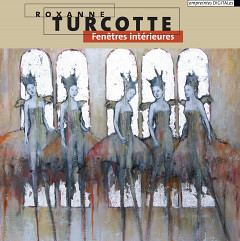
    Canada’s Roxanne Turcotte is more terrestrial in remit, turning eye to the turmoil of a human-ravaged planet (the Fukushima disaster among our many accomplishments), reflecting on our mortality and experience of time and taking a political stand in a piece written for Amnesty International — Tout en rouge — sourced from recordings from a 2012 demonstration an subjected to the usual laboratory procedures. If Elizabeth Anderson seats her compositions in the imagination, then Turcotte’s — produced primarily for installation and radio — are from the heart. Given the number of her dedications to the departed — quite powerfully so.

    At the outset, Fenêtres intérieures opens the window on a naturalistic world of sound and ‘the passing of time seen from the inside’, revealing the numinous in the normal (birds, skates on ice, tires on tarmac) and the magnificent in the mundane [Which is, I suppose, what lies behind so much of this sort of music.], and to remind us perhaps of how much we habitually ignore as we amble about with our Sony headphones. Turcotte seems less concerned with occupying space than with drawing attention to its presence (or absence) via unassuming portraits of our environment (eg the garden aviary of De la fenêtre) that quietly mutate as they grow in stature, as if poised to shock us with a tap on the shoulder the moment we’re feeling safe.

    From an aesthetic point of view I’m less taken with the torrents of (French language) voices that occupy several pieces than I am those consisting of processed, non-human sound per se; particularly those involving musical instruments. OVI (Objet volant identifié) for instance — a pathological study of modified electric guitar (that takes me back to some of the more time-bending instrumental moments on Squarepusher’s mutant jazz Just a Souvenir) — offers welcome respite from the deliberately uneasy cut n’loop vocal antics of Alibi des voltigeurs, and Le piano d’Horowitz manages a similarly deranging feat while almost passing for untreated. At the same time, one finishes listening with the feeling that much has passed the radar undetected.

    At the outset, Fenêtres intérieures opens the window on a naturalistic world of sound and ‘the passing of time seen from the inside’…

    L’envol dans The Sound Projector

    «Review», Stuart Marshall, The Sound Projector, 19 juillet 2015
    dimanche 19 juillet 2015 Presse

    Empreintes DIGITALes expands its fold with two more softly-sung heroines of electroacoustic music and at this point one can easily pick a winner among any of the label’s releases, though pick two and you might find little drastic variation. If the label is a leader in its field, its scope is a narrow one: many are the glistening field recordings, processed Japanese musical instruments, hulled and spaghettified voices and avowed interests in humanistic sciences that have graced my humble ears since becoming acquainted [Legion also are the academic accomplishments and international awards held by the composers inhabiting this label.]. But then, why spoil a winning formula?

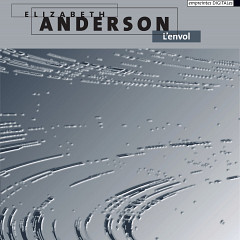
    While not dramatically at variance with those of her peers, the compositions of USA’s Elizabeth Anderson still sound strikingly fresh (to ears not recently acquainted with this music, admittedly) and there’s a comfortable cohesion to the sequencing of two decades’ worth of work (1994-2014): glass-showers pummelling powerful liquid flumes; radio feedback collaged and spewed; riots of industrial klang and proliferating strands of deranged monologue that lend a historical vintage to earlier pieces such as Mimoyecques (a meditation on imprisonment and death). With no piece shorter than eight minutes, these events course throughout like organic silicon life through a cosmic/atmospheric vastness, though there’s plenty of capacity to be startled by such as the abdominal explosions of Protopia/Tesseract, its lines of low profile flutes and bifurcating, rattling particles: variables that interact with a volatility expressive of the many conceptual oppositions (and harmonies) — principally the spiritual and celestial — that form the basis for much of Anderson’s work: the poetic tension of William Blake’s Tyger in Les forges de l’invisible; the companionship of visible and invisible universes in Solar Winds … and Beyond. Accordingly, her work displays all of the dynamic vigour found in the work of her peers, though it inhabits far remoter cosmic real estate.

    Accordingly, her work displays all of the dynamic vigour found in the work of her peers, though it inhabits far remoter cosmic real estate.

    James O’Callaghan dans Sound Symposium Blog

    «James O’Callaghan and Objects-Interiors: (Re)presenting Space», Ellen Ringler, Sound Symposium Blog, 14 juillet 2015
    mardi 14 juillet 2015 Presse

    On Tuesday July 12, 2016 at the LPSU theatre James O’Callaghan shared his [concert] entitled “Objects-Interiors: the piano as an acoustic Space” as a part of St John’s Sound Symposium. O’Callaghan’s work haunts the theatre and defers the traditional repertoire of (re)presentation. As described by the artist in the programme, “Objects-Interiors is the first in the series of extended-acousmatic pieces investigating the acoustic interior properties of musical instruments. This first piece for piano will scrutinize the piano as an acoustic space, and its possible metaphoric associations with ‘real spaces’. It will move from the ‘rational’ world of the piano-as-space to a surreal juxtaposition of outside and unexpected spaces integrated into the acoustic space of the piano.” O’Callaghan placed speakers inside the piano and weighted its pedals in order to allow the strings to resonate freely, and he employed the GRAIL (surround sound speaker array) in order to play his electroacoustic piece. While the audience listened carefully in the darkness, the artist executed his work from behind a laptop. It seems to me as though O’Callaghan employs his music as a series of deferrals, in order to emphasize the social implications of representation.

    All representation is misrepresentation in the world of the stage, in that as an audience we recognize and subsequently misrecognize what is presented to us. Because sound is representational the audience will consistently and constantly misrecognize what they are hearing and ultimately what it ‘means’. We will always experience misrepresentation because it is mediated by performance and we will always misrecognize representation because it is mediated by the composer. O’Callaghan’s work seems to invite us to think about (mis)representation and the space that it inhabits. By diffusing an electroacoustic piece of music through speakers inside the piano as well as through the sound system of the theatre (itself a kind of performance of his composition), he invites the audience, sitting in darkness, to defer representations of sounds.

    These representations are deferred through the visual of the piano, the sound emanating from the piano, and the sound surrounding the entirety of the theatre space itself. The speakers within the piano help to ‘colour’ the sound, but also invite the audience to ask who/what is represented as well as who/what is absent. When we hear the sound of a piano we may expect to see a musician physically playing the piano on stage – but we do not. Instead the sound emanating from the speakers ‘plays’ the piano by vibrating its strings. When we hear the sound of this piano and wonder about the potential pianist we may ask ourselves who this (absent) pianist could be. What do they look like? What is their skill level? What is their gender, race, cultural background, ability etc? The representation of or lack of representation of a pianist on stage allows us to question ad infinitum who we may expect to see at the St John’s eighteenth Sound Symposium. This deferral of representation invites the audience to develop avoid (mis)recognition and challenge expectations through sound metaphor.

    O’Callaghan’s Objects-Interiors is sonically haunting. Perhaps a part of this haunt is its evocation of the mystery of representation. I was left uneasy most likely because my expectations regarding who is represented in any given space were challenged. The deferral of meaning, the sonic bounce from space to space and place to place disavowed any common assumptions I may have about who and what is (re)presented and who or what is misrecognized at the St John’s Sound Symposium.

    … is sonically haunting.

    Firmament dans Adventures Through Audio

    «Radio Broken Dreams — Hans Tutschku», Adventures Through Audio, 5 juillet 2015
    dimanche 5 juillet 2015 Presse

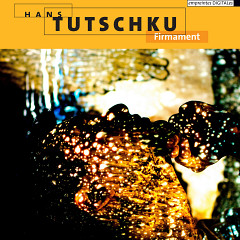
    Hans Tutschku began to study music at an early age. In 1982 he joined the Ensemble für Intuitive Musik Weimar, playing synthesizer and live electronics. He studied electroacoustic composition at the Hochschule für Musik in Dresden (Germany), and accompanied Karlheinz Stockhausen on several concert tours in 1989-91 for the purpose of studying sound diffusion. In 1989 he co-founded with Michael von Hintzenstern the Klang Projekte Weimar, a presenter of contemporary music, which presents an annual festival as well as a concert series. In 1991-92 he took part in the international year-long course at the Institute of Sonology (The Hague, The Netherlands). In 1994 he followed the annual composition and computer music course at Ircam (Paris, France). In 1995-96, he taught electroacoustic composition at the Franz Liszt Academy in Weimar (Germany) where he also set up the studio. In 1996, he attended the Royaumont Composition Workshop with Brian Ferneyhough and Klaus Huber (France). He taught at Ircam (Paris, France) from 1997 to 2001, and at the Conservatoire de Montbéliard (France) from 2001 to 2004. In May 2003 he completed a PhD in composition at the University of Birmingham (England, UK) with Jonty Harrison. Since September 2004 he has been working as professor of composition and director of the electroacoustic studios at Harvard University (Cambridge, MA, USA). With the Ensemble für Intuitive Musik Weimar he has realized several multimedia productions with projected images, choreography as well as the music that were presented in numerous concerts in Europe, Latin America and Asia.

    A universe of sound is surrounding us ‘from within.’ It’s composed of our dreams, fears and longings. It only exists within our body, our own imagination. We want to share it; but there are no words, no possible descriptions. We are sitting on a meadow on a warm night, alone, watching the stars. Nobody is disturbing our thoughts. Nobody is limiting our space. We don’t have to rush anywhere; we have time to let go and to follow these sounding creatures… It’s not a nightmare; it’s just the interplay of our imagination.

    Firmament — schlaflos [Firmament — sleepless] was realized in 2010 at Harvard University Studio for Electroacoustic Composition (HUSEAC) (Cambridge, MA, USA) and premiered on July 29, 2010 during the festival Inventionen in St Elisabeth-Kirche in Berlin (Germany). Thanks to Sarah Sun (recorded voice). The current stereo version was realized in January 2015 at the composer’s studio.

    Havres, À la plage dans Revue & Corrigée

    «Chronique», Pierre Durr, Revue & Corrigée, 1 juillet 2015
    mercredi 1 juillet 2015 Presse

    Encore la scène québécoise… D’un côté […], d’autre part deux artistes sonores, la première impliquée depuis longtemps dans la scène des musiques nouvelles, surtout en tant que productrice radiophonique (elle est responsable de plusieurs créations, souvent enregistrées déjà, d’autres musiciens) et longtemps animatrice à Radio-Canada, la seconde productrice de pièces radiophoniques. […]

    Quoiqu’ayant déjà collaboré à certains enregistrements (de Claude Schryer en particulier) il y a près de vingt ans, ce n’est finalement qu’assez récemment qu’Hélène Prévost s’est engagée dans des créations personnelles plus régulières, comme en témoignent quelques pièces sur diverses compilations (Musicworks 104, par exemple), ou sa participation aux projets Montréal/Victoriaville, matière sonore* et A la plage constitue le premier recueil entièrement sous son nom. Cela pourrait être La plage, matière sonore. Encore que ce ne soit qu’un jeu de mot, la plage étant à prendre ici au sens d’espace enregistré. Il y en a dix. Dix plages donc! Chacune proposant une combinaison propre de sons, issus de bruits, de voix, d’instruments, de nature diverses, offrant chaque fois des climats divers, tourmentés, oniriques ou inquiétants, parfois proche du silence (plage 09)…

    On finira cette chronique avec l’évocation de Havres, une courte (17.35 min.) collaboration entre un poète (Sylvain Campeau et Chantal Dumas. Cette dernière fut d’ailleurs aussi une des artistes impliquées dans l’aventure de Montréal ou Victoriaville matière sonore, mais a un parcours de créations personnelles plus anciens. Ici, elle propose une bande sonore pour la mise en sons d’un poème, basé sur un quartier péninsulaire de Montréal, la Cité du Havre, en bordure du St Laurent, décliné en français, en Irlandais et dans la langue mohawk des amérindiens du lieu. D’où plusieurs récitants, et une bande-son évocatrice aussi bien d’une certaine quiétude (celle de parc) que de son histoire et de ses diverses communautés.

    * Respectivement Montréal, matière sonore Pogus P21041-2 et Victoriaville, matière sonore VICTO113

    Morphogenèse dans 5:4

    «Review», Simon Cummings, 5:4, 5 juin 2015
    vendredi 5 juin 2015 Presse

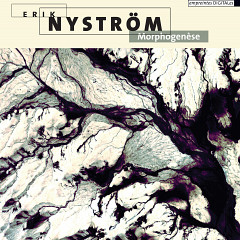
    Morphogenèse, featuring music by Swedish composer Erik Nyström. Permeating all five pieces on this disc is an overt sense of evolution, as though the music was changing shape and manner in real-time as we listen. In Latitudes, everything begins from a simple bell strike, its resonance (which, although not always obviously, remains throughout) leading to a plethora of developments that, parallel to the notion of evolution, also suggest a sense of moving ever closer to something, in the process discerning increasing amounts of surface detail. The rather gorgeous sheen of this piece makes the effect hypnotic, but in works like Far-From-Equilibrium and Catabolisms Nyström’s concern is with sounds altogether more granular and fragmented. Yet these are moulded and compacted into startlingly present episodes where the music, bristling with organic energy, appears to muscle its way beyond the confines of the loudspeakers. Lucent Voids, at 20 minutes the longest work on the disc, makes both the deepest and most long-lasting impression. It could be heard as a synthesis or a summation of the other four works, embracing granular textures, extended pitch resonances, burly inner movement and gradual transitions of forms. But it transcends all of this, Nyström constructing a vast dramatic canvas that begins in the depths, passing through a hectic interplay of pitch and noise, and a number of increasingly vertiginous high points, to a place of genuine grandiosity, enveloping us in layer upon layer of highly variegated seams of material, dissipating into something resembling the crackle of vinyl mixed with an excited Geiger counter drenched by falling rain. Absolutely breathtaking.

    Absolutely breathtaking.
  • 85
  • 86
  • 87
  • 88
  • 89
  • 90
  • 91
  • 92
  • 93