Sauter au contenu principal
electrocd

Blogue

87 résultats
  • 7
  • 8
  • 9
  • 10
  • 11
  • 12
  • 13
  • 14
  • 15
  • Dômes dans Amusio

    «Destillate der Diversität», Stephan Wolf, Amusio, 16 février 2015
    lundi 16 février 2015 Presse

    Um das weite Feld der Elektroakustik wird gerne ein ebensolcher Bogen gemacht. Als viel zu akademisch, anspruchsvoll und anstrengend gilt auch diese Sparte der Neuen Musik — und viel zu selten wird sie für Außenstehende nachvollziehbar gemacht. Obwohl sich das in Québec ansässige Label empreintes DIGITALes zwangsläufig ans Fachpublikum richtet, rechtfertigen seine hochwertigen Veröffentlichungen die vermeintliche Mühe, sie einmal unvoreingenommen als Musik wahrzunehmen, die durchaus auch unterhalten kann und will. Einige herausragende Beispiele aus dem aktuellen Katalog mögen die „Anhörbarkeit“ von elektroakustischer Forschung und des sich davon ableitenden Ausdruck zu untermauern. Fortsetzung folgt.

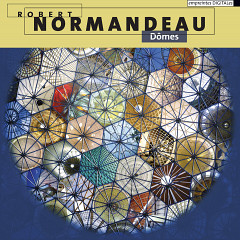
    Mit Dômes legt der in Montreal lebende und lehrende Komponist Robert Normandeau eine Auswahl von Arbeiten aus verschiedenen Schaffensphasen vor, die trotz ihrer voneinander abweichenden Kontexten ein homogenes Hörerlebnis offerieren. Zweckentfremdet editierte Theatermusik (Pluies noires von 2008 und Hamlet-Machine without Actors von 2014) trifft auf akustische Installationskunst (La part des anges, 2011 und Kuppel, 2005) und eine onomatopoetische Suite (Baobabs, 2012).

    Jenem Anteil, der bei sich bei der Destillation von Alkoholika verflüchtigt und somit den Engeln überantwortet wird (La part des anges), widmet sich Robert Normandeau auf Basis altmusikalischer Vokal-Capella-Traditionen und erschafft so eine sinnliche Erfahrung aus intensiver Verflüchtigung und sakraler Kontemplation. Gleichfalls im Zentrum für Kunst und Medientechnologie (ZKM) zu Karlsruhe entstanden und uraufgeführt wurde die sich auf der CD anschließende Klangverdichtung Kuppel, in der unter anderem das Fahrgeräusch der Karlsruher Straßenbahn sowie die Glocken der Stadtkirche am Marktplatz die Funktion tragender Ebenen übernehmen.

    Doch nicht nur bei den Einwohnern der Fächerstadt dürfte sich hier ein Gefühl von Heimat und Vertrautheit einstellen. Ein Gefühl, das sogar als eine Einladung zur Auseinandersetzung mit den genannten — mehr oder weniger vagen — Begrifflichkeiten verstanden werden kann, so die Klangquellen der Alltäglichkeit im Hinblick auf ihre immanenten Meta-Ebenen transzendiert werden.

    Bei Pluies noires handelt es sich um eine portugiesische Theaterinszenierung des Stückes Blasted (dt. Zerbombt) von Sarah Kane, dass die Kriegsnachwehen der menschlichen Seele auf explizite Art nachvollziehbar zu machen versucht. Die als Intermezzi eingesetzte Musik soll laut Regisseurin Brigitte Haentjens den Klang des Regens zu unterschiedlichen Jahreszeiten interpretieren, doch machen Robert Normandeaus finster anmutende Flächensounds nicht zuletzt deutlich, dass Verrohung auf Jahreszeiten keine Rücksicht nimmt.

    Ähnlich schwer, aber keineswegs schwerfällig oder übergewichtig, erscheint Hamlet-Machine without Actors, was jedoch angesichts des Stoffes aus der Feder Heiner Müllerskaum überraschen dürfte. Zunächst auch für eine Haentjens-Inszenierung komponiert, liegt nun eine komplett überarbeitete Version vor, der es in neun Minuten gelingt, die Essenz des berühmten Monologs zu transponieren. In einem anderen musikalischen Bezugsrahmen würden beide Theaterkompositionen als herausragende Stücke des Dark Ambient verstanden werden.

    Wie um der vorherigen Schwere entgegen zu wirken, beschließen Baobabs, in fünf Sätzen abwechslungsreich und pointiert kompilierte Lautmalereien eines Vokalensembles, das Album auf geradezu ansteckend heitere Weise. So entlässt Dômes seine Hörer mit einem stilistischen Ausreißer, der die enorme Bandbreite Normandeaus mehr als andeutet. Unter diesem Gesichtspunkt erweist sich diese Zusammenstellung als ein kluger Zug im Sinne einer breiteren Wahrnehmung dieses Komponisten, für den sich die Auseinandersetzung mit Elektroakustik hier als Mittel zum Zweck auszahlt.

    Unter diesem Gesichtspunkt erweist sich diese Zusammenstellung als ein kluger Zug im Sinne einer breiteren Wahrnehmung dieses Komponisten, für den sich die Auseinandersetzung mit Elektroakustik hier als Mittel zum Zweck auszahlt.

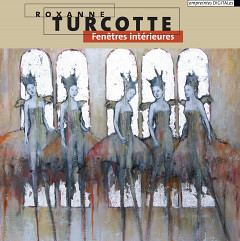
    Fenêtres intérieures dans KindaMuzik

    «Kritiek», Sven Schlijper, KindaMuzik, 12 février 2015
    jeudi 12 février 2015 Presse

    Vanuit Montréal, Canada vertelt Roxanne Turcotte haar verhalen. Beter: laat ze deze voordragen. Deze componiste regisseert niet alleen haar stemacteurs, ze houdt in een mêlee aan instrumentale fragmenten en knipsels van veldopnamen haar musique concrète op een duidelijk anekdotische koers.

    Turcotte’s verhalenbundel kent acht hoofdstukken. Ze gaat steevast uit van uit het leven gegrepen situaties; het alledaagse wordt onderwerp van een akoesmatisch experiment richting een vorm van alchemie in muziek en tekst. Daarin speelt uitvergroting van het minuscule niet zelden de hoofdrol.

    Alsof Turcotte een raam openzet en de geluiden haar komen aanwaaien; zo schijnbaar achteloos komen de zeer complexe en heel tactiele composities voor de dag. Want juist door het triviale dat je vaak over het hoofd ‘hoort’ te componeren en daarmee tegelijk te abstraheren en te concretiseren, ontdoet deze elektro-akoestische muziek zich van elke notie van cliché en zelfs ambientgevoel.

    Het is een zekere mate van fijngevoeligheid, romantiek zelfs, die de acht werken zo dichtbij brengt dat ze op slag geïnternaliseerd zijn. Niet worden, maar zijn. Turcotte lijkt wel te vragen: “Waarom heb je dit niet eerder gehoord? Waarom is het je niet opgevallen?” En daarmee ook: “Luister je eigenlijk wel?” Alsof ze zegt: “Wat klinkt de wereld mooi. Toch?!

    Cinematisch verhalend is Fenêtres intérieures geen academische zware kost of muziek waarvoor je eerst een boekenplank aan secundaire literatuur tot je genomen moet hebben alvorens er enige sjoege van te kunnen beginnen maken. Het is de koppeling van fragiel componeren op het scherpst van de minimalistische snede en directe herkenbaarheid die Turcotte’s werken een toegankelijkheid bieden die uitnodigt tot een nieuw luisteren. Ook als haar stukken niet te horen zijn.

    L’envol dans Freq

    «Music to write science fiction to», Arwen Xaverine, Freq, 9 février 2015
    lundi 9 février 2015 Presse

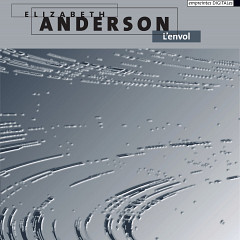
    L’envol is the first solo album release from American-born, Brussels-based composer Elizabeth Anderson. She is a prolific artist and teacher, and when I hear the opening of L’envol, I feel somewhat like I am at the beginning of a lecture on electronic music.

    The sounds are perhaps what you might have expected from the title of the record, (L’envol is French for The Flight), but only if you have spent a lot of time watching science fiction films from the Nineteen Sixties. I know these soundscapes because they furnish my dreams. It is a vernacular that as a reader and writer of science fiction — stories of space and space travel — I know very well. This is not a bad thing, although it does afford me a level of commitment to the narrative of these haunting pieces that I realise that those unfamiliar with the genre and its common narrative might find inaccessible. I would hope that, like me, listeners will be engaged by the ideas presented and then be prepared to take the chance and listen with open minds as well as open ears.

    This work deals with themes that are well-known, not tropes exactly; archetypes perhaps, and reflected in the titles of the different pieces — Les forges de l’invisible (“The Invisible Forges”), Solar Winds, Ether, Protopia/Tersseract — evocative of the kinds of titles to stories that take us into uncharted space in the deepest parts of the universe. I was drawn to this music because of this so it is unsurprising, and possibly quite affirming, to discover that it does exactly what it says on the tin.

    What, inevitably, I find myself coming to believe is that Elizabeth Anderson also has this shared vernacular of the genre, that she is communicating the same ideas and thematic narratives of science fiction writing, the ideas and themes that draw me in to the writing and films of the genre. Because the thing that is most important to say is that, whilst there is nothing here that an aficionado of science fiction won’t recognise, there is nothing of the parody in this work. It is in itself a genuine work of science fiction, just as you might find in the writings of Ursula Le Guin or Isaac Asimov. It deals in the same big themes of vastness and loneliness, of unknown landscapes. It introduces your brain to concepts of scale that are impossible to experience on our small planet, and to concepts, therefore, of our own humbling insignificance.

    I find myself wanting to accompany this piece with an infographic depicting our size relative to the universe (actually, for anyone who found the soundtrack of the film Gravity as irritating as I did, this would make a very good reboot). I did not want to write about this work track by track; the thematic structure of the work is the point and the component parts are narrative in their flow from one place to the next, much as any collection of movements in a symphony for traditional instruments. That this work is made using sampled sounds and synthesised recordings does not take away from its symphonic structure or its ability to engage the listener’s attention. If you are looking for recurrent themes, it is not in motifs of repeated sounds that these appear, but in the return always into the silence between the sounds, which then in turn bring you back to the huge emptiness of space, slightly altered by the journey.

    I feel as though, even if I listen to this every day (and I have been), I will hear something more in there each time and be intrigued. If there is a concern about the hook of this collection, it is that unless the listener has a vested interest in the narratives of space and space travel, they might not bother, just as with genre fiction in more traditional media. I suppose this is the chance one takes making art that is about things that are as yet unknown or potentially unknowable. I like L’envol for its stark galaxyscapes and the enormous quantities of emptiness it affords my ambulations into the realms of those places, although I suspect it is, like deep science fiction writing, not for everyone.

    I like L’envol for its stark galaxyscapes and the enormous quantities of emptiness it affords my ambulations into the realms of those places…

    Pierre Alexandre Tremblay dans KindaMuzik

    «Liverecensies: CTM 15 Un Tune I — Onderzoek naar de lichamelijkheid van geluid», Sven Schlijper, KindaMuzik, 5 février 2015
    jeudi 5 février 2015 Presse

    […] Adembenemend

    Soms schieten woorden te kort. Dan valt het gesprek feitelijk stil. Dan voel je alleen nog maar en neemt de muziek je mee. Je geeft je over. Zoals bij de wereldpremière van nureinwortgenügtnicht van multi-instrumentalist en componist Pierre Alexandre Tremblay. Over twaalf kanalen stuurt hij onder andere vooraf opgenomen partijen uit. Een deel van het surroundgeluid wordt live gevormd. Dit doet Tremblay in intrigerende wisselwerkingen tussen performer en microfoon. Heather Roche jaagt haar basklarinet door vele tonaliteiten en texturen. Daarmee haalt ze vooral qua detaillering en frasering Colin Stetson rechts in, zodat hij op slag lomp lijkt. Adembenemend is ook de vocale serie erupties vol overtuigings- en zeggingskracht die sopraan Peyee Chen brengt.

    In Tremblay’s lange nieuwe stuk zijn flarden te herkennen die al op zijn album La marée staan. Ingebed in dit veelzijdige livenarratief is de muzikale brille rijker en dieper dan tevoren. Dit werk verdient absoluut een plek op het Holland Festival. Het is immers een stuk dat betoont hoe divers een muzikale luisterervaring anno nu kan zijn, ook — of juist — in gecomponeerde muziek. Caleidoscopisch, bedwelmend en zo tastbaar emotioneel dat het lichamelijk wordt. […]

    Caleidoscopisch, bedwelmend en zo tastbaar emotioneel dat het lichamelijk wordt.

    Fenêtres intérieures dans felthat

    «Review», Hubert Heathertoes, felthat, 2 février 2015
    lundi 2 février 2015 Presse

    Conservatoire de musique de Montréal graduate Roxanne Turcotte served a high-quality gourmet dish I haven’t expected from an academician. The usual stance of academically trained artists often resembles a well trained ego but nothing else. Luckily this is not the case.

    First track with voice preapration and voice-over narratives gives a great atmosphere to something that could be well used in some derivative of ambient music but as such is much more interesting and no operating in clichees at all.

    Field recordings, voice and preparations of acoustic instrumentts play the first seats in the cast here. It may sound trivial when you think of it but the ultimate feeling I got apart from the obvious interesting tonalities is the essence of the feminine spirit and mind expressed through this album — the gentility and the sound concept is just so striking and yet not overworked at all.

    Roxanne Turcotte served a high-quality gourmet dish I haven’t expected from an academician.

    Dômes dans EtherREAL

    «Critique», Pierre-Luc Senécal, EtherREAL, 25 janvier 2015
    dimanche 25 janvier 2015 Presse

    La réputation de Robert Normandeau n’est plus à faire dans le monde de l’électroacoustique. Compositeur récompensé à d’innombrables reprises pour ses pièces, il aura fait entendre ses œuvres plus d’une centaine de fois partout à travers le monde, sans compter ses nombreuses collaborations pour la musique de scène.

    Dômes est son plus récent recueil d’œuvres, distribué sous la fameuse étiquette montréalaise empreintes DIGITALes. Les pièces, composées pour dôme de haut-parleurs, un dispositif donnant une impression de tridimensionnalité du son, ont été réduites en stéréo tout en conservant leur caractère immersif. Ainsi, on se sent comme baigné dans un liquide sonore, flottant à la dérive vers un «ailleurs imaginaire».

    En ouverture, on débute avec La part des anges, et on sait que c’est du sérieux. Un boom profond rythme l’évaporation des voix. La musique nous emporte vers les hautes strates de l’atmosphère, comme si nous n’étions plus qu’une vapeur ondulant vers un éden stellaire, et toute notion du temps s’envole, perdue parmi les souffles distillées. À regarder dans le noir, les yeux fermés.

    Pluies noires, c’est de la corporalité et du viscéral. Les multiples couches de saxophone merveilleusement orchestrées sont en lente effervescence, sorte de machine organique qui se délecte de méchanceté. Qu’on ne surprenne que la pièce de théâtre Blasté de Sarah Kane aie servi de source d’inspiration. «Toutes ces pluies ne peuvent que difficilement laver la noirceur de l’âme humaine lorsqu’il est en guerre, spécialement à propos de celle de Bosnie à laquelle la pièce fait implicitement référence.» Une longue respiration de cruauté, celle d’une monstrueuse beauté.

    Hamlet-Machine without Actors (à distinguer de la version «avec les acteurs» sur Puzzles du même compositeur) puise dans la trame sonore composée pour la pièce Hamletmachine, mise en scène par Brigitte Haentjens à Montréal en 2001. Véritable mécanique vivante, les bruits de métaux et de chaîne se mêlent aux sons plus introspectifs, des chants qui semblent observer le monde à travers les rouages d’une machine en marche.

    Pas de doute, ces trois pièces sont des bijoux où se rencontrent beauté, intensité et une sensualité qui flirte avec la lascivité! […]

    […] Dômes comporte des moments fantastiques, un véritable vermeil sonore. À entendre en concert dans un dôme près de chez vous.

    Dômes comporte des moments fantastiques, un véritable vermeil sonore.
  • 7
  • 8
  • 9
  • 10
  • 11
  • 12
  • 13
  • 14
  • 15