Sauter au contenu principal
electrocd

Aussi dans le blogue

21 résultats
  • 1
  • 2
  • 3
  • 4
  • Sondes dans Intro

    «Tonträger: Hörtest», Sascha Karminski, Intro, no 78, 1 octobre 2000
    dimanche 1 octobre 2000 Presse

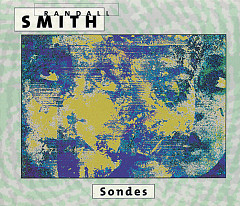
    Smith hat seinen Arbeitsschwerpunkt von Soundtracks zu “gemischten elektroakustischen Kompositionen” verlagert; will heißen: klassische Instrumente (v. a. Streicher und Bläser, aber auch Akkordeon) meet Tapemanipulationen. In weniger illustren Momenten klingt das verdächtig wie das, was György Ligeti und Co. auch ohne Elektronik erschaffen. Im Verlauf der Kompositionen immer häufiger jedoch umspielen sich Originalsounds und Effekte, bis sie kaum noch zu unterscheiden sind und völlig neue Klangwelten erschließen, die assoziativ mit biologischen (Liquid Fragments 1) und geologischen Phänomenen und Vorgängen (Elastic Rebound, Continental Rift) verbunden werden. Wozu ein Sampler, wenn auch so Soundmalereien gelingen — der Film läuft eh im Kopf ab.

    Sondes dans Splendid E-Zine

    «Reviews», George Zahora, Splendid E-Zine, 4 septembre 2000
    lundi 4 septembre 2000 Presse

    I don’t pretend to know a whole lot about electroacoustic music. I’ve picked some stuff up over the last few years, but I still lack the appropriate perspective — I can’t help approaching and assessing electroacoustic compositions on the basis of conventions better suited to rock music. Though many works within the genre have far more to do with mathematics and sculpture than with songwriting, I continue to look for the music.

    When you’re talking about a composition that sounds like loose change falling out of someone’s pocket and onto a multi-tiered metal scaffold, or a song made up of oddly-spaced taps on a series of fine-tuned cabinet doors, it’s easy to understand why pop music fans don’t gravitate to this stuff. Deprived of the recognizable verse/chorus/verse structure they savor, they’re looking for spectacle. That’s why Sondes is a good bet — both for newcomers to electroacoustic composition, and for old hands bored by bland, self-indulgent works.

    Smith writes for a combination of acoustic instruments and found-sound tapes, creating mixed electroacoustic music. He makes use of instruments with distinctive voices — double bass, cello, alto flute and even accordion — and pairs them with truly striking sound effects. From the first seconds of InsideOut, which delivers a veritable “Dolby jolt,” you’ll realize that this is an album for active listeners — and for headphone fans. InsideOut is a fever-dream of sickness, referencing everything from horror-movie stringwork to feverish bodily operations. Elderly melodies are reanimated and forced to clatter across the soundscape, frightened onward by bursts of percussion. Despite a wealth of activity over several movements, the piece ends where it began, its energy nullified like an interrupted dream.

    Less frenetic, Liquid Fragments 1 uses double bass and alto flute to envision music as experienced from inside the human body. It is full of activity, but somehow detached; we recognize the transition from calm to motion, and can almost identify the cause, but we lack the perspective required to understand it.

    Elastic Rebound and Continental Rift are small scale sonic metaphors for grand-scale events, addressing the infinitely slow negotiations of geographic masses in a sped-up, confrontational style. The latter work makes liberal use of cello, including a series of striking classical references at its midpoint.

    The Unmoved Centre is a conversation between sounds. The listener will hear an aural community come together as disparate musical and mechanical sources are woven into a dance of call and response, tiny movements negotiating for position within a greater sonic whole. Headphones, closed eyes and darkness will pay off nicely here.

    Finally, the striking Convergence co-opts the accordion — an instrument, as Smith states in his notes on the piece, “commonly associated with fun, dance, drinking and local cultural events.” Though filled with moments of dissonance, the piece also bubbles with carnival-style musical humor, dispensing fragmented polkas that encourage the listener to dance amid the confusion. Though its focus occasionally descends to music-box mechanical details, Convergence remains fascinating, and sounds like an afternoon spent sharing hallucinogens with Astor Piazzolla.

    Though it has its obtuse moments, most listeners will find Sondes to be a thoroughly vibrant and exciting journey, bubbling over with brain-tickling energy. Smith’s source material is rich in texture and subtlety, and you’ll experience great joy in discovering the finer details in his work.

    Can a pop song enthall you like this? I doubt it.

    … truly striking… thoroughly vibrant and exciting journey…

    Sondes dans Incursion Music Review

    «Review», Richard di Santo, Incursion Music Review, no 009, 13 août 2000
    dimanche 13 août 2000 Presse

    Canadian electroacoustics composer Randall Smith presents six pieces composed from 1995 through 1999. Each of these pieces is teeming with sounds and intensity; thousands of minute sounds flutter through these compositions in complex movements, revealing an intricate soundworld unlike anything I have hard before.

    InsideOut is for me the most intriguing of these works. Using only sounds derived from four instruments of an orchestra (alto flute, violin, E-flat clarinet and double bass), the piece carries a certain urgency and unease about it, and a crisp resonance that is remarkable. In the liner notes, the piece is effectively described as being “a digression through small worlds, islands of experience, each demarking a facet of the whole.”

    Other pieces incorporate the sound sources of live instrumentation: Liquid Fragments 1 uses double bass and alto flute; Continental Rift is a composition for cello and tape; and Convergence is for accordion and tape. There’s also a geological theme that runs through some of these recordings. Elastic Rebound attempts to explore — in electroacoustic terms — the geographical activity of the earth. The title is a reference to a phenomena relating to the tectonic behaviour of an earthquake. Continental Rift, says Smith, is a “metaphorical composition” describing the evolution of continental structures. This is perhaps the piece with the least sense of urgency, considering its theme is evolutionary as opposed to revolutionary; the cello intones in a way that suggests loss or a looking back to things that were. My least favourite of the compositions is Convergence: a chaotic piece for accordion and tapes, characterised by quickly shifting movements where the accordion rides erratically in a strange “carnivalesque” manner. The CD comes packaged with lengthy elucidations by the composer on each of the pieces, describing their compositional histories. Also for each piece, the contexts, themes and impressions are discussed with great interest by Mike Hoolboom.

    Randall Smith is certainly an inventive and innovative artist, experimenting with new electroacoustic techniques and creating surprising results. Each of the compositions on Sondes carries a very unique sound full of complexity and urgency, a hectic soundworld full of transitions and sharp movements.

    … a very unique sound full of complexity and urgency…
  • 1
  • 2
  • 3
  • 4