Sauter au contenu principal
electrocd

Blogue

37 résultats
  • 1
  • 2
  • 3
  • 4
  • 5
  • 6
  • 7
  • L’ivresse de la vitesse, L’ivresse de la vitesse 1, L’ivresse de la vitesse 2, Paul Dolden dans The Wire

    «Soundcheck Review», Phil England, The Wire, no 135, 1 mai 1995
    lundi 1 mai 1995 Presse

    Most people use the recording medium for purely documentary purposes; Paul Dolden’s project is to highlight the way the recording studio can create ‘impossible’ effects and musical events. This CD finds him multitracking up to 400 tracks of expanded orchestral instrumentation to create a kaleidoscopic music of dazzling complexity.

    Dolden’s stunning debut CD worked with the transmuting effect of speed — not speed as an end in itself, but as a gateway into another sonic and textural reality. L’ivresse de la vitesse, by contrast, sounds more conventionally orchestral. Wagnerian vocal passages give way to humour, fragmenration and objection. Aaron Copland and morning-in-America passages move into hyperspeed and cascade into huge, finely detailed washes of sound. Like Conlon Nancarrow or the New Complexity school, Dolden sets different tempos and time signatures against each other. Such a vast amount of musical information demands a new way of listening, the imposition of patterns on apparent chaos.

    Spiritually, Dolden seems to have plumped for being a postmodern rootless soul fascinated with surface. “Seduction threatens all orthodoxies with their collapse as it is a blacK magic for the deviation of all truths” he writes in the sleeve notes. He seems able to incite controversy witn ease. Since his appearance at last year’s LMC festival, idle talk has centered on his “objectionable” personality; one composer has even called for Dolden’s music to be banned for its alleged misogyny.

    This double CD (selling for the price of a single) also contains a number of works for instrumentalist and tape. Dolden magnifies tne tiny sounds made by the instruments and then uses them to surround the soloist along with his usual orchestral apocalypse. Francois Houle (soprano saxophone, clarinet) and Peggy Lee (cello) both worked on developing the parts and put in excellent performances here. Veils, the final 30 minute track, takes a different tack completely with dense, lush, sustained chords — possibly the final word on drone music, with a closing passage which will make your windows death-rattle.

    Dolden’s music is like viewing a landscape from a helicopter, or at Koyaanisqatsi hyper-motion: a postmodern lens through which to view complexity. Do not miss the work of this important “fin de siècle” artist.

    Do not miss the work of this important “fin de siècle” artist.

    Ne blâmez jamais les bédouins dans The New Mexico Sun News

    «Avants In the Garden», Dwight Loop, The New Mexico Sun News, 1 avril 1995
    samedi 1 avril 1995 Presse

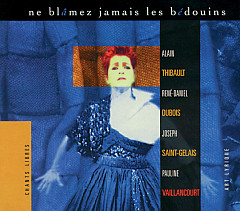
    Another Canadian label, DIFFUSION i MéDIA, is a consistent good bet for the new music seeker looking for an experimental “find.” Their modern opera recording of Ne blâmez jamais les bédouins featuring singer Pauline Vaillancourt, electronic music computer whiz Alain Thibault and a cast of other Phantom of The Opera-types is nothing short of unusually captivating.

    … a consistent good bet for the new music seeker…

    Les méandres du rêve dans Contact!

    «Critique», Denis Dion, Contact!, no 8:2, 1 mars 1995
    mercredi 1 mars 1995 Presse

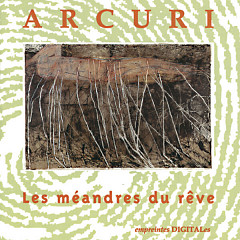
    La maison empreintes DIGITALes nous propose un tout nouveau produit signé Serge Arcuri. Sous le titre Les méandres du rêve le compositeur montréalais nous présente une sélection intéressante regroupant sept titres extrait de son catalogue déjà fort imposant. Le titre de l’album est pour le moins représentatif des sélections présentes. Nous retrouvons un alliage savoureux d’œuvres écrites pour bande ainsi que de l’exploration de l’univers électroacoustique de type mixte. Prélude aux méandres (1985), La porte des sables (1989) pour hautbois (également Cor anglais) percussion MIDI et bande, Murmure (1989), Errances (1992) pour hautbois d’amour, harpe et bande, Lueurs (1987) pour cor percussion et bande, Résurgence (1982) et Chronaxie (1984) pour percussions multiple et bande.

    Il y a chez Arcuri un sens inné de la poésie sonore. Le parcours musical est souvent amorcé de manière délicate et subtile proposant à l’auditeur une écoute riche en découvertes. Nous avons ici (en ce disque) un échantillon important du travail d’un compositeur en pleine possession de ses moyens. L’aventure musicale or, son parcours, n’est jamais abandonné au passage au bénéfice d’une démonstration banale d’une technologie utilisée.

    En d’autres termes… de la musique avant toute chose!!!

    Je ne saurais passé sous silence la complicité des musiciens présents… Lawrence Cherney aux parties de hautbois, hautbois d’amour et de Cor anglais, Trevor Tureski aux percussions et percussion MIDI, Erica Goodman à la harpe ainsi que l’excellent Francis Ouellet à la partie de cor. Nous écoutons ici quatre grands musiciens desquels nous découvrons une forte complicité dans ces alliages d’instruments et de bande. Il y a dans ce type d’écriture une recherche de l’intégration de l’instrument et de l’univers sonore de l’électroacoustique… fort bien comprise par l’ensemble des musiciens. À l’audition il n’y a pas lueur de conflit, lutte ou combat d’un univers vers l’autre mais un respect de la nature instrumentale souhaitant faire ressortir ses qualités propres. Le jumelage est fort bien réussi et il en découle de la sonorité globale un plaisir d’écoute.

    Ce disque s’inscrit dans la politique de production de la maison empreintes DIGITALes ou chaque produit est avant tout affaire de qualité non de quantité. Bravo à toute l’équipe!

    … un compositeur en pleine possession de ses moyens.

    Ne blâmez jamais les bédouins dans Allegro

    «Discos», Allegro, no 12, 1 mars 1995
    mercredi 1 mars 1995 Presse

    Llenar un vacíio en la creatión operistica en Quebec: Esta fue la razón fundamental que llevó a la Soprano Pauline Vaillancourt, el Director Joseph Saint-Gelais, y ai autor Renald Tremblay a combinar su talento y fonmar la compañia de arte línco Canto Libre en 1989. Esta Compañia tiene objaivos lan amplios como interpretar obras operisticas contemporaneas, estructurar la organización de producciones y coproducciones a nivel internacional, organizar representaciones, coloquios, conferencias y exposiciones en conexión con las obras producidas por la compainia. La ópera que presentan en esta grabación, fue escata en 1991 por el compositor canadiense Alain Thibault, para una voz solista, sobre el texto homónimo del escator René Daniel Dubois. En la obra, el narrador. que ha estado esperando por largo tiempo a una persona que ha tallado a la cita, improvisa esta histona acerca de una soprano atada a los neles del fearocanil en el medio del desierto; un monstruo miope que la persigue, un romántico galan que quisiera salvarla pero está atrapado en la connisa de un acantilado, y trenes mditares que se persiguen uno a otro como parte de la Open — ción Goliath y Goliath.

    Transformations, Hildegard Westerkamp dans Electric Shock Treatment (EST)

    «Interview With Hildegard Westerkamp», Brian Duguid, Ios Smolders, Electric Shock Treatment (EST), no 6, 1 mars 1995
    mercredi 1 mars 1995 Presse

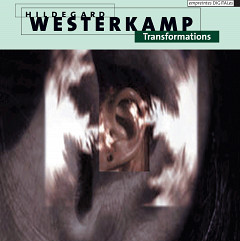
    I first encountered Hildegard Westerkamp’s music on the compilation CD Aerial #2, where her piece Cricket Voice appears. This uses recordings made when on a trip to the so-called “Zone of Silence” in the Mexican desert, most prominently a cricket’s night song. There are also various percussive sounds, created using desert plants such as dried up roots, dried palm leaves, and cactus spines. The cricket recording is played at various speeds, sounding like a cosmic heartbeat in places, and like peculiar birds in others. The piece has tremendous clarity of sound, and is beautiful in a very straightforward manner, but it’s the context, the concern to reflect the spirit of the sources in the music that stands out.

    Hildegard is a prominent member of the World Forum for Acoustic Ecology (see this issue’s Directory), being coordinating editor of its periodical, The Soundscape Newsletter. She grew up in post-war Germany and emigrated to Canada in 1968. She has taught courses in Acoustic Communication at Simon Fraser University in Vancouver. She has composed a number of film soundtracks and has produced and hosted radio programs such as Soundwalking and Musica Nova on Vancouver Co-operative Radio.

    You work with environmental situations. What’s so exciting about working in outdoors situations?

    I work with any environmental situation, outdoor or indoor, urban or wilderness or rural. I work with environmental sounds exclusively. Sometimes I add a live instrument and/or voice. What’s so interesting? The meanings that environmental sounds hold for us. In other words, I am bringing into the concert/radio/gallery situation “instruments” that are familiar to the audience in one way or another, with which the audience has some kind of association or relationship (both personally or shared culturally). These meanings — as well as the actual recording experience that I have while gathering the sounds — play into my compositional process and usually give the pieces life (for me and the audience). I hardly ever use anyone else’s recordings, because I am not interested in recordings per se, but in the experience while recording.

    Am I correct in saying that sound ecology is about making people aware of their auditive environment? How do you do that?

    Yes, listening, “ear cleaning” is usually the first. Listening to everything. So that listeners begin to become conscious of the soundscape’s role in their lives, begin to discriminate between what is acceptable and what is unbearable, what is exciting, what is boring, what is low frequency, what is high frequency, what is quiet, what is noisy, what is relaxing, what is unsettling, what is acoustic, what is “schizophonic” (i.e. electroacoustic). This usually means that people will become aware of the acoustic imbalances in urban environments and can begin to rectify that, design their life in a more balanced fashion.

    Asking people to make recordings is another step. As soon as we compare what a microphone “hears” to what our ears hear we inevitably sharpen our hearing sense.

    Is there an aspect of protest in your sound projects? Against environmental pollution, for example?

    Yes. His Master’s Voice is an angry satirical protest against the male macho voice that one hears so relentlessly here in the media. Cool Drool is a satire about Muzak. Other pieces may not necessarily be outright protest, but they will always comment on existing social and cultural situations.

    My newest piece, Beneath The Forest Floor, takes listeners into the coastal forest of British Columbia, where one can still find a few ancient tree-stands. It also hopes to take the listener further into the inner depths of such a forest experience, into the forest in us.

    There’s much technology involved in sound ecology, and also, I guess, in your music. Exactly how important is the technological aspect?

    Of course, I need audio equipment for my work. Good quality equipment is absolutely necessary to be at all effective in what I want to say with my compositions. I also need good studio equipment. Much as I hate this dependence on technology (I do! Because it tends to have a life of its own. It can break down. It is expensive. It is always changing) I do like the direct aural interaction in the studio. Musical/acoustic decision making is completely aural and has a strong improvisational element to it. And this process appeals to me very much.

    When your music is released on LP/CD/cassette you bring outdoor sounds into living room situations. I guess you give that transition a lot of thought. What are your considerations? What difficulties do you meet?

    Once my pieces are on cassette or CD they take on a new life in the world. They become a new listening environment. They will have to put up with bad playback equipment and noisy living rooms, car radios, or distracted ears. I cannot control that situation and do not want to. I can try to make sure that my pieces somehow reach ears even through tiny speakers. I find it very important that my pieces are able to interact with any environment in which they happen to be played. A forest piece in an apartment by a freeway… well, can it draw the listener into the forest?

    Do you prefer the outdoor environmental performances?

    I have no preferences in that respect. They are two very different things. Outdoor performances are more nerve wracking usually if they involve equipment and I like to avoid them for that reason. I do like outdoor performances that do not involve electroaoustic technology. The Harbour Symphony that I was commissioned to compose for the Canada Pavilion here in Vancouver for EXPO ‘86 was a crazy piece with over 100 boat horns playing in the harbour of Vancouver. It was an exciting social event but as a composition in its own right really does not quite make it. The Globe and Mail was right when it commented that the piece sounded like “a bunch of happy elephants in a traffic jam”.

    Gayle Young mentioned that as a woman, she has learned to work with her music in between ten other activities (like doing the dishes, feeding the children). What is your experience?

    After my daughter was born, I became very aware of my time limitations. I realised that I had very little time to devote to myself or my work and learnt to take advantage of the little bit that I had. That’s when I realised I was a composer and became more serious about my compositional work. But, as opposed to some of my women composer colleagues, I was never good at composing between ten other activities. I had to make sure to have longer stretches of time in which I could close my studio door and just work. This was possible because my husband and I tried as much as possible to share the responsibilities of child-care evenly.

    Do you think that you focus attention on other aspects of life, musical issues, environment, than men do? And does it show?

    I find this very hard to answer. Yes, I do focus on other aspects of life beyond composing, for example, on environmental issues, cultural issues, on children and education, teenage issues as my daughter is a teenager now, on women’s issues, on my garden, my house, etcetera. But whether I do it more than men do I really do not know. I know a lot of women and men who have their fingers in many different activities and aspects of life, especially here in North America, where it is a way of life to do more than one thing.

    Why do you think the number of (known!) women working with electronic music is so much smaller than that of men? There are all kinds of (male chauvinist) ideas that immediately come up (e.g. women fear technology, women don’t care about worldly matters, keep their thoughts closer to home), and a few examples that I have experienced in my environment: women start a career but break it off when they long for a child and become pregnant.

    Again, this is hard to answer. In your question you have already suggested some of the possible reasons. I can only answer for myself. I like technology because it allows me to work aurally in the studio, to record the soundscape, etcetera. I don’t like it because in order to do my type of composing I have to spend too many hours in very inhuman, airless, dark studio environments, unhealthy places. This is enough of an issue for me to keep me from doing a lot of fancy stuff with technology.

    I am particularly sensitive to the conditions of my work environment (and have become more so as I grow older) and perhaps, as a woman, have been allowed to acknowledge that sensitivity. Men have been taught to keep a “stiff upper lip” and to bear hardship. Women have not. So, I can only speculate — along with articulating my own experience — that because it itself is constructed in an alienating way but because the environments in which it exists are usually inhuman, inorganic and the furthest away from natural environments.

    “If you’d like to hear her music, Hildegard has a series of five cassettes available, including tape pieces using urban sounds and vocal fragments; collages of spoken word, poetry, environmental sound and the music of other performers; and a document of the Harbour Symphony discussed above. Her music can also be found on the What Next and empreintes DIGITALes labels.”

    Listening to everything. So that listeners begin to become conscious of the soundscape’s role in their lives…

    L’ivresse de la vitesse, L’ivresse de la vitesse 1, L’ivresse de la vitesse 2, Paul Dolden dans Electric Shock Treatment (EST)

    «Review», Brian Duguid, Electric Shock Treatment (EST), no 6, 1 mars 1995
    mercredi 1 mars 1995 Presse

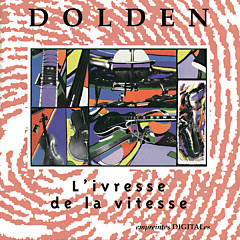
    The title of Paul Dolden’s first CD, The Threshold of Deafening Silence says a lot about the method and aims of this Canadian electroacoustic composer. As does the title of this new release (it translates as “Intoxication by Speed.” All Dolden’s pieces use mainly acoustic instruments, with in several cases several hundred separate instrumental parts painstakingly multitracked and mixed. The result is music of overpowering density, great contrast and frequently startling and fascinating texture. Several of the cornpositions are for thesed taped instruments only. Others use the impenetrable tapes as backing for solo instrumentalists. For example, Peggy Lee’s cello on Physics of Seduction. Invocation #3 highlights extremes of romanticism and potency, throwing the tape scrum into sharp relief. Dolden’s aim is to bring the listener to a point where the complexity and intensity of the music prevents any orthodox listening response, resulting in a transcendent sensual experience. The admirable CD booklet includes plerity of provocative and thoughtful notes from the composer, but even without the points of entry that it provides, I could hardly fail to be seduced by this astounding album. For anyone who wans to hear new music that doesn’t lack in passion, that addresses the information age in an apt way, that enlists noise, complexity and beauty in its qufft for excess, this is it. There are few other composers whose music even seeks out such awe-inspiring power (Glenn Branca, possibly, although Xenakis also comes to mind), and few other modern composers who can be so effortlessly assured of a place in history.

    … few other modern composers who can be so effortlessly assured of a place in history.
  • 1
  • 2
  • 3
  • 4
  • 5
  • 6
  • 7