Sauter au contenu principal
electrocd

Blogue

172 résultats
  • 1
  • 2
  • 3
  • 4
  • 5
  • 6
  • 7
  • 8
  • 9
  • Isostasie, Natasha Barrett dans Sonoloco Record Reviews

    «Review», Ingvar Loco Nordin, Sonoloco Record Reviews, 25 octobre 2002
    vendredi 25 octobre 2002 Presse

    Natasha Barrett (1972) has studied with some of my personal all-time favorites in the dominion of electroacoustics and sound art; Jonty Harrison and Denis Smalley. She has worked at BEAST (Birmingham ElectroAcoustic Sound Theatre), which had a great impact on her aesthetics. A grant from The Research Council of Norway brought her across the North Sea to her current base in Oslo, Norway, where she teaches and composes.

    She is fully at ease with works for instruments and live electronics, sound installations, dance, theatre and animation projects, but her heart and soul dwell in the acousmatic tape composition.

    Track 1 – Three Fictions (Northern Mix) – is, as the title indicates, a revision of a work, revised in Barrett’s own studio. Each of the three sections glimpses a sight / sound / sensation. Each part also carries a short, haiku-like text.

    A soft tuning in, fading in, to the fire of brush – or, as the poem suggests; the mind – pries open a meadow of elves’ bells and quirky birds of electricity, but deep murmurs of overgrown layers of clay reveal some geological unrest… until a myriad of grains fill the air to polish your face like a battalion of blast-lampas… Maybe the ringing of little bells disclose a silently treading group of goblins through the grass… but nothing is threatening…

    Strong vibrations, frictional grindings, bubbling simmerings, shimmerings – a sudden laughter out of unreality, swallowed by silence like matter sucked into a black hole… rolling, shifting motions; deep murmurs onto which fragments of audio are sprayed… A woman’s vocal expressions rise softly, sparsely, like rare flowers in the forest, and a reminiscence of midday cloister bells of southern France glide by like a summer fragrance… Towards the conclusion the voice utters fully graspable sentences, evidently out of a poem, and the intensity of the rushing sounds increase.

    A downward glissando, like a distant dive bomber at the end of WWII, and some inconspicuous closeness populated with screws and bolts of the age of industrial paraphernalia… caressed by solitary gamelan gongs along the curvature of the planet, the horizon shivering with bent light through the gravitational field, upheld by the virtual particles of quantum mechanics… and the World Cat meows and purrs, extremely closely miked behind interstellar clouds of Creation!

    Natasha Barrett has inserted shorter interludes into the progression of works marching on like crouched shadows on a lithograph by Rune Lindblad through the sonic landscape on this CD. She calls these insertions Displaced:Replaced, and there are three of them: Fog, light windWet and gustyGathering wind. As a further explanation she reveals that these brief works stem from a sound and visual installation that she set up with photographer Trym Ivar Bergsmo, who is also responsible for the CD cover and the photo of Natasha Barrett that I submitted with this review. The installation was designed to capture realtime meteorological circumstances and their effect on nature; hence the titles, which simply describe those circumstances.

    Evidently, the move to Norway, but also an inherent affinity for, or intuitive understanding of, the interplay of human and natural forces, spirit and matter, has a decisive effect on the composer’s work. She has roots in the soil and the clay and the rock, and a soaring mind among the stars. She rides a slingshot through curved space!

    Fog, Light Wind has a prickly notion hopping or sort of vibrating across the wet rocks of the shore, as an imagined sound of mist paints grayish colors across your ears… and I do believe I can sense Moomin Papa’s boat adrift between hidden islands in a combination of homeliness and bohemia – an impression you’d normally get in the October of the Finnish archipelago…

    Red Snow is a spiritual, musical, account of Barrett’s impressions on moving to the land of Norway from Great Britain in boreal times. She says:

    I moved to Norway in the winter. Leaving behind everything I knew, I felt increasingly aware of the environment: the variety of snow spiraling in the wind; intricate details of vegetation enhanced by crystal formations; the soft sun and bright landscape; footprints suggesting their own scenario… and the potential color lying dormant.

    A moment – the sensual feeling of a moment – flashes by, then recedes… only to return with its catch of time residue, which then displays on the inside of your eyelids as the moment widens to encompass the holy NOW of FOREVER, the mighty HERE of all directions.

    The spatiality of Red Snow is amazing, sweeping past and by, back and forth, hither and thither, up, down, front, back – and gathering a rare force of timbral colors; tempting, persuasive, instigating a let-go of every-day paraphernalia, to enter a shaman’s spiritual aloofness, as layer upon layer of existence are superimposed in an ever-changing kaleidoscope of sound dreams upon dark skies…

    The beauty of this forceful music is grand; stretched bells, elongated through space-time, focuses the attention on minuscule motions-emotions, which in this spinning-top behavior are subject to intense study, their smallest properties taking on unknown, otherworldly appearances…

    The music changes character, winds down into a slow breath of metallic specs riding murmuring infras in a thoughtful, spiraling circumspection, the open, saliva-running jaws of Bardo fantasies nearby – and concrete soundscapes open their little shutters onto peaceful still lives of crows and farmhands deep inside the music, and in the final shrill moments the work winds down into a winding bead of brilliant sonic pearls, rattling in shimmering reflections down the line.

    In earphones this piece is a shattering, mind-blowing ride. Over heavy loudspeakers it moves your mind sky-high and your furniture around the room!

    Wet and Gusty, the second brief meteorological sonic insertion, sounds like its title; like gusts of wind grabbing your coat or the makeshift sails of the raft of a childhood adventurer inside your forlorn memories – and there is a definite presence of some fluid that might well be water, in many sonic nuances; streaming, gushing – or just condensing on your window…

    Viva la Selva! comes, says Barrett, in four continuous sections: Morning introduction (claiming territory), Midday heat (mad insects, mellow birds and lazy day dreams), Dancing at night (a frenzied bizarre), Dawn and rain (long live the forest!). This is the longest piece on the CD. It opens in a cicadish panning, in a subatomic jitter, elongated into a spacious bird expanse, meditative, pure… shining, rippling around its axes. Barrett fits well into the respected role as a true artisan of the audios in this extended work, which she displays in transparent visions, suspended like spider webs in the forest; that secretive, protecting forest into which you can run as civilization becomes too hostile for you; Natasha Barrett’s spidery, dewy sound webs sticking to your forehead amongst the spruce trees, the tiny kinglets squeaking up around the trunks, small balls of feathery life bopping inside the branchery. Almost human vocal sounds bring forth ideas of goblins and fleshy, meaty creatures rising like mushrooms out of the forest floor, raising their heads with those curious eyes above the fern…

    Some sections are so deeply pastoral that they bring me into a forgotten orchard behind an old castle ruin on an island in Lake Båven in Sweden, which I came upon once when canoeing by myself across misty waters. Giant bumble bees, the size of sheep, murmur around you in this music, and the residue of evil intentions flutter around you in swarms of half-uttered morphemes… acrid, bitter…

    The conclusion is even more mystic, like precipitation on the fern of a forest meadow, where the force fields of good spirits fondle the moment…

    The third meteorological insertion is Gathering Wind. The initial sweeping, circling, spiraling gust is chilly, having you wrap your coat tighter around your anatomy, hat in face, bending towards the might that bears down on you… Like in the earlier cases, Barrett sketches these brief moments from out in the open with expertise and an uncanny feel for the character of each sound.

    The Utility of Space is, says the composer, an exploration of spatial musical structure. This is also, like Viva la Selva! A rather long work, more than 13 minutes. It is, however, very different from that work, introducing itself in crumply, prickly, dry crackles and an absentminded, inward female voice, under the desolate drone of a distant airplane on high, far above the dark clouds, gleaming up there in the moonlight like a silvery fish across the reefs… The voice gets cut up and multiplied, sometimes lifting off the surface of the planet in clouds of sound dust… I get the impression of a chaotic, lonely mind, traveling the existence with big eyes and empty hands, timorous and bashful like an outcast fairy, like a bleak butterfly with wounded wings, dragging herself across these barren lands, searching for her death amongst the rocks and ravines of the pure arbitrariness of geology – and can anything be lonelier…

    The sensation of a kind of Bardo walk increases along the duration of the piece, drifting over in a dreamscape, into the interior of a dream that blows through the inner expanses of a life not asked for but graciously given and humbly received…

    Industrial Revelations is the concluding work on this precious CD of exemplary sound art; an art so subtle, so… compassionate and emphatic, towards all that has lived and will live, and towards the elusive NOW that is so infinitely short that it can only be described as the hypothetical interface of past and future, stretching and bending in the uncertainty of quantum mechanics… leaving us helpless… and the final words on this last piece, uttered by Natasha Barrett, go: “… the landscape will sing with machines…”. A bubbling, forceful but simmering mud flow sound overwhelms the listener, and inside the mighty, brown wall of sound sledge hammers and heavy machinery can be distinguished… as dirty brick walls rise out of the poisoned planet like sores of sorrow out of the mourner… and a flickering light of rare innocence, forlorn in this desolate place, is put out by dark sounds that well in from the karma of those that didn’t have the power to give up power…

    She has roots in the soil and the clay and the rock, and a soaring mind among the stars. She rides a slingshot through curved space!

    The Freest of Radicals, Infoslut dans Exclaim!

    «Review», I Khider, Exclaim!, 17 octobre 2002
    jeudi 17 octobre 2002 Presse

    A double-CD release of avant sounds, featuring an overwhelming 36 tracks. A buffet of styles is offered, including noise, musique concrète, click-dub, instrumental free-improv, electroacoustic sound engineering and ambient, among others. Some of the more striking tracks are Jon Vaughn’s Bouncing Ball (1 of 2) + Gravel Road, coupling static noise with menacing rhythmic overtones, and Tomas Jirku’s I Think I’m In Love, a nice minimalist dub piece. The one flare track is definitely Infoslut’s He Dreamt She Was An Atom, She Dreamt He Was Enola Gay, a radiant full-colour painting set amidst clever etchings. Opening up with some screaming distortion static, Infoslut lays in some drilling industrial strength percussion and epic synthesiser sweeps that instil a powerfully dramatic mood. All these tracks are very good explorations in sound texture and rhythmic pieces.

    All these tracks are very good explorations in sound texture and rhythmic pieces.

    Parr(A)cousmatique dans Voir

    «Cordes sur disques», Réjean Beaucage, Voir, 3 octobre 2002
    jeudi 3 octobre 2002 Presse

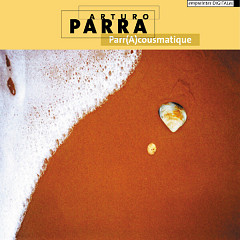
    Le guitariste Arturo Parra a lancé il y a déjà quelque temps le disque Parr(A)cousmatique (Empreintes Digitales) où il se livre à un exercice inusité qui consiste à composer une partie de guitare sur des musiques pour bandes pouvant être écoutées de façon indépendante. Les bandes sont de Stéphane Roy, Mauricio Bejarano, Francis Dhomont, Gilles Gobeil et Robert Normandeau. On a ici le meilleur de ce que peut offrir la musique mixte: une partie électroacoustique réalisée par quelques-uns des meilleurs compositeurs du genre et une partie instrumentale composée par un virtuose qui connaît toutes les possibilités de son instrument. Du grand art.

    Du grand art.

    Parr(A)cousmatique dans The WholeNote

    «Review», Darren Copeland, The WholeNote, no 8:2, 1 octobre 2002
    mardi 1 octobre 2002 Presse

    There is a recent trend in electroacoustic music where instrumentalists with improvisational or compositional skills are collaborating with studio-based electroacoustic composers in the creation of works. Lori Freedman, Randy Raine-Reusch, and Abbie Conant are a few of names that come to mind. Another example is Colombian-Canadian guitarist Arturo Parra who collaborates on this recording with a choice group of Montréal acousmatic composers — Francis Dhomont, Stéphane Roy, Gilles Gobeil, Robert Normandeau, and from Colombia, Mauricio Bejarano.

    The most successful of these collaborations in my opinion are those with Dhomont, Normandeau and Gobeil. The intense energy of Parra’s playing is well supported by those artists’ sensitive control of tension and release. They also work because the guitar and the studio parts find frequent points of intersection and dialogue. The Roy piece felt to me that the studio component was on a different plane than the guitar, although to his credit, I found the sounds Roy created to be the most original.

    Cooperative efforts such as the one lead here by Parra are long overdue — the synthesis of the two encroaches on old habits and gives acousmatic music a new zest. It is nice to hear a melodic line weaving in and out of voluminous washes and thick stabs, for instance, or hearing the acousmatic component hold the main pitch interest while the guitar screeches and grinds around it. In short, a bold spark on my radar screen. I look forward to similar explorations in the years ahead instigated by Parra and others.

    The intense energy of Parra’s playing is well supported by those artists’ sensitive control of tension and release.

    Robert Normandeau dans Le Devoir

    «Un grand interprète des haut-parleurs», François Tousignant, Le Devoir, 16 septembre 2002
    lundi 16 septembre 2002 Presse

    La soirée est chargée: plus de trois heures de musique, de quoi assouvir le plus vorace appétit. Auparavant, une courte rencontre avec le compositeur à l’honneur en ce samedi, Robert Normandeau, membre fondateur de cette manifestation Rien à voir avec Gilles Gobeil et Jean-François Denis. C’est la douzième édition de cette sorte de festival quasi bisannuel de l’acousmatique et ce dernier concert est entouré d’une aura spéciale.

    Robert Normandeau y tient le haut du pavé, comme compositeur et comme interprète. «Oui, dans ce genre de métier, nous sommes vraiment des interprètes; la diffusion — certains parlent de projection, en analogie avec le cinéma — est primordiale car, pour notre forme de musique, rien n’est plus essentiel que la manière dont on met le son en espace.» Le concert s’annonce donc bien puisque, en plus, on y entendra Chorus, une œuvre pour laquelle Normandeau a remporté le premier prix au premier Concours international de musique sacrée de Fribourg. Robert Normandeau fait de la musique sacrée?

    «Absolument et je vous prie de ne pas confondre avec musique religieuse», lance-t-il aussi amicalement que Messiaen avait l’art d’aborder ce sujet. «Mon œuvre se base sur le son d’une cloche, représentant le christianisme, la shofa [une sorte de gros hautbois], qui est un instrument rituel judaïque, et l’appel des muezzins, pour l’islamisme. Il ne s’agit donc pas de parler de religion, davantage de spiritualité au sens moderne et dans une perspective individuelle. J’aimerais croire que cette musique amène à une réflexion.» On en jugera plus avant, après le concert.

    Formidable interprète

    Entré dans la salle, Normandeau présente d’abord des pièces d’autres compositeurs qui le passionnent — et nombre d’entre elles sont des premières ici.

    C’est la formule consacrée de cette série de concerts. Un premier constat s’impose: Normandeau est un formidable interprète. Plutôt que de jouer de l’à-plat des haut-parleurs devant nous pour ensuite faire «tourner» le son dans le volume de la salle, il crée presque systématiquement — c’est son style — un axe oblique qui va du côté jardin au fond de la salle qui s’oppose au côté cour. Ainsi, nous nous trouvons au centre même de l’espace sonore, dont l’entièreté est intimement ressentie. On suit alors avec un émerveillement renouvelé les pérégrinations spatiales de la musique.

    On apprivoise The Unmoved Center (Randall Smith) avec joie. Surtout, on découvre cette musique de pionnier qu’est l’œuvre de Dockstader — datant de 1961 — qui s’impose comme une forte réponse au Poème Électronique de Varèse, possédant la même aspiration à l’énergie de la nouveauté.

    L’Athanor, de Marc Favre, sonne plus académique; ce qui stupéfie ici, c’est la mise en sonorisation qu’en fait Normandeau, attentif à tous les détails. Puis arrive le chef-d’œuvre et l’interprétation de génie, l’un semblant fructifier l’autre et vice-versa en ce contexte: pièce la plus «longue», ce fut celle qui, imagination incroyable, séduisante et passionnée imposant l’attention fervente, parut la plus brève. Sur un rire d’enfant, de petits riens de bruits de pierres, on ne pressent rien: Normandeau nous fait pénétrer de plain-pied dans un univers magique qu’on tient absolument à retrouver ultérieurement, tant la découverte fut forte.

    Un autre regard

    Pour ses propres œuvres, un autre regard est nécessaire. Erinyes, issue d’une musique de scène écrite pour l’Électre de Sophocle, nous fait entrer dans le monde de l’horreur et de la souffrance. Le cri humain de douleur psychologique ou de révolte fort discernable, qu’il soit féminin ou masculin, se confronte à un monde violent de heurts. Le paratexte est important: la pièce fut créée à Belfast et les raccourcis artistiques du grand créateur glacent le sang par leur efficacité.

    Chorus s’avère de la même veine. Trois éléments semblent vouloir se confondre. Cet appel à l’œcuménisme vire rapidement au drame, tout en étant entraîné dans un maelström qui amalgame et fait se choquer les idées de bases, à l’image même de la réalité. La virtuosité de l’écriture et de l’interprétation laisse pantois! On attend la création de Strin(G/D)berg avec impatience.

    Pour déchanter amèrement. Sur un ostinato de quinte à vide, Normandeau joue du filtre harmonique comme un débutant s’amuse avec cet élément de la quincaillerie. Assurément, ces sons durent être efficaces lors des représentations de Mademoiselle Julie. La pseudo-œuvre tirée de ce travail théâtral, à l’opposé des deux œuvres entendues précédemment, montre un net recul de la pensée et de la curiosité technique dont pâtit l’art. En plus, la diffusion est d’un ordinaire consternant et l’imagination montre sa pauvreté dès que les modèles (le Stockhausen de Stimmung, Unsichtbarer Chöre ou Oktophonie, les passions d’Ian Moody et certaines pages «planantes» de Tavener ou harmoniquement réductrices d’Adams ou de Glass) imposent leur nette supériorité. Tous les créateurs ont leur moment d’égarement et succombent une fois à la facilité. Espérons que c’est là la situation, qu’on souhaite très passagère.

    Auparavant, il y eut un concert consacré aux jeunes compositeurs. Deux noms ressortent: Félix Boisvert et Martin Messier. Plus que de belles promesses, déjà une maîtrise assedz originale de ce qu’il y a à dire et comment le dire. Le reste est en général scolaire et sans grand intérêt, sauf qu’une constatation se doit d’être respectueusement faite, qui s’adresse à tous: le haut niveau de qualité que montrent tous ces jeunes à rendre adroitement vivante dans l’espace la musique parfois gauche qu’ils tentent d’inventer.

    Normandeau est un formidable interprète.

    Robert Normandeau dans La Presse

    «Rien à voir, tout à entendre!», Guy Marceau, La Presse, 14 septembre 2002
    samedi 14 septembre 2002 Presse

    Aujourd’hui à l’Espace GO, la soirée sera consacrée aux œuvres de Robert Normandeau, compositeur et cofondateur de l’événement Rien à voir, ce minifestival de musique électroacoustique qui se termine demain. Dans la salle: les spectateurs; sur la scène: un orchestre de haut-parleurs. S’il n’y a rien à voir, il y a tout à entendre. Et pour imposer le genre en musique électroacoustique, tout est encore à faire.

    «Le problème avec la musique électroacoustique, lance Robert Normandeau, c’est que les médias en musique classique font peu de couverture parce qu’ils n’y comprennent rien! Mais aujourd’hui, avec toutes les mouvances électroniques plus populaires, il y a un peu plus de journalistes qui s’intéressent à la scène électro.»

    Tout ça est dit sans hargne particulière, mais plutôt comme une affirmation ou un constat. Depuis les premières explorations musicales électroniques, il y a plus d’un demi-siècle, on ne peut pas dire que le genre soit encore aujourd’hui très populaire, ce qui n’a pas empêché les créateurs d’ici et d’ailleurs de poursuivre leurs démarches artistiques en marge des grands courants «populaires», au même titre que les cinéastes, les peintres ou les écrivains.

    Robert Normandeau est un bel exemple de pionnier en la matière. En 1992, il décrochait le premier doctorat en composition électroacoustique de l’Université de Montréal (où il enseigne depuis 1999). Son sujet de thèse: le cinéma pour l’oreille. Une métaphore qui est devenue la base conceptuelle de Rien à voir, festival de musique électroacoustique produit par Réseaux, une société de concerts qu’il a fondée avec deux autres compositeurs, Gilles Gobeil et Jean-François Denis.

    «Pour l’auditeur novice en électro qui ne sait pas trop à quoi s’attendre, le cinéma pour l’oreille est encore la meilleure dénomination. Et l’analogie ne tient pas tant au cinéma commercial et narratif qu’au cinéma d’animation, par exemple. Parce que ce sont des arts enregistrés et non des arts de performance. Le cinéaste d’animation est très proche du compositeur d’électroacoustique; peu importe la technique utilisée, c’est lui qui fabrique ce qu’il va filmer ensuite, image par image, son par son, etc.»

    «L’artiste est aussi l’artisan. C’est moi qui «bidouille» mes sons; ce n’est pas do-ré-mi-fa-sol et, en ce sens, on est aussi très proche du sculpteur ou du peintre. L’objet qui sort de mon studio, c’est la musique dans son ensemble; je ne peux pas la transmettre à quelqu’un d’autre comme on le fait avec une partition; le peintre ne donne pas lui non plus le mode d’emploi avec son tableau. Or, pour l’auditeur qui s’assoit dans la salle de concert, c’est tout l’univers sonore qui lui est donné à entendre, et son imaginaire peut alors s’y projeter de façon beaucoup plus forte et développée que lorsqu’une image lui est présentée.»

    Robert explique que l’électroacoustique possède son langage propre et que l’auditeur doit oublier toute référence à un genre musical existant. L’enjeu n’est donc pas tant de comprendre la musique électroacoustique que de se laisser impressionner par les mille et une sonorité de ces paysages sonores, fruits des savants échantillonnages.

    La soirée «carte blanche» consacrée à Robert Normandeau réserve donc plusieurs surprises aux auditeurs curieux. À 18h, place à la musique de cinq jeunes compositeurs et, à 20h, Robert Normandeau a choisi des œuvres de Randall Smith, Tod Dockstader (une pièce de 1961!), Marc Favre, Maurizio Martusciello et trois de ses propres œuvres dont la création de Chorus, une pièce qui a récemment remporté le premier prix au Concours international de musiques sacrées de Fribourg (Suisse) consacré cette année à l’électroacoustique.

    «Les trois pièces que je présente sont nées du travail que j’ai fait au théâtre notamment, et surtout avec la metteure en scène Brigitte Haentjens. Par exemple, Chorus vient d’une musique que j’ai composée pour la pièce Antigone (Sophocle) présentée à Québec cette année. Chorus utilise les symboles sonores de trois religions monothéistes: la cloche d’église (christianisme), le shofar (judaïsme) et l’appel à la prière (islamisme).» D’ailleurs, Chorus sera aussi présentée demain à 16h en clôture de Rien à voir avec les deux autres œuvres lauréates du concours de Fribourg. Et comme Rien à voir débutait le 11 septembre, le concert intitulé Tolérance se fera au bénéfice d’Amnistie internationale.

  • 1
  • 2
  • 3
  • 4
  • 5
  • 6
  • 7
  • 8
  • 9