Sauter au contenu principal
electrocd

Blogue

268 résultats
  • 23
  • 24
  • 25
  • 26
  • 27
  • 28
  • 29
  • 30
  • 31
  • Jalons dans Blow Up

    «Recensione», Massimo Padalino, Blow Up, no 62-63, 1 juillet 2003
    mardi 1 juillet 2003 Presse

    Jalons antologizza un quindicennio abbondante (1985-2001) di lavoro dello sperimentatore elettronico, vive fra la Francia e il Québec, Francis Dhomont. Delizioso davvero. Anticipa colla sua musica, seppure in maniera mille volte più creativa, la “psicoacustica” del passato decennio di un Tetsu Inoue: eliche di suoni che sibilano, attorcigliano, cavalcano maree silenti, naufragano nel vuoto più desolato per magari poi sfrigolare via frizzanti, scintillanti, verso pareti d’elettronica estesa. Meraviglioso, ricco nel dettaglio sonico, spruzzato e macchiato di gocce musicali spesso sfuggevoli. Ma nondimeno incantevoli. (8/10)

    8

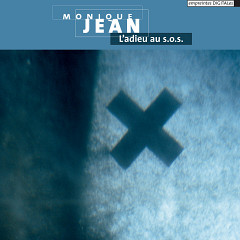
    L’adieu au s.o.s. dans Blow Up

    «Recensione», Massimo Padalino, Blow Up, no 62-63, 1 juillet 2003
    mardi 1 juillet 2003 Presse

    Subisce la morfologia di un classico radio work questo debut cd della performer Monique Jean. L’adieu au s.o.s., scomposto in 6 parti, è in realtà un continuum sonoro di voci trovate-recitate, flauto basso e piccolo, tempeste d’elettronica sahariana ed elucubrazioni stratificate (in un impasto risolutivo dei precedenti elementi) sulle “figure del tempo”. L’eleganza non è mai formale ed il gesto “musicale” tende sempre ad accompagnare l’esibizione vocale (laddove presente) tratteggiandone “drammaticamente” l’impatto. In tal senso, pezzi come 13’13 pour voix défigurées stanno idealmente fra L’Apocalypse de Jean (Pierre Henry; ’68) e la Rivelazione di Giovanni (Ermanno Cavazzoni, Lucia Ronchetta; ’98), fra catarsi e dolore.

    L’adieu au s.o.s. dans The WholeNote

    «Review», Paul Steenhuisen, The WholeNote, no 8:10, 1 juillet 2003
    mardi 1 juillet 2003 Presse

    In a related vein, composer Monique Jean’s L’adieu au s.o.s. (A farewell to S.O.S) explores a similar technical world, and a contrasting expressive voice. The difference between the two composers is that while both are capably occupied with frenetic and colourful textures, Jean is more likely than Dhomont to extend further into quiet, into a concentrated, multi-faceted stasis. Francis Dhomont’s materials tend to be clipped in a quick, bright inhalation at the end of a phrase, while Jean allows her materials to settle, to breathe a touch longer. In the accompanying liner notes, Jean herself outlines aspects of this difference in writing that in Danse de l’enfant esseulée, the form “develops around the idea of the stoppage of time, or more precisely, its suspension… that of a momentary pause of sound, as much filled with tension as are points of suspension, inconclusive.” While her music explores similar sonic terrain as other acousmatic composers, Jean’s unhurried approach through her chosen sourdscape and greater than usual comfort level with softer dynamic levels are an integral part of her individual voice. While her colleagues may have equal or superior technical skills in the electroacoustic music studio, her attention to the subtleties separates her work from the crowd.

    … her attention to the subtleties separates her work from the crowd.

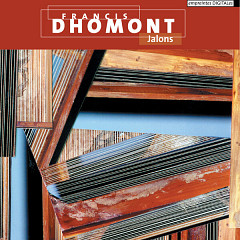
    Jalons dans The WholeNote

    «Review», Paul Steenhuisen, The WholeNote, no 8:10, 1 juillet 2003
    mardi 1 juillet 2003 Presse

    Anyone interested in electroacoustic and acousmatic music in Canada is already familiar with the empreintes DIGITALes label and its catalogue of excellent artists and CD’s. Jalons and L’adieu au s.o.s. are no exception.

    Jalons (meaning “milestones”) is a collection of more obscure, less performed works from Francis Dhomont’s output between 1985 and 2001. A master of the acousmatic field he sowed and cultivated, Dhomont is also a sensitive recycler, recontextualizing and reworking the sound materials he carefully kneads. Some sources tire (the water sounds, the requisite footsteps, etc.), while others sparkle (the strings in Un autre Printemps, and the guitar-based timbres of En cuerdas). These are sounds we know, materials we hear or confront every day in the natural world, here explored in great depth. From John Cage we learned to the extreme that every sound can be music, and from Dhomont we learn that every sound is a doorway to elsewhere, an ambiguous and mysterious portal. Experts will recognize the software and processes employed on the sounds — the trademarks, icons, and (at worst) clichés of the style — all the while remaining appreciative of the special care taken by the artist, and the attentiveness of his compositional ear.

    Dhomont is also a sensitive recycler, recontextualizing and reworking the sound materials he carefully kneads.

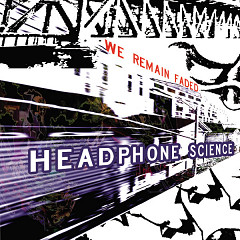
    We Remain Faded dans Ampersand Etcetera

    «Review», Jeremy Keens, Ampersand Etcetera, no 2003_h, 1 juillet 2003
    mardi 1 juillet 2003 Presse

    More from No Type — following from the bulk seen just recently. Another ep, there are also some vinyl ones on the way, participating in the No Type real/on-line series.

    We Remain Faded is basically an instrumental — long soft tones, rapid rim hits dancing over the sound space, a strong bass and crunchy claps giving a rhythm with squiggles and scrapes over. Some bigger washes and breath like snatches together with interference stutters complete the main underbody, and then a slow melody slides through creating a lovely relaxed mood over the shifting ground — some breaks for a breather but nicely balanced.

    The next track, Games, is the one that was on the sampler and is a 10 minute delight. Tones, occasional cat squall (that signals direction changes) and a strong drum rhythm have thrown highly chopped and looped rap over them some words are seperable, but it is mainly a chopping jump. There is a deep synth melody, and the male rap is replaced by a woman. Some echoed twangy synth lines and some boppy ones and an extended instrumental period ensues, the voices return before instrumental final section ended by some woodblockey tuned percussion. An exciting track.

    Those two track totaled 18 minutes, making half the album. Thus the next four take the other half. In Larcenous big grooves support the ‘lyric’ line which begins sensibly then becomes chopped and turns into a melody line. The main melodies, though, are a pair of slow synths, one high the other lower, that create a stately semiclassical mood. There are contrasts in Air Bubble Material as ratchetting and a dense crackling rhythm are joined by slow tones which sound like string samples, insects leap about and a higher lyrical line runs through.

    To Dine in Distance begins with some concrete — walking round, a camera motor — then shifts to some loungey jazz with trumpet and a romance/soap sampled conversation. After a minute or so they both go ‘choppy’, swirling and churning over a steady rhythm, then the trumpet goes solo, before an acoustic guitar and straight-trumpet take the final moments. The album ends with Life Struggles Constant where buzzy blurts shift from side to side then long organ tones join with clickety blip-hop, high flitters and chopped rap-voices, before it all gets loopy to the end.

    This album works on rhythms and contrasts — voices in sense and fragments, hip-hop and classical sensibilities — to create a very entertaining mix.

    This album works on rhythms and contrasts to create a very entertaining mix.

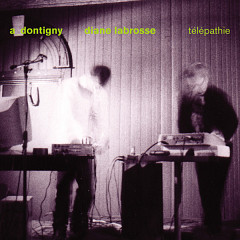
    Télépathie, A_dontigny, Diane Labrosse dans Real Tokyo

    «Review», Andreas Stuhlmann, Real Tokyo, 1 juillet 2003
    mardi 1 juillet 2003 Presse

    After months of silence, and just in time for their showcase at this year’s Mutek 03, Montréal-based label No Type has unveiled another bunch of fine releases. For one that represents the experimental electronic end of the label’s palette, A_dontigny (computer) and Diane Labrosse (sampler) have teamed up for a sonic dialogue in which telepathy might in fact have played a part. The four pieces on this album sound as spontaneous as they seem to be compositions that have been worked out over years. While A_dontigny usually creates walls of noise with his morceaux_de_machines project, Labrosse is known as a former member of art rock bands, and from collaborations with several Tzadik artists. Considering this, Télépathie sounds rather quiet, and with subtle rhythms and melodies mysteriously born out of the duo’s equipment, it’s an outstanding title in the label’s list of albums that convince with originality and high tension. (4.5/5)
    … subtle rhythms and melodies mysteriously born out of the duo’s equipment… an outstanding title…
  • 23
  • 24
  • 25
  • 26
  • 27
  • 28
  • 29
  • 30
  • 31