Sauter au contenu principal
electrocd

Blogue

268 résultats
  • 31
  • 32
  • 33
  • 34
  • 35
  • 36
  • 37
  • 38
  • 39
  • All Your Dreams Are Meaningless dans Phosphor

    «Review», Paul Bijlsma, Phosphor, 18 mai 2003
    dimanche 18 mai 2003 Presse

    The 36 minute long opening track heads of with some hardly audible electronic sounds, before some white noise in the Merzbow tradition takes over. This extreme noise gets calmer after a while and the music even gets soundscape-like, slightly reminding of John Hudak. Lullaby, the next composition, is an experimental piano track with classical vocal art and dramatical noise outbursts. Terminal is a track with long drawn-out cascading electronics. No5 is heads of with pure white noisy that slowly disappears. Solitaire is the combination of a speech and sophisticated cold electronic frequencies that slowly get more in the foreground. The seventhth track entitled tlia3ml features a fine-tuned metal sound. This song as well as the last track remind me of Richard Chartier’s more minimal and hardly audible output. Scission is a short noise composition, slightly more hectical as most other tracks on this album. All in all, a very intelligent use of different atmospheres and clear sounds.

    … a very intelligent use of different atmospheres…

    Télépathie dans Phosphor

    «Review», Paul Bijlsma, Phosphor, 18 mai 2003
    dimanche 18 mai 2003 Presse

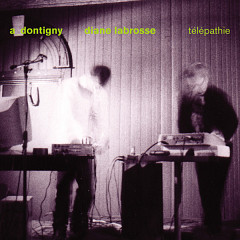
    Two quite active Canadian musicians came together in April 2002 to do a live recording. Aimé Dontigny, also member of morceaux_de_machines and Diane Labrosse, who is part of Les Poules and collaborated with the likes of Ikue Mori (Tzadik), Martin Tétreault and Zeena Parkins combined forces and produced their first dark experimental album with four long tracks. The debut of this new collaboration entitled Télépathie heads of rather dark, but gets a little noisier along the line. Especially the beginning of the third song entitled photo satellite is good example of this. Undefinable electronics, static noises and sounds like those of a highway go hand in hand. The fourth track features the first vocal contribution. A french male voice tells something, while at the same time some static machine-like noise has been put on top of it. The track continues with a sort of electronic radio tuning and metal sounds. In general the music is not that hectic. Diane Labrosse, who uses a sampler and Aimé Dontigny, who makes use of a computer, create a nice sombre improvisational atmosphere with enough variation and noise to keep the music far from boring.

    … nice sombre improvisational atmosphere with enough variation and noise to keep the music far from boring.

    No Type dans Phosphor

    «Review», Paul Bijlsma, Phosphor, 18 mai 2003
    dimanche 18 mai 2003 Presse

    No Type was founded in 1998 to become a microcosm of artistic freedom for a rich diversity of musicians. Their sampler is proof of the development that took place since then. Headphone Science is the first to be featured on this sampler. This California based project by Dustin Craig offers a combination of catchy electronics and hip-hop vocals. The song is no less than 10 minutes long. Much shorter is the next contribution by Balai Mécanique. A sort of free-jazz noise track, which ends where PO starts. Again free improvisation with an experimental touch is the main ingredient. Books on Tape is next. The music by this formation, who already released a 10” entitled Hey typical!, is based upon rock, but with enough external influences, like a groovy drumbox rhythm, to keep the concept fresh. Coin Gutter, another artist that already released some material on No Type (All your dreams are meaningless), offers one of the highlights here. The excellent combination of a strange female vocal sample (saying “he’s gone”), dark, robust, ominous electronics and the ticking of an alarm clock will give the listener a positive unpleasant feeling. Claudia Bonarelli, known from the album Everything happens only a certain number of times (Mitek) offered another excellent contribution. Dense mechanical hypnotic rhythms, slightly reminding of Porter Ricks and GAS, have been put in an intelligent setting. Watch out for the upcoming 10” May ’68! Also dark is A_dontigny and Diane Labrosse’s contribution, in which a pounding beat and a rich variation of noises have been combined. Tomas Jirku, who will release the album Bleak 1999 in August, has been featured here with a minimal funky relaxed techno track. Magali Babin offers a beautiful dark organic track with sounds of scraping metal and a rhythm reminding of a train. If her album Chemin de fer is just like this, the CD might become immense popular in the industrial scene. Unfortunately Oeuf Korreckt does a little less, with synthetic synth tunes and a cheap rhythm. And morceaux_de_machines ends this compilation with a stressful noise piece. This No Type sampler provides the listener a good glimpse of the musical diversity this label has to offer.

    Jalons dans Funprox

    «Review», TD, Funprox, 10 mai 2003
    samedi 10 mai 2003 Presse

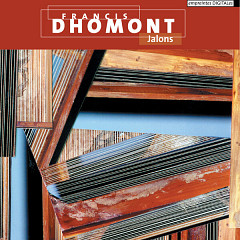
    Francis Dhomont is a composer from France who has been composing ‘musique concrète’ and electroacoustic music for over 60 years, along with composers like Pierre Henry and Pierre Schaeffer. Besides composing, Dhomont also lectures at the University of Montréal and writes articles about music-theory. Dhomont taught a lot of other composers, like Robert Normandeau, Christian Calon and Yves Daoust and many more.

    Jalons is Francis Dhomont’s 7th CD release (his 6th on empreintes DIGITALes). The eight pieces contained on this CD were composed between 1985 and 2001. The music ranges from subtle soundpatterns made from various recorded or ‘found’ sounds to very organic sounding storms of drones. Dhomont seems to play with the recognisable element of sounds a lot, since a lot of the sounds are on the edge of recognisability. Some are totally recognisable while others are totally abstract. This makes the compositions very intriguing and an exciting listening experience.

    Dhomont seems very fascinated with the sound of voices of humans or animals, since this seems to be returning on every release. Voices are obviously a source of great recognisablity, but they are also very useful for manipulating. Although certainly not all works contain vocal samples, other sounds used in his compositions often seem to turn into vocal-like parts. Most of Dhomont’s works therefore seem to turn into both organic and industrial sounding waves of sound. Dhomont’s works sound something like a flock of mechanical birds chattering.

    Mind, electroacoustic compositions are often meant to be ‘performed’, mostly in theatres or at exhibitions. This means that there is nothing else for the listener to focus on, so the music is often very demanding (difficult). Therefore this CD is not exactly easy listening ambient work (although it can of course be used as such). To be able to fully experience its potential it requires dedicated listening, preferably on a perfect installation, or with headphones.

    The works of Francis Dhomont will certainly appeal to those who like musique concrète or electroacoustic music, and to those who are willing to give a CD a really thorough listening. It will prove to be a very exciting listening experience.

    It will prove to be a very exciting listening experience.
    L’adieu au s.o.s. dans Funprox

    «Review», TD, Funprox, 10 mai 2003
    samedi 10 mai 2003 Presse

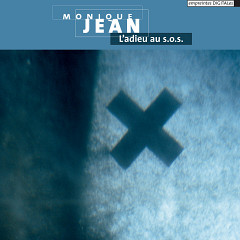
    I’ve never heard of Monique Jean before, but she surely made an impression with her first CD on the empreintes DIGITALes label.

    Jean lives in Montréal and is a student of Francis Dhomont. She works with dance, video and media installations. This is perhaps why her work is a bit soundtrack-like (in a slightly abstract way). Because of this it also sounds far more industrial than other electroacoustic releases.

    The CD consist of 6 highly abstact tracks that are quite noisy. Blasts of concrete noises turn into drones which seems like the howling of the wind in a sandstorm. Spoken word sometimes surface to be blown away in the next moment. Suddenly we are in an old Metro with a bunch of children and some drunk old people, to wake up again in a city being bombarded. This creates a ghostly atmosphere that should certainly appeal to those who like the darker sides of ambient, or perhaps horror-movie soundtracks.

    The work of Monique Jean can best be compared with a droney version of Brume, and with the works of Thomas Dimuzio or Alan Lamb.

    … a ghostly atmosphere that should certainly appeal to those who like the darker sides of ambient…

    Télépathie dans Montreal Mirror

    «Review», Raf Katigbak, Montreal Mirror, 8 mai 2003
    jeudi 8 mai 2003 Presse

    Fans of the local actuelle/noise scene should already be familiar with the highly acclaimed Web-based label No Type. For the last five years, No Type has been offering up a quality assortment of experimental noise and actuelle CDs, vinyl and MP3s from a large roster of North American artists. Among these artists is the computer vs. sampler duo of Dontigny and Labrosse, whose April 2002 show at the Casa del Popolo is immortalized here. A soundscape in collage form, ranging from electronic bleeps, hisses and bursts of noise to organic squelches and crumbles and pitter-pats, the sound is at once playful and disturbing. 8/10

    … ranging from electronic bleeps, hisses and bursts of noise to organic squelches and crumbles…
  • 31
  • 32
  • 33
  • 34
  • 35
  • 36
  • 37
  • 38
  • 39