Sauter au contenu principal
electrocd

Blogue

268 résultats
  • 37
  • 38
  • 39
  • 40
  • 41
  • 42
  • 43
  • 44
  • 45
  • Parr(A)cousmatique dans Bad Alchemy

    «Kritik», Rigobert Dittmann, Bad Alchemy, 17 janvier 2003
    vendredi 17 janvier 2003 Presse

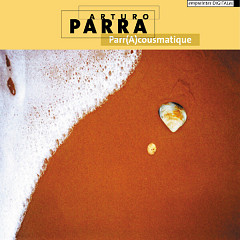
    Seit 1989 lebt der 1958 in Bogotá geborene Gitarrist und Komponist Arturo Parra in Kanada. Parr(A)cousmatique (IMED 0264) ist ein Kollaborationsprojekt speziell für Arbeiten mit Gitarre und Tonband. Die Tapezuspielungen stammen von Stéphane Roy (La basilique fantôme), Mauricio Bejarano (D’or et de lumière), Francis Dhomont (Sol y sombra… L’espace des spectres) und Robert Normandeau (L’envers du temps). Parra übermalt die bruitistisch-programmatischen Folien mit starkem spanischen Akzent zu Stimmungsbildern, in denen sich Archaik und Hypermoderne durchdringen. Parras selbstbewusste, virtuos-avancierte Handschrift versteht es, sich auch in konfliktreicher und geräuschvoller Umklammerung zu behaupten, als subversives, flinkes Graffiti, als phantasievolles Ornament, als stoische Patina, als überlegener Lichtschimmer. Der Gipfel an Intensität wird erreicht zusammen mit Gilles Gobeil bei der schroffen Klangwüste Soledad. Aber gerade wenn man sich mit der Gitarre im Tal des Todes verscharren lassen will, öffnet Normandeau die Schleusen der Zeit und die Sekunden peitschen die Haut wie gemahlenes Glas, während Parra die Saiten rührt wie Urvater Chronos persönlich.

    Rhizomes dans Bad Alchemy

    «Kritik», Rigobert Dittmann, Bad Alchemy, 17 janvier 2003
    vendredi 17 janvier 2003 Presse

    Der 1956 geborene Belgier Stephan Dunkelman hat bei Annette Vande Gorne studiert. Obwohl er seine Arbeiten gern auch kontextualisiert mit Kunstausstellungen, Modeschauen oder Tanztheater, geht von den auf Rhizomes (IMED 0263) versammelten Werken Signallures (1991), Rituellipses (1993-96), Aquaéra 1 (1996), Hanna’ Duet (1998), Metharcana (1998), Thru, Above and Between (1998) und Dreamlike Shudder in an Airstream Part 1: for a crumpled woman (2000) eher etwas Intimes, Hermetisches und Verträumt-Vergeistigtes aus. Subtile Klänge schweben und tanzen zwischen Bewegung und Stille, Raum und Zeit, Essenz und Existenz, Realität und Irrealität. “Listening is vertical” ist nur vordergründig ein klares Statement in Dunkelmans fremdwortreicher Selbstvermarktung, die aber ganz dem rabulistischen Tenor der Kunstkopffraktion unter den Bruitisten entspricht. Das stereophone Rollin’ & Tumblin’ seiner morpho-dynamischen Wischer, Zuckungen und rumpelnden Vibrationen folgt bestechend präzisen Choreographien, die ihnen konfrontale Antagonismen oder zentrifugales Gehusche als ‘Schritt’-Wirbel diktieren.

    Isostasie dans Bad Alchemy

    «Kritik», Rigobert Dittmann, Bad Alchemy, 17 janvier 2003
    vendredi 17 janvier 2003 Presse

    Natasha Barrett, 1972 in England geboren, studierte Elektroakustik bei Jonty Harrison und Denis Smalley und lebt und arbeitet heute in Oslo. Norwegen ist keineswegs die elektroakustische Diaspora wie zu Zeiten Arne Nordheims, dessen Pionierwerke 1967 — 72 noch in Warschau entstanden sind. Barrett steht heute das Osloer NoTAM-Studio zur Verfügung und mit dem Ultima in Oslo, dem Ilios in Harstad und dem Music Factory in Bergen sogar drei Festivals, um ihre mit diversen Preisen gewürdigten Soundscapes zu präsentieren. Auf Isostasie (IMED 0262) erklingen sechs Kompositionen der Jahre 1998 bis 2001: Three Fictions (Northern Mix), Displaced:Replaced, Red Snow, Viva la Selva!, The Utility of Space und Industrial Revelations. Barretts algorithmische Haikus kreisen ausnahmslos um Naturerscheinungen — Wald, Regen, Wind, Nebel, Schnee, die Mitternachtssonne. Oft sind es meteorologische oder räumliche Phänomene, die eigentlich nur im synästhetischen Sinne ‘hörbar’ sind. Allerdings scheinen Barrett nicht so sehr die Naturklangbilder als solche zu fesseln, sondern ihre durch elektroakustische Verdichtung und Konkretisierung spürbar gemachten Effekte auf Psyche und Stimmung. Hören wird so zu einer Form des Nachspürens und Nachsinnens über das Eingetauchtsein in ein gewelltes, getöntes, temperiertes, belichtetes Environment.

    Isostasie dans BBC Music Reviews

    «Review», Peter Marsh, BBC Music Reviews, 11 janvier 2003
    samedi 11 janvier 2003 Presse

    Not so long ago, electronic music was the province of those lucky enough to be able to gain access into the squeaky clean labs of Ircam or similar institutions, where large, impossibly expensive boxes festooned with dials and flashing lights awaited the bidding of the composer. Now that a similar level of wizardry is achievable with just the aid of a laptop, and contemporary electronica made in bedrooms all over the world enjoys cutting edge status, it’s tempting to wonder what the point of ‘classical’ electronic music actually is…

    A graduate of Jonty Harrison’s B.E.A.S.T. project, Natasha Barrett’s approach is highly rigorous, borne of compositional rather than improvisational process. Though on paper her methods can seem a bit dry, her music is posessed of an overtly sensual and often awesome power that rivals anything else you’re likely to hear. Her ‘acousmatic’ techniques transform field recordings, percussion and voices into restless soundscapes that conjure up strange geographies buffetted by even stranger meteorological phenomena, cosmic forces on a massive scale or hallucinatory rainforests straight out of JG Ballard.

    Barrett’s structural precision gives her pieces a strong sense of narrative as well as place. Tiny sonic fictions unravel throughout; footsteps recede over glassy, gong like tones. A door is opened, a cat enters, draws near, purrs and eats from a bowl seemingly placed in your left ear. You’re dragged through dense undergrowth packed with insects, or sat in a dripping cave listening to distant machines devouring the landscape. But most of all it’s her control of timbre that catches the ear again and again.

    At times during the opening Three Fictions (Northern Mix) the immersion factor almost sent me into some deep alpha state, or the abstract sweep of millions of tiny oscillations produced such strange sensations in the small of my back I had to take my headphones off to catch my breath.

    Lush, disturbing and beautiful all at once, Isostasie at once connects with the rich and strange concoctions of classic musique concrète, yet has a timeless quality lacking in the ephemeral world of contemporary electronica. Stunning.

    … a timeless quality lacking in the ephemeral world of contemporary electronica. Stunning.

    Parr(A)cousmatique dans Touching Extremes

    «Review», Massimo Ricci, Touching Extremes, 6 janvier 2003
    lundi 6 janvier 2003 Presse

    I’d say that Arturo Parra is a visionary in the best sense of this definition. Mixing classical guitar with shadows and lights evocated by some of the “acousmatic big names” (Stéphane Roy, Mauricio Bejarano, Francis Dhomont, Gilles Gobeil, Robert Normandeau) the Colombian composer — who plays a mean guitar, by the way — created five beautiful pieces about lucid dreams and fantastic imagery, involving us with a kind of music that I really could not even remotely compare with anything else that I know. While some of the final results fuse highly skilled technique and electroacoustic refractions bringing lots of fantastic colours to the mix, the dark/grey — almost spectral — sounds of Soledad, with the guitar body parts singled and transformed into a condition of human desolation and desperate thoughts, stand out among the rest to make us feel frozen to the ground.

    I’d say that Arturo Parra is a visionary in the best sense of this definition.

    Rhizomes dans Touching Extremes

    «Review», Massimo Ricci, Touching Extremes, 6 janvier 2003
    lundi 6 janvier 2003 Presse

    Dunkelman comes from Belgium and his creations are a perfect example of inventiveness when juxtaposing real and modified sounds in an electronic environment. Mostly used for dance/theatre, art and fashion settings, Stephan’s pieces are so full of forms, ever-changing pulsations and rhythms that they literally escape any definition, trying to justify their existence in a stark contrast with silence. It’s like a mathematic relation between sound and space, only observed through unknown angles and surprising trajectories. The resulting concoction could be a little discomforting to ears not adequately trained, but surely is rewarding for open minds and for the ones who dare exiting the borders of known.

    … rewarding for open minds and for the ones who dare exiting the borders of known.
  • 37
  • 38
  • 39
  • 40
  • 41
  • 42
  • 43
  • 44
  • 45