Sauter au contenu principal
electrocd

Blogue

87 résultats
  • 1
  • 2
  • 3
  • 4
  • 5
  • 6
  • 7
  • 8
  • 9
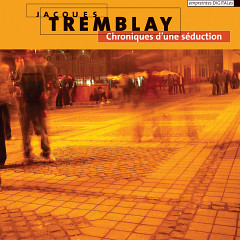
  • Chroniques d’une séduction dans Sonoloco Record Reviews

    «Review», Ingvar Loco Nordin, Sonoloco Record Reviews, 12 novembre 2009
    jeudi 12 novembre 2009 Presse

    When I heard the name Jacques Tremblay, I was sure I’d reviewed CDs by him before, but that wasn’t so. It seems the name Tremblay is common in electroacoustic realms, or maybe in the French-speaking world, because I had reviewed Marc Tremblay and Pierre Alexandre Tremblay before, not Jacques…

    Jacques Tremblay was born in Jonquière, Québec, in 1962. He is a composer and a classical guitarist.

    Tremblay explains that the main theme through his three works here is otherness. He goes into exemplifications, like a moment of reminiscing disturbed by a noisy neighbor, or a radio station reaching him from somewhere outside his private space, or an Arabian song panning by, from inside a passing car, and so forth. His own attitude towards these external intrusions into his privacy also pan, from resistance to interest and even pleasure.

    Track 1. Espresso espressivo (2003 — 04) [12:30]

    Jacques Tremblay, at the end of his CD cover introduction to the piece, expresses his regards to the “expressiveness of [his] espresso machine”. We fall right into an up-tempo urbanism in this work; hectic, caffeine-speedy, nervous; in the spastic motion of modern day moneymaking. Furthermore, it is a motion from the outside to the inside; from a street scene into the obscurity of a bar — or something. These are the first few seconds of the caffeine piece.

    Then a peculiar thing happens, as this everyday atmosphere all of an electroacoustic sudden changes into another sonic and mental realm. Tremblay, like an escaping hare, jumps sideways into something else, pulling the listener with him into a thoughtful, slow motion suspension in space, which somehow is made up of all these familiar street-and-bar sonorities, although pulled and stretched in rubber band heaven.

    I can appreciate that many of these wheezing sounds are derived from Mr. Tremblay’s espresso machine, and perhaps the cathedral bells that resound, seemingly, through the wall, come from the rattling of porcelain in the bar / café? The mix of white noise wheezing and slithering with hushed and muffled church bells, anyhow, makes for a highly interesting piece of electroacoustic poetry!

    Of course there’s got to be some bubbling effects in a piece of espresso machine music, and here they come; first just hinted at, at a natural pitch and speed, but then slowed-down and low-pitched, in shiny, glary concave surfaces of sound, alligator back-like. Nice!

    It’s not that the sounds are obvious at all. I don’t think I’d make the immediate association, if I hadn’t been told. With that piece of information, though, you don’t have to look hard!

    The “real world” is gradually mixed back in with the extended electroacoustic aspects, in the shape of people chatting across their coffee cups… but soon Tremblay zooms in on some of the sounds in this wide awake environment, like the dropping of some sugar cubes into the coffee, and the subsequent stirring of a spoon in said cup — while the rest of the environment; chatter and all, seems to be sucked up around the walls and the ceiling, leaving ample sonic room for the details focused on. Brilliant!

    The wake and extremely present moment is sometimes diluted and warp-sped into the field of a common consciousness that spreads across the vast distances between the galaxy clusters, in an action of non-locality that dizzies, eventually ending up as a standing wave of energy clear across the universe. Jacques Tremblay shifts perspective and aspect in a jiffy inside his sound art, from the stirring of a spoon in a cup to the horizon of events at the brink of a black hole.

    With an eye on the stars passing by in a stretched silence, Tremblay opens a bag of coffee and fills his machine. The ambience of spiraling thoughts swings the moment around, as some steam rises. A bubble of here and now, containing that pleasant chatter of the coffee shop, sails by, while other bubbles with other moments — of there and then, perhaps — bounce off.

    Reflections of even-surfaced singing hang like meandering serpentines through time, while chopped-up, permuted, sliced and rolled-up Bach quotes fall away like shiny, colorful candy wrappers out of a toddler’s Christmas Day hands.

    The pressurized and moist air passing through Tremblay’s coffee machine makes me think of passenger jets streaming by high up, leaving trails across the sky, and that far-off, curving sound of power, speed and distance, high up in the dressed-up atmosphere of inter-continentalia! The coughing and squirting of this coffee commodity, pitched-down, evoke visions of dark thunderclouds across a summer’s lake, the claps resounding back and forth between the shores. Reflections of fluorescent tubes in spoons provide the lightning.

    Later on Tremblay’s coffee music turns liturgical, as it nears the South East Asian Gamelan ensemble expression, although, simultaneously, this passage awakens memories of small herds of cows with cowbells around their necks, moving across a Swiss slope in the fragrance of spring flowers and the vibrancy of bumble bees.

    Wonderfully percussive spurs fall by like the rattling of bamboo sticks, also resembling a steam locomotive struggling up a hill in the Rockies — and somehow these visions of sound all stem from a coffee machine under the spiritual influence of sonic wizard Jacques Tremblay from Jonquière!

    Track 2. L’énigme anima (1997, 2001) [9:22]

    There are two sides to L’énigme anima; Persona and Anima. Tremblay explains that Persona represents the outer personality, while Anima, then, constitutes the inner one. The composer refers to Carl Gustav Jung (1875 — 1961). Jacques Tremblay lets Persona express itself through guitar sounds, while Anima is heard through a counter tenor. I suppose Tremblay provides the guitarisms, but there is no way to guess the counter tenor, so I guess — before listening — that the identity of this voice is so far removed that dropping a name is useless.

    The music — the moment — the present… starts with a breath, a rasping ripple of dust and iron, a voice gliding between evening clouds… a dream… A speedy velocity pans the premises, while toy horseshoes clatter up-tempo. The guitar arrives on a slow-down note, breaking to a halt, almost falling over forwards. The female voice rattles down; comes to a standstill. A breath is being breathed. Guitar slaps you in the face, like a Zen master might do, recited by Lucien Stryk. And yet, we have only reached 50 seconds into L’énigme anima. This means that Jacques Tremblay works hard with his compositions; studies time in detail, grain by grain, second by second, though he never loses sight of the overall impression. He knows his trade.

    Lots of things happen; many details are formed and de-formed, rising through your mind, sliding out of your perception — and there’s no way to collect all of Tremblay’s expressions in one impression. Deep, drone-like sounds carry the moments, while high-pitch patches are let loose higher up in your mind. Suddenly melodious shreds of tunes are hinted at; a kind gesture inside the poisonous moment.

    This is a piece drenched in fragments, over-loaded with sprawling and straggling auditive thorns; not a very harmonious sonic adventure, and, I must say, a pretty laborious work to hear…

    Tracks 3 — 10. Empathies entropiques (1998 — 2001) [47:08]: La petite Camille; L’enfant d’Afrique; Ganga is Divine; Lolita corps et âme; Polonaise; Tryptique russe; Rêve libanis; Haïti troubadour (dedicated to Yves Daoust)

    The last work on the CD is much longer than the preceding works, containing of no less than eight parts, all together forty-seven minutes.

    Jacques Tremblay quotes Martin Buber, from his book I and Thou, in connection with this extended work:

    “This is the eternal origin of art: a shape appears to a man and demands to be fixed in a work. That shape is not the product of his soul, but an outside apparition that manifested itself to that soul and asked from it an efficient force. This is an essential action. If the man realizes himself, if he says, with all his might, the fundamental word I-You to the shape that appeared to him, the efficient force flows, and the work is born”

    Tremblay also says that this piece is “an inner odyssey […] in praise of multiplicity.

    He further explains that this long electroacoustic work features a series of snapshots with otherness-character, from various cultures. The languages that the voices that he features are clothed in are Russian, Italian, Creole, English, Arabic, African [I don’t know which of the many African languages he means] and a made-up language. However, he uses these languages blindly, without consideration to the inherent meaning of the words, since he doesn’t speak these languages. He was aiming at a sense of strangeness.

    However, the first voice I hear is that of a French-speaking toddler — La Petite Camille —, whose happy exclamations fly up and flutter around like a swarm of butterflies in the sun.

    Strange, estranged… ripples of drone-like character are laid out like bracelets on a desk at a jeweler’s store, while the little child plays in the soundscape, talking happily to himself, and then to a parent, who replies. It’s a mix of the apparent, the obvious, the well known — and a visualization of an inner world, like so often in modern electroacoustics. The breathing of a busy child playing is the cement that makes for a kind of coherence when all these strange dreams and visions are blended into the so-called reality.

    The breathing of this child is slowly spilling over into another world of sounds, where the rhythm of these inhalations, exhalations turn dark, slow, deep — like was it the soil that expands and retracts under your feet. In the middle of a sound-poetic permutation of the French-speaking people at hand, the audible and comprehendible voices appear, but soon in a language that nor I or the composer understand. This means that the voices then Are used as just another sonic ingredient, although the vibrations of human voices always are biased in such a way that you never really can regard them solely as sound, without the attached irritation/pleasure/ indifference of a person.

    The original child’s voice returns, but bathed in a bell-like ambience, Jell-O-like, wobbling, moving like huge soap bubbles in the wind. An English-speaking man of non-English origin talks about salvation. The ample usage of various languages reminds me of Karlheinz Stockhausen’s Engel-Prozession (2000), in which he utilized languages from India, China, Spain, The English-speaking world, the Spanish-speaking world, Africa (Kiswahili) and Germany for his choirs and soloists.

    Jacques Tremblay grabs an instance of a child’s voice and stretches it electroacoustically into elastic bands of catcalls, very illusionary! Adult voices are also permuted and pitched-away, so as to take on the guises of trombones and drowsy cows — or the desperate rubbing of wet balloons, like in Sune Karlsson’s 12-hour work Phonia Domestica (1988).

    Tremblay’s ingenuity is almost limitless in this extended work, which has an extremely rich soundworld; opening up to the listener, layer after layer. Empathies entropiques honorably takes its place in the glorious tradition of worked-through, programmatic or semi-programmatic French electroacoustic grand works by composers like Bernard Parmegiani, François Bayle, Michel Chion or Francis Dhomont.

    Tremblay’s ingenuity is almost limitless in this extended work, which has an extremely rich soundworld; opening up to the listener, layer after layer.

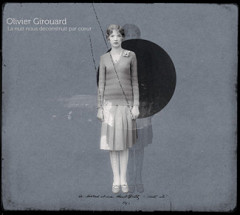
    La nuit nous déconstruit par cœur dans Earlabs

    «Review», Thierry Lemmers, Earlabs, 11 novembre 2009
    mercredi 11 novembre 2009 Presse

    Less is more. This proverb certainly qualifies for La nuit nous déconstruit par cœur, Olivier Girouard’s debut release on Ekumen. As far as electro-acoustic compositions go, Girouard’s music is much more alike to the organic ramblings of compatriots like Andrey Kiritchenko or the improvised ambient of Tape than the grand, neo-classical ambient pieces of Max Richter for example.

    So what does this album actually have to offer? The leaflet that accompanied this album to my home is a little vague in that respect. It mentions Girouard sharing a bond with a metaphysical kind of musical poetry and all that is good about culture. Although this statement sounds a little too pompous to be taken seriously, Girouard’s debut record does exhibit a poetic quality in a fidgety sort of way. He takes great care to keep his music dreamy and subtly dynamic by fiddling and rummaging with guitar and piano, some found sounds and little touches of glitchy electronics.

    And it all meshes well together. Girouard changes rhythm often enough to keep me from slumbering away at the more timid passages with solo guitar, piano or simply some crackling noises in the background. He shows a deft hand to keep these softer moments in the record interesting.

    With this in mind, it’s hard to imagine that this is a record created for a choreographer. Although there is plenty of movement, it is still movement pared down to a minimum which also accounts for the lack of tension on the album. The flow of the album is a little too turgid to really tickle my imagination.

    Nonetheless, I feel that Girouard managed to create a piece of music that often enthralls me with its devious simplicity. He does a lot with minimal means and he does it with a great deal charm and meticulous care. And precisely that goes a long way with me.

    … Girouard managed to create a piece of music that often enthralls me with its devious simplicity

    Francis Dhomont dans Tuning is a Function of Time

    «ISSUE Project Room», Andrew Christopher Smith, Tuning is a Function of Time, 1 novembre 2009
    dimanche 1 novembre 2009 Presse

    Francis Dhomont arranges natural recorded sounds onto stereo tape (now CD), and plays them back through eight speakers, mixing the two channels live throughout the room. This creation of fixed-media art came to be called musique concrète, a term which began in France with Pierre Schaeffer.

    There are things we (an educated classical music audience) come to expect and recognize in music: the “arc,” harmonic movement (or stasis), the grammar of an ending. The natural sounds strip away any harmony, any recognizable form, and timbre — or “sonority,” why a trumpet and a saxophone can play the same note and sound different — is the only thing left. At one point in time, primarily with the Romantics beginning around Beethoven, this was achieved through orchestration, or the differentiation of instruments. Whereas Bach’s Die Kunst Der Fuge was completely devoid of instrumental markings (it has since been played by string trios, pianists, the organ, and many others), Mahler rides on the powerful sonority of the brass, and Grieg’s “Spring” from Peer Gynt is unimaginable on anything but the pure flute. Timbre serves as a support to harmony, such that we know that the blaring brass signify a climax. We realize discrepancies within the instruments as well, as a flute can be soft and pure (Grieg’s Peer Gynt) or the voice of a flaming bird (Stravinsky’s Firebird Suite).

    If timbre can support and even eclipse harmony, then can harmony be removed completely? Dhomont’s music is pure sonority, without harmony or signposts given to traditional (harmony-based) musical analysis. Instead, it creates much the same form using nothing but the sounds themselves. And this is the key: the form is recognizable. Dhomont (at age 84 — Friday was his birthday) seems to be a product of that late modernist generation, schooled before the formlessness (and silence) of John Cage. The endings were endings, the grammar still underlying every musical movement, even if the sounds themselves were entirely foreign. It was Modern music in the capital sense, the sense that can be better read as post Modern because of its extension of the methods, rather than questioning of the motives. It was still the work of an artist, as sounds are still given voice by the man at the mixer; there were no dice rolled.

    This begs the question of writing, possibly the greatest leap that musique concrète made. In the French school (meaning not Stockhausen), there was no score for these tape works (feel free to correct this statement — I’m curious to hear if examples exist). The expectation exists that the audience is hearing the voice of the artist (composer) directly, without any interference from a conductor or performer. It would seem to be a war waged against the precariousness of writing, if not for one thing: the sounds’ origins. These “natural” sounds, not sprung fully-formed from the artist and his tools but rather shaped on the chopping block (although now shaped on the MacBook Pro digital audio workstation) are appropriation itself. Like a poet’s appropriation of words, the composer creating musique concrète shapes sounds by their contexts — by what other sounds appear near them, and how those sounds may carry multiple meanings. Dhomont’s music, then, becomes even closer to writing than ever before, not because it is seemingly fixed but because it is appropriated.

    … the audience is hearing the voice of the artist (composer) directly, without any interference from a conductor or performer.

    La face cachée dans Sonoloco Record Reviews

    «Review», Ingvar Loco Nordin, Sonoloco Record Reviews, 1 novembre 2009
    dimanche 1 novembre 2009 Presse

    David Berezan was born in Edmonton, Canada in the (for me) magic year of 1967, when (my) awareness of bottomless riches of poetry, literature, music — yes, the arts! — grew exponentially. This widening, and simultaneously deepening of the universe of the arts, and the attached, or inherent, amazement at our mysterious existence, is still happening, and as a person much dedicated to the sonorous aspects of the energies of life, electroacoustic music in particular opens vast spaces of experience to me. It’s my art par excellence.

    Like quite a few other successful composers of electroacoustic music, David Berezan has studied with Professor Jonty Harrison at the University of Birmingham. Mr. Harrison has had, and has, a great and benign influence on this generation of sound artists. His name is synonymous with high-end elegance and sonic ingenuity.

    David Berezan became Lecturer and Director of the Electroacoustic Music Studios at the University of Manchester, Great Britain in 2003, also founding MANTIS; Manchester Theatre of Sound, where regular presentations of electroacoustic music takes place, using a custom-designed diffusion system, in my ears sounding like an offspring of that famous Acousmateque at the Groupe de Recherches Musicales in Paris.

    David Berezan:

    “[…] through processes of transformation, reconstruction and imagination, I reveal hidden spaces, characters and substance […] Within, underneath and behind the sound objects and concepts, there are often unexpected sound worlds in terms of detail, color and dynamics. For me, this multi-faceted aural-vision that twists, turns and opens into itself is the magic of the art form. It is also through this process of discovering ‘the hidden side’ (la face cachée)” that I discover as much about myself”

    Track 1. Cyclo (2003) [10:41]

    Biking is one of my most obsessive undertakings, and I do an exercise round of 30 kilometers each day of the year (more in summer), except if it’s too rainy or too much ice on the road some winter days. I’ve been keeping in shape on a racing bike since the early 1970s, and I have enjoyed, immensely, the changing scenery, as, like Dylan says in Idiot Wind; “the springtime turned slowly into autumn”… Cyclo sprouted out of David Berezan’s bike rides to and from the studios in Birmingham, UK. The composer offers a pretty extensive — as far as CD cover texts go — introduction to the piece, and among other things he states that “Cyclo is concerned with cycling and the journey as much as it is with the inner sound world and workings of the bicycle itself”

    The music starts off with a sensation of a completely clean chain circling the sprocket wheels, as a forward motion is attained, down the asphalt road, down the score of these enjoyable and elegant exercise-acoustics. All kinds of unusually separated and clear bike ride sounds present themselves in a lively but controlled fashion, while the occasional wheezing may symbolize the at least 8 kilograms of air pressure inside the tire. Am I imagining things, or do I hear twittering birds inside this mechanic display? I think I do, and this is one of the advantages of riding your bike to work; the sounds of nature around you, as you speed along, firmly kept in place by a gravity that is always on. Another precious advantage of biking is that you definitely gain a lot of virtuous assets by not polluting, which may reduce some of the bad karma you carry along with you. You gain merits!

    Sometimes the naturalistic sounds that Berezan applies so well onto this spokey (!) sonic painting shift gear and rise into a higher level of consciousness, where the ideas of biking are dealt with, rather than the materialized steel, rubber and asphalt of an earthly morning ride on the outskirts of town. That is when I close my eyes and let myself be carried off on the equilibrium of velocity. The music turns hypnotic, as the sound is suddenly reduced to a muffled bell-like rhythm of the rotation of the pedals, such as you may experience it a long way into a ride, when your thoughts drift off to any matter that needs sorting out, and your repetitious leg-work is executed automatically. Nowhere is thinking more focused, and new ideas more frequent, than twenty or so kilometers into a bike ride; especially if you’re doing it a winter night with a strong headlamp mounted on your helmet. It’s like being in a think-tank; the think-tank of the universe!

    Gradually a kind of reality seeps in and takes over, in a sprawling, straggling maze of sharpness and fluidity in a rare mix, until motion halts, only leaving a thin layer of dawn consciousness to carry your sensation of “I” and “here”.

    The biking adventure — on various levels of consciousness and sound — carries on, and a really striking property of David Berezan’s sound art is it’s delicacy; it’s finely tuned expertise of the detail; the smoothly soaring sonorities of the highly adapted, fitted, adjusted, matched, tailored and conditioned precision mechanics of the most noble means of transportation: biking!

    The wonder is how Berezan so lightly and effortlessly moves the listener’s focus from the hard rubber tire singing against the asphalt, up the fork, through the top tube, up the seat post, through the saddle and through your body up into your head, where the noble energy is converted into all kinds of visions, soothing as your impermanence of the present flickers through the landscape. There is an ongoing communication exchanged from your head down into the asphalt and up again, in David Berezan’s composite contraption, wheezing up and down the carbon fiber as your weight is flown across the land in a winding, curling, coiling pattern.

    However, this is free music, just as handy and refreshing for the occasional woodpecker as for some highbrow member of an English gentlemen’s club. It leaves many thoughts unthought, many visions just about to appear, so keep listening!

    Later on in the piece those red and spacious autumn ride skies open above you like the ceiling of a cathedral; the air is cool, the breathing effective, and your beard is wet from your respiration; your muscles are warm and you move in a sense of triumph past a world that moves backwards, backwards, backwards, until your cool machine arrives at your doorstep, where you disconnect your feet from the pedals and fall into a hot shower, which completes the perfection of a speedy bike ride through landscape and mindscape; through David Berezan’s Cyclo!

    Tracks 2 — 6. Baoding (2002) [7:20]

    Prologue — Ecstatic — Intimate — Pulsing — Epilogue

    The composer handles Baoding bells from China in this piece, in three electroacoustic miniatures with a prologue and an epilogue; neatly! These balls are held and shuffled — or rotated — in your hand, to keep you cool. Other sounds are brought in, from the Kun and Beijing Operas, for example.

    The delicacy of the nature of sound carries over from the preceding work. It seems to be characteristic of David Berezan’s handicraft. This delicacy tingles and glitters way inside the mind of the ambience, until a complicated metal structure protrudes its many gratings in front of, behind or around isolated vowels that bounce inside their confinements like gluey soap bubbles, or like little blue Glenn Gould rubber balls gushing out of CBC loudspeakers.

    Baoding, to a certain extent, is sound poetic too, since voices and shreds of voices fly up like a flock of jackdaws at times, flashing past like flickering ghosts. At about six minutes into the work, for just a little while, Stockhausen steps in through the sound current and puts his arm around the shoulder of Berezan, uncommonly friendly and benign.

    Track 7. Styal (2004) [13:54]

    Berezan describes the Quarry Bank Mill of Styal, south of Manchester, England, in his introduction to this piece. Inside the mill, at the heart of it, you find the waterwheel that provides the power for the textile machinery from the 19th century. It is not really clear by his text, but it seems that this place is a living museum, where the wheel is still running and the machines turning, because he says:

    “Inhabiting the mill is a sound world of great volume, vibration, resonance, rhythm, intensity, energy, steam, cogs, belts, pulleys and spindles, steam pipes, groaning and straining machines, delicate threads and textiles”

    He goes on to state that from these sounds that he collected at the mill, plus a few additional ones, he creates a place of his own imagination.

    A more mystical atmosphere permeates this 14-minute moment, as the tingling sonic sensations inside the factory hall spaciousness of the ambience gleam like welding flames through the metal dust of the air below the overhead cranes moving like sloths through the obscurity high up under the ceiling. The music of Styal feels like a solid block of time and space moving through mind, or the back of mind, in a dream or through something forgotten.

    The moment creeps upon you in inconspicuous jingling, slowly disguising a deeper murmur that grows to grab hold and lift you firmly up ahead through your dream. The expanding moment bulges like a calm swell of the sundown sea, in dark and bronze sonorities, like the afterglow of giant cathedral bells in the European night — and I remember some of my early heroes of the trade: François Bayle, Jean-Claude Risset, Denis Smalley.

    This music is incredibly beautiful. It sounds naïve, but that’s the sum of what I hear here; beauty! I’ve learned, by now, that David Berezan is a guru of the clean transportation of sound. No matter how complex the web of sonorities, no matter how much you magnify it, or how deep you travel into it; you will still discover only more detail; absolutely clean, undiluted sound, which will amaze you and thrill you with it’s state of, as the Tibetan Buddhists would call it, a Blissful Pure Land. Deep inside this soundworld you feel like you’re standing in front of Amithaba; the Buddha of Infinite Light.

    As I continue listening, wrathful deities from one of my Bardo journeys slither around my path in slithering electroacoustics, licking at my heels as I hurry on through my mindsets. The intensity grows stronger, momentarily, but soon recedes back into a state of commotion that is easier to deal with, although still too many things happen in this Styal soundworld to keep full track of.

    The insertion of a second or two of complete silence between spurs of massive motion of heavy weights, scraping sounds, gravitational threats… make you still more aware of the crucial property of the moment; any moment — because the star crushing remodeling of everything is always going on.

    Little springs bounce back, blocks of time and space glide past, minds sink into sets of circumstances, kids set fire to cars, poets gather suitable syllables, planets wallow in space… in this abstract painting by David Berezan, that I’ve entered. It is clear that Time is a Place, and Matter a Journey.

    Track 8. Hoodoos (2007) [19:11]

    David Berezan is a composer to my liking! Not only does he compose a great electroacoustic work from a bike ride, but he also composes another one from a wilderness hike! I had a vague plan some years ago, to record the great variety of water sounds you find in Lapland, where I hike through rock deserts and below glaciers (sometimes across glaciers…) each year, because you have water sounds as varied as the tiny trickle below your feet to the distant rumble of a waterfall on the other side of the valley — but as yet I haven’t realized that recording hike. The late Sami writer, poet and composer Nils-Aslak Valkeapää put together a recording of the four seasons of Lapland in his Goase Dušše — La Symphonie des Oiseaux (Bird Symphony) — that was awarded the Prix Italia pour la Radio prize of 1993. David Berezan used sounds from the Hoodoo Trail in the Banff National Park, out west in Canada. He says that the composition he made is “concerned with contrasting states of dynamic, fluidity, stasis and kinesis”.

    There is a steady motion flowing; water trickling and an ominous deep waveform huddling in back of the present. Shreds of gravel-and-ice audio glide down slopes in the ambience, reminding me of tricky precipes that I have traversed in Lapland, with the sound of mud and pebbles falling away below my cramponized boots. The longer strands of purple audio in David Berezan’s Hoodoos have me think of those open skies with high altitude clouds flattening out at inversion strata high above white summits. It’s a combination of the very close and treacherous, and the distant and almost hypothetical, as the Earth curves off on the horizon. This beautiful and crisp sound from falling specks of thin ice remind me of earlier works by specific sound artists, like John Rimmer from New Zealand, Javier Alvarez from Mexico and Horacio Vaggione from Argentina. It’s a celebration to experience this sound world, ultra-light on one end, and threatening and gravitational on the other, which Berezan provides. This world isn’t common any more. It used to be, albeit in a rawer and less delicate form, in the heydays of IMEB and the yearly Cultures Electroniques releases. David Berezan has managed to keep the tradition, while simultaneously developing it. Maybe that’s part of the reason I feel so at home in his art.

    Berezan has already explained that he handles his experiences from the trail in a highly abstract way, but this, of course, is the best way to extract the essence of a wilderness adventure or any other formidable experience, and I feel a lot of recognition in his rendition, as I am an aficionado in both disciplines, i.e. mountain hiking and electroacoustics! I’m probably an ideal listener to Berezan’s Hoodoos!

    Track 9. Hannibal (2005) [10:55]

    The last piece on this rich CD — really Audio DVD — is Hannibal, which owes its origins to Jean Tinguely’s (1925 — 1991) sound sculpture Hannibal II at the Museum Tinguley in Basel, Switzerland. David Berezan had spent a compositional residency at ESB — The Elektronisches Studio Basel — and decided to use a minute aspect of Hannibal II, namely a metal chain that swings slowly to and fro after a complete cycle of movements by the sculpture, and process this sample intensely.

    The piece emerges like a drone of many pale shades of color, soaring like the first light of dawn in a Scandinavian December; frail, slow, hesitant, like a breath that is hardly visible across the chest of a resting person. Soon these bleak nuances of Berezan sound cram together to form grains, bubbles and spheres, bouncing against each other like particles in the fourth state of matter; the plasma state, wildly incoherent, without any bindings, interacting by pure chance to shape these flowing, grainy passages of sound. Incredibly pleasurable incidents of rippling audio follow, in a pearl-bead percussion that gleams and glistens point-blank, en face, in your face, without the hesitation that I felt in the beginning. It’s metallic and glassy; metal drops and spheres of glass, plus some factory hall metal dust towards the conclusion, when these clean objets sonores seem to soar through an industrial early 20th century mirage.

    This music is incredibly beautiful. It sounds naïve, but that’s the sum of what I hear here; beauty!
  • 1
  • 2
  • 3
  • 4
  • 5
  • 6
  • 7
  • 8
  • 9