Sauter au contenu principal
electrocd

Blogue

29 résultats
  • 1
  • 2
  • 3
  • 4
  • 5
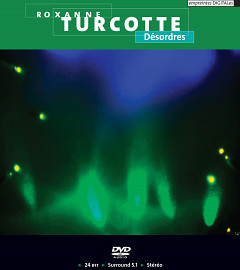
  • Désordres dans Voir

    «Le Flip et le Flop des collaborateurs musique», Réjean Beaucage, Voir, 19 décembre 2011
    lundi 19 décembre 2011 Presse

    […] Mes 10 albums de 2011 […]

    [Parmi] mes 10 albums de 2011

    Désordres dans SOCAN — Paroles & Musique

    «Critique», Gilles Boisclair, SOCAN — Paroles & Musique, no 18:4, 1 décembre 2011
    jeudi 1 décembre 2011 Presse
    Inutile de chercher un sens mélodique, le plaisir est plutôt de se laisser envahir par les textures et les ambiances sonores.

    Quelques reflets dans SOCAN — Paroles & Musique

    «Critique», Gabriel Bélanger, SOCAN — Paroles & Musique, no 18:4, 1 décembre 2011
    jeudi 1 décembre 2011 Presse
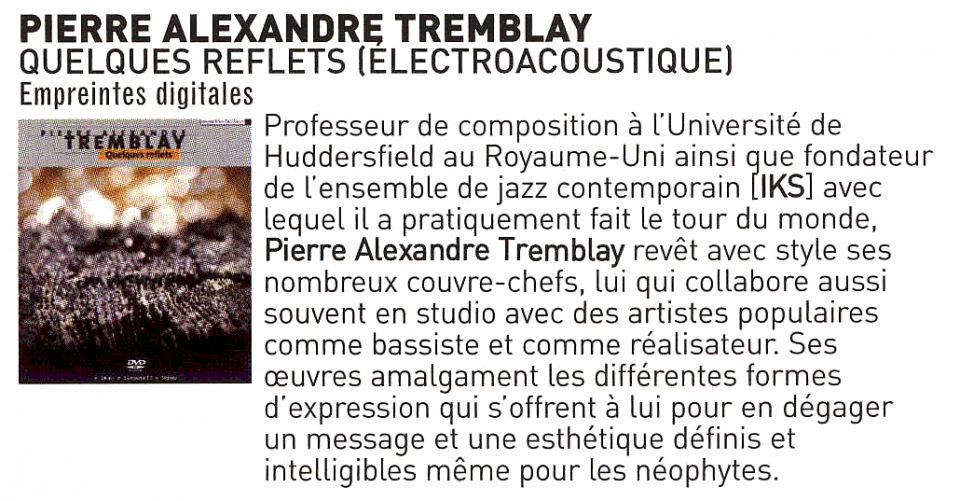
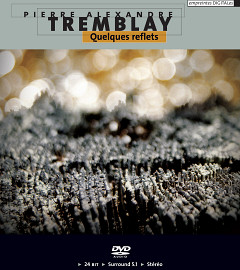
    Ses œuvres amalgament les différentes formes d’expression qui s’offrent à lui pour en dégager un message et une esthétique définis et intelligibles même pour les néophytes.

    Entre espaces dans Exclaim!

    «Reviews — Improv & Avant-Garde», Nick Storring, Exclaim!, 25 octobre 2011
    mardi 25 octobre 2011 Presse

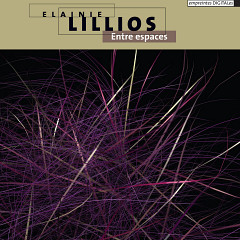
    Although the music of Elainie Lillios is firmly rooted in the new stream of musique concrète-derived aesthetics, her work offers much for fans of other forms of abstract electronica to sink their teeth into. Like the work of many of her peers also documented by Montréal’s scene-defining empreintes DIGITALes label, each piece here is dynamic and gestural, with real-world sounds transforming and dissolving through unpredictable electronic processing trajectories. Lillios favours granular processing techniques that shatter sounds into particles and then sprays them out like clouds of dust or casts them across the soundscape like handfuls of pebbles. While others have employed this technique extensively, Lillios does so especially adeptly, achieving a balance between preserving the source material while conjuring a wide palette of unanticipated sonic colours. Her work often settles into an intimate mode with the use vocal source sounds. Though attractive, this feature can also occasionally feel overly prescriptive and literal, like with the texts in Listening Beyond. Elsewhere, such as in Arturo, textual aspects are perfectly intertwined with the sound world of the piece, only adding to the intrigue. Said intimacy and balance, as well as her penchant for resonant, droning atmospherics and dramatic contrasts, make Entre espaces a worthwhile listen.

    … processing techniques that shatter sounds into particles and then sprays them out like clouds of dust…

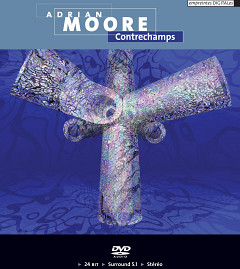
    Contrechamps, Scènes par Alan Cooper

    «Concert Review», Alan Cooper, 25 octobre 2011
    mardi 25 octobre 2011 Presse

    The Atrium is a fantastic venue for certain kinds of music and electroacoustic performance definitely gains something extra special from the sheer vastness of its acoustic. Surprisingly, this entailed little or no loss of clarity or precision in the diffusion of the sounds.

    Tuesday night’s performance for University Music in association with Sound was more than just a concert however. It was the occasion of a launch of a new CD of music by Pete Stollery and a surround sound DVD-Audio by Adrian Moore. These two releases are published by the Montréal-based label empreintes DIGITALes.

    Electroacoustic music is a relatively new artistic endeavour and in listening to the works of new composers in the genre I am constantly amazed by the sheer variety of technical, musical, artistic and imaginative approaches to the genre. In certain respects the three pieces we heard by Adrian Moore and the two pieces by Pete Stollery approach the medium from radically different directions.

    Adrian Moore’s compositions started with piano, violin or horns as sources and then moulded and transformed them into a whole mind-expanding new world of sound. His three pieces taken together were on a symphonic scale and the sounds of piano, violin and horns blossomed into a magnificent musical sound garden. Above all, his pieces were richly musical in their inspiration.

    Pete Stollery two pieces come at the enterprise from a quite different direction. In his first piece Still Voices especially, he is acting partly as a preserver and curator of sounds in North East Scotland particularly those that are about to disappear because for instance their source is to be destroyed. In his second piece, scènes, rendez-vous which has become a kind of classic of its type, his sources are recorded direct from points in the streets of Paris along which the cinéaste Claude Lelouch drove his sports car during the making of his film short C’était un rendez-vous (definitely worth a look on YouTube if you have not seen it).

    Thus if Adrian Moore takes a musical source and expands it out into a world of sound, Stollery starts with sounds throughout the world and moulds them into music. In both his pieces there are moments of recorded sound which are specific to a certain place or event but his work is not merely a series of these at random, the artistry comes first from the way in which these are arranged in order and then when these basic sound sequences are magically transmuted into musical creations that live in the realm of pure imagination.

    I particularly love the sequence where the sounds of a French ambulance siren becomes like a huge organ cord or traffic passing over a grille on the road becomes almost like pizzicato strings.

    I have heard scènes, rendez-vous in several venues, the Mitchell Hall, the Belmont Cinema, the Left Bank in Tarland and now in the Atrium. It has always been subtly different. This is partly because of the radically different venues, but also because Pete diffuses the sounds differently each time which gives electroacoustic performance the same immediacy and individuality as any live performance.

    … I am constantly amazed by the sheer variety of technical, musical, artistic and imaginative approaches to the genre.

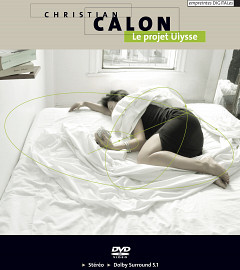
    Le projet Ulysse dans Monsieur Délire

    «Journal d’écoute», François Couture, Monsieur Délire, 12 septembre 2011
    lundi 12 septembre 2011 Presse

    Parlant de légèreté et de médiation à travers la culture, Le projet Ulysse est l’antithèse de Désordres [de Roxanne Turcotte]. Ancré fermement dans le mythe d’Ulysse, l’œuvre fait appel à un livret étoffé, en français, en anglais et en allemand. Son sens est multiple, difficile, et ce texte, mis de l’avant résolument, détourne l’attention de la musique et des procédés utilisés. Parmi les narrateurs, on trouve entre autres la chanteuse Shelley Hirsch (qui fait beaucoup plus que narrer), l’acteur Gabriel Gascon, le poète Fortner Anderson, le dramaturge Wajdi Mouhawad et le compositeur Ned Bouhalassa. Fait intéressant: cette parution sur DVD-Vidéo comporte une piste visuelle qui propose des photos de la performance, ainsi qu’une partition graphique défilante.

  • 1
  • 2
  • 3
  • 4
  • 5