Sauter au contenu principal
electrocd

Blogue

68 résultats
  • 1
  • 2
  • 3
  • 4
  • 5
  • 6
  • 7
  • 8
  • 9
  • Figures dans Exposé

    «Review», Henry Schneider, Exposé, 22 septembre 2016
    jeudi 22 septembre 2016 Presse

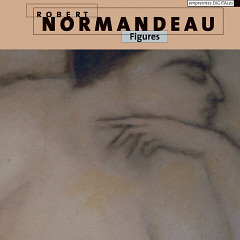
    Clocking in at exactly 60 minutes Figures is Robert Normandeau’s latest release of acousmatic music. The opening piece is Le renard et la rose (The Fox and the Rose). This is a concert suite composed from two sound sources: music commissioned for The Little Prince and the voices of the actors involved in the recording of the story. It is light and bubbly with laughter layered and processed through a chain of effects. The second piece is Figures de rhétorique which combines tape and piano. It has a cosmic feel at times similar to early Pink Floyd and Stockhausen. The third composition is Venture, named after the 60s group The Ventures. But it is more than that. Venture refers to all the progressive rock music of 60s and 70s. Normandeau states that Venture is composed exclusively of fragments of that music. Unmistakably, there are bits and pieces of The BeatlesRevolution 9 and Pink Floyd’s Grand Visier’s Party. I am uncertain of the other sources, but the resulting Venture is worth the price of this CD alone. Figures closes with Ellipse, a tape piece commissioned by Arturo Parra for him to accompany Normandeau on guitar. It sounds like heavily processed acoustic guitar scrapings, tappings, and noodlings. Or is it a swarm of angry alien bees? Figures is the high point for me of the recent empreintes DIGITALes releases.

    Venture is worth the price of this CD alone… the high point of the recent empreintes DIGITALes releases.

    Espaces tautologiques dans SilenceAndSound

    «Critique», Roland Torres, SilenceAndSound, 20 septembre 2016
    mardi 20 septembre 2016 Presse

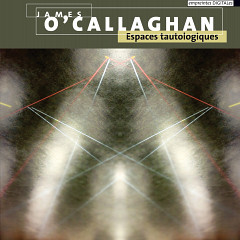
    Il y a beaucoup de similitudes entre le travail du jeune canadien James O’Callaghan et celui du compositeur Bernard Parmegiani. Que ce soit dans l’art de jouer avec les collages et de leur faire raconter des histoires, où d’esquisser des mondes fantasmagoriques, où les objets prendraient vie dans un espace musical parallèle.

    Avec Espaces tautologiques, James O’Callaghan impressionne de par sa virtuosité à fusionner les genres, passant dans un même morceau, du field recording à l’électroacoustique pour le faire exploser en route sur les terres d’une électronique glitch matinée de musique contemporaine sound designée.

    L’autre grande force est l’enchainement des titres qui ne sont pas sans évoquer une narration futuriste, où les mots seraient changés par des bribes de sons à la capacité élastique, écartant nos tympans pour y insuffler ces bruits persistants que nous avons appris à oublier.

    On ne peut s’empêcher de penser aux compositions d’Elizabeth Anderson, avec qui il partage le goût pour les ambiances froides et désolées, recouvertes de bises froides, aux vagues de gelée successives, derrière lesquelles se cachent des hordes d’êtres joueurs semant le trouble, pour que les répétitions ne se succèdent pas dans les profondeurs du chaos. Impressionnant.

    Impressionnant.

    Voyages dans Aural Aggravation

    «Review», James Wells, Aural Aggravation, 15 septembre 2016
    jeudi 15 septembre 2016 Presse

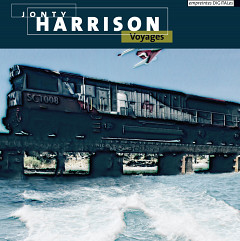
    Sometimes, arguably at its best, music has transportative qualities, either by capturing the essence of a place, or by triggering a memory which takes the listener to another time or place. On Voyages, Jonty Harrison marries these elements together.

    The field recordings collaged to form Espaces cachés are eclectic, from birdsong and passing traffic to distant voices, the wash of waves, and creaking doors. Lifts and tannoy announcements, trains and miscellaneous, extraneous sounds bring the city and countryside together over a low-level hum.

    Going / Places takes the travel and transportation theme further, having been inspired, Harrison explains in the accompanying notes, by contextualising the work thus: ‘One day, nearly 25 years ago, when I was recording a journey on the London Underground, a lost overseas visitor asked me directions: that incident gave me the idea for a piece based on the broad theme of travel…’

    And, essentially, Going / Places, is a collection of field samples which documents a journey, or a succession of journeys, literal and mental. Because geography is a state of mind. It’s perhaps worth taking into account the fact that while the sounds were gathered from around the globe, the listening experience — even on a mobile device — is likely to e rather more fixed, geographically speaking. And the location is the context, is a way.

    Although the track listing shows this as a single track with a running time of 59:55, the disc is mastered to twenty-three individual tracks, all segued, with some of the segments less than a minute long. Along the way, Harrison takes sounds from different countries, and gives flavours of myriad different cultures. Ringing bells on trams, marimbas, chatter of a bustling market, birds and insects, myriad sounds of life, and life on the move. The sense are vivid, vibrant, recorded in full colour (so to speak). There’s a palpable sense of movement, of motion here, and Harrison describes the segments as ‘scenes’. In his ‘rough guide’, he lists the locations and sound sources. The notes, in their way transport you there.

    With this album you may never need to leave the house to cross the oceans to explore the world. But after hearing it, you may want to.

    With this album you may never need to leave the house to cross the oceans to explore the world. But after hearing it, you may want to.

    Lieux inouïs dans Exposé

    «Review», Henry Schneider, Exposé, 8 septembre 2016
    jeudi 8 septembre 2016 Presse

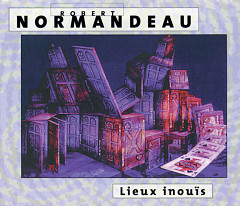
    Lieux inouïs is a digitally remixed reissue of Normandeau’s 1990 debut release. Normandeau is one of Canada’s premiere electroacoustic composers and Lieux inouïs is a collection of five compositions recorded between 1985 and 1989. The order on the disc is from newest to oldest. The opening composition Jeu is 24 minutes of sonic cinema based on different uses of “jeu,” French for game or play. This is a playful piece utilizing somewhat realistic and often unrecognizable sounds that metamorphose every one to two minutes. Jeu has a distinct Stockhausenian feel with its use of multi-layered sounds. In fact excerpts of Stockhausen’s Hymnen appear along with children at play, jazz music, crashing chairs, jack hammers, etc. The next composition, Mémoires vives, is Normandeau’s study of a requiem. Etheral choirs accelerate and spin in and out of hearing alternating with electronics and sampled acoustic instruments. This is an interesting piece that can at times sound coldly sterile and then warmly engaging. Stepping back now to 1987, the third composition is Rumeurs (Place de Ransbeck), an electroacoustic piece best thought of as an acoustic analogy of a rumor. Again, a collage of elusive sounds that scurry away as you try to study and identify them. It does have some similarities to Pink Floyd’s Several Small Species… The fourth composition is Matrechka. Just like the nested Russian dolls, Matrechka is a series of musical unveilings revealing smaller and more interesting “dolls.” The disc closes with the oldest and shortest composition Le cap de la tourmente. This is a piece of drones that cycically sweep across the sonic space alternating appearances and disappearances of the sculptures is was composed to accompany. Lieux inouïs is a diverse collection of fairly accessible electroacoustic music and is a good introduction to the genre.

    … a good introduction to the genre.

    Isadora Sings dans Harpsichord & Fortepiano

    «Review», Pamela Nash, Harpsichord & Fortepiano, no 21:1, 1 septembre 2016
    jeudi 1 septembre 2016 Presse

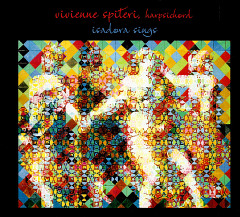
    Enigmatic maverick of the harpsichord world Vivienne Spiteri has released Isadora Sings, another CD collection of electroacoustic harpsichord alchemy. One of only a small handful of harpsichordists devoting themselves entirely to the work of living composers, Spiteri (also known by her musical alter ego of vivie’ vinçent) is credited with single-handedly reviving the contemporary harpsichord in her adopted homeland of Canada. “Au diable le conformisme” is an apt byword for her artistic philosophy: for the past 30 years she has resolutely eschewed all traditional expectations of what a harpsichordist should be, throwing off all that she considers as the deadweight of the harpsichord’s heritage as well as questioning the conventions of performance practice: in particular, the adherence to, and reverence for, the written score. Instead she continues to pursue headlong the possibilities for transforming and “extending” harpsichord sound, mainly through combination with live electronics and tape, producing much cutting-edge collaborative work with composers who share her vision, not only of the harpsichord’s predisposition for mechanistic virtuosity, but of how far its relationship with contemporary technology can go.

    In order to appreciate the technological diversity as well as the recording quality of this disc, I would urge the use of headphones, not only to allow the listener to enter the different ambient spaces of each sound field, but to engage fully with the immediacy and intimacy of harpsichord sound, whether in its pure acoustical form or in one of the many transformations it undergoes — “deconstructed” harpsichord sound, so to speak. It is not imperative to have technological knowledge to understand the impact of each of the five works on this disc, and from a purely objective and musical standpoint, the compositions speak for themselves. However, the absence of technical information in the CD notes may give rise to questions for the inexperienced electroacoustic listener, and since the intellectual ideas behind the sound engineering and the various recording set-ups are often integral to the work, it is always useful to know how they, and the collaborations, come about.

    This is much less of an issue with the first track, Cinéma, mode d’emploi for harpsichord and effects by Pierre Desrochers. The only work on the disc without a “fixed medium” or “tape” part, it is the most musically direct and least complex for the listener, with the “effects” (from sampling and layering) creating sound blocks of rich density and enhancing what is essentially the piece’s minimalist-driven, metrical nature. This is a dramatically propulsive 16- minute ride — still riveting after several playings — by a composer who demonstrates with uncompromising and devastating effect how to capture rhythmic “groove” on the harpsichord, and how to produce pulse and accent through the textural and rhythmic manipulation of layered harpsichord sound.

    If the Desrochers piece exploits harpsichord rhythm, then the title track — a collaborative work by Spiteri and composer Kent Olofsson — explores more the nature of its mechanism, with exhaustive treatment of the harpsichord strings through pitch-bending, muting, strumming and manipulation for harmonics. The sense of relish from musicians treading the line between playfulness and seriousness is tangible, but despite — or perhaps because of — the work’s 25-minute duration, some listeners may find less musical cohesion here than in the other works on the disc. Yet, whilst a casual listener may assume it to be a protracted series of randomly unrelated effects, a more searching and patient one (headphones essential) will discover the joyousness of the sound transmutations: the echoing of the harpsichord effects in the electronics and the myriad sonic impressions it generates — among them bells, voices, wind, machinery, knocking and ringing.

    Assuming that the title of Isadora’s Box for harpsichord and tape — another collaborative effort, with composer Eleazar Garzón — is an allusion to the mythical unleashing of uncontrolled forces, it captures the notion perfectly. Indeed, the tension between the more structured musical statements in the harpsichord (analogous to the containment of the box?) and the almost breath-taking flight of tape sounds (the dervish-like menace of its contents?) makes for a near-unhinged, giddy listening experience, but one well worth the discovery.

    The title of Tangram for bass clarinet, harpsichord and tape by Hope Lee may refer to a Chinese puzzle, but the composer turns the conundrum of this unlikely instrumental pairing completely on its head. The bass clarinet supplies not only the lower registers which the harpsichord lacks, but also provides a foil, with its sift-edged sound, for the immediacy and stridency of harpsichord tone, qualities that Lee modulates to good effect. But whilst there is still the novelty factor in the interaction of these disparate instrumental characters, there is too the tension arising out of the work’s “trio” disposition; the harpsichord and bass clarinet as partners — both of them fitful, whimsical and improvisatory in feel — pitted against the pre-set, fixed dimension of the “third player”.

    Jean-Claude Risset’s Pentacle for harpsichord and tape is a five-part work of high energy and calibre but also one which possesses such technical complexity that it is hard to quantify without reference to a programme note. The spatial effect of different channels is evident, and in essence it is a frenetic dialogue between harpsichord and digital sounds — mostly harpsichord-derived — and with each of the five sections stressing an individual construct relating to harpsichord timbre. Least successful of these is the distortion of tuning temperament in the third section — a highly uncomfortable, almost a-musical sound to have to tolerate, but by contrast (and indeed, one of the highlights of the disc), is the work’s dazzling fifth and final section: two minutes of frantic perpetuum mobile in cascading scales with a devastating collective effect of a hall full of amplified harpsichords.

    The disc would be a valuable addition to the libraries of electroacoustic music enthusiasts, and I would hope it makes an impact in that area. As for the harpsichordist, I can only speak for myself as someone who witnesses the possibilities of the contemporary harpsichord and the ways in which it continues to excite and inspire major composing talent such as that revealed by the recording. For that reason, I firmly and warmly commend it. The performance and production values are excellent and Vivienne Spiteri’s Hubbard French double after Taskin (1979) sounds with searing clarity.

    … I firmly and warmly commend it.

    Espaces tautologiques dans Musicworks

    «Review», Pierre-Luc Sénécal, Musicworks, no 126, 1 septembre 2016
    jeudi 1 septembre 2016 Presse

    Montréal-based James O’Callaghan confirms his position as a world-class composer with the release of Espaces tautologiques, his first album on the Empreintes Digitales label. Composed between 2011 and 2015, the four acousmatic pieces on this fifty-minute recording are further proof of O’Callaghan’s remarkable technical proficiency and virtuosity.

    Sounds are at war, ferociously whizzing from speaker to speaker. Recordings of the sounding bodies of guitars, pianos, and a string quartet are torn apart and crashed against outdoor soundscapes or dramatically ruptured by punchy thumps and propelled violin tremolos.

    O’Callaghan has cited Bernard Parmegiani as an influence, and he shares with that late composer a fondness for sculpting sound, as he imperceptibly turns car horns into wailing cries and elsewhere refines the hidden musicality of a ticking clock. Indeed, amidst the shredded samples of instruments, the composer uses the click of a lamp switch, the drop of a pencil, and other anecdotal sounds in such a way as to impart a sense of soul, which is clear to the listener. Those quirky, stranger sounds are brought to life in a thickly layered polyphony. In-depth exploration of these compositions requires several listens.

    While any one of these pieces is undoubtedly spectacular in concert, for listening to a string of four you need breathing space around each to fully appreciate them. The constant tension and density of the music make each composition an intense listening experience. Less would definitely be more for O’Callaghan’s next release.

    The constant tension and density of the music make each composition an intense listening experience.
  • 1
  • 2
  • 3
  • 4
  • 5
  • 6
  • 7
  • 8
  • 9