Sauter au contenu principal
electrocd

Blogue

68 résultats
  • 4
  • 5
  • 6
  • 7
  • 8
  • 9
  • 10
  • 11
  • 12
  • Nécropolis dans Rif Raf

    «Love on the Bits», Fabrice Vanoverberg, Rif Raf, no 221, 1 juin 2016
    mercredi 1 juin 2016 Presse

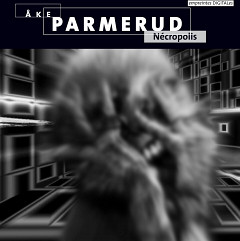
    Son nom est tout un programme, tant son retour en 2015 avait été tonitruant, et pas seulement parce qu’il rompait un silence long de douze ans (Growl). Quelques mois plus tard, Åke Parmerud renvoie au vestiaire les souvenirs de métal (la musique, pas la matière) sur son nouvel essai Nécropolis (empreintes DIGITALes). Tourné vers le versant acousmatique de son œuvre, le sexagénaire suédois nous offre quatre morceaux de sa plume, ils datent d’entre 2005 et 2011. À vrai dire, est-ce leur complexité ou leur froideur, il nous a été bien difficile de trouver des points d’accroche. En dépit de rythmes effrénés, notamment sur l’inaugural Dreaming in Darkness, ou de bruits vitreux d’une pureté cristalline sans concession (Crystal Counterpoint ̧ le bien nommé), les chemins tortueux empruntés par Parmerud nous ont parfois égarés. Seule exception, et elle est à couper le souffle, son ReVoiced de 2009, pièce vocale démentielle entre Amazonie, Russie et Luciano Berio. Au moins.

    … à couper le souffle…

    Le cri du Choucas dans Carnage News

    «Recensione», Riccardo Gorone, Carnage News, 1 juin 2016
    mercredi 1 juin 2016 Presse

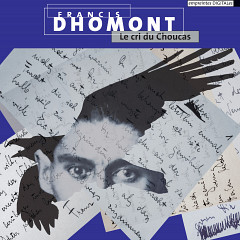
    Francis Dhomont, audioartista belga specializzato in musique concrète e acusmatica, presenta un disco la cui ricerca è iniziata una decina d’anni fa, su Kafka, dal titolo Le cri du Choucas, “il grido della cornacchia”, o, ancora meglio, “il grido della taccola”, uccello sempre passeriforme dal piumaggio nero grigiastro, spesso considerato “uccello pericoloso, associato a morte e rovina” come sostiene Florence Bancaud nel suo Kafka ou le nom impropre. E da qui il riferimento allo scrittore ceco (Kavka, in ceco, significa letteralmente taccola, cornacchia, appunto) il cui mondo e la cui figura sembrano innestarsi completamente con questo immaginario.

    Molto intelligente la narrazione delle tracce, poiché di questo si parla: la comprensione profonda che il suono si sviluppa all’ascolto orizzontalmente, come la narrazione, come il potere cinetico della voce narrante. Al di là dei titoli che sono chiaro riferimento alle opere letterarie (La loi, La colonie pénitentiaire, Le père, La métamorphose), Dhomont sviluppa le sue tracce seguendo le vicende del celebre racconto, Davanti alla legge, che spesso intervengono nei vivissimi affreschi acusmatici. La voce narrante, presenza quasi minacciosa dell’opera, è alterata, pitchata verso il basso in modo da risultare asettica e inesorabile. Il disco è sicuramente denso (momenti davvero profondi come i quasi 15 minuti di Le père in cui Dhomont mescola cori, noise, voci, rumori d’ambiente, armonici intonati, che regalano un’imponente immagine del dissidio interiore di un rapporto) dovuto soprattutto alla sua complessità, ma la scelta dell’autore riesce ad essere accattivante: il taglio prospettico scelto dal Nostro si concentra su ciò che Kafka era in Kafka, l’autore nelle sue opere, o meglio, l’autore filtrato dalle sue opere. Si pensi alla traccia Le Choucas in cui voci che si sormontano ripetono il nome dell’autore che si mescola al nome della cornacchia in ceco e francese (kafka, kavka, choucas), identificando le sue figure, mettendo a nudo l’autore e la sua figura che si auto interroga, che si auto accusa (impossibile non pensare alle atmosfere de Il Processo). Raffinate le due “parafrasi” di Dhomont (Paraphrase I e Paraphrase II) con cui prepara piccoli sipari sonori introdotto da alcuni fondamentali passaggi del racconto di cui poco sopra. Inquiétante étrangeté passa in rassegna, tra le varie registrazioni, un estratto audio che sottolinea l’olismo della figura kafkiana: il meccanismo onirico delle sue opere ha fatto sì che fossero il mezzo per poter sviluppare i diversi aspetti di lui stesso in una figura unica.

    Il lavoro di Dhomont è lo specchio incrinato della figura di Kafka e, nel contempo, una linea di luce che fa brillare aspetti inediti dell’opus all’ombra della cornacchia.

    Le cri du Choucas dans 5:4

    «Review», Simon Cummings, 5:4, 23 mai 2016
    lundi 23 mai 2016 Presse

    When it comes to acousmatic music as its finest, though, Francis Dhomont remains one of the best of the best. Le cri du Choucas (the Cry of the Jackdaw) is a 70-minute work that forms the third and final part of the composer’s Cycle of Depths (following Sous le regard d’un soleil noir and Forêt profonde). As one expects from Dhomont, it’s a bold statement that comes across both as a continuation of and an ongoing reinvention of the acousmatic ‘tradition’ (for want of a better word). Quoting Michel Chion, Dhomont calls the piece an “electroacoustic melodrama”, an extremely appropriate description for a piece founded upon and musically elaborating fragments of text both by and associated with Franz Kafka. The emphasis is psychoanalytic, Kafka’s words being expanded by considerations from Marthe Robert’s As Lonely as Franz Kafka and RD Laing’s classic The Divided Self. It takes a little time to get used to its dramatic approach, declamatory spoken passages alternating with and inserted throughout extended musical meditations, but one soon acclimatises to this rhythm, and the results pass quickly from merely fascinating to deeply moving. Dedicated to Dhomont’s father, the text and music confront very complex and painful aspects of Kafka’s own paternal relationship. In response, Dhomont regularly fashions material that’s beautiful but barbed, sometimes arranged in multiple layers of dense activity, sometimes shot through with thin splinters of razor-sharp pitch over roiling depths. Le cri du Choucas is often startlingly vivid (the opening industrial soundscape of third movement La colonie pénitentiaire is like being plunged into the prologue of a Terry Gilliam dystopia), but without any sense of calling on easy associations from ‘anecdotal’ sources. Put another way, sounds — as they so frequently do in Dhomont’s work — usually remain just out of recognisable reach, yet retaining enough recollective proximity to trigger both memory and imagination. Coherent and organic throughout, the drama in Le cri du Choucas is just as much to do with the way musical materials are judged and handled than with the work’s more immediately tangible text component. Eighth movement Un message impérial is a masterclass in poised tension; despite being situated in the middle — and background, the steady increase in pressure is heart-poundingly riveting. Considering the difficulty of the subject matter, Le cri du Choucas contains music more dark and uncomfortable than one expects from Dhomont, even in the work’s closing moments; far from offering a reassuring conclusion, it passes instead through angular, awkward, even ugly passages, surrounded on all sides by ominous glowering layers of sound seemingly coloured different shades of black. At its end, Le cri du Choucas sounds stunned, which is precisely how i felt too. It’s another spectacular creation from an undisputed master of the art.

    It’s another spectacular creation from an undisputed master of the art.

    Nécropolis dans 5:4

    «Review», Simon Cummings, 5:4, 23 mai 2016
    lundi 23 mai 2016 Presse

    Nécropolis, the latest compilation of works by Swedish composer Åke Parmerud, is altogether more problematic. Last year’s Growl indicated a composer fond of confining himself to discrete aesthetic and sonic limitations, but in the case of these four pieces, it’s surprising and disappointing to hear a recurring vagueness permeating them. In the case of Dreaming in Darkness, an attempt to “create surrealistic fragments of a blind person’s dreams”, it’s not entirely clear whether the overt lack of clarity that’s surely the work’s defining feature means Parmerud has succeeded or failed in his aims. Surrealistic it certainly isn’t, which is a shame as it might have provided something outside the palette of rather hackneyed bells, whooshes and thuds that comprise the primary content of the piece. Indeed, Parmerud’s default approach to demarcating structure via heavily-articulated percussive blunt impacts is subject to a strict law of diminishing returns. The title piece is worse, an arbitrary mashing-up of musics — from Wagner’s Valkyries to Palestrina’s Papae Marcelli mass to Mozart’s Requiem — that’s the epitome of apathetic (mis-) appropriation, with no meaningful sense of direction or purpose. Crystal Counterpoint is a more engaging examination of the sonic potential of wine glasses, fashioned into a pretty loose-weave tapestry passing through nicely differentiated sections, forming a coherent narrative. These are sounds we’ve arguably heard rather too many times in acousmatic music yet nonetheless it’s a piece that certainly makes the most of their limited but very particular timbral qualities. ReVoiced, composed in 2009, is narrowly the best of the bunch. A simple work passing through four different types of regional vocalisation, the first part is sufficiently rudimentary that it gives the impression Parmerud is simply playing with software presets, but the rest are sensitively handled, scrutinising their respective qualities. The second, featuring a Russian woman singing (the only female voice, providing some respite from the work’s overall low register emphasis) is especially lovely, but in no small part this is due to the loveliness of the source recording. It’s hard to recommend such a qualitatively-challenged selection as this, but it’s not without some nice moments.

    ReVoiced, composed in 2009, is narrowly the best of the bunch.

    Lépidoptères dans 5:4

    «Review», Simon Cummings, 5:4, 23 mai 2016
    lundi 23 mai 2016 Presse

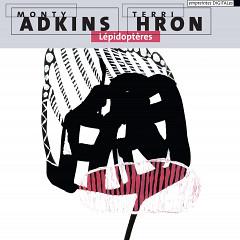
    The latest crop of releases from Canadian label Empreintes DIGITALes has proved as thought-provoking as ever, offering extremely diverse approaches to electronic music, with similarly varied results. Lépidoptères, a new 40-minute cycle of music by composer Monty Adkins in collaboration with recorder player Terri Hron, takes its inspiration, as the name implies, from families of butterflies and moths. The relationship between the various recorders used and the electronic sounds is deliberately flexible, allowing Hron scope for improvisation both materially and structurally. Selections from a distinct palette of sounds are triggered randomly, creating a ‘habitat’ for Hron, which are subsequently shaped by envelopes that, in Adkins’ words, “focus on specific families or combinations of families of sounds”. The first thing to say is that Lépidoptères is generally at some remove from the ambient aesthetic that’s characterised the majority of Adkins’ work in recent years. That in itself is a welcome and interesting development. In its place is a soundworld more spontaneous and unpredictable, where one’s listening focus is drawn primarily to the shifting, moment-by-moment articulations and textural shadings. The relationship between acoustic and electronic is well-balanced, neither predominating overall, taking turns to assume predominance in the foreground. It’s a work that, to my mind, takes time to establish itself, only really finding a foothold from the third movement, Saturniid, where the recorder is surrounded on all sounds by dense, broad agglomerations of colour and minute slivers of ticklish sonic stuff. There’s something primordial, elemental about it, carried over into the more overtly meandering environment of Anisoptera, where everything becomes simultaneously more considered yet very much more demonstrative, passing through some simply delicious episodes that stomp all over the myth that acoustic and electronic sounds can’t convincingly cohere. Hron teases out some fantastical material from her instruments, going some way towards redefining our perception of them. Taken as a whole, Lépidoptères is a nicely strange and engrossing cycle, one that finds a telling compromise between the immediacy of beauty and a more radical exploration into modes of behaviour and interaction.

    Taken as a whole, Lépidoptères is a nicely strange and engrossing cycle, one that finds a telling compromise between the immediacy of beauty and a more radical exploration into modes of behaviour and interaction.
  • 4
  • 5
  • 6
  • 7
  • 8
  • 9
  • 10
  • 11
  • 12