Sauter au contenu principal
electrocd

Blogue

2899 résultats
  • 177
  • 178
  • 179
  • 180
  • 181
  • 182
  • 183
  • 184
  • 185
  • Geisteswissen­schaften dans Touching Extremes

    «Review», Massimo Ricci, Touching Extremes, 1 mars 2008
    samedi 1 mars 2008 Presse

    Aimé Dontigny (1975) is a Canadian composer, also a contributor to projects such as Napalm Jazz and Ensemble Camp. This is his first solo release, and despite not presenting anything really unexpected it sounds interesting for its large part, with a quantity of selected emotional moments as a bonus. The author figures that this work would achieve maximum potential “in the margins of electroacoustic music, electronica and audio art.” It must be said that nowadays the no man’s land comprised by these definitions can accept loads of elemental artistries that aren’t always worthy of consideration, often just made of pre-existing snippets. Dontigny avoids the typical annoyances of the “overly intellectual,” in premise by keeping things short and concise (all tracks last a few minutes or less), then enclosing parameters from distinct worlds and styles, sometimes in full-mix mode, somewhere else deepening a single concept. Thus, some parts of this record might recall a “more accessible” John Oswald, while other sections — perhaps we should call them the most lyrical ones — could be associated to a kind of nostalgic turntablism in the vein of Philip Jeck. Still, Geisteswissenschaften remains a pretty personal statement sounding like a hundred different snapshots — lo-fi and hi-fi, convulse yet linear, physically tolling and coldly digital at once. An apparent gathering of contradictions whose balance is exactly the necessary key to penetrate the creator’s vision. For sure one listen is not enough, and I’d also suggest beginning with an attentive scrutiny, then trying this blend as a stimulating alternative ambient. Those momentary presences and interferences will mesh with life’s soundtrack without a problem.

    Those momentary presences and interferences will mesh with life’s soundtrack without a problem.

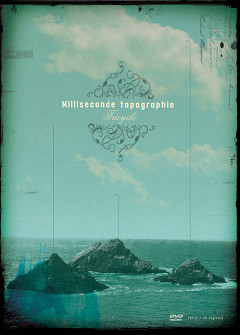
    Tricycle dans Chain DLK

    «Review», Marc Urselli-Schaerer, Chain DLK, 27 février 2008
    mercredi 27 février 2008 Presse

    Milliseconde topographie is a Canadian duo formed by Nicolas Bernier and Delphine Measroch, two artists who have made it a point to go beyond merely sonic creations and have wholeheartedly embraced an audio-video artform of their own, in which multiple layers of footage of outdoors scenes, dripping water, orchid petals, sea and beaches, bits and pieces of phrases in different lettering and other more artsy and surreal clips are synched (or not) with minimalistic and glitchy electronica under or over imposed on field recordings and the occasional acoustic instrument (it wouldn’t be a record from a french-speaking country if there was no accordion, would it?;-)). The DVD contains four videomusic pieces totaling over 30 minutes as well as almost 20 minutes of “musiques fossiles” (fossil music) made with ancient instruments (organ, dulcimer and harpsichord), which are offered in mp3 format as well.

    The duo is on to something very unique and special. I personally like some parts of this DVD very much (the photography and the vivid colors of Treelogy 2: This is a Portrait and the audio/video sync of Treelogy 3: Orchid are beautiful and of the highest caliber) and some film festivals have taken due noticed and issued a awards. The duo is currently working on underwater musical installations, musical urban posters and soundwalks.

    Definitely cutting edge and original!

    Definitely cutting edge and original!

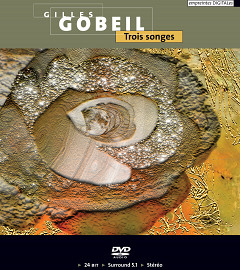
    Trois songes dans France Musique

    «Tapage nocturne», Éric Serva, France Musique, 27 février 2008
    mercredi 27 février 2008 Presse

    «Sur le même principe et dans le même format vous pouvez également vous procurer un DVD-Audio de Gilles Gobeil. Intitulé Trois songes il regroupe trois créations sonores écrites et interprétées lors d’une résidence au Zentrum für Kunst und Medientechnologie à Karlsruhe entre 2005 et 2007. Chacun de ces songes est inspiré par une œuvre littéraire la première par un ouvrage de Jacques Lacarrière, la seconde par un poème de Dante et la troisième par un scénario non réalisé de Tarkovsky. Gilles Gobeil utilise des sources sonores puisées dans les musiques du passé ainsi que le fameux Daxophone [interprété par] René Lussier, un instrument avant-gardiste inventé par Hans Reichel fabriqué en bois précieux et joué avec un archet et qui produit des sonorités proches des sons émis par l’homme ou l’animal.»

    … des sources sonores puisées dans les musiques du passé ainsi que le fameux Daxophone…

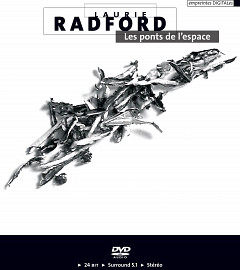
    Les ponts de l’espace dans France Musique

    «Tapage nocturne», Éric Serva, France Musique, 27 février 2008
    mercredi 27 février 2008 Presse

    «Je tiens également à vous signaler l’intéressante initiative du label empreintes DIGITALes qui vient d’éditer quelques DVD-Audio sur lesquels ont peut trouver les œuvres d’artistes en format numérique haute définition. Parmi ces nouveautés vous trouverez un album de Laurie Radford. Intitulé Les ponts de l’espace cette nouveauté discographique est une réunion de pièces multipistes diverses composées entre 2001 et 2005 et magistralement transformées en formats stéréo, Surround 5.1 (MLP, Dolby Digital ou DTS) mais également disponibles en format mp3 et acc sur un échantillonnage de 320 kb par seconde. Un traitement artistique et technique donc très académique d’une écriture savante par une figure incontournable de la musique acousmatique canadienne.»

    Un traitement artistique et technique […] d’une écriture savante…

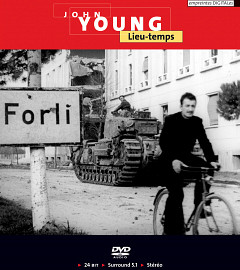
    Lieu-temps dans Titel Magazin

    «Soektrum — Musik — Digipak», Tina Manske, Titel Magazin, 21 février 2008
    jeudi 21 février 2008 Presse

    Forlì ist eine kleine Stadt im Norden Italiens. Der Komponist John Young fuhr im Jahr 2002 dorthin, um auf die Suche nach Spuren seiner Familie zu gehen; seine Eltern hatten sich mitten im Zweiten Weltkrieg hier kennengelernt, als Youngs Vater mit der neuseeländischen Armee dort als Soldat stationiert war. Sein Vater reiste mit ihm und konnte sich noch sehr gut an Gebäude und Umgebung der Stadt erinnern. Young überkam das Gefühl, hier könne man, zum Beispiel im Klang der entfernten Kirchenglocken, den Sound der Vergangenheit hören im Sinne der tempi non passati. Lieu-temps ist der Versuch, dieses Gefühl in eine Soundcollage zu überführen, eine Mischung aus Familienerzählung, geschichtlicher Abhandlung und musikalischem Hörstück. Young verwendet dafür Interviews mit Zeitzeugen, Sounds der Umgebung, historische Korrespondentenberichte und eigene Kompositionen mit elektronischen und akustischen Instrumenten. Lieu-temps findet im wahrsten Sinne des Wortes in Raum und Zeit statt. Besonders interessant dürfte die Aufnahme für Besitzer von Surround-Sound-Anlagen sein, denn sie kommen in den Genuss, mitten in der Emiglia Romagna zu stehen, während mächtige Stürme über sie hinweggehen oder neuseeländische Panzer zur Befreiung rumpeln. Beeindruckend.

    Beeindruckend.

    Mâts dans Tokafi

    «Human Voice as a Template: Music Driven by Curiosity», Tobias Fischer, Tokafi, 15 février 2008
    vendredi 15 février 2008 Presse

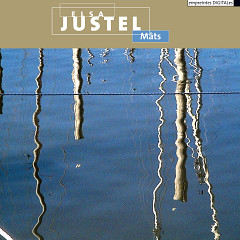
    Many composers and listeners fear a growing degree of abstraction in music, the consensus among them being that it leads to less ‘human’ and ‘emotional’ compositions. Elsa Justel disagrees. Her pieces certainly rely on a considerable amount of processing and timbral transformation. But behind the border of immediate recognition lies a colourful new world, which she playfully populates with her sounds.

    Mâts is a collection of several loose tracks compiled over the last 10 years, with the most recent piece already dating as far back as 2004 — which implies that Justel is one the composers who either needs temporal distance to be able to gauge the true value of her work or an artist who simply cares more for quality than for being up to date. If this album, her first regular CD despite several impressive distinctions at international concours and competitions, is anything to go by, the latter seems to apply here.

    The approach has paid off. To me, anyway, an album of serious academic electronics that is both sonically explorative and thoroughly enjoyable is a feat to be celebrated. Maybe her position as a professor of Avant-garde Music has indirectly been responsible for this bipolarity. In her function of teacher, Justel confronts her students both with the most adorable facets of the music she loves, as well as with the stereotypes and cliches of the genre (which she semi-jokingly mocks on Puntos, comas y refritos). Like a knowledgeable DJ, she seems to approach her job as a composer both from an angle of education and entertainment.

    Another stand-out feat is the vigorous thematic reduction she applies to her work. Midi de sable researches the sonics of the contrabass recorder and of the basset “to create a deep space,” Alba Sud deals with the fusion of concrete and synthetic source material and Au loin… bleu with the integration of speech into music. Her music is not so much conceptual, it is driven by curiosity — quite a difference in a community which often replaces healthy naivete with cool theory.

    Shades of the sources often remain audible, but blended in with the electronically manipulated elements, they, too, turn into events changed by the senses. And yet, every single sample Justel uses seems to be filled with a life of its own, talking, singing, babbling, bouncing, laughing, grating, gritting, crunching or humming. Just like an instrumentalist in search of perfection, she uses the human voice as a template, imitating, mimicking or exceding its capacities with her computer.

    This original factor turns her emissions, as void of melody or harmony as they may be, into a veritable dialogue with the listener and into an invitation to participate. It is music which creates an open, not a hermetically sealed, ambiance and which, despite its high degree of abstraction, is closer to nature than many more ‘traditional’ forms. I, for one, listened to this while taking a walk on a sunny morning along the canal.

    … an album of serious academic electronics that is both sonically explorative and thoroughly enjoyable is a feat to be celebrated.
  • 177
  • 178
  • 179
  • 180
  • 181
  • 182
  • 183
  • 184
  • 185