Sauter au contenu principal
electrocd
  • This website is also available in English.

Blogue

2899 résultats
  • 284
  • 285
  • 286
  • 287
  • 288
  • 289
  • 290
  • 291
  • 292
  • No Type dans Splendid E-Zine

    «Review», Walt Miller, Splendid E-Zine, 8 juillet 2003
    mardi 8 juillet 2003 Presse

    No Type is a Canadian label with a name that serves as its mantra. With a roster that ranges from improvisational jazz to noise to austere techno, their signings are not based on a particular sound or genre; the requisite seems to be quality, and it’s an A&R policy I sometimes wish all labels would follow, as financially suicidal as that may be. But No Type doesn’t worry about money, apparently. Formed in 1998, they’ve been giving away their music in strictly MP3 form for the last five years. Only recently have they decided to put their music out in the more traditional forms (CD, vinyl), which they do through a joint venture with www.electrocd.com.

    If no one gets paid, how does No Type attract such great artists? Any one of the eleven on this label sampler could — and sometimes does — have a deal on a less obscure label. The choppy hip hop of Headphone Science bridges Autechre and Prefuse 73, a brilliant mash of melodic IDM effusion and urban milieu that would be at home on Chocolate Industries. Both Balai Mécanique and PO, two artists featured in the recent and heralded Montréal Freebox set, turn in chunks of free jazz rhapsody that Thirsty Ear would be advised to get their hands on. Claudia Bonarelli and Tomas Jirku, who have had releases on Mille Plateaux and Force Inc., respectively, are masters of minimal laptop techno, individually infusing gentle glitch into absorbing four-on-the-floor chillout. Vancouver’s Coin Gutter lays down five minutes of ambient penetration on Timewise, its otherworldly isolationism taking sharp swings at the aorta with dark droning turns and eerie female spoken word. And then there is A_dontigny & Diane Labrosse, a collaboration of two sound-sculpture heavyweights. Their track, t.s.f., lifted from their recent one-off Télépathie, is an amorphous treat of liquid sound and musique concrète, with each artist playing off of the other in expert, real time manipulation. And so on.

    Judging from the music featured here, the No Type roster is the equivalent of titanium: strong and uncompromising. I’d venture to guess that just about any No Type would be worth your while, but it’s a little too early to etch that in stone. In the meantime, I think I’ll put a little trust in the keen senses of these Canadians and see where it takes me. Feel free to follow.

    … the No Type roster is the equivalent of titanium: strong and uncompromising.

    Télépathie dans Blow Up

    «Recensione», Nicola Catalano, Blow Up, no 62-63, 1 juillet 2003
    mardi 1 juillet 2003 Presse

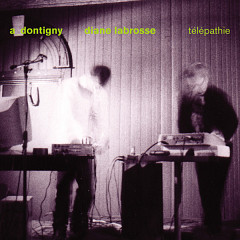
    Registrato dal vivo sulle assi dell’attivissimo club Casa del Popolo, il disco è un incontro impro-telepatico tra il computer di A_dontigny (Napalm Jazz e morceaux_de_machines) e il campionatore di Diane Labrosse (un passato in gruppi art-rock al femminile nonchè frquenti collaborazioni con Ikue Mori, Zeena Parkins, Martin Tétreault etc.), scuro e pastoso sound design elettro-acustico sotterrato da brute valanghe di interferenze e disturbi.

    All Your Dreams Are Meaningless dans Blow Up

    «Recensione», Nicola Catalano, Blow Up, no 62-63, 1 juillet 2003
    mardi 1 juillet 2003 Presse

    Il duo Coin Gutter dopo una serie di CDR autoprodotti approda alla No Type con questo cd, edito nella abstract series dell’etichetta guidata da David Turgeon ed Érick d’Orion. Un originale compendio di mezzo secolo e passa di pratiche sperimentali, dalla musica concreta alla nuova elettronica del glitch, passando per industrial, ambient, minimalismo e noise (paradigmatica in tal senso la lunga e inquietante composizione d’apertura), sublimato in una magnifica Lullaby a base di voci operistiche, più o meno manipolate, e cd-skipping.

    Jalons dans Blow Up

    «Recensione», Massimo Padalino, Blow Up, no 62-63, 1 juillet 2003
    mardi 1 juillet 2003 Presse

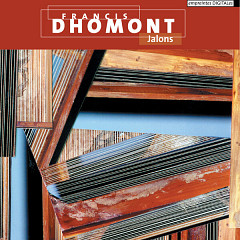
    Jalons antologizza un quindicennio abbondante (1985-2001) di lavoro dello sperimentatore elettronico, vive fra la Francia e il Québec, Francis Dhomont. Delizioso davvero. Anticipa colla sua musica, seppure in maniera mille volte più creativa, la “psicoacustica” del passato decennio di un Tetsu Inoue: eliche di suoni che sibilano, attorcigliano, cavalcano maree silenti, naufragano nel vuoto più desolato per magari poi sfrigolare via frizzanti, scintillanti, verso pareti d’elettronica estesa. Meraviglioso, ricco nel dettaglio sonico, spruzzato e macchiato di gocce musicali spesso sfuggevoli. Ma nondimeno incantevoli. (8/10)

    8

    L’adieu au s.o.s. dans Blow Up

    «Recensione», Massimo Padalino, Blow Up, no 62-63, 1 juillet 2003
    mardi 1 juillet 2003 Presse

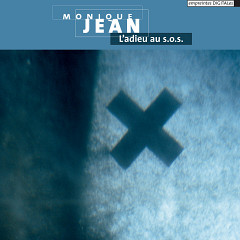
    Subisce la morfologia di un classico radio work questo debut cd della performer Monique Jean. L’adieu au s.o.s., scomposto in 6 parti, è in realtà un continuum sonoro di voci trovate-recitate, flauto basso e piccolo, tempeste d’elettronica sahariana ed elucubrazioni stratificate (in un impasto risolutivo dei precedenti elementi) sulle “figure del tempo”. L’eleganza non è mai formale ed il gesto “musicale” tende sempre ad accompagnare l’esibizione vocale (laddove presente) tratteggiandone “drammaticamente” l’impatto. In tal senso, pezzi come 13’13 pour voix défigurées stanno idealmente fra L’Apocalypse de Jean (Pierre Henry; ’68) e la Rivelazione di Giovanni (Ermanno Cavazzoni, Lucia Ronchetta; ’98), fra catarsi e dolore.

    L’adieu au s.o.s. dans The WholeNote

    «Review», Paul Steenhuisen, The WholeNote, no 8:10, 1 juillet 2003
    mardi 1 juillet 2003 Presse

    In a related vein, composer Monique Jean’s L’adieu au s.o.s. (A farewell to S.O.S) explores a similar technical world, and a contrasting expressive voice. The difference between the two composers is that while both are capably occupied with frenetic and colourful textures, Jean is more likely than Dhomont to extend further into quiet, into a concentrated, multi-faceted stasis. Francis Dhomont’s materials tend to be clipped in a quick, bright inhalation at the end of a phrase, while Jean allows her materials to settle, to breathe a touch longer. In the accompanying liner notes, Jean herself outlines aspects of this difference in writing that in Danse de l’enfant esseulée, the form “develops around the idea of the stoppage of time, or more precisely, its suspension… that of a momentary pause of sound, as much filled with tension as are points of suspension, inconclusive.” While her music explores similar sonic terrain as other acousmatic composers, Jean’s unhurried approach through her chosen sourdscape and greater than usual comfort level with softer dynamic levels are an integral part of her individual voice. While her colleagues may have equal or superior technical skills in the electroacoustic music studio, her attention to the subtleties separates her work from the crowd.

    … her attention to the subtleties separates her work from the crowd.
  • 284
  • 285
  • 286
  • 287
  • 288
  • 289
  • 290
  • 291
  • 292