Sauter au contenu principal
electrocd
  • This website is also available in English.

Blogue

2899 résultats
  • 346
  • 347
  • 348
  • 349
  • 350
  • 351
  • 352
  • 353
  • 354
  • Titakti dans AllMusic

    «Review», François Couture, AllMusic, 1 août 2001
    mercredi 1 août 2001 Presse

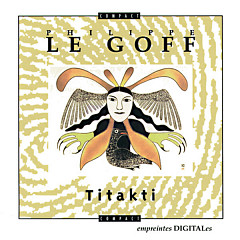
    Titakti is one of the unsung classics in the catalog of electroacoustic label empreintes DIGITALes. A cycle of four works ranging from six to 21 minutes, it was created after Philippe Le Goff spent five years in the Arctic, more precisely in Nunavik (Québec), in a handful of villages lost in the Northwestern Territories (Canada), and on Coat Island and Baffin Island. The composer immersed himself in the culture, language and daily lives of Inuits. The resulting pieces are passionate tributes to a culture still very much anchored in tradition. Speech, singing and field recordings are paired with acousmatic sounds and occasional musical instruments to create truly cinematic works, like the actual sound track to a hidden movie. The stand-out title is La Guerre (“War”), a beautiful solar piece driven by Inuit chants and enhanced by a delicate music score made of minimal contributions by a wide array of instruments, from tabla to electric guitar, Hammond organ, shinaï, and a trio of French horns evoking the sound of exploration boats. The other track featuring “music” is Nipingit—la parole, in which violin and viola dialogue with Inuit women. Meta incognita and Plan séquence (“Action Shot”) respectively open and close the CD on wide panoramic views. Laughter and joy of life inhabit all four works, making them feel like as many movements of a larger piece. Straying lightly from the more academic musique concrète to enter the realm of film-sound documentary, Titakti sits the listener in the middle of an Inuit village. Very strongly recommended, especially to persons who are looking for an easy introduction to tape music. The album was released in empreintes DIGITALes’ “Compact Compact” series.

    Titakti is one of the unsung classics…

    Figures dans AllMusic

    «Review», François Couture, AllMusic, 1 août 2001
    mercredi 1 août 2001 Presse

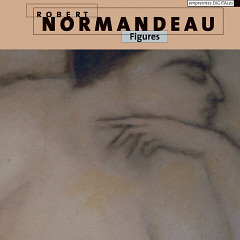
    Released in 1999, Figures is Robert Normandeau’s third CD. It contains four works, all around the 15 minute mark, all created since the release of Tangram (1994), the composer’s previous album. The first piece is his most acclaimed Le renard et la rose winner of the Golden Nica at the 1996 Ars Electronica competition (the piece had already been included on three different compilation albums). Revolving around Saint-Exupéry’s Le Petit Prince, it uses as sound samples the music Normandeau wrote for a radio adaptation of the book, plus the voice of the actors. There is very little left of the original text, as the composer furthers his explorations in sound-speech relations. Yet the narrative translates into a gripping cinema for the ear. The other highlight on this CD is Venture, an unusual exercise for Normandeau. Here he pays tribute to his progressive rock background, using as source material quotes from various 1960s and 1970s LPs. Bits of Mussorgsky’s Pictures at an Exhibition, the piece that introduced many prog fans to classical music thanks to Emerson, Lake & Palmer’s album, surface here and there. The piece is not a Christian Marclay-like collage: much of the material is manipulated to the point that it is hardly recognizable, but the standard prog rock gestures are cleverly underlined without reducing the genre to a handful of clichés. Play “spot the tune” to find quotes from The Beatles’s A Day in the Life, King Crimson’s Formentary Lady, Yes’ Close to the Edge, and many more. Compared to these two impressive works, Figures de rhétorique, for piano (played by Jacques Drouin) and tape, and Ellipse composed with samples of guitarist Arturo Parra, lack panache.

    … the narrative translates into a gripping cinema for the ear.

    Bruit-graffiti dans AllMusic

    «Review», François Couture, AllMusic, 1 août 2001
    mercredi 1 août 2001 Presse

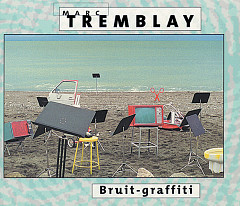
    Bruit-graffiti is composer Marc Tremblay’s first album. He approaches electroacoustics from a “popular” or “vernacular” angle. The CD offers six works based on everyday sounds and noises. This is not musique concrète, as the listener easily recognizes the sound sources. In fact, the identification process is part of the listening pleasure in this case, since Tremblay is an obsessive quoter. The first track, Vroum, opens with a “Beep Beep” sampled from The BeatlesDrive My Car — the tone is set. This piece explores the sonic possibilities of the automobile — a nice concert of horns with numerous samples from other famous and less famous car songs. Cowboy Fiction provides the finest moment. It is constructed from two western movies (El Dorado and The Searcher) and various related sound sources like samples of Hank Williams. The atmosphere is brilliantly restored, the whole thing reads like an old western plot — any fan of the genre will appreciate. Most of the pieces run for 10 to 15 minutes. Résidus (clip dadaïste) (“Waste”), on the other hand, is a 5 minute dadaist clip and the most disgusting piece of electroacoustics you will probably ever hear. A tribute to Marcel Duchamp’s work Fontaine, this piece uses noises heard in a public restroom. Very graphical, it leaves no room to the imagination. The first two minutes are funny on a very atavistic level; after it just gets sickening — but still interesting in a very weird kind of way. Tremblay’s maverick tape music, through its attraction to popular references and sound collage, is a lot less difficult than usual musique concrète, but purists will grind their teeth.

    … interesting in a very weird kind of way.

    Zoo dans AllMusic

    «Review», François Couture, AllMusic, 1 août 2001
    mercredi 1 août 2001 Presse

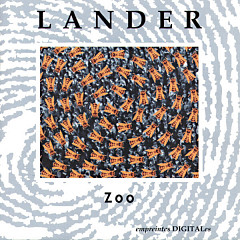
    Electroacoustic composer Dan Lander released his first CD in 1995 on the Montréal label empreintes DIGITALes. Zoo regroups four works created between 1988 and 1992. The first two are the most important, interesting and disturbing; they both address communication through the use of speech-based sound material. Talking to a Loudspeaker is a 24 minute reflection on radio. Highly entertaining and witty, it illustrates Lander’s absurd sense of humor. It opens on a series of excerpts from the Legislative Assembly of Ontario, everyone saying “Please Mister Speaker” and “Thanks Mister Speaker” (read the title of the piece again if you don’t understand why). After this introduction, the listener is taken through clichés about the weather, a staged call-in show plagued with technical difficulties, a collage of radio publicity spots — even 30 seconds of dead air. Destroy: Information Only is a lot more disturbing. A piece of audio vérité, it features friends and relatives of the composer recorded in their homes, reminiscing about a surgery he had. Over 34 minutes, their vague memories and personal anecdotes are confronted and mixed with acousmatic bits, forming an intimidating form of auto-exorcism. Failed Suicide also uses human speech as its basis, but with less interesting resutls. City Zoo / Zoo City arranges field recordings of a zoo into a loose narrative while blurring distinctions between the natural and the mechanical. Lander’s pieces require attentive listening in order to follow the discourse. His approach is highly personal, but his constant relying on words might unnerve some listeners.

    Zoo
    Highly entertaining and witty, it illustrates Lander’s absurd sense of humor.

    Les méandres du rêve dans AllMusic

    «Review», François Couture, AllMusic, 1 août 2001
    mercredi 1 août 2001 Presse

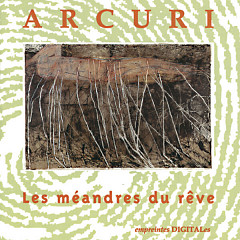
    Serge Arcuri’s Les méandres du rêve is an untypical release for the musique concrète label empreintes DIGITALes. Although the composer works with concrete sounds and creates tape music, his approach also includes lots of recorded keyboard parts and performed instruments. The resulting music belongs as much to mixed electroacoustics music as to new-age instrumental music. The first five pieces on this CD form a cycle, Les méandres du rêve (“Dream’s Meanders”), the musical part of a creation which also included choreography and scenography. After a short prelude, the listener dives head first into Arcuri’s dreamy world. La porte des sables, based on Tahar Ben Jelloun’s novel The Sand Child, includes electroacoustic sounds, oboe, English horn, and MIDI percussion. References to Arabic sonorities turn this piece into something a lot more evocative (and engaging) than what could be expected. If Murmure comes closer to a standard tape piece, Errances (for tape, oboe and harp) and Lueurs (for tape, French horn and percussion) cross over many genres, from 20th century classical to synthesizer music, both of them beautiful musical dreams. To complete the program, Arcuri added Résurgence and Chronaxie (for tape and percussion), two earlier pieces. The first one is a traditional tape piece without any distinctive qualities, while the second consists of his first experience in mixed composition. Percussionist Trevor Tureski appears on a total of three tracks, but even when he does not contribute the music remains very rhythmical. Les méandres du rêve is not your average tape music album and will appeal more to synthesizer-based instrumental music lovers than musique concrète purists.

    Les méandres du rêve is not your average tape music album…

    Articles indéfinis dans AllMusic

    «Review», François Couture, AllMusic, 1 août 2001
    mercredi 1 août 2001 Presse

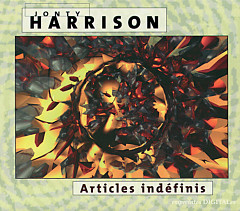
    Articles indéfinis (“Indefinite Articles”) is Jonty Harrison’s first CD. Here are collected five works of musique concrète spanning more than 15 years. The set begins with Pair / Impair, a piece created in 1978 but aging very well, based upon the notions of dynamic and static. The highlight of this CD is … et ainsi de suite…, which Harrison describes as a “French suite” in the purest musique concrète tradition. The 11 segments (mostly in the one-to-two-minutes range) present variations on the sound of wine glasses. Together with Aria, they illustrate Harrison’s fascination with movement and sound spatialization. Each segment comes back to the glasses and push their sound into another direction. Aria and Hot Air both use the prime element of air as their main sound source. The latter contains a wide range of dynamics. The composer would later create two more pieces (included on Évidence matérielle) using prime elements, wood and water, fuller and better constructed. Unsound Objects is clearly weaker: it lacks focus and poetry. Articles indéfinis proved there was serious research on musique concrète going on in England and that Harrison deserved a place among the leading figures of the genre, but his second CD would be stronger.

    Harrison deserved a place among the leading figures of the genre…
  • 346
  • 347
  • 348
  • 349
  • 350
  • 351
  • 352
  • 353
  • 354