Sauter au contenu principal
electrocd
  • This website is also available in English.

Blogue

2899 résultats
  • 376
  • 377
  • 378
  • 379
  • 380
  • 381
  • 382
  • 383
  • 384
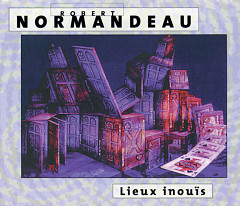
  • Lieux inouïs, Robert Normandeau dans Amazon

    «Exquisite acousmatica», Steve Benner, Amazon, 15 août 2000
    mardi 15 août 2000 Presse

    This 1990 release from DIFFUSION i MéDIA (on the empreintes DIGITALes label) represents the first disc entirely devoted to the works of Canadian acousmatic composer Robert Normandeau. The five works presented here span Normandeau’s output from 1985 thru 1989 and represent, in the composer’s own words “[virtually] the only [works] I have chosen to present publicly after more than ten years of full-time work.” That statement attests more to Normandeau’s humility and modesty, than to any shortcomings he may have as a composer.

    Indeed, there is not a single uninteresting moment on this disc, which is absolutely captivating from start to end.

    Its title, Lieux inouïs, (“Unheard-of Places”) is a reference to the unique aural landscape that Normandeau’s pieces inhabit and the surreal imagery they evoke. He calls his particular approach to acousmatic ‘Cinema for the Ears’ and so it is no surprise that the works on this disc — derived entirely from computer-processed real-world sounds — are constantly conjuring up dramatic moments in the mind’s eye of the listener. And the composer handles it all with such consummate mastery. Who else but Normandeau could so seamlessly join massed choirs singing Pérotin’s Viderunt Omnes with the sounds of pneumatic drills; or mix the chatter of children playing with the clatter of railroad trucks?

    For ears unaccustomed to this genre, probably the most easily approached work is the 12-minute acousmatic masterpiece Rumeurs (Place de Ransbeck) (1987). This work constantly oscillates “between pure sound and meaning, without ever resolving to one or the other,” thus providing endless suggestions and hints but no solid facts (rumours, in fact!) of life around the Place de Ransbeck (home of Annette Vande Gorne’s studio Métamorphoses d’Orphée, where the piece was produced).

    The slightly longer Matrechka (1986) is a more abstracted work, with its complex sound-world (of largely undiscernible origin) unfolding by degrees, each of its sections revealing another within it, like the nest of Russian dolls of its title. The 15-minute Mémoires vives (“Vivid memories,” 1989) provides another mostly abstracted vision, this time of the composer’s musical heritage, evoked by the reworking of (recordings of) fragments from other composers’ music for the Requiem Mass. The sparkling 24-minute work Jeu (“Play,” or “Game,” 1989) that opens the disc is ample testimony to Normandeau’s ability to exploit the inherent punning (i.e. ‘play on words’) connotations that his source material offers. Finally, Le cap de la tourmente (1985), which closes the disc, is a dark and brooding 7-minute ‘movement’ from the much longer Musique holographique, which accompanied an exhibit of sculptures with holograms (holosculptures) by Georges Dyens.

    … there is not a single uninteresting moment on this disc, which is absolutely captivating from start to end.

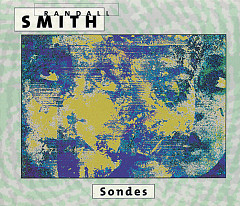
    Sondes dans Incursion Music Review

    «Review», Richard di Santo, Incursion Music Review, no 009, 13 août 2000
    dimanche 13 août 2000 Presse

    Canadian electroacoustics composer Randall Smith presents six pieces composed from 1995 through 1999. Each of these pieces is teeming with sounds and intensity; thousands of minute sounds flutter through these compositions in complex movements, revealing an intricate soundworld unlike anything I have hard before.

    InsideOut is for me the most intriguing of these works. Using only sounds derived from four instruments of an orchestra (alto flute, violin, E-flat clarinet and double bass), the piece carries a certain urgency and unease about it, and a crisp resonance that is remarkable. In the liner notes, the piece is effectively described as being “a digression through small worlds, islands of experience, each demarking a facet of the whole.”

    Other pieces incorporate the sound sources of live instrumentation: Liquid Fragments 1 uses double bass and alto flute; Continental Rift is a composition for cello and tape; and Convergence is for accordion and tape. There’s also a geological theme that runs through some of these recordings. Elastic Rebound attempts to explore — in electroacoustic terms — the geographical activity of the earth. The title is a reference to a phenomena relating to the tectonic behaviour of an earthquake. Continental Rift, says Smith, is a “metaphorical composition” describing the evolution of continental structures. This is perhaps the piece with the least sense of urgency, considering its theme is evolutionary as opposed to revolutionary; the cello intones in a way that suggests loss or a looking back to things that were. My least favourite of the compositions is Convergence: a chaotic piece for accordion and tapes, characterised by quickly shifting movements where the accordion rides erratically in a strange “carnivalesque” manner. The CD comes packaged with lengthy elucidations by the composer on each of the pieces, describing their compositional histories. Also for each piece, the contexts, themes and impressions are discussed with great interest by Mike Hoolboom.

    Randall Smith is certainly an inventive and innovative artist, experimenting with new electroacoustic techniques and creating surprising results. Each of the compositions on Sondes carries a very unique sound full of complexity and urgency, a hectic soundworld full of transitions and sharp movements.

    … a very unique sound full of complexity and urgency…

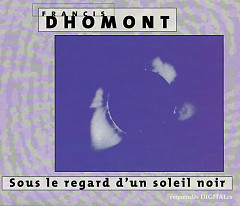
    Sous le regard d’un soleil noir dans Array Online

    «Review», Jon Christopher Nelson, Array Online, 6 août 2000
    dimanche 6 août 2000 Presse

    Acousmatic and soundscape composition are arguably the most important compositional tendencies in Canadian electroacoustic music today. Rooted in musique concrète, acousmatic music treats the sound source as an abstract element which can be modified to suit a formal plan laid out by the composer. Recorded sounds are taken out of their context and their temporal and spectral characteristics are transformed, sometimes beyond recognition. Contrastingly, soundscape composition keeps the sound material close to the original recordings, and places the musical process within a specific socio-cultural context.

    Francis Dhomont is among the foremost composers in the acousmatic tradition.

    Since 1963, he has produced several dozens of works for tape. Sous le regard d’un soleil noir (Under the glare of a black sun) was done between 1979 and 1981. Its CD release dates from 1996. This is the first work of a trilogy inspired by psychoanalytic thought.

    According to Dhomont, this work proposes a meeting of the imagination (‘psychology of depths’) with the mental images produced by the acousmatic treatment of sounds. Dhomont uses texts by psychiatrist — psychoanalyst Ronald D Laing (among other authors) to describe the journey of a schizophrenic mind from the ‘incarcerated self’ to the catatonic state.

    The piece is structured in eight sections lasting four to eight minutes each. Dhomont uses three strategies to achieve formal unity: (1) The text is delivered almost without inflections and it is clearly articulated to keep it comprehensible. Little processing is applied. (2) Material from previous sections is recycled achieving an impressive economy of means. (3) The pitch class B natural is employed as a pivot and as a recurring motive throughout the piece.

    Dhomont shows his compositional craftsmanship by keeping the pace of the sections masterly balanced. Sound objects are carefully designed to keep sources’ identities hidden. When these can be identified, they are meant to fulfill a specific formal function. For example, after the listener has been exposed to several minutes of abstract sound, the sudden appearance of a talking crowd (Inner Citadel, at 1:10) provides a striking contrast. The voice of the narrator is usually kept as a layer separate from the musical material.

    After twenty years of its conception, Sous le regard d’un soleil noir starts to feel the weight of time. Some of the sound processing techniques employed may sound a bit artificial today, e.g., the low pass and high pass filtering of the voice. The use of amplitude envelopes on natural time varying sounds eliminates important temporal cues. Thus, the spectral characteristics of these sounds do not fit their temporal structure creating a perceptual paradox. Check, for example, the articulation on the B natural in the section titled Implosion.

    Keeping in mind the year of its realization and the concepts underlying its formal plan, Sous le regard d’un soleil noir stands as a landmark of acousmatic composition.

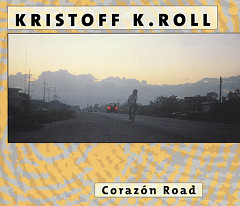
    Corazón Road dans Splendid E-Zine

    «Review», Noah Wane, Splendid E-Zine, 31 juillet 2000
    lundi 31 juillet 2000 Presse

    In the tradition of French musique acousmatique, cinema for the ear, comes Kristoff K.Roll’s Corazón Road. It is a musical travel diary of the duo’s trip through Central America — but don’t worry, it’s more interesting than your aunt Twilla’s slide show of her trip to Palm Beach! What Kristoff K.Roll’s members Carole Rieussec and Jean-Christophe Camps do here is more of an artistic impression of their voyage than a travelogue. The piece’s five movements each have a distinct personality and seem to correlate with distinct legs of the journey. Everything has that wonderful ethereal, disembodied quality that is so characteristic of acousmatic music. I like Belize City, with its strong Jamaican flavor, and Guatemala, which starts with the sounds of torrential rain and ends with the fascinating sounds of some kind of local evangelical tent meeting.

    … wonderful ethereal, disembodied quality that is so characteristic of acousmatic music.

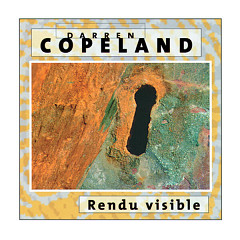
    Rendu visible dans Incursion Music Review

    «Review», Richard di Santo, Incursion Music Review, no 006, 2 juillet 2000
    dimanche 2 juillet 2000 Presse

    If Bernhard Günter’s time, dreaming itself struck me as having an acutely visual effect on me as a listener, then Darren Copeland’s Rendu visible takes this theme and makes it his most explicit concern. Drawn from entirely environmental sounds, the pieces presented on this disc are rich aural textures suggesting a most intricate visual environment. Sounds of rushing water, the wind, clusters of birds, voices, cars, and a host of other mysterious and visually suggestive sounds populate the three works on this disc, composed between 1993 to 1996. For all their aural wonder, these recordings remind us that even if we are standing in the apparent ‘quiet’ of a desolate wooded area, if you start to pay attention you realise that what you perceived as quiet is actually full of life and sound.

    In the liner notes to the disc, Copeland describes his theory that “a composition using real world sounds is able to re-awaken latent visual imagery in the mind of the listener, as if this disc was really an empty canvas or a fresh stock of film, [where] soundscapes furnish the listening imagination with a magical lens for viewing invisible worlds.” Indeed. And this accounts, says Copeland, for the ubiquitous visual analogies used by so many acousmatic composers in the titles or program notes for their works. Copeland takes this notion one step further, though. He seems to have an implicit desire to stimulate specific visual images and meaning through his works, though he admits his limitations:

    It is virtually impossible for me, at the present time, to stipulate what visual image or associated meaning is being evoked for any person at any particular moment on this disc. Not until credible studies are undertaken about the imagination’s ability to visualize from sonic sensory input alone can I comfortably approach composition outside the realm of musical abstraction.

    But this for me represents a darker, more autocratic side of musical expression that I prefer not to endorse. To accomplish this wish of being able to stimulate specific visual responses in the mind of the listener is to rob the listener of his autonomy, to rob him of the chief pleasure of listening, which, like reading, allows the listener to make free associations and respond to a piece on his own terms, contributing to an open ‘dialogue’ between composer, music and listener. This idea takes the concept of musical rhetoric — which, of course, is already an immensely suggestive medium, which already directs the imagination in extremely powerful ways — one serious step further. A step I’d rather not see taken. You can set up your piece in whatever manner you like, build the most contrived listening environment, feed your listeners with descriptions, images, and suggestive sounds. But let the listener explore what he is given at his own pace, and with the freedom of his own perception and sensibilities. Otherwise, what you’re left with is a row of rotting cabbages. Hardly what you’d call a listener’s utopia.

    … rich aural textures…

    Miniatures concrètes dans Sztuka Fabryka

    «Review», Geert De Decker, Sztuka Fabryka, 1 juillet 2000
    samedi 1 juillet 2000 Presse

    For us it is a completely new form of music, never heard by us before. But it is a very surprising one. It is putting together all kinds of sounds and a search for the most strange sounds that surrounds us for creating very delicate compositions. These compositions does not stress rhythm or music, but the beauty of how sounds can appear when you start to compose with it. To understand this kind of music we quote from the enclosed booklet about the composition Aquaéra from Stephan Dunkelman (Belgium):Aquaéra constitutes my first attempt at composing with sonic elements sampled from reality whose morphological substance infers or moulds the movements of other acting elements.” We recommend this CD for those who seek ultimate compositions of sounds. Musique concrète is the alchemy of sounds.

    … for those who seek ultimate compositions of sounds.
  • 376
  • 377
  • 378
  • 379
  • 380
  • 381
  • 382
  • 383
  • 384