electrocd

Blog

2899 results
  • 370
  • 371
  • 372
  • 373
  • 374
  • 375
  • 376
  • 377
  • 378
  • Moment in Sztuka Fabryka

    “Review”, Geert De Decker, Sztuka Fabryka, November 1, 2000
    Wednesday, November 1, 2000 Press

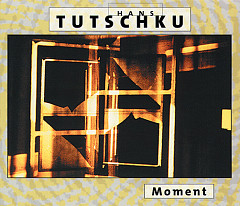
    All 5 tracks on this CD are electroacoustic compositions wherein he work with several recorded sounds. [Hans Tutschku] experiments with these sounds, just plays them and makes compositions or re-aranges the sounds in several ways so that completely new sounds are created. On each track he handles the sounds completely differently and focuses himself on a specific source of sounds.

    In the first track for example he uses sounds he recorded in Asia. This track last about 16 minutes and is a composition that has the almost mystical touch of Asia, soft strange sounds. In a second track he uses voices and transformations of voices, somewhere else there are again vocal and instrumental sounds. The use of vocals or the voice as instrument is present in the majority of the compositions. Also instrumental sounds such as bells, strings, sounds that sounds as creeping doors, and certain daily background sounds are present in his works, or sounds that sounds as such sounds. So difficult it is to describe his work. The compositions can be compered as opera because there is a certain theatrical atmosphere in the music. It not tells a story, the sounds just brings a theatrical atmosphere.

    … the sounds brings a theatrical atmosphere.

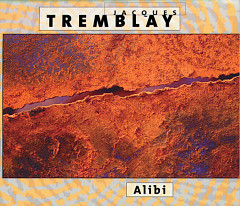
    Alibi in SAN Diffusion

    “Review”, Anna Rubin, SAN Diffusion, November 1, 2000
    Wednesday, November 1, 2000 Press

    [This text was also printed in Computer Music Journal #25:1 (ÉU), 1 mars 2001]

    The new Jacques Tremblay CD, Alibi, includes six pieces dating from 1990–95. Tremblay is a young composer who explains in the program notes that he began as a guitarist and encountered electroacoustic music as a revelation. Further, he grounds his work in the use concrete sound, both vocal and ambient and favors a rich and dark sound palette. The typical sonic makeup of the first three pieces, in particular, are so varied and rich, yet oddly similar to each other, that listeners may prefer to listen to the works in the following order: 1, 4, 2, 6, 3, 5.

    The first work, Hérésie ou les bas–reliefs du dogme (1990), is a relatively long piece of twenty–one minutes which includes extended recordings of an American fundamentalist Christian preacher along with snippets of Frank Sinatra, and Muslim and Gregorian chant. The extended rant of the American is juxtaposed with French dialogue which I could not follow but which another reviewer characterized as papal posturing. Most of the quoted speech is enmeshed in a rich stew of repetitive, mechanical sounds, and long stretches of bell–like overtones emphasizing upper partials over repetitions of tonic and dominant. Occasional stretches of Tibetan horns and Gregorian chant (sung by a woman, yet another heresy!) gradually distort and slither away. The religious spirit is viewed here through the lens of perhaps those dark Spanish baroque paintings, all blood, fire and damnation, although religion itself is viewed as the evil. The piece inscribes a long arc of 18 minutes, pauses, and then has a 3 minutes coda of similar material. I am not altogether convinced of the larger form but certainly Tremblay has a feel for climactic intensity and gnarly sounds which get under your ears.

    Oaristys (1991) is described as following the stages of a hypothetical night of love, (p 14, notes) and is divided into six movements entitled Call of Desire, Approach, Embraces and Sensuous Delight, Animal Urges, Scattering, and Inflection. It is highly sensual but ominous as well. But then great passion is often companion to the sense of danger, of vulnerability before the beloved other even as union occurs. Tremblay draws from both these sides of the erotic experience.

    Waves, bird–like calls, cello quotes from a Bach Saraband, and the stylized vocalizations of a Japanese Noh actor all enmesh the listener is a sinuously rich texture. The second section grabs along with the erotic and informal laughter of a woman, albeit looped and cycled with percussive patterns reminiscent of bird calls. He characterizes this section as a remake of the Erotica movement of Pierre Schaeffer and Pierre Henry’s Symphonie pour un homme seul. Sounds progressively expand, speed up, reappear, distort and disappear in a mercurial trajectory and the resulting four movements follow each other until ending in a slow, brooding finale.

    The third work, L’intrus au chapeau de spleen (The Intruder with a Spleen Hat) is a mysterious stew which incorporates favorite Tremblay strategies multi–layer repetitive mechanical sounds, sinuously morphing gestures, but allows a bit more silence in the mix to frame individual gestures. A mysterious, watery and nocturnal world is evoked, the sense of what boils and roils beneath otherwise ordinary surfaces.

    Rictus nocturne (1992), again in six movements, evokes the jam session of jazz. I quote the composer: Each movement follows its own story and develops a compositional problem: montage; play–sequence, of density; of silence; and of sketched, improvised and edited sequences from object instruments. (p 16, notes) But jazz idiom is absent in the composers own music though intermittently quoted. Interestingly, this piece includes the most introspective and quiet music heard on the CD up to this point. What Tremblay seems to love most of jazz is its quiet balladic side as well as the needle noise of old records which he riffs upon.

    Jeu d’ondes quotes Ravel’s Jeu d’eau and includes quotes from historic recordings of reflections on the problems of creating an FM network for radio. Delightful confections of boat noises, much of it frothy and effervescent make this a tasty morsel.

    The work, La robe nue, (The Naked Dress) uses string sounds for a good deal of its material as well as bells, train and horse; he evokes Proust’s Cambray, the first book of Remembrance of Things Past. Tremblay returns to a reflective mood, giving individual sounds room to gently resonate. This piece is extremely effective in maintaining a languorous, yet musically compelling texture throughout.

    … Tremblay has a feel for climactic intensity and gnarly sounds which get under your ears.

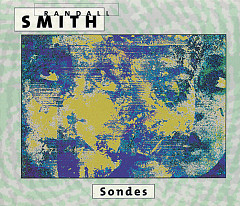
    Sondes in Blow Up

    “Altrisuoni in breve”, Etero Genio, Blow Up, no. 30, November 1, 2000
    Wednesday, November 1, 2000 Press

    Canedese, dell’Ontario come’l Lupi’, Randall Smith ha iniziato componendo colonne sonore per registi sperimentali, Passato poi alla composizione tout court lavora con computer e nastri manipolando suoni naturali e suoni ottenuti con strumenti questi ultimi vengono sovente riprocessati in tempo reale: Sondes contiene brani composti nel quinquennio ’95-’99 che rispetano i canoni descritti, con l’autore coadiuvato a tratti da otimi strumentisti come il violoncellista Paul Widner e il contrabbassista J Tracy Mortimore. Piace soprattuto Convergence dove Smith misura i suoi nastri con gli echi popolari della fisarmonica di Joseph Petric, Un buon disco anche se, e non vorremmo con ciò sembrare antipatici, puzza un po’troppo d’accademia. (8/10)

    Un buon disco…
    8/10

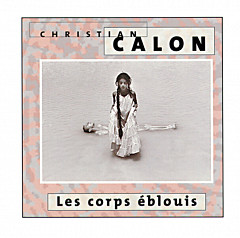
    Les corps éblouis in Sztuka Fabryka

    “Review”, Geert De Decker, Sztuka Fabryka, November 1, 2000
    Wednesday, November 1, 2000 Press

    On this CD just one composition that takes 22:45 minutes, the name of the track is obviously Les corps éblouis and is created in 1994. It is an interesting composition that starts with soft non-rhythmical ambient tunes that can be described as having the sound of crystal instruments and strings. Halfway the colour of the composition transforms from musical waves into music that starts to get more hypnotic, very slowly it transforms. From crystal sounds it goes to a random assembly of tunes and strings. All happens so delicate that the transformation in tunes has almost an hypnotised effect. Almost to difficult to describe you have got to hear it, to understand it.

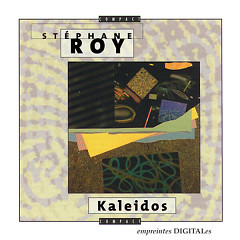
    Kaleidos in Sztuka Fabryka

    “Review”, Geert De Decker, Sztuka Fabryka, November 1, 2000
    Wednesday, November 1, 2000 Press

    On this CD there are 4 compositions, each is performed almost in the same style of music. Stéphane plays with sounds that he is able to create in an acoustic way and also in an electronic way. Sometimes the acoustic sounds are reworked electronically. Sometimes the composition is a chaotic mix of tunes, while in some songs it is a peaceful mix of easy tunes. It is not ambient music it is electronic music that can become real hypnotic.

    Musiques naïves in Sztuka Fabryka

    “Review”, Geert De Decker, Sztuka Fabryka, November 1, 2000
    Wednesday, November 1, 2000 Press

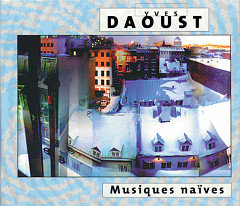
    Yves Daoust instrument is the piano, since as a child, therefore you find on this CD piano music. Not just classical piano music, no experimental music with the piano. He does not avoid using the classical piano sounds in combination with the new electronics. Impromptu (1994) the first composition is a combination of both, a classical play of Chopin is recorded with a sequencer and reworked. The result is a composition that starts with the classical timbre of the piano surrounded with an ambient atmosphere that slowly transforms into a very hypnotic atmosphere of piano tunes that comes and goes very quick. In the second track he goes completely an other way, there he plays with sounds and tunes. This way he creates stories with several atmospheres, sometimes you find yourself listening to a heavenly atmosphere of an other dimension while a bit later the nerve breaking sounds of a fair comes over you. Playing with sounds and tunes is what you also can found in the 4 other tracks on the CD. Especially his search for what is able to do creatively in music with what is there on the world. He works with sounds that he can creates and find around him, with the bell sounds of the Notre-Dame in Montréal, Water Music is a composition made with several sounds of water, and last but not least makes a composition with archive material from French Radio-Canada. Yves Daoust is a master of the composition, because he proves here that there is able to make music with the collage of sounds, thanks to the several atmospheres that he is able to put into his compositions.

    Yves Daoust is a master of the composition…
  • 370
  • 371
  • 372
  • 373
  • 374
  • 375
  • 376
  • 377
  • 378