Sauter au contenu principal
electrocd

Blogue

2899 résultats
  • 360
  • 361
  • 362
  • 363
  • 364
  • 365
  • 366
  • 367
  • 368
  • Délirantes dans Nightwaves

    «Reviews», Gary Flanagan, Nightwaves, no 8, 1 avril 2001
    dimanche 1 avril 2001 Presse

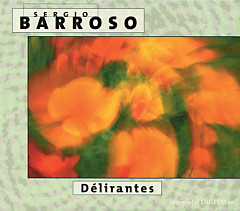
    This is a two CD set of electroacoustic music by another artist on the Diffusion i Media label. Upon one listen, the listener can immediately notice the very obtrusively cinematic nature of this music. Barroso uses a variety of equipment (including a Yamaha DX7!) to create an intense musical climate. And calling it intense is putting it mildly. These CDs never come up for air… almost every second is soaked with an undercurrent of drama and tenseness. Just imagine the music that you hear in a film just before the monster jumps out from around a corner. That is basically the sound of Délirantes. En Febrero Mueren Las Flores features clangorous industrial noise, yet this is a fine distinction. Overall this is highly climactic music in the vein of Bernard Hermann, yet it very guickly reaches its peak and tires itself out. Very intense but somewhat one-dimensional.

    … almost every second is soaked with an undercurrent of drama and tenseness.

    Le parfum des femmes — Das Perfüme der Frauen, OHM / Avatar dans The Wire

    «Soundcheck Review», Andy Hamilton, The Wire, no 206, 1 avril 2001
    dimanche 1 avril 2001 Presse

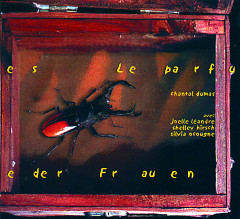
    A prize-winning trilogy of narrative pieces produced for German radio during 1996-97, and inspired in part by the improvising shills of panticipating musicians. All three stories articulate the experience of migration, with various voices woven through a mix of instrumental sound and environmental recordings. Silvia Ocougne’s guitar and voice ebb and flow with the rhythms of waves and wind, the mewing of gulls, sea traffic and whales calling. The multiple voices of Shelley Hirsch roam amongst nomads while children play hide and seek. The psychological contusions encountered at checkpoints and on border crossings are mirrored in Joëlle Leandre’s double bass. Compelling work, finely conceived and sensitively realised.

    Anecdotes dans AllMusic

    «Review», Tom Schulte, AllMusic, 17 mars 2001
    samedi 17 mars 2001 Presse

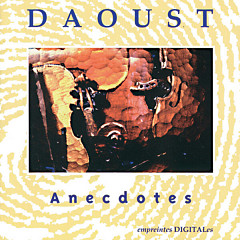
    On the eight pieces presented on Anecdotes, composer Yves Daoust uses motifs from Western classical music as springboards to wholly original audio collages. Daoust further combines elements of musique concrète into these works. As the works of Beethoven and Bach are now culturally dissipated into commercials and film scores, Daoust diffuses these themes into a sonic kaleidoscope of environmental sounds and samples. The samples are truly mundane, but taken out of context and placed on the canvas of instrumental flotsam, they become mysterious and full of meaning. Each piece is composed for assembly from audio tape segments. Often, a solo instrument is present to provide the transmogrified melody. These instruments include piano, flute, and accordion.

    … an impressive work.

    Sources / scènes dans Soundbase Online Musikmagazin

    «Rezensionen», Dirk Janßen, Soundbase Online Musikmagazin, 12 mars 2001
    lundi 12 mars 2001 Presse

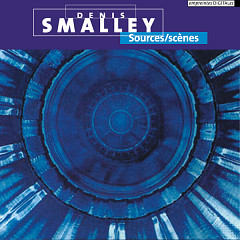
    Musik von Intelektuellen für… Intelektuelle? Sicher bin ich mir bei Sources/scènes da nicht, wenn dieses Werk über die Klangexperimente des Elektroakkustik Gurus Denis Smalley auch nicht für das Mainstream Publikum geeignet sein mag, aber dennoch Freunde von avandgardistischen Sounds und düsteren Soundtracks gleichermaßen ansprechen könnte.

    Dem einem dürfte diese CD durchaus auch durch sein bedrohlich, pulsierendes Flair gefallen, wobei dies nicht veraussetzt, daß man sich intensiv mit den Motiven auseinandersetzt. Der typische Hörer solcher Werke versucht aber die Intention, die hinter den ‘Krachwogen’ und ‘stillen Momenten’ steckt, zu entdecken und zu verstehen. Hierbei behilflich ist — wie auch beim Werk von Adrian Moore — das ansprechende und erklärende Artwork. Zu den fünf Titel gibt es ausreichend Informationen, die neben den verwendeten ‘Instrumenten’ bzw. ‘Werkzeugen’ auch die Absicht des Künstlers offenlegen. Denn es ist nicht unbedingt offensichtlich oder leicht zu erkennen, daß z.B. beim Track Empty Vessels aus dem Jahr 1997 sämtliche Klangkonstrukte aus dem Zusammenspiel von leeren Behältern und Umgebungsgeräuschen entstehen, auch wenn der Titel beschreibend sein dürfte. Tides besitzt durch sein Zusammenspiel von Wasser und Klängen eine beinahe schon entspannende Funktion, ein Moment um sich von den Soundexplosionen, die einen bei Base Metals immer wieder hochschrecken lassen, zu erholen. Tip: Niemals auf dem Discman hören. Eine Austeuerung der Lautstärke ist nicht möglich, da hier der Begriff ‘Laut/Leise-Dynamik’ sehr streng genommen wurde…

    Connexion dans L’entrepôt

    «Kritiek», Tom Wilms, L’entrepôt, 10 mars 2001
    samedi 10 mars 2001 Presse

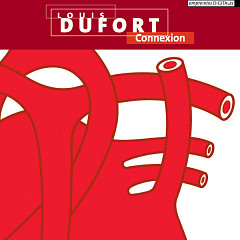
    Louis Dufort studeerde af in electoacoustische composities in Montréal Nu verdoet hij zijn tijd met componeren voor Marie Chouinard contemporary dance company, zijn werk bij ‘the artistic committee of ACREQ,’ en het creëren van hybride en ongebreidelde muzikale experimenten.

    Ondertussen ben ik in de lectuur gedoken, ik ken te weinig van de electroacoustiek om er echt iets zinnig over te zeggen. Ik ben op zoek van waar het vandaan komt, en wat de doelstellingen zijn van het genre. Als iemand me met informatie kan helpen. Het is de bedoeling dat ik hier een klein artikeltje rond ga breien.

    ‘A work that makes use of continuous discontuity’ dit zou de leidraad zijn van Transit, de eerste compositie op Connexion, daterend uit 1998. Wat maak je op uit zoiets. Het is discontinu: de structuur lijkt onlogisch, discontinu te zijn. Het stopt steeds op zeer agressieve manier. Ten tweede zou er continuïteit in die discontinuïteit te vinden zijn: een zelfde geluid lijkt steeds terug te keren, maar telkens gemanipuleerd, telkens is gebruik gemaakt van verschillende filters, etc. Verder in het stuk, de discontinuïteit laat immers alles toe, komen er nog andere geluiden, bijvoorbeeld stemmen bij.

    Pointe-aux-Trembles (1996) is eerder een rustig stuk, waar stilten, of schijnbare stilten een groot aandeel in hebben.

    Zénith (1999) ‘the fromal expansion of form’ zoals Louis Dufort het uitdrukt, lijkt organische te zijn dan bijvoorbeeld Transit. Het geluid zwelt aan, en kwijnt weer weg tot een ander zijn plaats terug inneemt, een geleidelijke expansie van geluid, niet abrupt zoals in Transit. Electroacoustische ambient.

    Décap (2000), een compositie voor de choreografie ‘A Study for wrists and ankles’ van Marie Chouinard. Dit is veruit het agressiefste stuk dat me soms aan John Zorns project ‘God’ doet denken. Even komt er een stuk in waarvan drum’n bass één van de belangrijkste invloeden lijkt te zijn.

    … hybrid and unbridled musical experimentation…

    Alibi dans Computer Music Journal

    «Review», Anna Rubin, Computer Music Journal, no 25:1, 1 mars 2001
    jeudi 1 mars 2001 Presse

    [This text was also printed in SAN Diffusion (RU), 1 novembre 2000]

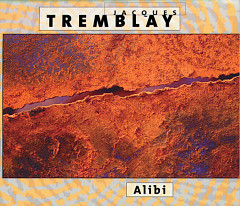
    The recent Jacques Tremblay compact disc, Alibi, includes six pieces dating from 1990-1995. Mr. Tremblay is a young composer who explains in the program notes that he began as a guitarist and encountered electroacoustic music as a “revelation.” Further, he grounds his work in the use of concrete sound, both vocal and ambient, and favors a rich, dark sound palette. The “typical” sonic makeup of the first three pieces, in particular, are so varied and rich, yet oddly similar to each other, that listeners may prefer to listen to the CD in the following order: tracks 1, 4, 2, 6, 3, 5.

    The first work, Hérésie ou les bas-reliefs du dogme (1990), is a relatively long 21-min piece, which includes extended recordings of an American fundamentalist Christian preacher along with snippets of Frank Sinatra and Muslim and Gregorian chant. The extended “rant” of the preacher is countered with French dialogue which I could not follow, but which another reviewer characterized as “papal posturing.” Most of the quoted speech is enmeshed in a rich stew of repetitive, mechanical sounds, and long stretches of bell-like overtones emphasizing upper partials over repetitions of tonic and dominant. Occasional stretches of Tibetan horns and Gregorian chant (sung by a woman, yet another heresy!) gradually distort and slither away. The religious spirit is perhaps viewed here through the lens of those dark, Spanish baroque paintings, all blood, fire, and damnation, although religion itself is viewed as the evil. The piece inscribes a long 18min arc, pauses, and then has a 3-min coda of similar material. I am not altogether convinced by this large-scale form, but certainly Mr. Tremblay has a feel for climactic intensity and gnarly sounds which get under your skin.

    Oaristys (1991) is described as following “the stages of a hypothetical night of love,” and is divided into six movements: Call of Desire, Approach, Embraces and Sensuous Delight, Animal Urges, Scattering, and Inflection. This work is highly sensual, but ominous as well. But then, great passion is often companion to a sense of danger, of vulnerability before the beloved other, even as union occurs. Mr. Tremblay draws from both these sides of the erotic experience. Waves, bird-like calls, cello quotes from a Bach Sarabande, and the stylized vocalizations of a Japanese Noh actor all enmesh the listener in a sinuously rich texture. The second section loops and cycles erotic feminine laughter with percussive patterns reminiscent of bird calls. The composer characterizes this section as a remake of the Erotica movement of Symphonic pour un homme seul by Pierre Schaeffer and Pierre Henry. Sounds progressively expand, speed up, reappear, distort, and disappear in a mercurial trajectory, and the succeeding four movements follow each other until ending with a slow, brooding finale.

    The third work, L’intrus au chapeau de spleen (The Intruder with a Spleen Hat), is a mysterious sonic stew which incorporates favorite Tremblay strategies — multi-layered repetitive mechanical sounds, sinuously morphing gestures — but allowing a bit more silence to frame individual gestures. A mysterious, watery, and nocturnal world is evoked, conveying the sense of what boils and roils beneath otherwise ordinary surfaces.

    Rictus nocturne (1992), again in six movements, evokes the jam session of jazz. I quote the composer: “Each movement follows its own story and develops a compositional problem: montage; play-sequence, of density; of silence; and of sketched, improvised and edited sequences from object instruments.” The jazz idiom, though, is absent in the composer’s own music, though it is intermittently quoted. Interestingly, this piece includes the most introspective and quiet music heard on the disc to this point. What Mr. Tremblay seems to love most of jazz is its quiet balladic side as well as the needle noise of old records which he riffs upon.

    Jeu d’ondes quotes Maurice Ravel’s Jeu d’eau, and also includes quotes from historic recordings of reflections on the problems of creating an FM network for radio broadcast. Delightful confections of boat noises, much of it frothy and effervescent, make this a tasty morsel.

    La robe nue (The Naked Dress) uses string sounds for a good deal of its material, as well as bells, train, and a horse. The composer evokes Marcel Proust’s Cambray, the first book of Remembrance of Things Past. Mr. Tremblay returns to a reflective mood, giving individual sounds room to gently resonate. This piece is extremely effective in maintaining a languorous, yet musically compelling, texture throughout.

    … extremely effective in maintaining a languorous, yet musically compelling, texture throughout.
  • 360
  • 361
  • 362
  • 363
  • 364
  • 365
  • 366
  • 367
  • 368