electrocd

Blog

2899 results
  • 347
  • 348
  • 349
  • 350
  • 351
  • 352
  • 353
  • 354
  • 355
  • Connexion in AllMusic

    “Review”, François Couture, AllMusic, August 1, 2001
    Wednesday, August 1, 2001 Press

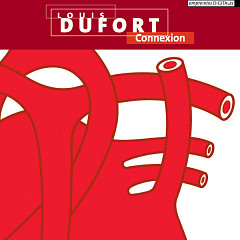
    Louis Dufort’s first CD revealed an original electroacoustics composer who, while relying heavily on the type of acousmatics created within the walls of Music faculties, managed to give his pieces an unusual delinquent twist. What other composer asked the singer of a death metal band to supply sound sources? You can hear the grunts of Gorguts’ Luc Lemay on Zénith and Décap. Dufort did not tear down the wall between the two forms of expression, but he sure found in Lemay a surprising interpreter. When his voice appears, the piece gains in dramatic intensity. Along with the human voice, machines hold an important place in Dufort’s art. Pointe-aux-Trembles was inspired by the refineries of East-end Montréal, while from parts of Décap arise temporary industrial rhythms. Maybe it has to do with the fact that the latter was first created for a choreography by Marie Chouinard (it stands very well on its own). Transit is the most conventional work of this set, an acousmatic study on “continuous discontinuity” (the composer’s choice of words). Less striking mostly because of its weaker structure, it still contains intriguing sounds and textures. Connexion makes a very strong debut from an artist who could rise up to become a singular member of the electroacoustic community.

    … an artist who could rise up to become a singular member of the electroacoustic community.

    Évidence matérielle in AllMusic

    “Review”, François Couture, AllMusic, August 1, 2001
    Wednesday, August 1, 2001 Press

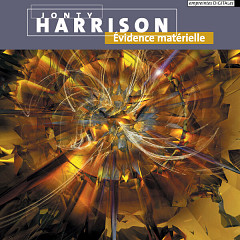
    Father of British acousmatic music, Jonty Harrison’s art runs deep and allies technique, poetry and a strong sense of sound spatialization. The works included on Évidence matérielle make no exception to this rule. The album begins with Klang, the oldest piece of this set and maybe Harrison’s best known work (it was released on two previous occasions and was awarded a Bourges Awards Euphonie d’Or in 1992). It is a beautiful, captivating electroacoustic concerto using sounds derived from two pots and electronically-produced sounds. Sorties (“Exits”) blends environmental recordings to musique concrète techniques to evoke the escaping, the fleeing of indoors for the outdoors. Surface Tension is the most acousmatical work, presenting sound for sound’s sake, a good example of the composer’s sense of drama. The two last pieces, Splintering and Streams, use prime materials, wood and water respectively. Here sounds retain part of their signification, but this technique results in less powerful works. They bring to mind Annette Vande Gorne’s Tao cycle. Some people will prefer these less abstract pieces. Anyway, Évidence matérielle is somehow more appealing than the dryer Articles indéfinis, Harrison’s previous release on empreintes DIGITALes.

    Jonty Harrison’s art runs deep and allies technique, poetry and a strong sense of sound spatialization.

    Traces in AllMusic

    “Review”, François Couture, AllMusic, August 1, 2001
    Wednesday, August 1, 2001 Press

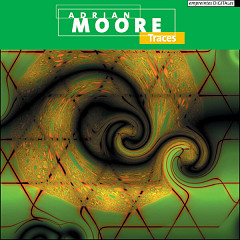
    A student of Jonty Harrison, the British electroacoustic composer Adrian Moore inherited his mentor’s sense of movement, while pushing further his sound poetry. Traces collects five works created between 1994 and 1997. Junky and Dreamarena could be described as “ambient electroacoustics.” Sound sources have been stripped from their context and sculpted into tonal and rhythmical structures. The first piece could almost be mistaken for an ambient synthesizer piece, while the second one shovels sounds back and forth between the listener’s ears, creating dreamy ever-changing soundscapes. Study in Ink and Foil-Counterfoil are both built on one main sound source. The first one uses a marker pen on a whiteboard. Both funny and puzzling, it has an interesting “squeaky” quality. The second, based on recordings of tin foil, is more conventional and mechanical. The closing piece, Sieve, is described by the composer as a “radiogenic work”: natural (as in “real world”) sounds are heard accompanied by their electronic manipulations. The large number of sound sources used and the constant analysis the listener must do to relate them to their manipulated counterparts make for a busy, rich, exhausting work. This one is very impressive, resists to multiple listens, and serves as a perfect closer, leaving an impression of fulfilling creativity which radiates on the whole album. If one puts Foil-Counterfoil aside, Traces becomes one very strong musique concrète CD. Recommended.

    … one very strong musique concrète CD. Recommended.
    Sources / scènes in AllMusic

    “Review”, François Couture, AllMusic, August 1, 2001
    Wednesday, August 1, 2001 Press

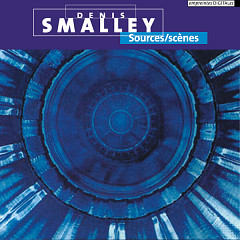
    The cover artwork of Denis Smalley’s CD Sources/scènes is in blue monochrome. It describes the composer’s acousmatic pieces very well: cold and mysterious. The works collected here span three decades and their running order invites the listener to move backward in time. Base Metals (2000) features sounds produced by artist Derek Shiel’s sound sculptures, but these are rendered abstract through electronic manipulation. The 1997 Empty Vessels was constructed with recordings made from inside large garden pots. The air resonating in them and the environmental sounds happening around them (birds, rain) are kept much intact by the composer. It creates a very original atmosphere. The diptych Tides is based on water sounds. It dates back to 1984, which means its detached dryness could be imputed to the digital technology available at the time. The two dark movements feature many simultaneous layers of sound, but while they succeed in creating suitable atmospheres, they don’t captivate the listener the way they should. Strangely, the 1974 Pentes feels less outdated. Using instrumental and synthesized sounds, it has a nice organic feel and features the drone of Northumbrian Pipes for harmonic modulations. This piece provides the only lighthearted moment on this otherwise sombre CD. In the end, Sources/scènes is a mixed bag of ingenuous and very ordinary works.

    … cold and mysterious.

    Évidence matérielle in Jade

    “Chronique”, Julien Jaffré, Jade, August 1, 2001
    Wednesday, August 1, 2001 Press

    Jonty Harrison, directeur du BEAST, groupe de compositeurs anglo-saxon se plait à définir son album comme une flânerie sensorielle, déambulation libre le long d’une avenue idéalisée où les magasins sont autant de tonalités électroniques sur l’asphalte «concret». Une casserole, des déchets de consommation courante, tiges de métal, bruits de forêt, autant de sons bruts, d’objets usuels et d’environnements fréquentés qui prennent une tournure onirique et abstraite dans les mains de cet anglais de génie. Plus intimiste et académique, cet album calme et riche reste éblouissant de maîtrise.

    … cet album calme et riche reste éblouissant de maîtrise.

    Connexion in Jade

    “Chronique”, Julien Jaffré, Jade, August 1, 2001
    Wednesday, August 1, 2001 Press

    Louis Dufort, 31 ans, premier prix du Conservatoire de Montréal, compositeur de la compagnie de Marie Chouinard, est un brillant iconoclaste. Il aime ainsi à intégrer des éléments non-musicaux dans sa trame musicale: «Objets, corps, couleurs et anecdotes sonores donnent lieu à des jeux de perception dans lesquelles est immergé l’auditeur. Les matériaux sonores sont ainsi trafiqués pour en soutirer des profils musicaux où poésie et représentation narrative du son servent de balises à l’élaboration de l’œuvre». La limpidité de ses travaux offre un profond vertige soucieux d’allier tradition et modernité. Ses compositions électroacoustiques et atmosphériques sont empruntes d’angoisse, d’images pesantes et d’accalmies majestueusement fluides et dynamiques dans le même temps. Comme si Francisco López signé la BO de «la machine molle» sur Ant-Zen. Impressionnant.

    La limpidité de ses travaux offre un profond vertige soucieux d’allier tradition et modernité… Impressionnant.
  • 347
  • 348
  • 349
  • 350
  • 351
  • 352
  • 353
  • 354
  • 355