Sauter au contenu principal
electrocd

Blogue

93 résultats
  • 3
  • 4
  • 5
  • 6
  • 7
  • 8
  • 9
  • 10
  • 11
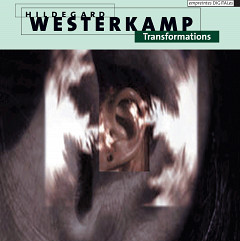
  • Transformations, Hildegard Westerkamp dans Musicworks

    «Sociopolitical Sonic Potentials», Andra McCartney, Musicworks, no 68, 1 juin 1997
    dimanche 1 juin 1997 Presse

    Hildegard Westerkamp says: “I hear the soundscape as a language with which places and societies express themselves.” Her Transformations CD presents five of her soundscape compositions, reflecting work composed from 1979 to 1992, each sounding the depths of a different place, creating a different inner landscape each time I hear them. She works with the sonic and sociopolitical potentials of each place, recording, mixing, and subtly transforming sounds to heighten listeners’ awareness and appreciation of these sites. She is a skilled and careful interpreter of their languages.

    You make it with the skin of the desert night

    Cricket Voice is a musical exploration of a solo cricket song, recorded by Westerkamp at night in a Mexican desert region called the Zone of Silence. The acoustic clarity of this place frames the cricket song, accompanied by soundmaking with the spikes of cacti and other plants, and electroacoustic transformations of these sounds. This composition is as expansive as the desert, intimate as the voice of a single cricket.

    Listen to our cities

    Two of the works, A Walk Through The City, and Kits Beach Soundwalk, are both based on urban soundscapes. In the downtown core, I can become numb to the constant sounds. These works challenge me to listen, to transform, to make quiet places in the city. A Walk Through The City takes us through Vancouver’s Skid Row area, guided by Norbert Ruebsaat’s poem of the same name. Kits Beach Soundwalk begins at Kitsilano Beach, in the heart of Vancouver, yet at the same time a border. I hear the throb of the city balanced with the tiny sounds of barnacles feeding in the lapping tide. This piece explores many borders—between dream and waking, city and country, water and land, documentary and composition. When it enters the dreamworld of high frequencies, I remember where quiet places in the city can take me.

    Soundmarks and Sitka

    Fantasie for Horns II is the earliest piece in the collection, composed from the sounds of Canadian trainhorns, foghorns, factory and boathorns, and a live part for French horn. Horns are especially evocative soundmarks that give us a sense of place. Each time I hear this piece, I remember growing up by the sea and listening to the moan of the coastal foghorns, reminding me of the awe-inspiring power and energy of the sea. The latest piece on the CD is Beneath The Forest Floor. Most of the sounds for this piece were recorded by Westerkamp in the Carmanah Valley on Vancouver Island, and the piece evokes the stillness and peace of this old-growth rainforest, home to Sitka spruce and cedar trees over a thousand years old.

    I have always found Hildegard Westerkamp’s work to be a particular source of insight and inspiration. It takes me to familiar and new places, encourages me to listen to the sounds around me, and to “transform through listening,” as Pauline Oliveros also notes about Westerkamp’s work. Her music urges me to listen to the language of the soundscape and to express my own relationship to it by working with soundscapes myself. I hope it does for you, too.

    … a particular source of insight and inspiration.

    Transformations dans N D - Magazine

    «Review», Jeff Filla, N D - Magazine, no 20, 1 juin 1997
    dimanche 1 juin 1997 Presse

    Like the Wende Bartley CD also reviewed, this one [Westerkamp’s] is diverse enough that it seems like a compilation disc. On the whole, it is also no less wonderful a release than that of Bartley, though there is not the vocal theme. Westerkamp’s trademark seems to be the use of location recordings… or does this only seem to be so? The effect of being transported is everpresent whether the piece be one involving first person narration, beat poetry collage, or a Fantasie for Horns II. This disc culls works from the late 1970’s to the early 1990’s. Fans of old-definition “ambient” like Ferrari’s Presque rien should be dazzled.

    Claire-voie dans N D - Magazine

    «Review», Jeff Filla, N D - Magazine, no 20, 1 juin 1997
    dimanche 1 juin 1997 Presse

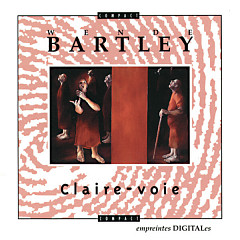
    Three pieces constitute this CD — all work from the mid-to-late 80’s. All very electronic and similar in character. Very listenable stretches of texture landscapes separated by short, swishy intervals of tape effects. Compositions evolve in ways that are appreciable even on a “passive listening” level. Reminiscent of Christian Zanési’s GRM LP, or Christian Clozier’s Quasars CD.

    La mécanique des ruptures dans N D - Magazine

    «Review», Daniel Plunkett, N D - Magazine, no 20, 1 juin 1997
    dimanche 1 juin 1997 Presse

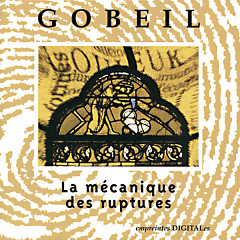
    “I’ve discovered that my work as a composer has much in common with this branch of civil engineering (stone cutting) — exploring and evaluating the behavior of material on the verge of splitting apart.” (from liner notes). This CD features work from 1985 to 1993. Much of the work is a roller coaster for the ears: dynamic shifts, sounds bouncing and then quickly turning double-takes in mid-air. There is an intensity here and a shaping of the material to the breaking point which is both inspiring and exhaustive. Impressive and recommended.

    Impressive and recommended.

    L’ivresse de la vitesse, L’ivresse de la vitesse 1, L’ivresse de la vitesse 2 dans N D - Magazine

    «Review», Jeff Filla, N D - Magazine, no 20, 1 juin 1997
    dimanche 1 juin 1997 Presse

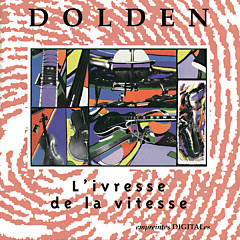
    One of my favorites, if only because of the Veils piece. Most of the music on these two disks is a stylistically heterogenous jumble of orchestral, jazz, and choral arrangements—all meticulously assembled from thousands of pre-recorded tracks. Such a grandiose production of acoustic instrument track layering has surely never come before this. Sometimes the instruments are so densely layered they become a storm of harmonics that approaches white noise. The whole compositional temperament—impatient, violent, and spastically bursting and whirling relentlessly—makes me wonder who has the mental energy to listen attentively to the whole length of it, much less labor to compose it. Possibly, it’s brilliant (I should mention that a composer friend of mine thinks these tracks are the most original new music he’s heard in years), but I found it oppressively cluttery. At the tail end of the second CD is the piece titled Veils; another study in multi-tracking which is stylistically the flipside of the coin. Veils is an ambient masterpiece where, atypical of ambient music, genuine compositional events are as important as the arrangement at any given time. No electronic effects were used, but extensive multitracking between 180 to 280 tracks of acoustic instruments is responsible for a consistency and flow of this phenomenal work. Very artfully done.

    Very artfully done.

    L’oreille voit dans N D - Magazine

    «Review», Jeff Filla, N D - Magazine, no 20, 1 juin 1997
    dimanche 1 juin 1997 Presse

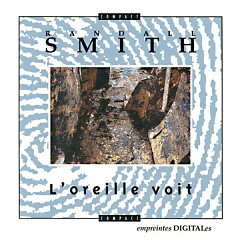
    A bit more patient and slowly evolving than your average electroacoustic work. This gives a lot of emphasis to stimulating, grainy textures and raw imagery, without constantly interrupting you with that sterile “electronics-in-a-void” sound that can make me blase about electroacoustic work sometimes. Satisfies the same tastes that enjoy John Watermann’s “Calcutta Gas Chamber” or David Dunn’s “Chaos and the Emergent Mind of the Pond.” Pretty potent stuff, especially at high volume levels.

    … It took some talented hands to shape these little tracks.…
  • 3
  • 4
  • 5
  • 6
  • 7
  • 8
  • 9
  • 10
  • 11