electrocd

Blog

100 results
  • 3
  • 4
  • 5
  • 6
  • 7
  • 8
  • 9
  • 10
  • 11
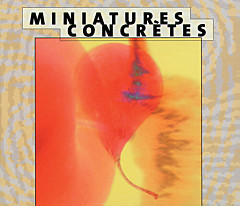
  • Miniatures concrètes in Adverse Effect Fanzine

    “Review”, HM, Adverse Effect Fanzine, no. 2:4, October 24, 2000
    Tuesday, October 24, 2000 Press

    The convoluted world of musique concrète is on occasion somewhat baffling. Trawling through the piles of albums available by names only vaguely familiar even to east Europeans makes picking up a goodie a hit and miss affair. And that’s where the compilations come in. They ought to be informed, coherently assembled, albums that provide a way through musique concrète’s many blind alleys. Sadly, few work beyond the “interesting.”

    This one, however, is a terrifically enjoyable journey through 24 tracks assembled to be just 3 minutes long each. The 3 minute stipulation tightens up the inclination to sloppiness and, strangely, brings a playfulness to the works. There’s a very high standard here, representing some of the better constructors around (Tremblay, Hoffman and Lillios in particular are fabulous). As important as the recordings, the album comes (in a fold-out cardboard box) with an enormously useful 32-page booklet (in French and English) detailing the resumés of the artists concerned.

    … a terrifically enjoyable journey through 24 tracks…

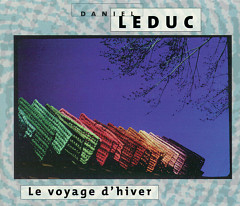
    Le voyage d’hiver in Adverse Effect Fanzine

    “Review”, Adverse Effect Fanzine, no. 2:4, October 24, 2000
    Tuesday, October 24, 2000 Press

    Staggering array of electroacoustic pieces; mostly miniatures either forming part of a lengthy cycle or represented in their own right. All recorded between 1994 to 1997, they apparently mark an important period in Montréal based Daniel Leduc’s approach to composition drawing on the sources of acousmatics and the transition from analogue to digital techniques. The range encompasses everything from dynamic bursts of contained random sound elements to tempered collages and tinely-tuned tapping into what normally passes by unheard. Sometimes subdued, sometimes bordering on the tempestuous, these pieces, all created from samples, chart a highly infectious causeway to the cusp of an island positively commanding our attention. With a number of teaching credits and a chriving interest in multimedia to his name as well, it’ll be interesting to see whether or not Leduc sustains his compositional drive without sacrifice. Meanwhile, this album literally begs your attention.

    … a highly infectious causeway to the cusp of an island positively commanding our attention.

    Présence in AllMusic

    “Review”, François Couture, AllMusic, October 23, 2000
    Monday, October 23, 2000 Press

    Presence ([released in 1997…] followed by Présence II in 2000) replaces the “DISContact!” series as the Canadian Electroacoustic Community [CEC] mean of spreading the works of its members. Exit the clip format (pieces under three minutes) that was at the basis of DISContact! and DISContact! II: this time pieces are selected for their interest and the goal is to put good music in the hands of listeners instead of as many composers as possible. Some works are a few seconds shy from 15 minutes while one is under 60 seconds.

    Most of the 23 featured composers are Canadian (some are French, American, Spanish), teachers and students. All of them are seldom found on record (but some are regulars of the CEC’s compilations: Steve Bradley, Diana McIntosh, Jean Routhier, Daniel Zimbaldo). As with any arbitrarily-built compilation (pieces are presented in alphabetical order of the composers, regardless of compatibilities), some pieces are breath-taking, others are quickly forgotten.

    Highlights include Rémy Carré’s La Trace du Souffle, Jan Jarvlepp’s Buoyancy (using only cello sounds to great effect) and David Lindsay’s Cetacean Progress.

    … some pieces are breath-taking…

    Francis Dhomont, Robert Normandeau, Stéphane Roy, empreintes DIGITALes in Le Devoir

    “Constats électroniques: La mouvance acousmatique”, François Tousignant, Le Devoir, October 16, 2000
    Monday, October 16, 2000 Press

    Première chose qui saute à l’oreille après le concert de jeudi soir: il y a bel et bien une «école de Montréal» en électroacoustique. Toutes les œuvres entendues au programme participent d’une même approche, celle lancée par Pierre Schaeffer. Cela consiste en le fait qu’il a fallu, pour le nouvel art qu’était la musique faite de sons enregistrés, manipulés ou électroniquement générés, définir un vocabulaire, inventer un solfège et composer un répertoire de sons et de manipulations sonores. Ce dernier point est malheureusement trop souvent confondu avec la composition elle-même, ce qui rend l’art alors un certain art acousmatique stérile.

    Le programme s’ouvrait et se fermait avec deux extraits de Francis Dhomont. On ainsi voulu rendre un hommage à celui qui est de plus en plus reconnu comme le «fondateur» de cette école. À l’heure où il œuvrait à la Faculté de musique de l’Université de Montréal, quand on parlait de musique électroacoustique, le membre artistique de l’équation primait sur le technique.

    Non seulement la musique de Dhomont reste-t-elle encore belle et jeune, mais diffusée ainsi en salle — Robert Normandeau!, sublime poète de la console! — sa dimension réelle éblouit avec autant de force que de sensualité, d’intelligence que d’inspiration. Peu importe le média, la grande musique, c’est cela. Mémoires vives, du ci-nommé Normandeau, est une pièce un peu rhétorique (je maintiens mon jugement antérieur), mais qui passe mieux en salle qu’au disque — comme tout le reste du programme d’ailleurs; après tout, on n’a chez soi que deux haut-parleurs plutôt que l’armada ici sollicitée et l’espace utilisé. Dommage pourtant que le climat fût brouillé par un impair technique, équivalent du trou de mémoire au concert «habituel» et qui a toutefois démontré que, oui, quelque part, ces machines à musique restaient humaines.

    Le plus beau moment, là où vraiment on a senti une succession au maître fondateur, reste les Paysages intérieurs, de Stéphane Roy. Non seulement la «bande» est splendide, mais Normandeau s’est hissé à des sommets d’inspiration interprétative pour la rendre exceptionnellement sensible. On est pris par cette mouvance qui s’ouvre et qui nous ouvre, qui tourne qui appelle, parfois répond, et qui nous dit… que si on fait cette musique, c’est qu’elle doit être faite ainsi car le message ne saurait être livré autrement. […]

    … il y a bel et bien une «école de Montréal» en électroacoustique.

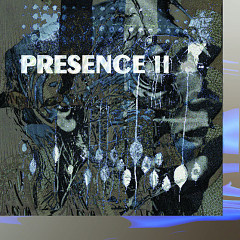
    Présence II in AllMusic

    “Review”, François Couture, AllMusic, October 16, 2000
    Monday, October 16, 2000 Press

    Présence II is a 2-CD set of electroacoustic music released by Productions électro Productions, an arm of the Canadian Electroacoustic Community (CEC). The scope of the music presented here is very wide: established composers and newcomers, 60-second snapshots and large-scale works (the longest piece is 12 minutes), typical musique concrète and approaches closer to real-time performance. A third of the composers are Canadian, another third come from England, the rest from France, Belgium, Germany and South America. Some pieces date from the mid-80s (Otto Joachim’s Three Electronic Sketches) but most material is fairly recent (1997-1999).

    Présence II offers a nice overview of what is produced around the world in terms of electroacoustics, but it remains a very straight compilation: no attempt has been made at giving the record its own identity. Tracks are presented in alphabetical orders of their composers, without any regards to compatibilities, interesting contrasts, etc. It might be democratic but since there is no continuity in the program, the listener must reset his attention 36 times. Still, Présence II documents a number of valuable composers like Alastair Bannerman, Gordon Fitzell, Barbara Golden, Jean Routhier and Ben Thigpen that are cruelly under-recorded.

    … a nice overview of what is produced around the world…

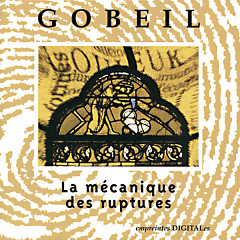
    La mécanique des ruptures in Incursion Music Review

    “Review”, Richard di Santo, Incursion Music Review, no. 015, October 5, 2000
    Thursday, October 5, 2000 Press

    Comprised of eight compositions dating from 1985 through to 1993, La mécanique des ruptures (The Mechanics of Cleavage) was released in 1994. Gobeil describes his compositional technique as being similar to that of medieval stone-cutters, “who would strike rock, making it ‘ring’ in order to judge its worth for construction”. He further describes that his sound material “is subjected to restraint, to enormous pressure, until it finally sunders, shatters, transforms — brought to its breaking point.”

    Fitting words indeed; each of these compositions carries with it feelings of intensity, tension, and urgency. The sounds are reaching critical mass, and seem like they’re going to break at any moment and explode right in our faces.

    The first piece, Le vertige inconnu (The Mysterious Vertigo), takes as its theme “the essense of solitude,” but on the contrary doesn’t feel very solitary. Bursts of concentrated sound alternate with quieter moments of field recordings and incidental noises.

    Voix blanche (White Voice), featuring Suzanne Binet-Audet on the ondes Martenot, is an extremely dramatic piece with a stunning sound dynamic. Abstract tones and concrete sounds fill a three-dimensional space that shifts in rapid motions, presenting first one scene, then another, creating a work of immense drama and movement.

    The third piece features the dynamic improvisational talents of René Lussier on electric guitar. The piece, explains Gobeil, “consists of a succession of very dense and expressive scenes, a suitable foil for the guitar’s vibrant, playful gestures.” As good a description of this piece as any.

    The fourth piece, probably the most ambitious and unique among this grouping, incorporates a text and scenario by Lyette Limoges, an intriguing and complex radio-play, full of mystery and compelling imagery: “The sun was setting. I saw an angel and it took flight, while all around lions tried to hold it back but… and then it became dark.” I was really drawn into this piece, which runs just short of fifteen minutes, and yet still manages to occupy a substantial psychological space in the listener.

    Further into the disc we find the tightly arranged piece Rivage (Shore), which utilizes “untouched sounds” from an urban environment. The ondes Martenot makes another appearance in the seventh piece, and Traces closes the disc off with further bursts of intense sounds and sharp movements.

    Intense, noisy and complex, La mécanique des ruptures presents a series of very compelling and challenging works. Essential electroacoustic music that is sure to keep you from sitting still for even a moment while listening.

    Essential electroacoustic music that is sure to keep you from sitting still for even a moment while listening.
  • 3
  • 4
  • 5
  • 6
  • 7
  • 8
  • 9
  • 10
  • 11