electrocd

Blog

37 results
  • 1
  • 2
  • 3
  • 4
  • 5
  • 6
  • 7
  • Gilles Gobeil in Le Devoir

    “Refaire le monde”, Mario Cloutier, Le Devoir, September 16, 1995
    Saturday, September 16, 1995 Press

    […]Gilles Gobeil pourrait sans doute dire la même chose de ses créations électroacoustiques. La poésie, voilà ce qui l’habite. Détourner, dire de façon différente, tel est son credo. «La musique électroacoustique, contrairement à celle du nouvel-âge qui flirte avec le tempérament, s’éloigne du rythme et de la mélodie.»

    Maître ès composition de l’université de Montréal, lauréat de nombreux concours nationaux et internationaux et boursicr maintes fois reconnu, Gilles Gobeil vit une carrière à l’image de sa musique. Rien à voir, tout à entendre. Le spectacle sera donc pour l’oreille lors de la présentation de sa pièce de 8 minutes, Le vertige de l’inconnu, qui a nécessité trois mois de travail, lors du concert de jeudi prochain à la 5e salle de la PdA.

    «Mon travail s’apparente à celui des tailleurs de pierre du Moyen Age qui consistait à explorer et évaluer le comportement des matériaux au voisinage de la rupture. Il privilégie les formes nettes, fortes et tranchées, les mouvements d’alternances et les jeux marqués de tensions et de détentes.»[…]

    La mécanique des ruptures in Audion

    “Review”, Steven & Alan Freeman, Audion, no. 33, September 1, 1995
    Friday, September 1, 1995 Press

    Not a name I’d heard of before, though like France, the French Canadian sector does tend to proliferate radical new-music composers! Almost as though he’s combining the talents of François Bayle, Bernard Parmegiani and Michel Redolfi, Gobeil makes electroacoustic music that is really vivid, dynamic and almost 3-D, and he’s capable in many different mediums: the purely sonic/electronic, the esoteric using rich synthetic tones (actually an Ondes Martenot on Voix blanche), the dramatic (especially when aided by Rene Lussier’s guitar work on Associations libres) and even the “cinema for your ears” genre with the theatrical 15 minute La Ville Machine. The tracks that follow tend to combine the elements I’ve described above, and it gets all the more avant-garde, especially so on the closing track Traces. A devastatingly radical and fascinating album!

    … music that is really vivid, dynamic and almost 3-D…

    Corazón Road in Audion

    “Review”, Steven & Alan Freeman, Audion, no. 33, September 1, 1995
    Friday, September 1, 1995 Press

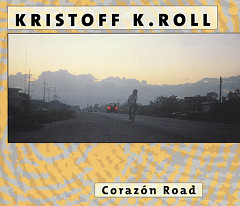
    A sonic film, very much in the tradition of Metamkine’s “cinema for your ears” series, but on a much grander scale. This is a condensed history of Central America told in a very bizarre manner, charting from the Hispanic invasion to the present day, it’s a sonic journey on a troubled road, with extensive use of field recordings, sonic collage and an abundant amount of musique-concrete and electronic processing.

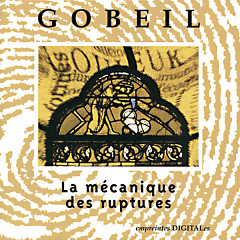
    La mécanique des ruptures, Gilles Gobeil in Contact!

    “Review”, Laurie Radford, Contact!, no. 9:1, September 1, 1995
    Friday, September 1, 1995 Press

    Winner of this past year’s Stockholm Electronic Arts Award and of numerous other international and national prizes over the past decade, Gilles Gobeil has established his refined and singular approach to electroacoustic composition with a growing series of works. This 1994 CD from empreintes DIGITALes brings together eight of his works from the past decade.

    The disc begins with Gobeil’s most successful work to date, Le vertige inconnu (1993), a work that in a sense summarizes the composer’s preoccupations found in varying degrees of evolution in the other works on the disc. He uses visceral sound materials that are drawn from machines, industry and the urban environment; fine attention to structural detail where abrupt, screaming sequences of grinding and whining metal are juxtaposed with the relative repose of whirring gears, hissing steam and rich, throbbing drones; and new spatial environments where these industrial voices are given shape, size, and speed as they collide and combine in ever-new trajectories and textures. Le vertige inconnu is severe, and of a beautiful purity of design and balance of form and material.

    Two works on the disc, Voix blanche (1988-89) and Là où vont les nuages… (1990-91), utilize the ondes Martenot in combination with tape and additional sources of sound generation and processing via MIDI (in the case of the Là où vont les nuages…). The ondes is not so much a soloist in these works but rather an equal sonic source contributing to and complementing the materials of the tape part with its crystalline, supple and haunting voice emerging from complex gestural and timbral constructs. It only predominates, like a sole survivor, in the ghostly interludes that hover softly between the main phrases of friction, collision and impending climactic punctuation.

    La ville machine (1992), “an electroacoustic drama on the subject of sound ecology”, is the heart of the disc both by its duration and its breadth of expression. There is an unflagging tension between breathless voices sharing images, nightmares, a mission fraught with confusion and apprehension, immersed in an environment constantly shifting from grotesque urban punctuations to collages of human activity, the seashore, the street, the playground… and the hopeful words of children. There is an urgency to the work and its contents, unsettling, yet optimistic in its unabashed confrontation and its embrace of the very source of the destruction it alludes to: the mechanized city.

    Rivage (1986) is perhaps the most blatantly visceral of the works presented here. It clearly reveals Gobeil’s early preoccupation with industrial sound materials and formal structures driven forward by the very weight of the sounds they contain. It features a more prominent use of fabricated materials in combination with environmental sources than the later works, but already maintains a darkly pensive character that finds its way into most of the later works.

    The earliest work presented on La mécanique des ruptures, Traces (1985) reveals, like Rivage, the seeds of Gobeil’s gestural and structural preoccupations: the contrast between highly charged textures and large, quivering spaces inhabited by delicate shimmers of sound and the chirping of natural environments.

    The reverse chronological order of the works on the disc takes us from concision and refinement back to a time of searching and discovery. Try reprogramming your CD player and follow the composer’s original journey!

    … the disc takes us from concision and refinement back to a time of searching and discovery. Try reprogramming your CD player and follow the composer’s original journey!

    Volt in Paris Transatlantic

    “Out of Canada”, Christopher Elson, Paris Transatlantic, no. 2:3, September 1, 1995
    Friday, September 1, 1995 Press

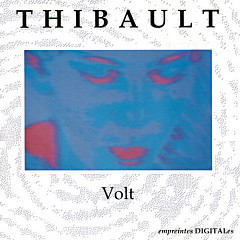
    Some music can be truly characterized as striking. Alain Thibault’s new album Volt, brought to us by Canadian publisher empreintes DIGITALes, really packs a punch. It positively pounds!

    The opening piece, Concerto pour piano MIDI, follows the classical concerto schema, but the computer driven synthesizers and sequencers drive us into a decidedly contemporary space. Jacques Drouin does an admirable job of sticking with what Thibault himself describes as “the nightmarish precision of tape.”

    E.L.VI.S. (Électro-lux vertige illimité synthétique) harnesses a team of willing saxophonists (Quatuor de saxophones de Montréal) to the synthesized plough and turns over some pretty unexpected ground: texts of songs made famous by Elvis Presley are synthesized and used as a rather touching foil for soundscaping (like landscaping…)

    Approximately equidistant between Ian Hammer’s Miami Vice theme and Pierre Boulez’s Le marteau sans maître, Thibault’s work chisels itself into our edgy modern consciousness, leaving a mark deeper than we might feel comfortable with. How many volts in a hammer, anyway?

    … really packs a punch. It positively pounds!

    Polyphonie-polychrome in Revue & Corrigée

    “Critique”, Albert Durand, Revue & Corrigée, no. 25, September 1, 1995
    Friday, September 1, 1995 Press

    Des nouveautés chez empreintes DIGITALes, voilà qui fait plaisir car cette étiquette de disques nous fait régulièrement découvrir des compositeurs ou des pièces délaissées par d’autres plus institutionnalisées.

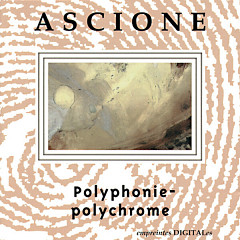
    Voici le premier CD de Patrick Ascione (ex-æquo avec Métamorphose d’un jaune citron chez Métamkine, MKCD 014) qui, dans son travail, s’intéresse à l’espace (il compose beaucoup de pièces en multipiste) et à exprimer une relation entre peinture et musique concrète. Une musique agitée avec beaucoup d’éléments rythmiques et un bouillonnement de grands mouvements stéréophoniques qui, cependant, n’effacent pas les nombreuses teintes de ces dégradés sonores.

    … un bouillonnement de grands mouvements stéréophoniques…
  • 1
  • 2
  • 3
  • 4
  • 5
  • 6
  • 7