electrocd

Blog

101 results
  • 8
  • 9
  • 10
  • 11
  • 12
  • 13
  • 14
  • 15
  • 16
  • Alibi in Etch

    “Review”, Davis Ford, Etch, no. 5:2, April 1, 1999
    Thursday, April 1, 1999 Press

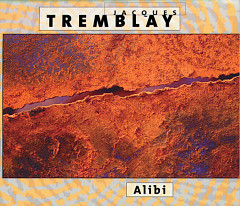
    This is an extremely complicated, and disjointed volume of concrete sound manipulation. As a general listen, it can come across quite harsh, with it’s wide spectrum of noises, some of of them literally attacking you. Listening to Karlheinz Stockhausen often produces a similar tone, and Tremblay admits a Stockhausen influence. In a described context, this melting pot of sounds starts to make sense. Listening to the first track, Hérésie ou les bas-reliefs du dogme, you are assaulted with various religious audio snippets varying from southern American televangelist preachers, and other quotes issued in French. One gets the sense, whenever samples of preachers are used, that the artist isn’t necessarily promoting religion, but chastising it. This indeed turns out to be the case, as culled from the liner notes: “I found it unbelievable to see all the cruelties that man has committed in the name of God. I had found my subject.”

    With Tremblay, it appears that subject is preeminent to the music. With each piece he has a strong message or concept in which to convey via recognized sounds. Sounds do transform, and shapeshift, but when they do, it appears that there is a purpose to that as well. Tremblay points out that when the Gregorian Chant dissolves into distortion, it symbolizes a transition from pure to impure. Alibi is like a difficult read, which must be pieced together and analyzed. This can be a fascinating adventure, or a tiresome chore, depending on who listens to it. Taken at face value, the pieces herein can be quite intrusive as a background, attesting to their demand for deeper exploration. This property alone seems to indicate that this collection should garner timeless recognition. Other themes Tremblay explores involve: eroticism, the unconscious, a tribute to jazz spontaneity, and Marcel Proust. Jeu d’ondes is a piece constructed entirely from sounds taken off a sailboat. In this “imaginary marina,” ships have come together to celebrate a new vessel: “the unsinkable FM network” which Tremblay expresses via various radio broadcasts throughout while the ships blow their horns. There are some fascinating and original ideas and concepts realized on this disc, although it requires a bit of explanation to guide you through Tremblay’s world.

    … this collection should garner timeless recognition.

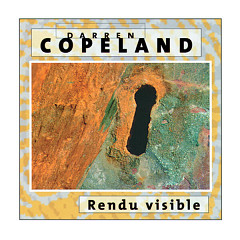
    Rendu visible in Etch

    “Review”, Davis Ford, Etch, no. 5:2, April 1, 1999
    Thursday, April 1, 1999 Press

    Copeland creates all of his music solely from tape consisting of environmental sounds. Rendu visible (rendered visible) centers around the mysterious fusion of sound and vision, and how different people may interpret sound, which then triggers visual elements (He begs an interesting question: “What if a listener is congenitally blind?”) This music is very visual, indeed. On the piece, Rendered Visible, Copeland creates landscapes of drones, and surrealistic ambient highways that sound like the roads may stretch for continents. One car may pass as expected, while another car may approach, but its timing is extended so that you may never appear to realize its passing, and it soaks back into the earth. Copeland morphs the sound of cars flitting by into the sound of waves crashing into the shore. Droning human cries of despair add to an already eerie landscape. At times, this album seems almost like a human version of some of Thomas Koner’s ambient wastelands. Those deep, dark, ice-cold drones are there, but you get human contact with elements like doors closing, people speaking in the background, and animal sounds, etc. Night Camera is a suite of three separate pieces, each in a different audio environment. Each piece acts as a sort of mechanical gadget that allows you to see in the dark (infrared?) what you otherwise would not be able to see. This is a wicked concept that works almost too well. The environments Copeland creates are downright creepy, and almost certain to contain predators, which can be heard scraping and scratching at the landscape (at least in ‘my version’ there are predators). As the wind whips through the trees with rain, I could almost feel my eyes tear up. Thunder is processed into what sounds like the metallic roar of a great metal deity. The environment is harsh enough to make you shut your eyes, but that only clears the visual slate for yet another fantastic voyage.

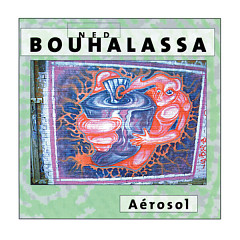
    Aérosol in Etch

    “Review”, Davis Ford, Etch, no. 5:2, April 1, 1999
    Thursday, April 1, 1999 Press

    Ned Bouhalassa has constructed a truly breathtaking journey through the world of natural sound manipulation. Consider the piece Move 1, which begins with the maddening buzz of insects. I made the mistake of stepping on a hornet’s nest once while treading through some wetlands. I thought planes were approaching. I was wrong. This is what I heard. I got stung plenty. The hornets quickly disperse, and the sound shifts into chickens clucking sporadically. This is interrupted by the sound of something dropping into the water, almost as if a frog is scurrying for cover, which has the gratifying effect of destroying the environment the music was sculpting for you. Chickens and water are not common entities… yet they seem to coexist here. Further along, wetland insect buzzing slides in and out, interrupted almost violently by flapping wings. Then, a door slams.

    Again, Bouhalassa seems to create a semi–coherent environment, only to slap you in the face with something completely foreign. The piece parades on, and the sounds become less familiar and more manipulated. Many of the sounds Bouhalassa incorporates are immediately familiar, yet he shifts them into environments and textures they probably would never see. This is the real treat involved in listening to this release. He also attempts to integrate the world of musique concrète with some well–intentioned but hardly inspiring techno. This is really the only area worth bypassing on this wild sound journey. Highly recommended.

    … a truly breathtaking journey through the world of natural sound manipulation…

    Rendu visible in Splendid E-Zine

    “Review”, George Zahora, Splendid E-Zine, March 29, 1999
    Monday, March 29, 1999 Press

    I can’t really tell what elements Copeland uses to paint his white-noise pictures. Often the source material sounds watery—tides, rainstorms, etc.—but evolves into collages of industrial noise and the altered soundscapes of public spaces. Sometimes he layers storm upon storm, or warps and loops sounds that sound almost familiar but fail, despite persistent concentration, to resolve themselves into a distinct and recognizable pattern. These electroacoustic compositions make perfect listening while reading or relaxing—they’re passive enough to sooth, but full of details ready to ensnare a mind ripe for sonic distraction.

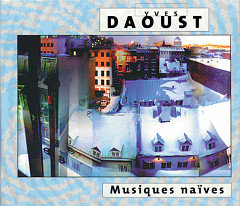
    Musiques naïves in Splendid E-Zine

    “Review”, Splendid E-Zine, March 22, 1999
    Monday, March 22, 1999 Press

    On Musiques naïves, Canadian electroaoustic composer Yves Daoust presents an interesting assortment of concert tape music. Impromptu is made of a flurry of MIDI messages triggering musical motives drawn from the works of Chopin. It is frenzied and saturated, meant to capture the “feverishness” of Chopin’s work. Il était une fois… (conte sans paroles) is a highly fanciful soundscape inspired by bedtime stories the composer once told his daughter. Water Music celebrates nature by focussing on the sound of water dripping for 13 minutes. Fantaisie commemorates 50 years of French national radio and draws its sonic material from archival recordings, very nostalgic I’m sure. All in all the stuff on Musiques naïves is evocative and imaginative, and it’s electroacoustic!

    Musiques naïves is evocative and imaginative, and it’s electroacoustic!

    Aérosol in Montreal Mirror

    “Review”, Chris Yurkiw, Montreal Mirror, March 18, 1999
    Thursday, March 18, 1999 Press

    Electroacoustic music, or contemporary musique concrète, needs more practitioners like local Ned Bouhalassa, whose first commercial collection maps the evolution (1990-98) of a young composer straining to break free from the confines of an institutional music that allows everything in theory but usually ends up just sounding like theory (swoosh… whirr… crash!). What I really want to hear, though, is some of Bouhalassa’s latter-day delves into techno, hinted at here in 1997’s Constamment (autoportrait). (7/10)

    Electroacoustic music […] needs more practitioners like Ned Bouhalassa
  • 8
  • 9
  • 10
  • 11
  • 12
  • 13
  • 14
  • 15
  • 16