electrocd

Blog

101 results
  • 1
  • 2
  • 3
  • 4
  • 5
  • 6
  • 7
  • 8
  • 9
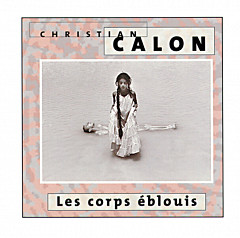
  • Les corps éblouis in Audion

    “Review”, Audion, no. 41, November 1, 1999
    Monday, November 1, 1999 Press

    Calon is a master of such sonic art, and this single 22’45” work is a piece of cosmic Parmegiani-esque genius, a spatial floating atonal affair that moves to the realms of Gunner Møller Pedersen’s monumental ET LYDAR. Electronic sound-clusters that shimmeras if sonic flakes of glass, dart around in a digital wind, interrupted by a variety of other indescribable sounds, oozing and flowing in patterns that paint a sonic picture for our ears. It’s a superbly executed work, proving that empreintes DIGITALes can still deliver the goods.

    … a piece of cosmic Parmegiani-esque genius…

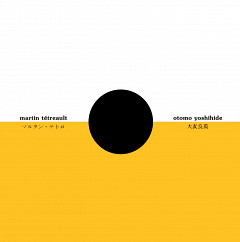
    21 situations in Nightwaves

    “Review”, Nightwaves, no. 4, November 1, 1999
    Monday, November 1, 1999 Press

    This recording represents a long anticipated collaboration between two turntable manipulators, one from Québec, the other from Japan. It is a completely improvised work involving noise, needles, scratching and vinyl. Some of the tracks (Spoutnik) do show flashes of atmosphere and mood, yet many seem to be pointless, noisy messes (Debris and Friction).

    This work is noise in the truest sense of the word. Convention has been completely disregarded for a totally experimental ethic that you will either enjoy or loathe. 21 situations is comprised of non-musical sonic deconstructions that embraces sound experimentation as the ‘be-all end-all’. Perhaps this album would be more engaging if it wasn’t so left-field and the sound pallette wasn’t so abrasive.

    Tétreault and Yoshihide have indeed suceeded in achieving audio environments, yet the substance factor is almost non-existant. Ultimately this work is forgettable, pointless and not worthy of repeated listenings. Members of the artistic “elite” may refer to this as daring and innovative, but the rest of us will just be left scratching our heads, wondering why studio time was wasted on such an undecipherable mess.

    This work is noise in the truest sense of the word.

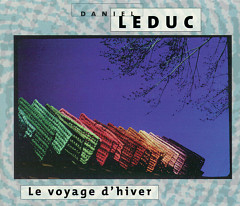
    Le voyage d’hiver in Blow Up

    “Altrisuoni in breve”, Etero Genio, Blow Up, no. 17, October 1, 1999
    Friday, October 1, 1999 Press

    Il Winterreise (viaggio d’Inverno) è una raccolta del poeta tedesco Wilhelm Müller, contemporaneo ed esteticamente gemello del nostro Leopardi, molto conosciuta dagli amanti della musica classica perché venne musicata da Schubert. Quelle stesse 24 poesie vengono oggi riprese dal canadese Daniel Leduc in un progetto tanto ambizioso quanto riuscito Fortunatamente Leduc non propone una versione pacchiana e plastificata di quella che fu l’interpretazione schubertiana ma riscrive di bel nuovo le musiche atte a commentare i testi di Müller (che qui, a differenza dell’opera di Schubert, vengono recitati). Le voyage d’hiver è faflo di rumori quotidiani, poesia eleflroacustica, musica ecologica e soflili manipolazioni elettroniche che sono in grado di dare un’ambientazione corporea alle parole. Le voyage d’hiver è insieme un film radiofonico ed uno stimolo concreto ad intraprendere un “viaggio” all’esplorazione del “vostro Inverno” Gli altri sei quadri che adornano il CD offrono un’immagine di un Leduc che sa accostare ai suoni concreti un gusto (di nuovo il pacoscenico) d’impronta classico-lirica (6/7)

    6

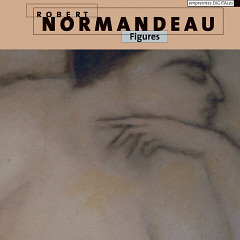
    Figures in Blow Up

    “Altrisuoni in breve”, Etero Genio, Blow Up, no. 17, October 1, 1999
    Friday, October 1, 1999 Press

    Next?) e autore di svariate musiche da scena, il canadese francofono Robert Normandeau raccoglie in questo CD alcune composizioni scritte negli anni che vanno dal 1995 ad oggi: quattro episodi di lungheza media (10-20 minuti) frammentati in svariate Figures. Normandeau — musicista prettamente elettroacustico — sembra, più che possedere un linguaggio proprio, conoscere perfettamente innumerevoli linguaggi che spadroneggia con spirito tipicamente accademico. Figures — con la sua impersonalita, freddezza e rispetto della forma — mi ha aiutato a comprendere come un’affermazione fatta da Francisco López (’Non sono un musicista elettroacustico in quanto non sono un musicista accademico), che in un pnmo momento non avevo completamente digerito, rifletta precisamente un dato di fatto.

    Figures, Robert Normandeau in Gibraltar

    “Review”, François Couture, Gibraltar, October 1, 1999
    Friday, October 1, 1999 Press

    Hello to all of you. This is not one of my usual reviews. But there is a record I must share with you, especially with the most adventurous of you. I love prog music, but I also have other interests, one of which is electroacoustics. The basic principle of electroacoustics is to take source sounds and to transform them electronically to create a piece of art. Concepts such as melody, rhythm or tonality are irrelevent. The composer is sculpting the sound to create a sonic work of art. This type of ‘music’ can be very disorienting for the first-time listener and really is an acquired taste. But here I have for you a portal, a way of entering electroacoustics for prog heads.

    Robert Normandeau is Québec’s best electroacoustician. He won numerous international prizes and already has three CDs out on the Montréal-based label empreintes DIGITALes. His latest, Figures, is just out now. I want to draw your attention on track 3, Venture, a 19-minute piece. In this piece, Normandeau pays tribute to his musical background. Like many of us on Gibraltar, Normandeau grew up with progressive rock. In the liner notes, he confesses that he was introduced to classical music through (guess what) Mussorgsky’s Pictures at an Exhibition, thanks to Emerson, Lake and Palmer of course. So Venture (notice the similarity with a Yes tune) uses as source sounds bits and pieces of prog tunes that are transformed to make them almost unrecognizable. I say almost because I still managed to find a bit of the intro of Close to the Edge, a vocal track from King Crimson’s Formentary Lady and there are a lot more. Normandeau uses these as archetypal music signatures, trademarks of prog (like building crescendos, mellotron sounds, etc.). There are also citations from the 16 Pictures… Mussorgsky exhibited. This piece could be your introduction to electroacoustics the same way Pictures at an Exhibition was a way to enter classical music for so many of us. In any way, and although you might feel a bit lost at first if you never experienced this type of music before, it is really fun just playing ‘spot the tune’ throughout the 19 minutes of this track.

    Robert Normandeau is Québec’s best electroacoustician.

    Figures in CFLX 95.5 FM

    “Délire actuel: Critique”, François Couture, CFLX 95.5 FM, September 28, 1999
    Tuesday, September 28, 1999 Press

    Robert Normandeau est, avec Francis Dhomont et Gilles Gobeil, l’un des plus grands électroacousticiens québécois. Figures, son troisième CD, rejoint en qualité et en intérêt ses deux précédents, Lieux inouïs en 1990 et Tangram en 1994.

    Figures rassemble quatre œuvres réalisées entre 1995 et 1999. Le disque s’ouvre sur Le renard et la rose. Cette œuvre, lauréate du Golden Nica au concours Ars Electronica 1996, a pour assises une musique commandée pour adaptation du Petit Prince de Saint-Exupéry, ainsi que les voix des comédiens qui collaboraient à l’adaptation radiophonique en question. Étude de la voix humaine, Le renard et la rose joue dans le registre du rire. Normandeau atteint ici un sommet de son art.

    Sur Figures de rhétorique, Normandeau s’adonne à l’écriture mixte, juxtaposant œuvre acousmatique et partition de piano. Jacques Drouin livre une interprétation qui s’appuie sur le chassé-croisé entre bande et instrument, mais le résultat demeure moins probant.

    Venture est l’occasion pour Normandeau de rendre hommage à ses racines musicales, le rock progressif. Cette œuvre est entièrement constituée de fragments provenant de pièces progressives. Ces fragments sont utilisées comme archétypes sonores qui l’ont influencé par la suite dans son travail de compositeur. S’y ajoutent aussi des citations des Tableaux d’une exposition de Modest Petrovitch Moussorgsky, une œuvre qui a servi de pont entre le rock et la musique classique pour plusieurs amateurs de progressif.

    Enfin, Ellipse est une pièce acousmatique qui utilise le jeu guitaristique d’Arturo Parra comme source sonore. Une pièce au mouvement à la fois circulaire et transcendant, Ellipse joue sur l’entendu et le non-entendu pour entraîner l’auditeur dans un monde à part.

    Figures constitue l’un des grands disques d’électroacoustique de l’année. Normandeau s’y affirme une fois de plus comme un des rares incontournables du genre.

    … un des rares incontournables du genre.
  • 1
  • 2
  • 3
  • 4
  • 5
  • 6
  • 7
  • 8
  • 9