electrocd

Blog

172 results
  • 8
  • 9
  • 10
  • 11
  • 12
  • 13
  • 14
  • 15
  • 16
  • liberum arbitrium, morceaux_de_machines in Vital

    “Review”, Brian Lavelle, Vital, June 13, 2002
    Thursday, June 13, 2002 Press

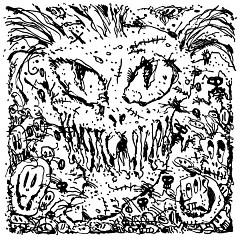
    Swathed in the closest I have yet seen to a Savage Pencil-esque liquefying demon sleeve — a truly fitting representation in pen and ink of this Canadian duo’s music — morceaux_de_machines’ debut CD is an insanely free journey into the possibilities of live laptop performance. Aimé Dontigny and Érick d’Orion’s improvisations are nothing less than startling in a context where the debate often centres mundanely around the merits or otherwise of watching individuals perform the digital equivalent of tape-based works. There is dripping sweat in this music; there is a refreshing ferocity and brutal dynamism in abundance. It seems even at times that the ghost of Coltrane’s 1966/67 interstellar live work pervades the proceedings. The resulting brew is a primordial mix of cut-ups, lifts, uncategorisable loops, acrid and acidic soundscaping and more, all the components reaching half-life at similar points in the fray. Like the sound of the multitude of layers being stripped internally from the walls of the atom, this is pure jazz fission. The penultimate track on liberum arbitrium is entitled rothko and the choice is apt, even as a generalised pointer to the sonic landscape of this disc: oversized slabs of dense, textural colour juxtaposed in an end-to-end fashion, exaggerated, confrontational, surprising — all essential qualities of a difficult but completely mesmerising sonic soup.

    There is dripping sweat in this music; there is a refreshing ferocity and brutal dynamism in abundance. It seems even at times that the ghost of Coltrane pervades the proceedings.

    liberum arbitrium in Ici Montréal

    “Compact!”, Catherine Perrey, Ici Montréal, June 6, 2002
    Thursday, June 6, 2002 Press

    morceaux_de_machines, c’est Aimé Dontigny et Érick d’Orion, de la formation Napalm Jazz. Le communiqué parle d’une œuvre qui s’écoute comme on regarde un Riopelle. Et c’est exactement ça. On en reçoit plein les oreilles comme on en reçoit plein la vue lorsqu’on regarde un tableau de ce géant de la peinture. Sans crier gare, on est plongé dans une mer de bruits qui dessinent l’espace sonore tout entier. Un orage, un cataclysme, qui, bizarrement, n’agressent jamais. Une collection de bruits, rapides, incisifs. Un empilement par textures, le tout organisé selon un rythme qui s’accélère. Des pièces plus moutardées au début du disque précèdent des morceaux plus tranquilles. Mais peut-on parler vraiment de tranquillité dans le cas de ce duo? 8,5/10

    … une œuvre qui s’écoute comme on regarde un Riopelle
    8,5

    Chemin de fer in Splendid E-Zine

    “Review”, Brett McCallon, Splendid E-Zine, June 4, 2002
    Tuesday, June 4, 2002 Press

    Magali Babin is a performance artist/live sonic experimentalist whose focus is the sound that can be drawn from subtle and not-so-subtle interactions between metallic objects. The album’s title, which in English translates to “Rail Road,” literally means “road of iron.” That translation is apt.

    Babin wants her listeners to imagine the objects she is manipulating, and therefore emphasizes their differences. Triturations is grounded in the scraping sound rasped by what sounds like two rough steel blocks, while Petit jardin is tiny metallic beads undercut with an occasional deep, bell-like resonance. La corde uses what sounds suspiciously like the pickup of an electric guitar to scrape some interesting patterns; L’entonnoir engages a ride cymbal to back up the strange, roiling hum in the foreground.

    Granted, this music is not for everyone, and even for those willing to go along with Babin’s program, there are moments of needless repetition . Babin is, of course, an artist who will inevitably remain on the fringe, but the iron road that leads to that fringe can definitely be rewarding.

    Babin is, of course, an artist who will inevitably remain on the fringe, but the iron road that leads to that fringe can definitely be rewarding.

    The Freest of Radicals in Splendid E-Zine

    “Review”, George Zahora, Splendid E-Zine, June 4, 2002
    Tuesday, June 4, 2002 Press

    No Type began life in 1998, and continues to this day, as an MP3 label. If the concept seems a bit ludicrous to you — after all, don’t MP3s render the whole record label structure redundant — think of them more as arbiters of quality, or defenders of a defiantly experimental aesthetic. For No Type there are no rules, no “official” sound, no set expectations — everything about them defies convention and strives ardently against categorization and quantification. Therefore, while it’s initially alarming to see No Type embrace the brick-and-mortar world of CDs, those reservations last only a few seconds; The Freest of Radicals, the stellar debut of their “tactile” line, compiles two and a half hours of the most wildly wonderful, defiantly peculiar sounds (music seems too limited a word) you’ll hear this year — compositions that not only discover and explore the union between sonic experimentation and listening pleasure, but cavort gleefully therein.

    Broadly speaking, The Freest of Radicals is all about the electronic manipulation of sound. We’re not talking about anything as simple as keyboards and synthesizers, or even the sort of functional, mechanical/algorhythmic processes that yield the blips and bleeps of IDM. The source material on The Freest of Radicals is everything from the barely audible pop and crackle of PCM data to voice samples and video game music — all of it subjected to a variety of data-invasive procedures. Sounds are chopped, hacked, dissected, disintegrated, corroded, smothered, stretched, compressed, torn, fused, mutated and devolved by every conceivable means, creating everything from organic squelching sounds and dog-audible whines to pulsating bass tone arrays, needle-scratch collages and the sound of aluminum siding falling off of a house. For every piece that sounds like the artist left the mic live while tinkering with a hand-made synthesizer (ja_dijiste’s Laquinta), there’s an electro-fried dub odyssey like Tomas Jirku’s I Think I’m In Love, the feverishly brooding jazz-rock of Kannovanik’s creepy Tell Me About Death, Mommy or a crunchy, melodic epic like Alphacat’s exquisite Waveporn. To encounter pieces as fundamentally different as Julie Rousse’s gamelan-hacking Une à six idées improvisées and V.V.’s Moment 3 on the same CD is to receive a joyous (albeit ear-abrading) reminder of the near-infinite variety of sounds available to adventurous listeners. It may hurt like hell, but it’s liberating.

    If you’re an old hand at the whole concept of non-musical music — that is, if you’ve sampled the less accessible works of Merzbow, JLIAT or the Ambiances Magnétiques folks — go ahead and dive into The Freest of Radicals with the “Bait” disc, which includes a higher proportion of the compilation’s “difficult” material. It’s here that you’ll find pieces like Magali Babin’s Petit jardin, which anchors its acousmatic explorations (pebbles being scraped up and dropped in a metal pan, perhaps) with a lingering, resonant three-note bass “melody” that pierces the relative silence like a foghorn. You’ll also encounter Camp’s nervously vibrant, high-pitched Oeee (which I’d swear includes a greeting-card version of the Wedding March), the sub-aural dub of Claudia Bonarelli’s They Use Us Back and the trash-compactor conflagration of Napalm Jazz’s kitchen-sink noise epic De la viande bio. The peculiar pleasure of the “Bait” disc comes from finding music where no music had seemed to exist; repeat spins, particularly with the use of headphones, reveal layers of hidden melody — rather like the aural equivalent of the moment when, while watching a subtitled film, you cease to be aware that you’re reading the subtitles. There is great beauty in even the most abrasive of Radicals’ compositions, and its discovery is a profound pleasure.

    If you’re looking for something a little more musical at the outset, sample (no pun intended) the “Switch” disc first. After Kalx’s Soundtest puts your speakers through their paces, you’ll slip easily into the pseudo-orchestral “smart techno” of Œuf Korrect’s Hooked on Phone Ethics; the song’s chirping “vocal” synth might even evoke a satisfied smile. Sluts on Tape’s compellingly clever The Last and Finest of Peter Pans would turn Mike Paradinas green with envy, channeling thick layers of morose sci-fi synth into domestic-futuristic melodies, garlanded with white noise and overdriven digital burble-drone. There are glitches, clicks, pops and digital audio artefacts galore, all of them pressed into service to forcibly expand the frontiers of electronic music. Here, dissonance and beauty are two sides of the same spinning coin, and the transition from one to the other is merely a matter of perspective. The “Switch” disc’s final minutes — Infoslut’s explosive (and brilliantly named) sound voyage He Dreamt She Was An Atom, She Dreamt He Was Enola Gay and N.Kra’s sizzling eight-bit Metroid Remix — should leave you breathless.

    And this, from a label that you probably would have ignored or dismissed outright in 1998. Albums like The Freest of Radicals restore faith in the musical adventure; the revelations here, both unassuming and astonishing, are the reason we take musical risks, whether we’re slapping down extortionate prices for intriguing-looking import albums or making the time to check out an unassuming CDR from an unknown artist. And increasingly as the years wear on, they’ll be the reason we download.

    … the most wildly wonderful, defiantly peculiar sounds you’ll hear this year… albums like The Freest of Radicals restore faith in the musical adventure…

    Cycle du son in Brainwashed

    “Review”, Graeme Rowland, Brainwashed, June 2, 2002
    Sunday, June 2, 2002 Press

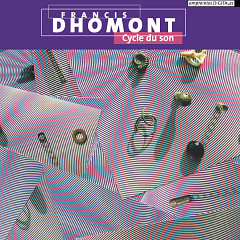
    What can you say about 76-year old composer Francis Dhomont? You could say he’s been given lots of prizes for his noises. You could say he talks a good acousmatic game theory. You could say he wears an eyepatch over his right eye. He first grabbed my attention with his Frankenstein Symphony on Asphodel, a plunderphonic acousmatic journey on which he skillfully cut up and stitched together various excerpts from works by his French Canadian contemporaries. He now tips his hat to perhaps his biggest inspiration. This sound cycle is a fiftieth anniversary homage to musique concrète pioneer Pierre Schaeffer, specifically the first movement of his Étude aux objets, from which Dhomont has sourced his raw materials. There are many furtive similarities to the Schaeffer original, but Dhomont stretches the journey out almost twice as long and eschews Schaeffer’s violent tape splice edits, focusing and magnifying curiously questioning speaker panning whirls into successive new smoothed out seascapes. In the opening funeral march, Objets retrouvés, the sounds seem to be asking themselves what they are, curious to find themselves hanging around their own echoes. Dhomont breathes new life into them and gives them celebratory purpose. The second cycle AvatArsSon paints in the sky from a more varied and clattering palette. Sounds loom into the foreground, shimmer and mutate. Latterly choral vox limbo over glugging mystery spools. Bells ring out across the city full of gleeful honking taxis, soon washed away by tidal waves. This is the most cinematic of the four cycles, in that more untransmuted sound sources are apparent than in relatively abstracted sequences elsewhere. The third cycle Novars was the first to be completed and is the hub around which the others rotate, but since it is sequenced after Objets retrouvés despite being completed seven years earlier, it seems like an extended version thereof. Phonurgie hones and magnifies elements from the previous cycles casting long late summer evening shadows and deep pool reflections, folding mystery into myth. Latterly it seems as if several glass instrument orchestras are playing cut up fragments in reverse as they sink into the sea. A little recurring chuckle is a mirthful reminder of how much fun listening can be.

  • 8
  • 9
  • 10
  • 11
  • 12
  • 13
  • 14
  • 15
  • 16