electrocd

Blog

52 results
  • 1
  • 2
  • 3
  • 4
  • 5
  • 6
  • 7
  • 8
  • 9
  • Arc d’apparition; Whisperfield, John Oswald in Neural

    “Chronophotic, cinéma del l’immobile / moving stills”, Neural, December 29, 2006
    Friday, December 29, 2006 Press

    Time-based media art is a generic label applied to all the arts involving time as one of the mandatory coordinates to experience the works. John Oswald involves time at the very center of his own work, making it the hidden fulcrum of the reality he interprets, slowing down or accelerating his own concept of ‘reality.’ In Chronophotic [Arc d’apparition; Whisperfield] there’s an altered immobility reflected in the continuos almost perceptible changes that very slowly add persons to a sort of group picture, shifting, also slowly their dressed/naked image. The nakedness and the being dressed can be seen as two faces of the same reality, the public/private, the official/intimate, the endlessly alterable/the given one. The avoid misunderstandings, the work is not voyeuristic at all, showing human bodies of all ages in their most natural and neutral shape. Furthermore it simply seem to question our conventional daily perspective and the time we spend observing and relating to other humans. It’s an ancestral species’ issue: dealing with our own essence and our own temporal and instinctually mutual recognition.

    The avoid misunderstandings, the work is not voyeuristic at all, showing human bodies of all ages in their most natural and neutral shape.

    Un son peut en cacher un autre in De:Bug

    “Kritik”, ASB, De:Bug, no. 163, December 27, 2006
    Wednesday, December 27, 2006 Press

    Die surrealistische Musik des Schotten Pete Stollery funktioniert auch ohne akademische Grundbildung in Sachen Elektroakustik und Akusmatik. Die elektronische Bearbeitung lässt oft die Quellen der Klänge und Soundscapes erkennen, die Musik bietet einzelnen Klängen viel Platz, wirkt dadurch leicht und bleibt trotzdem durchweg spannend.

    … und bleibt trotzdem durchweg spannend.

    Perdu et retrouvé in Earlabs

    “Review”, Ios Smolders, Earlabs, December 10, 2006
    Sunday, December 10, 2006 Press

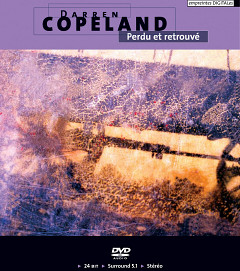
    Darren Copeland is a Canadian composer working as sound designer and composer, now also working as artistic director of New Adventures in Sound Art which produces electroacoustic and experimental sound art events in Toronto. This is his second release for empreintes DIGITALes.

    empreintes DIGITALes has a reputation of producing electroacoustic music of the highest standards. This is another proof of its status.

    This DVD-Audio offers the listener a variety of listening experiences. The music is no longer pressed on CD but on DVD. This allows the label to use much better sound quality (24-bit) and a surround experience. Next to that empreintes DIGITALes gives the music encoded in AAC and MP3 format, for iPod listening.

    Let’s first go through the compositions: This disc starts with the coming and going of a sound. It wanders around nervously, it flutters, comes and goes. Slowly, as a listener you become restless also. And then, after a minute or so a human voice becomes perceptible. At first it’s impossible to understand what is being said, only that the tome of voice is very excited. Then a first sentence is repeated again and again (reminded me of The Hafler Trio first release) and fades away again, in the distance. Only to return, break through in your face and then you understand that this is a woman reporting to a microphone on September 11, 2001. Strong entry.

    The second work is based on the sound of people whispering. The work is much longer than the first and moves on at a quiet pace. After a short overture the sound retreats and slowly moves on. There certainly is a cadenza, a rise and fall, like the breath of a sleeper. The piece alternates between some fluttering of whispers and a quiet backdrop of harmonics. Whispers of course consist mainly of noise which is a nice contrast with the other more specific frequencies that can be heard.

    Third: The Wrong Mistakes. A short work with a funny theme. The sounds, too, are a bit carnivalesque. Whirling about are bell and harmonica sounds. Short, interlude.

    On Schedule clearly deals with travel. It’s a 12-minute lasting translation of a trip from London Waterloo Station to Moskva Byelorusski. The length of the tracks between the stops has been translated into the length of the parts in the composition. So far, so good. But what makes it a bit cheesy are glissandi of the organ like harmonics that one easily connects with the accelerating and decelerating of the train. Also the recordings of the train start and stop somehow makes me think that this might very well be an acousmatic composition for children.

    Early Signals commemorates the first transmission of radio signals at the beginning of the 20th century. We hear the hoarse voices of Marconi and Eckersly and the clacking of morse signals. A short and simple layering of sound sources.

    By far the best composition on this disc is On a Strange Road. It starts as mysterious as its title suggests and continues on this path. We hear the sound of the tires of cars passing but also transformations of these sounds. After a few minutes it sounds as if we have reached a ghost land. In contrast to the On Schedule composition here there is nothing cheesy about the composition. Copeland succeeds in fascinating the listener with coming and going of the different sound sources that he has chosen. Here it’s the sounds of car tires, organs, rain, harmonic electronic sounds (in 2 or 3 different versions), some incidental recordings.

    Faith-Annihia does not layer sound sources (only on a few spots) but instead, just like the good old times, collates them one after the other. There are groups of sounds, which are then placed one after the other, fast or slow. The composition itself consists of the rhythm of the alternation plus the filtering of the sounds. Sometimes it’s muffled or very thin (especially at the beginning) at other times the sounds are bright (and therewith louder).

    Most of the works presented here are quiet. There are no rough edges, just as we can expect from the releases of empreintes DIGITALes. When it comes to pitched frequencies Copeland prefers the sound of reed instruments (such as mouth organs) which have a rich overtone structure. Most of the works date from 2001 and later, but the last two are 10 years older (1991 and 1992). It is of course interesting to compare these two groups. Indeed, the structure of Faith-Annihia is more abrasive than the works of this century. But the last work, Always Becoming Somebody Else, has a structure that is in line with the latest works. The most important difference is that Always Becoming Somebody Else lacks harmonic sounds. It is built from dark noise sounds that are counterpointed with high pitched squeals. But here too Copeland builds his pieces with the rising and falling of the volumes.

    About the DVD-Audio: empreintes DIGITALes presents these works in several modes. The music can be heard through 24-bit stereo files, 5.1 Surround files (which I haven’t heard because I do not own such a set), but also as AAC and MP3 files (320 kbps/48 kHz). So there is a mode for every conceivable situation. I have listened to the files in my car (MP3) and at home in stereo.

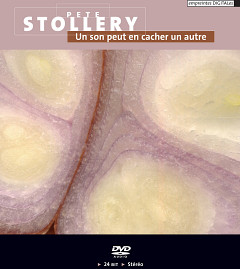
    Un son peut en cacher un autre in Earlabs

    “Review”, Ios Smolders, Earlabs, December 10, 2006
    Sunday, December 10, 2006 Press

    I started this review by trying to describe what happened inside those seven compositions. That is however both tedious work and the result of that hard labour will still not be enough to give the reader the right idea about what this music really is. Let’s take a look at what I managed:

    Onset/Offset

    The opening of a door, the flanged (slowly declining) sound that resembles the peeling off of cellotape. Stop, start again. The same sound types, the same order but slightly differently mixed, edited, placed. Then the distinct sound of a ball in a bowl. Stop, start again. New scene: closing of a door. Sub bass, re-editing of previous sounds. Reverberated, echoed and snappier cut. Stop, start again. We’re outside. Street sounds, at first clearand unadulterated but soon caught in a wide mix with reverberations, the sounds of the first scenes, and street sounds. After which the composition rounds it up with the sounds of the first few minutes.

    Peel

    This work is not as scenic as the first one and concentrates much more on the morphing of sounds. Central sound source is (I think) the sound of a turning coin. Reminding us of course of one of the first Études of Pierre Schaeffer. Then the sound changes and we no longer appear to be dealing with a Schaefferian but simply with a ball inside a roulette disk. New scene, starting with the final second of the first scene. But now everything breaks down again, and again. The sound of the ball is edited again and again. After a few minutes we hear, from the distance, the voice of a child. Then: silence and booming sounds. We’re teleported to a family scenery. The conversation between a small child and his very English parents. After which the story continues with sounds of wrapping paper, clicks, humms. Aside from the funny family scene, not the best work. It starts of quite strong but somehow looses its direction on the way out.

    See? This might be regarded as a sort of map, but still you wouldn’t see the landscape. The problem with this music (and indeed a lot of the music released by empreintes DIGITALes) is that it consists of so many layers and the musical structure is so complex that trying to describe will always fail to transmit the essential.

    So, how shall I proceed to review this release? Let me do that in separate phases. First some words about the total collection, after which a short description (no more) of each of the compositions. Then I might compare it to works that have already been released so that the reader has a point of reference. After which some words about the package and such.

    It is most important to keep your attention with the music. Do not, really, do not start another activity because you will miss out on 80% of the quality of this music. Also, listening with headphones is not recommended. The music needs to float freely through the air. I found listening through headphones not as pleasant as through speakers. The sounds heard in the compositions on this disc keep a strong link with their origins. 90% of the sounds are firmly rooted in real acoustic phenomena. We hear, for instance, the rolling of a ball in the roulette table, but it is presented to us in such a fashion that those parts of the acoustics are enhanced, that we normally neglect. This double negative, together with the sound icon that we already have of a ball rolling over a wooden plain, gives the impression of a sort of acoustic super reality.

    The whole disc is in this vein. Recordings are crystal clear and edits or the elaborations of these are never cloggy. So, in that corner everything’s hunky dory. I have more difficulty with the musical structure which can be hard to follow, sometimes. At times it seems like the music is designed on a second to second basis. This is especially the case where the sounds remain close to the original (phonographic) recording. There, Stollery seems to want to change our perspective again and again with abrupt or heavily processed interludes. As you may see in the descriptions of the two first compositions above but it also appears in composition number 5: ABZ/A. Composition numbers 3, 4, 5, and 7 (Shioum, Altered Images, Shortstuff and Vox Magna) are different. They are not as closely related to an acoustic source and follow a very clear thread of development.

    We get 7 compositions, ranging from 1993 to 2003, on this disc that is presented in several formats: [88 kHz / 24-bit, 48 kHz / 24-bit], and in AAC and MP3 (320 kbps).

    Un son peut en cacher un autre in De:Bug

    “Kritik”, ASB, De:Bug, no. 108, December 1, 2006
    Friday, December 1, 2006 Press

    Die surrealistische Musik des Schotten Pete Stollery funktioniert auch ohne akademische Grundbildung in Sachen Elektroakustik und Akusmatik. Die elektronische Bearbeitung lässt oft die Quellen der Klänge und Soundscapes erkennen, die Musik bietet einzelnen Klängen viel Platz, wirkt dadurch leicht und bleibt trotzdem durchweg spannend. 4/5

    4/5

    Mondes inconnus, Un son peut en cacher un autre, Alter ego in Bad Alchemy

    “Kritik”, Rigobert Dittmann, Bad Alchemy, no. 51, December 1, 2006
    Friday, December 1, 2006 Press

    Pete Stollery (1960, Halifax, UK), Mathew Adkins (1972, Leamington, UK) und Pierre Alexandre Tremblay (1975, Montréal) haben sicher Vieles gemeinsam, schon auf den ersten Blick auf ihre Biographien aber ihr Studium bei Jonty Harrison an der University of Birmingham, das Tremblay 2005 mit dem PhD in Electroacoustic Composition abschloss, die anderen natürlich ebenso. Das ist hier die Sorte von Elektroakustik, bei der so etwas obligatorisch ist und zählt und auch dazu führt, dass Stollery z.B. heute Lecturer in Music und Director des Electroacoustic Music Studio at the University of Aberdeen ist oder Tremblay Komposition an der University of Huddersfield lehrt. Ebenso obligatorisch ist, dass man für seine Musik Preise bekommt, in Sao Paulo, Prag, Stockholm oder Bourges.

    So wurde etwa Stollery für Altered Images (1995) und Vox Magna (2003) ausgezeichnet, die zusammen mit 5 weiteren Kompositionen enthalten sind auf Un son peut en cacher un autre (IMED 0678, DVD-Audio). Dabei spielt er mit Roulettekugeln (Peel, 1997) und Fahrradspeichen, schließt Debussy mit Ken Russell kurz, lässt Kinder grüne Bienen malen, lässt sein Material knackig zucken (Shortstuff, 1993), umrundet, angestoßen von Aberdeen-O-Ton, im Zeitraffer die Welt und begegnet dabei zwischen Meeresstrand und Autobahn einem Akkordeonspieler (ABZ/A, 1998). Das ziemlich großartige Vox Magna schließlich meditiert als postindustrialer Soundscape über die nordenglischen und schottischen Hinterlassenschaften des Industrialen Zeitalters, mit geisterhaften Echos des eisernen Eifers eines Fortschritts, der längst vorüber geschrittenen ist. Konzept muss sein, meinte die grüne Biene und tänzelte dabei auf einem Bein.

    Mondes inconnus (IMED 0679, DVD-Audio) versammelt 8 Arbeiten von Adkins, darunter seine Preisträger Melt (1994) und Mapping (1995-97). Adkins Musik kreist um Anfänge (Mapping), Ruhezustand und Geschwindigkeit (Still Time, 2001), sie wirft Blicke aus der Satellitenperspektive auf die Erde und per Teleskop ins All (Aerial & Deepfield, 2002) oder pendelt mit dem Zug ins Zentrum von Birmingham, mit Turners Rain, Steam, and Speed und Schaeffers Étude aux chemins de fer im Hinterkopf (Melt). Symbiont (2002) und das gleichzeitig übereifrig stotternde und pathetisch nach den Sternen greifende Cortex (2004-05) wurden angeregt durch die Science Fiction von William Gibson und Isaac Asimov und die visuelle Phantasie von HR Giger. Silk to Steel (2005) entstand als Geburtstagsgeschenk für den Kollegen Christopher Fox und variiert mit Hilfe von Primzahlen auf elektroakustische Weise Fragmente aus dessen Pianostück Prime Site. Die brillante Akustik gibt Adkins fantastischen Reisen in unbekannte Welten eine oft nicht mehr geheure Plastizität. Schnitte wooshen wie Poes Pendel. Wenn es knirscht, dann rummmst gleich eine Gerölllawine aus den Boxen. Immer wieder gerät man als Incredible Shrinking Man zwischen die Backenzähne eines Riesen. So etwas nenn ich Sonic Fiction erster Güte.

    Tremblay, ansonsten auch Bassist und Kopf des Quebecer Jazzquintetts [iks], beginnt seine Sammlung Alter ego (IMED 0680, DVD-Audio) mit einem autoportrait (2001), einem Blick auf die zurück liegende Dekade des eigenen Strebens und Werkeln, der 10. Ausgabe des Festivals Rien à voir entstand. Danach folgen Klang gewordene expressive und romantische Reflexionen über die unmögliche Stille (au Croisé, le silence, seul, tient lieu de parole, 2000), über Mind & Body (Binary (Virtual Rapper Remix), 1998), über Ovids Spruch „Tempus edax rerum” und die Flüchtigkeit der Zeit (fugue; qui sent le temps?, 1997) und über Baudelaires Zeile „Moi, mon âme est fêlée” (la cloche fêlée, 2004). Immer wieder werden Stimmen, Schritte, demagogisches Gebrüll geloopt oder Fetzen von Rap (Dice B von The CatBurglaz). Dazu brodelt es und rauscht aus allen Fugen und selbst Breakbeats oder vorbei röhrende Formel 1-Boliden und schließlich auch noch Kirchenglocken geraten in Tremblays Zentrifuge. Hier ist endlich mal wieder einer, der von Musik groß denkt und sogar das Wort Übermensch nicht scheut. Musik ist Komplize, Spiegel, das Andere (Alter ego). Eine Poesie des Unvollkommenen und Traumpfad ins Andereswo. Zumindest der Versuch, Übergänge zu finden oder zu bahnen zu Altered States, zu einem lebendigeren und schöneren Selbstsein (Alter ego).

  • 1
  • 2
  • 3
  • 4
  • 5
  • 6
  • 7
  • 8
  • 9