electrocd

Blog

115 results
  • 10
  • 11
  • 12
  • 13
  • 14
  • 15
  • 16
  • 17
  • 18
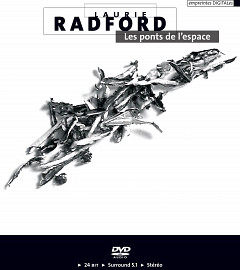
  • Les ponts de l’espace in Sonoloco Record Reviews

    “Review”, Ingvar Loco Nordin, Sonoloco Record Reviews, March 25, 2008
    Tuesday, March 25, 2008 Press

    Laurie Radford (1958) is a new name to me, but probably just because of my ignorance. Now I get the chance to become acquainted with his sound art on this Audio DVD from empreintes DIGITALes; a label which not only is the foremost label for electroacoustic music, with its own distinct style, but which also is one of the most prolific labels in the genre, with a host of new Audio DVDs and the occasional CD out this winter and spring.

    Radford works in a diverse compositional realm, with various combinations of instruments and voices, electroacoustics, and performers interacting with computer-controlled signal processing. He is currently teaching electroacoustic music and composition at London’s City University, UK.

    Track 1. Verb Tales

    (2002) [5:01]The composer explains that the origin of this brief piece were the reverberant tails of a variety of vocal recordings. The start of the recording, though, to me, resembles a group of Tibetan lures, sounding fervently out of the pre-oppression days of the Potala, through the clear air of the high plateau. Synchronicity has it that I hear these cumulating Tibetan trumpets as I get a email urging me to sign a petition for the Tibetan people and the plight of the Dalai Lama, which I do — giving Laurie Radford’s first piece on the DVD a deeper significance.

    Wheezing, appearing and disintegrating sounds move in between the trumpet congestions that hammer gold through the chilly moments of high altitudes. At times I do also recognize the faint connection with words; thus verbs, but that is really very distantly associated. Longer, droning, but sort of slowly swelling sonorities, shape a sonic elasticity beneath the tack-hammering gold trumpets. Original!

    Tracks 2 — 7. les ponts de l’espace I (2001) [7:14]: line I / triangle / point I / circle / point II / line II

    The composer explains that the short pieces each are miniature studies of two compositional processes. In each piece Radford explores spatial sound motions within geometrical shapes, which explains the titles. These are also studies of environmental recordings integrated with sounds from the studio. More explicitly, some of the sounds derive from an instrument built by Tom Nunn, called Primordium. These sounds are set up to form relationships with unprocessed takes on a wintry urban streetscape.

    As I start to listen I get a sense of reality flushing through a number of quantum dimensions; situations, one after the other, for the current situation, for the swirling pattern of cars and birds and human anatomies down the mystery of space and time and whatever else is deciding our elusive lucidity in the dubious state of matter, which Michio Kaku in his spellbinding scientific TV programs have me marvel at, while I realize that anything that shows up in front of me, from coffee cups to galaxies, are mere patterns in space.

    Laurie Radford’s investigations of moving sound placed in geometrical situations further enhances my ever deeper identification with all and ever, in an existence of non-local connections and vibrating patterns that can make sense and no sense of everything.

    The sounds in a musical consideration are exciting and beautiful as well. You can listen without getting into philosophy and physics, and evolution is fast and charmingly witty in these flurries of spiraling grains and lofty passages through parks and across pedestrian crossings, as the wind carries children’s voices and spectacular, rustling and punching events are mirrored in mirror turning and tumbling through the void between time and space, between here and now.

    Tracks 8 — 13. les ponts de l’espace II (2003) [12:01]: point I / triangle / line I / grainDrone / line II / circle+point

    Laurie Radford continues his investigations of raw environmentals and studio produced sonorities. Some of the concrete sounds are brought in from a gallery opening in Ljubljana, Slovenia, and from a traditional bell ringing in Bresovica, also in Slovenia. He also brings back some of the electroacoustic sounds from a choice of his own earlier mixed compositions.

    This set begins with a truly elegant twitch; a tilted hat over half-hidden, smiling eyes and teeth glaring like white pearls out of the composer’s grin. Coin-twisting sounds at hilarious rotations breeze by and up, out into space, while other sounding motions crash down well within earshot. Lots of patterns exchange information about position, density, inertia and so forth, all inside a realm of style and grace! This is music made from creep-resisting alloy.

    Applause splash in like rain, or rain spreads like applause across the bleachers. Sharp, extremely close steel insect sounds move knifing antennae. Eleven dimensions of curly candy sonorities hide behind traditional ways of thinking. Right in a placement of dispersed squirts, people make themselves known through voices. Shadowy realities flutter by in wind instruments and shreds of ambient spaces; quite peculiar — and too much, really, to put your finger on. As soon as you stretch your finger to pinpoint something in this music, something else is there, which might not even be remotely related. This music calls for a kind of up-scaled acceptance that isn’t common. Squirts in buckets — perhaps a cow being milked — is mixed with a child happily and playfully calling Mommy, and spiraling, tight electronic ribbons turn through younger years. A jolly market place accordion is cut up like sound poetry, and you almost feel the wind coming down off the mountain. When the Bresovica bells are introduced, they appear in their afterglow at first, without the attack, folding out beautifully down an artificially extended duration, panning above lumpy, dark sounds of clay clod character — or these clods could be slowed-down echoes of steps through a tunnel. The bell afterglow deepens in the pitches to serious, stern, opaque veils of impermeability, forming deep blue and purple chords, like those steady, long La Monte Young chords from the Dream House on Manhattan “bent out of shape by society’s pliers” into wobbly bands approaching their breaking point. An acceleration and escalation is relieved into a calming, unifying bell chord, and things get more relaxed and unreal, enchanted — lost in a sonic fairytale of magic whistles — which in turn swoop down into a smaller crowd of familiarity; people who talk friendly without tenseness. Time hovers in a rumble, not knowing which way to go.

    Track 14. à la cire perdue (2004) [15:27]

    The composer explains the title: “Cire perdue is a time-honored sculptural technique still in use today. It involves the covering of an initial sculptural model with wax prior to casting the object in bronze. During the casting, the wax melts and disappears, is lost, leaving the finished bronze statue as the final reflection of the artist’s work.”

    Radford uses this description as a metaphor for the way he utilizes the source sounds — his own instrumental music — in the piece.

    With a candy wrapping paper crackle and a copper insect flyby, the piece opens into a tumbling rumble magnificence, like deep brown chocolate filling through the cracks of the sense of taste. The last and farthest reverberation of a voice aaahs in pannings across the perimeter. Mist hovers across the wetlands, against the bleak light of a promising spring morn. Inside your mind slowed-down rotor blades beat the air. Electronic birds chirp in circular motions while wastepaper oceans heave through the civilizations of this planet, visible in the eight-minute light.

    There is a slightly withheld force at play in à la cire perdue, and a tight, elegant kinetic energy; an inkling of much more power in store, the way you feel on your racing bike when you cycle fast and smooth and know that you have much more to give, stored in your amassed training and your muscles and your mental resources.

    Distant, panning nightjar prayer beads are thumbed through the obscurity of pine tree hideouts, deep inside the music. An ocean rises inside the sounds as I come to grips with perspectives and realize it might be a closely miked glass of an alcoholic beverage with ice cubes, tilted and twirled in a ring-marked female hand at an upper-class party in Mayfair in 1966, reflecting light blue velvet and golden frames around the walls, Mick Jagger’s dynamic mouth moving about in his face as he bespeaks a young Marianne Faithful

    Yes, visions supersede each other when you let Laurie Radford’s music take hold, not without pleasure!

    Track 15. Mining Inference (2003) [3:05]

    This is a variation of interferences III (1983-IV), composed by the Canadian-Argentinean alcides lanza. It begins with the distribution of short, rhythmicized portions of sound, which are repeated and developed in an almost shortwave static manner. The sounds which to begin with are gray and bland and anonymous bucket-in-the-shed finds, after a while give way to shreds and recollections of instrumental, almost identifiable sounds from a world that once was called real… Nowadays we know that all we see is just patterns of atoms, which themselves do not really exist either, disappearing into the flux of existence/nonexistence; a bewildering state of vibration — so we’d better just enjoy the music!

    Rickety oralities start to emerge like gnats in between sparse but decisive piano tones, panned madly, and a humming machine sits heavily backstage.

    A lovely miniature, which the composer has worked hard with. Very nice; a treat!

    Track 16. Terms of Occupancy (2004, 05-06) [10:08]

    Laurie Radford explains that this work began as an 8-channel variation and extension of à la cire perdue.

    The immediate impression as the music kicks off is that of a flock of jackdaws and crows stirring and flying up, perhaps at the sneaky arrival of a black-and-white cat with sharp claws and supple moves! As the musical motion spirals upwards like a beanstalk in a fairytale, silvery dust falls all around, sonically, each little speck reflecting everything and all. Whistling and chirping trajectories rise and fall, and somewhat denser areas begin to take shape, appearing as thuds or local percussive events. For a while things gear up to an extent that makes analogies to Stockhausen’s Sirius spacecraft viable. This tight-knit motion upwards is brutally cut, as brief silences and choppier sounds tumble in, like rock gardens in an emotional ambience; like cruel recollections when you wake up in your body. Things keep changing too fast to keep up, while associative visions spread out their sheets in the wind before you. The sky is no limit. Angelic choirs soar out all across the horizon in a Gustave Doré setting. Little whirlwind sonorities dance across the West Texan lowlands like Persian Surgery Dervishes while the dead are swept in the color blue.

    Yes, visions supersede each other when you let Laurie Radford’s music take hold, not without pleasure!

    Matériaux composés in Vital

    “Review”, Frans De Waard, Vital, no. 620, March 25, 2008
    Tuesday, March 25, 2008 Press

    Sometimes, afterwards, I think I was a bit too harsh. When I recently reviewed a couple of DVD (but with music only) releases by empreintes DIGITALes, the final review was a re-run of the previous reviews — as to outline the repeat character of the music. That was, perhaps, not entirely fair. But it make want to listen with much anticipation to the release by Louis Dufort. That was, again, all wrong, as this one, I must admit (and never afraid of admitting when I’m wrong), I quite liked. The differences between this, and some of the precedent releases by the label, are to me clear. Dufort’s interest doesn’t lie in the ways sounds are processed by similar pieces of software which seem to be applying to the other composers, but he rather uses a more roughly shaped compositional method. His sounds are more direct, more in your face, not processed beyond belief as some of the sounds what they are. In, for instance, Matério_***, there are farm sounds, scraping the surface, cooking sounds and clusters of instruments. They all make perfect sense, a fine, balanced audio picture. Sounds do not bounce up and down, back and forth, stumbling and tumbling, but are placed with great care in the right spot. Of course Dufort uses all sorts of computer techniques but as a means, not an end. O.k. so I was perhaps wrong in writing off this label. It doesn’t mean I will necessary straight away applaud everything they do, but this release made up things in an excellent way.

    They all make perfect sense, a fine, balanced audio picture. Sounds […] are placed with great care in the right spot.

    Exils in ResMusica

    “Exils acousmatiques”, Maya Prynda, ResMusica, March 20, 2008
    Thursday, March 20, 2008 Press

    Un DVD présenté comme un CD? Oui, tout à fait. Car le seul intérêt du format est qu’il permet à l’utilisateur de choisir entre deux types d’écoute. Sinon, il n’y a strictement rien à regarder. Les œuvres s’écoutent comme pour un CD. Seul le titre s’affiche à l’écran et c’est tout.

    Les œuvres acousmatiques présentées sont par essence basées sur la spatialisation et la circulation du son, la diffusion en stéréo est donc plus pauvre que celle en Dolby Surround 5.1, et l’auditeur, en étant moins «entouré» par le son, est par conséquent moins plongé dans l’ambiance souvent assez dramatique des pièces.

    Annette Vande Gorne travaille tout à la fois au studio Métamorphoses d’Orphée de Musiques et Recherches à Ohain en Belgique et à l’Ina-GRM de Paris dont elle a honoré plusieurs commandes. Ce DVD a pour ligne conductrice l’exil, qui donne le titre de cette compilation. Ce qu’a vu le vent d’Est (d’après Debussy), rend, par son titre, hommage à Debussy et à la mouvance de son œuvre constituée de juxtapositions de fragments. On retrouve d’ailleurs la même impression de magma sonore que dans le Prélude du compositeur. Les autres pièces, d’atmosphère variée mais avec toujours une certaine tension dramatique, laissent une place capitale à la voix déclamée qui est parfaitement intelligible et qui dit des poèmes ou des textes d’auteurs.

    L’écoute est sans cesse renouvelée, jamais lassante. La technologie est un support, un moyen de travail mais la technique ne prend jamais le dessus et permet aux émotions de s’exprimer, en particulier grâce à l’utilisation de la voix déclamée qui vient se superposer.

    L’écoute est sans cesse renouvelée, jamais lassante.

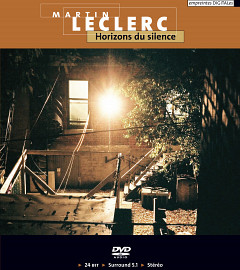
    Horizons du silence in Sonoloco Record Reviews

    “Review”, Ingvar Loco Nordin, Sonoloco Record Reviews, March 12, 2008
    Wednesday, March 12, 2008 Press

    Martin Leclerc was born in Québec City in 1976. He studied classical guitar at the Conservatoire de musique de Québec, and finished his Master’s with Yves Daoust at the Conservatoire de musique de Montréal. He keeps appearing as a guitarist in various groups, but mostly devotes his efforts to electroacoustic composition. When asked to categorize his artistic direction he replies: “My main interest in sound is to extrapolate concrete matter into musical objects while toying with semantic relations. Film parameters in electroacoustic music question me a lot. Poetry is one of my main sources of inspiration”.

    Track 1. … et le ça (2000) [12:58]

    Martin Leclerc adopts a very personal attitude towards his music. However, I don’t understand a single view he airs around the first piece on this CD. That doesn’t matter. His words are brief, and the music develops in interesting and perhaps somewhat scary ways, from grainy filterings of subcutaneous motions to elastic, candy-mist drones across the skies of past or future tenses. I feel a distant past long before the emergence of mammals, or, why not, a distant — or not so distant… — future way past the extinction of mammals… Track 1 makes me anticipate existence turning out any way at all; security just a grand illusion. Sounds of humans and the peaceful pouring of water like audible traces etched on flakes of steel turning in space, on an Aniara journey into the constellation of the Lyre; recorded voices the only voices left in a dehumanized world, like in the movie On the Beach.

    Tracks 2 — 8. À l’horizon du silence (2001) [17:16]
    Une journée comme les autres; Solo de trompette 1; Femme hystérique dans la ville; Solo de trompette 2; Écroulement; Solo de trompette 3; Désert — Éclaircie de soleil
    B-flat trumpet and tape
    Pascal Leprohon [trumpet]

    Leclerc touches upon a number of worldly parameters in connection with À l’horizon du silence. Maybe Leclerc’s French subtitles can guide your notions a little, if need be… A female French-speaking voice relates the tale from the Hebrew Scriptures about Jericho and the fateful trumpets, while brief incisions of a soprano and a romantic piano bewilder and delude. “Regarde!” The female voice continues the story, and one reflection that a basically non-French-speaking Scandinavian like I make, is how beautiful the voice and the language function together; a perfect match of lingo and timbre! This aspect is in itself extremely musical; a natural sound art, which is duly noted! A strong, electroacoustic ambience takes hold and offers you dizzying views inside your mind and inside the constellations of the void, while the romantic — or perhaps wiener classic — piano figure recurs, like a late Beethoven decoration or ornament, making a desolate journey astray in space more of a cozy pastime…

    Brief, completely silent breaks stress the significance of what emerges.

    Pascal Leprohon’s trumpet spreads its gold through vibrating exclamations, in serpentines of a sense of uproar, until it is let alone in a magnificent peace that calms all around it, Leprohon’s extended cadenza moving upwards through light in the solitary magnificence of a hovering skylark that pinpoints the essence of space and time. To a large extent, this work is a contemporary, soloist art music trumpet piece, delivered by a virtuoso on the instrument. For the longest time, you forget the electroacoustic backdrop, and enjoy the glory of instrumental finesse and refinement — BUT suddenly a madman shouts violently in your ear, scaring the wits out of your art music cool. It is no nice surprise. The continuation is a jagged and noisy pain, which does contain some drone-like aperture in there, but most of it is a kind of hen house pain… again losing itself in a peace and cadenza-like trumpet reasoning. It’s hard to find any rest or serious continuity here, but then again, I’m sure the composer didn’t look for that. I do find it unusually hard to come to artistic grips with À l’horizon du silence — but perhaps this irritation was what Leclerc sought — and found!

    Tracks 9 — 13. L’Odyssée (2002) [12:13]
    Souvenirs; Respiration 1; Sommeil — Réveil; Respiration 2; Affrontemente, folie
    “… since then, he has long tried to forget these abominable memories…” (Enki Bilal)

    Before even listening I read the composer’s description, where he explains the quite interesting and picturesque fact that the piece draws some inspiration from the comic story La chose à venir by Yugoslavian [Serbian?] cartoonist Enki Bilal. I have sometimes associated to cartoons in certain particularly wild, uninhibited Spike Jones electroacoustic expressivity, so this draws my closer attention, I do admit. As I think about my shattered impressions of the earlier piece on here, I feel some apprehension, though, when Martin Leclerc talks about the affects he benefited from Bilal’s story: “coldness, anxiety, horror and madness”. I respect that the composer maintains his artistic freedom and makes use of his inklings and compositional predispositions, but this again prepares me for abruptness and incoherence. Let’s listen!

    On the contrary, L’Odyssée starts in a most charming, persuasive and enchanted mood, trickling water running down the hull of a piano through breaths of melancholy chords, as a rusty gate slowly swings on the hinges of time in the back of your mind… and a sudden series of squeaks — shoe-like, fender-like — open a breathless moment; a halting-place of halation, your heart expanding through your innermost silence. A worried body — your body; heavy with flesh and gravity — twists and turns, caught in an unpleasant moment of space-time. Loose shreds of world stuff, like flaking words of children and high-spun creaking through the stratosphere, spiral your inward existence, as if your eyes are closed and your mind wide open.

    Deep respiration follows, but not associating primarily to human bodies, but to large, silent machine halls by the Baltic Coast; gigantic rolling-mills left to recession; heavy machinery silently resting, close to the surface of the planet: industrialization gasping for air, its kaldo furnace lungs hardly inflating, barely moving, like the last bulging throat motions of a frog in a pond. This is something that happens everybody unawares, when nobody sticks around, when everyone has tried to save themselves, and either succeeded or not. In dreamy, hallucinatory desperation, the congested, melancholy piano is returned, smeared back and forth across the mental terrain, in beauty and malignance, thinned out into soap bubble brittle reflectivity, transparent layers of metal giving off the most gentle virulence that grazes off the surface of your cornea. The sounds merge into one high pitch of blindness.

    War-Of-The-World rumbles prepare you for a scenery of bloody climes, and Martin Leclerc’s music makes you sense the existence of alien evil… while a worried heart cramps like a spounge in the fist of a catatonic psychotic… The disguised piano chords return like dark wings out of blind castles in Fairytale Mountains. The music passes through layers of membranes of existence, deep down in planetary atmospheres that hide obscure thoughts, vile dreams. You feel like dead walk, dead breathe — an empty, purely gestural breath — as Leclerc’s electroacoustic respiration episodes continue, now paired and accompanied by deep, bouncing steel hull percussion, from lonely quays in deserted harbor areas of the Western world, where human life has withdrawn like cephalopod tentacles into underwater caves. Mariners trapped inside sunken submarines of World War II tap away at the hulls in a peculiar, jolly ragtime of death and decay. Shoals of fish stand listening, billowing like one single organism in time with the rhythm of the enclosed human death. Oxygen is a scarce commodity. Perhaps present life has already ceased when violins — in soaring caresses and tiptoe pizzicati — begin a Central European tune from the clan societies of villages. The music swirls along in elegance and hypnotic body awareness, in the colors red and black, women on high heels, stilt-walking sex and death through Romanic romances of lush Hungarian gardens.

    More seriously electroacoustic and musique concrète sections breeze by; shreds of a voice, a door on rusty hinges and a heartbeat — all compositionally cleverly placed, spatially and in time, and at different levels of consciousness, in recollections or anticipations; beautifully arranged! Life/existence itself is focused, for a while, in a vibrating plane through the audible realm, concentrated, refined — in essence. This music makes you feel that your body is a mere hindrance; something in your way, providing you with needless cares and lots of pain, and you’d really need a way out, a method into Deliverance, which the Buddhists call Enlightenment. I read one of Dalai Lama’s books and try to merge, harder and harder, with the insight that personal existence is but an illusion; that clinging to this illusion is the root of all evil, of lousy karma — and right this moment my perception of the vividness of Martin Leclerc’s L’Odyssée provides an aural, audible backdrop that is quite effective! Our spirits are on an odyssey through the illusion of space/time, while all places are here; all times now! Faint echoes of craws seep through the membrane of the music. Occasional coleoptera rustle across dried leaves on the forest floor. The piano comes back in on the swirl of a whirlwind, serpentine chords through the gusts of your memory while harsh respiration raucously rub through the scarecrow Bardo between your lives, as the mood of the dreamscape pianism grows into the distant thunder of a romantic Rachmaninov concerto!

    You end up observing your body heave beneath you like the ocean at night; organic matter clothed on a white skeleton on a bed, its lungs mechanically breathing; slowly, heavily; in, out… in, out… slowly… heavily…

    Wow! If ever I was hesitant and undecided about Martin Leclerc’s two first works on this DVD-Audio, this third one — L’Odyssée — made up for that in great measures! It’s a true masterwork; one of the kind that you only very seldom hear, and that can bring your own imagination very far. I can only congratulate Leclerc to this wonderful electroacoustic work of art! So far in my listening (I have three works left to hear!) it stands out as the top-of-the-line audicity here; real state of the art art!

    Track 14. Sauf dans la brume (2005) [12:33]
    “Everything was basking in oppressive calm” (Pablo Neruda: Memoirs)
    “I have never found a companion that was so companionable as solitude. We are for the most part more lonely when we go abroad among men than when we stay in our chambers” (Henry David Thoreau: Walden)

    The composer says that this work was induced by solitude, that of the two literary works cited, and by his own sense of solitude. He also explains that the work is “a musical transposition of various states of solitude feeding on the literary discourse and soundscape evoked by these works”.

    This work also makes high quality dreamstate statements, in gloriously beautiful sonic clothing; veil after veil of satin and velvet sewn in Northern Lights; dancing poetic stanzas of emotions in soaring magnetic fields; shreds of messages out of the void lost in crackling dispersion over celestial fields.

    Leclerc manages his difficult task of actually achieving his programmatic goal of composing loneliness and its wider aspect solitude. He also, in the process — which isn’t bad! — goes through with sonic beauty and brilliance — and excitement! This is the loneliness of a deity, enormous, all encompassing, its only remedy to eavesdrop on the lower existences and their cruel wars.

    Sauf dans le brume delivers a soaring, shimmering auditive beauty of a kind you may recognize in times of utter tiredness, as I recall one time hiking the lonely valley of Stuor Reaiddávággi in Northern Lapland of Sweden, when I was so exhausted from moving through the tough terrain of the rock deserts beneath the towering glaciers that I wasn’t even able to get myself together enough to tie my boot string! At that time my mind sort of rose up through strange, shamanistic layers of consciousness, in soundworlds related to Leclerc’s Sauf dans le brume, while my body was just an unconnected machine below me, staggering across the rocks.

    Sauf dans le brume equals dizzying, venomous beauty! Quite wonderful!

    Tracks 15 — 19. Pièce pour petites oreilles (2003) [14:30]
    Berceuse; Balbutiements; «Koa le fermier»; Pulsations; Colère — Réconfort

    Leclerc’s introduction to this Piece for Small Ears deals with just that; the incredible sensitivity of small children’s auditory organs. However, you don’t have to go that far. I distinctly recall how I heard Bernard Parmegiani’s Lumière noire and Signe de vie, as well as François Bayle’s Motion-émotion and Les couleurs de la nuit when those CDs on INA and Groupe de Recherches Musicales hit the streets in 1986. The sharp and distinct treble was a bit sharper and more distinctive, as I recall it…

    Again, the music moves in beauty and dreams, here touching upon music boxes and enchanted soundworlds of fairytales, making me think of both Donovan Leitch and Karlheinz Stockhausen. In this dreamy state Leclerc, incredibly, inserts cut-ups of prattle and crowing, and the winding-up of music boxes. The saliva-dripping close-ups of babies are quite naturalistic, and I can recall always having a wet shoulder when my son was a toddler…

    Leclerc paints the environment in sturdy, vigorous and forceful drone-like sonorities at times, in which baby markers are spread like grainy and gritty sprays of rejected porridge — or if you’re American speaking: oat meal (By the way, I once passed a town in Texas called… Oat Meal! Are there any Sonoloco readers in Oat Meal, Texas?)

    Pièce pour petites oreilles is a fun and good-natured piece of electroacoustics, and not without beauty either, though it doesn’t measure up to the former two works. When the composer gathers a whole day nursery into his compositional spree, it gets very enjoyable! Most people have an built-in, automatic reaction to babies’ cries, though, so it may be a little hard to stay relaxed at all these calls for assistance — but Leclerc handles it well; doesn’t overstate anything. Fun!

    Track 20. Il y a… il y avait des fleurs (2000) [12:00]

    This last piece — dedicated by the composer to his mother — is “a dramatic programmatic work in which the main character is humankind represented in its modern form”… Martin Leclerc includes his own text Les enrobés, dealing with losing control.

    Beginning at Leclerc’s usual dream assemblage factory, things soon get wild and vile, mixing extremely disparate sonic sources, the way only the electroacoustician can. After a synthetic inhalation which is extended into a breathless drone of thinning air, rumble gets ominous, eventually close and thin, enclosed instead of spacious, and a toddler babbles happily. A motor vehicle blares by in speed through a rainy street, a door swings open to a sawmill with sawdust flying; you’re pushed inside, watching for the sharp circular saws, trying to keep your limbs attached. A woman gasps as in the act of intercourse, a baby cries left, a circular saw cuts right, sound-poetic permutations of bits and pieces of conversations or monologues fly up like dry leaves in gusts of wind, and a viola is heard playing, close and dry like in Paul Zukofsky’s rendering of Morton Feldman’s Spring of Chosroes on a 1991 recording on Musical Observations (though he plays the violin; not the viola).

    Martin Leclerc builds this unlikely simultaneity in brilliance and wit, amazing me with the sonic results, which I keep making helpless sense of in my head. I like being treated like this, at least when I’m in a harmonious and self-assured mood! He even brings me back into the wondrous mood of my first revolutionary discoveries of the breathtaking gargantuan works of the French masters at Groupe de Recherches Musicales in the 1980s.

    Respiration is a recurring aspect of Leclerc’s art, but it is always associated with soundworlds of mesmerizing poignancy, and well distributed over large distances. The sense of forceful, yet transparent motion at high velocities continues when important cultural markers in the shape of church bells high up in the jackdaw flight suggest associations down to the times of the Church Fathers, dispersing a sense of the transitoriness of existence almost to the degree of the Tibetan Buddhists of the Kumbum stupa of Gyangtse. Deep, invasive whispers climb up your shoulders, wheezing directly into your ears, while the crowd of innumerable human beings talk all at once, nobody listening — and perhaps the loud whispering scraping at your mind like a raven’s wing is the left side of your brain talking to your right side, as maintained in Julian Jaynes’ remarkable study The Origin of Consciousness in the Breakdown of the Bicameral Mind (ISBN 0-395-56352-6) by Houghton Mifflin Company, Boston 1976 / 1990.

    Angelic voices singing wordless stanzas in back of the real deliver Stockhausenesque convictions about the spiritual core of existence in Il y a… il y avait des fleurs — and for some reason; perhaps the compelling beauty and naked honesty about these sounds, I recall some scenes from yesterday’s exercise ride on my racing bike, the 8th of March, because not only did I watch a sea eagle sail diagonally across my path with its giant wingspan rustling soundlessly, but also did I see — and stop to smell — my first coltsfoots for the spring of 2008, in a ditch by the road.

    As Martin Leclerc’s final work on the DVD-Audio pulls to its close, I feel all these magical sounds, so charged with spiritual and existential significance, attune me in ways I can only approve of, proving once again that great art amply expresses the core of life and existence, vouching for art as the true essence of this elusive soaring on the transparence of being.

    … great art amply expresses the core of life and existence…

    Robert Normandeau in Le Devoir

    “De la bande originale de Paranoid Park”, Martin Bilodeau, Le Devoir, March 7, 2008
    Friday, March 7, 2008 Press

    Au tout début de Paranoid Park, le formidable long métrage de Gus Van Sant qui prend l’affiche aujourd’hui, un assemblage image-son très singulier m’a fait réagir. Cette scène, une des plus puissantes du film, imprimée au moyen d’une caméra mini-DV, montre des adolescents rouli-planchistes s’activant dans un parc de béton en escarpements. En superposition à ces images: une musique insolite, assemblage de bidouillages complexes et de percussions étouffées, dont certaines rappellent le bruit des roulettes sur le béton. En filigrane, matière dans la matière, on discerne un texte, difficile à déchiffrer mais lu en français avec un accent, à mon oreille, résolument québécois.

    Le générique de la fin m’apprend que la pièce employée dans cette scène, intitulée La chambre blanche, a été composée par le Québécois Robert Normandeau. Et c’est lui qui, joint par téléphone cette semaine, m’a appris que le texte, lu par Marthe Turgeon dans l’extrait choisi par Gus Van Sant, est tiré d’un poème de la regrettée Marie Uguay.

    «J’ai trouvé curieux qu’il veuille employer, dans un film tourné en anglais, une musique comportant du texte français», déclare le compositeur de musique électroacoustique, art qu’il enseigne depuis 1999 à l’Université de Montréal. C’est la compagnie de production de Van Sant, à New York, qui a approché Normandeau pour en obtenir les droits. Celui-ci ne savait pas quelle serait la fonction exacte de sa composition dans le film. «C’était très nébuleux, en fait. Ils m’ont demandé de leur proposer un extrait de tant de minutes, et puis voilà.» La pièce, à l’origine, en compte 24 et comporte plusieurs textes de L’Outre-vie et d’Autoportraits, recueils de la poétesse Marie Uguay, décédée en 1981 à l’âge de 25 ans et dont Robert Normandeau avait fait connaissance à travers le très beau film que Jean-Claude Labrecque lui avait consacré.

    Pourquoi cette Chambre blanche, dont on retrouve un extrait sur la bande sonore de Paranoid Park, n’a-t-elle jamais été publiée au Canada? «Elle existait aux États-Unis dans une compilation de créations radiophoniques. […] Le monde de la musique électroacoustique est très petit. Il se réduit encore plus quand, en plus, on utilise du texte en français», répond le compositeur, bien conscient de l’ironie. Car sa Chambre blanche, tombée dans l’oreille d’un cinéaste anglo-saxon, fera, par l’intermédiaire du film, le tour du monde.

    Le théâtre québécois fait souvent appel à Robert Normandeau. Le monde du cinéma, jamais ou presque. Auprès de Brigitte Haentjens, il a écrit la musique d’une douzaine de productions, dont celles de La Cloche de verre, de la trilogie Heiner Mueller (Quartett, Hamlet-Machine et Médée-matériau), ainsi que de Blasté, de Sarah Kane, à l’affiche de l’Usine C dès le 18 mars, avec Roy Dupuis et Céline Bonnier. Au cinéma, toutefois, les perspectives de travail sont rares et, selon lui, peu attrayantes. «Le milieu du cinéma est beaucoup plus conservateur que le milieu du théâtre. Ce n’est plus la chasse gardée de quelques compositeurs, comme ça l’était autrefois, mais il reste que l’approche de la musique au cinéma est très conventionnelle, nivelée, avec des usages très précis.» Ces usages et ces traditions, Gus Van Sant leur tourne le dos de façon admirable dans son fascinant Paranoid Park, que Robert Normandeau est allé voir en simple spectateur, lors de son séjour en Belgique, en octobre dernier: «J’y suis allé le jour de la sortie, à la première séance.» Je vous recommande de faire la même chose.

    … sa Chambre blanche, tombée dans l’oreille d’un cinéaste anglo-saxon, fera, par l’intermédiaire du film, le tour du monde.
  • 10
  • 11
  • 12
  • 13
  • 14
  • 15
  • 16
  • 17
  • 18