electrocd

Blog

115 results
  • 12
  • 13
  • 14
  • 15
  • 16
  • 17
  • 18
  • 19
  • 20
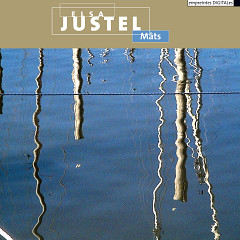
  • Mâts in Tokafi

    “Human Voice as a Template: Music Driven by Curiosity”, Tobias Fischer, Tokafi, February 15, 2008
    Friday, February 15, 2008 Press

    Many composers and listeners fear a growing degree of abstraction in music, the consensus among them being that it leads to less ‘human’ and ‘emotional’ compositions. Elsa Justel disagrees. Her pieces certainly rely on a considerable amount of processing and timbral transformation. But behind the border of immediate recognition lies a colourful new world, which she playfully populates with her sounds.

    Mâts is a collection of several loose tracks compiled over the last 10 years, with the most recent piece already dating as far back as 2004 — which implies that Justel is one the composers who either needs temporal distance to be able to gauge the true value of her work or an artist who simply cares more for quality than for being up to date. If this album, her first regular CD despite several impressive distinctions at international concours and competitions, is anything to go by, the latter seems to apply here.

    The approach has paid off. To me, anyway, an album of serious academic electronics that is both sonically explorative and thoroughly enjoyable is a feat to be celebrated. Maybe her position as a professor of Avant-garde Music has indirectly been responsible for this bipolarity. In her function of teacher, Justel confronts her students both with the most adorable facets of the music she loves, as well as with the stereotypes and cliches of the genre (which she semi-jokingly mocks on Puntos, comas y refritos). Like a knowledgeable DJ, she seems to approach her job as a composer both from an angle of education and entertainment.

    Another stand-out feat is the vigorous thematic reduction she applies to her work. Midi de sable researches the sonics of the contrabass recorder and of the basset “to create a deep space,” Alba Sud deals with the fusion of concrete and synthetic source material and Au loin… bleu with the integration of speech into music. Her music is not so much conceptual, it is driven by curiosity — quite a difference in a community which often replaces healthy naivete with cool theory.

    Shades of the sources often remain audible, but blended in with the electronically manipulated elements, they, too, turn into events changed by the senses. And yet, every single sample Justel uses seems to be filled with a life of its own, talking, singing, babbling, bouncing, laughing, grating, gritting, crunching or humming. Just like an instrumentalist in search of perfection, she uses the human voice as a template, imitating, mimicking or exceding its capacities with her computer.

    This original factor turns her emissions, as void of melody or harmony as they may be, into a veritable dialogue with the listener and into an invitation to participate. It is music which creates an open, not a hermetically sealed, ambiance and which, despite its high degree of abstraction, is closer to nature than many more ‘traditional’ forms. I, for one, listened to this while taking a walk on a sunny morning along the canal.

    … an album of serious academic electronics that is both sonically explorative and thoroughly enjoyable is a feat to be celebrated.

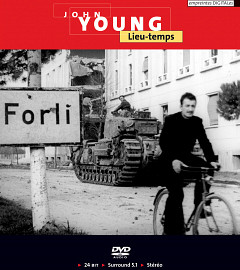
    Lieu-temps in Vital

    “Review”, Frans De Waard, Vital, no. 614, February 12, 2008
    Tuesday, February 12, 2008 Press

    There is John Young, who undertook a travel to Northern Italy with his parents — his mother being from that area. His work is based on field recordings made in that place, voice material from locals (perhaps his parents even) and voices from broadcasts about the war — the period in which John’s parents met and left for New Zealand. Now this is the way to do it. The voices and sounds tell us a story, about war, about a place, about memories in a very concentrated manner. Some of his processings are perhaps empreintes DIGITALes alike, but he uses it in the right combination with the spoken word material. Haunting stuff, absolutely beautiful. Radioplay like, cinema to the ears. A long piece, but interesting to the very end. As a sort of ‘bonus’ one also gets a piece for ensemble and electroacoustic music, which is nice, since the two are quite separated here and make interesting interplay.

    Haunting stuff, absolutely beautiful.

    Nicolas Bernier, Delphine Measroch, Milliseconde topographie, Simon Trottier, Urban9 in Le Lien multimédia

    “Ni de l’art sonore, ni de la musique”, Charles Prémont, Le Lien multimédia, February 8, 2008
    Friday, February 8, 2008 Press

    Nicolas Bernier est un artiste multidisciplinaire. Entre compositions électroniques, vidéos et design, il tente de rejoindre plusieurs publics. Son duo, Milliseconde topographie, qu’il complète avec Delphine Measroch, joue sur la frontière entre art traditionnel et numérique. «Il y en a qui font de l’art sonore, d’autre de la musique. Nous, on ne fait ni l’un ni l’autre, alors on ne «fit» jamais nulle part», explique, en guise d’introduction, Delphine Measroch.

    Le «problème identitaire» de Milliseconde topographie est bien réel. «Les critiques ne savent plus où donner de la tête. On envoie nos DVD à des critiques de musique, ils disent que c’est de l’art visuel, on l’envoie aux critiques d’art, ils pensent que nous sommes des musiciens», déplore, impuissant, Nicolas.

    Tirer dans tous les sens, voilà ce qui l’allume. «J’ai besoin d’explorer plusieurs avenues pour être satisfait. C’est ce qui a bien marché avec Delphine: elle s’intéressait aussi beaucoup à d’autres formes d’expressions que simplement la musique. Dans le milieu, c’est très difficile de trouver son «âme sœur» artistique», avoue-t-il.

    La technique utilisée par Milliseconde topographie pour créer leurs sons traduit parfaitement leur goût du compromis. En utilisant le logiciel Max/MSP, Delphine et Nicolas enregistrent des instruments conventionnels, mais aussi des bruits de jouets, de vieilles caméras Super8 et des sons ambiants, pour ensuite y ajouter des effets.

    «Ce qui est super, c’est que l’on peut enregistrer la même note sur dix pistes différentes et mettre un effet sur chacune d’elle. Ça donne un son «électro», mais on s’arrange toujours pour que l’on reconnaisse la facture de l’instrument organique. On veut transcender la froideur de l’art numérique», explique Nicolas.

    Le duo a vu le jour en 2004, peu après que Delphine et Nicolas se soient rencontrés sur les bancs d’école. Les deux étudiaient dans le programme de composition électroacoustique de la faculté de musique de l’Université de Montréal. «Je décrirais Milliseconde comme de «l’électro-subtile», c’est quelque chose d’ambiant où l’on reconnaît des sons de plusieurs provenances», explique Nicolas en riant.

    Mettant à profit leur goût pour le visuel, ils ont produit un DVD et même des «affiches à disques». C’était en 2005. «C’était un projet que l’on a fait avec un ami artiste, Urban9. Nous avions fait plusieurs affiches en sérigraphie et nous y avions collé des enveloppes avec un disque à l’intérieur. Urban partait le soir et les affichait un peu partout en ville. Les passants pouvaient ainsi se procurer notre musique», raconte Nicolas.

    D’autres projets

    Nicolas n’a pas que Milliseconde topographie comme projet. Pour vivre, il compose, principalement pour le théâtre et la danse. «Je travaille présentement pour la compagnie de danse O Vertigo. Avant, j’ai fait Ubu et Othello à l’usine C», assure-t-il.

    Un autre de ses essais est un duo électro-folk qu’il complète avec Simon Trottier. «C’était écrit dans le ciel qu’on ferait de la musique ensemble. On a fini par trouver deux jours où l’on était libre, on s’est enfermé dans un studio et on a produit un album», raconte Nicolas sous les rires de Simon. Ils seront du «Mois Multi» à Québec, un festival d’art multidisciplinaire qui se déroule du 13 au 24 février prochain.

    Les deux compères s’apprêtaient à livrer une performance lorsque le Lien les a rencontrés. Heure de tombée oblige, il fut impossible de rester pour livrer une critique en bonne et due forme. Vous pouvez vous faire votre propre idée en allant sur le site de 12rec, l’étiquette net qui les a pris sous leurs ailes.

    Entre compositions électroniques, vidéos et design, il tente de rejoindre plusieurs publics.

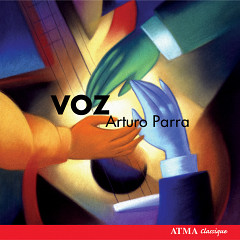
    Voz in Classical Guitar Magazine

    “Review”, Steve Marsh, Classical Guitar Magazine, no. 25:6, February 1, 2008
    Friday, February 1, 2008 Press

    This new, intriguing release from Colombian avant-garde guitarist/composer Arturo Parra is, at times, quite startlingly fearsome and terrifying; I kid you not, this is no exaggeration!

    After obtaining his master’s degree in music at the University of Montréal, Parra determined to extend well beyond the “traditional” boundaries of guitar playing and devised some fifty new guitar techniques to enable him to produce the effects required from his compositions. The CD is sub-titled “Pieces for Guitar and Vocal Expression”, the concept being that the music is a symbiosis of various human sounds and the various resonances the guitar is capable of producing. As the two sounds merge together, other sounds seem to develop and the effect is uncanny, at times verging on the supernatural.

    Each of the four tracks (played continuously, without any silence between them) are representative of the four elements: earth, fire, air and water, a notion which is not innovative at all, but I doubt if the concept has ever been produced quite like this, certainly not on the guitar. Each movement is split into three segments with the middle one being the lengthiest and most crucial part of the work. The reading and absorption of the lengthy and highly informative sleeve notes are a must if one is to get to the heart of this music.

    This programme is not in any way easy to listen to, it is stunningly “dark” a lot of the time, but in the right frame of mind there are surreal worlds to be discovered in the midst of all the cacophony and sound conflictions which are as mesmerising as anything else I have listened to in this ultra-contemporary style.

    There is some extraordinary writing here which I found absolutely fascinating, but fascinating in the way one finds oneself watching a catastrophe on the news. Faint hearted readers may be advised to approach Voz with caution and most certainly to listen to with all the lights on and a stiff drink within easy reach. I can only say that I found this disc to be unlike anything else I have in my recorded music collection, certainly a challenge to listen to, but not entirely unappealing in an unexpected kind of way.

    Voz
    There is some extraordinary writing here which I found absolutely fascinating…

    Geisteswissen­schaften in De:Bug

    “Kritik”, ASB, De:Bug, no. 118, January 14, 2008
    Monday, January 14, 2008 Press

    Der kanadische Cut Up-Komponist sampelt hier ein ganzes Musiklexikon nd frankensteint mithilfe einiger Gastmusiker an Cello, Gitarre, Bass und Sampleram Computer daraus ein wirklich aufregendes Stück Hörkunst. Er fügt all das zusammen, was garantiert nicht zusammen gehört und erzeugt dabei ein unglaubliches, nervöses Panoptikum großartiger Sounds, Zitare und untanzbarer Beats. Großartiger, garantiert nicht nebenbei konsumierbarer, organisierter Lärm!

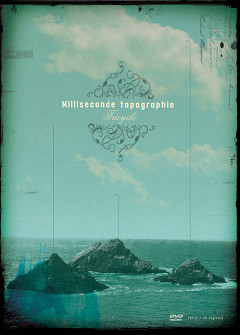
    Tricycle in Earlabs

    “Review”, Jos Smolders, Earlabs, January 13, 2008
    Sunday, January 13, 2008 Press

    MT present themselves (in their bio on the ekumen.com site) as experimentators. Having undergone a major education in electroacoustic composition wasn’t enough, they expanded their terrain into the visual.

    Milliseconde topographie is a duo, Nicolas Bernier and Delphine Measroch. They both graduated with Robert Normandeau and have a craving for experimentation. They explore not only the musical domain but also the visual. Bernier has been reviewed before at this site. This DVD-Video is their first and I must say it is quite something.

    There are three main sections on the disc, Treelogy, Le microsillon des vagues, Fossile 1, 2 et 3. Each of the pieces in itself consists of 3 parts.

    It’s a bit difficult to describe each piece because there are so many aspects to the works. The audio for most part is glitchy, dreamy, electronic. Now and again there is a real instrument applied (like the bandoneon, an organ or dulcimer) but not much more than their acoustic aspects are shown. There is hardly a melody played. Sometimes the music developes a slow rhythm but only to underpin the other sounds.

    The visuals are quite diverse but have a lot in common. Often we see photopgraphed objects or landscapes and if what we see is a filmed image the movement is minimal. For instance, She Under a Sherrington Tree which is part of Treelogy, presents a barn with high grass in front of it. The image is in black and white. Only after some time you notice that the grass is moving by the wind. Shortly after that we see a plowed field (also in black and white) with in the distance a row of trees. The trees move by the wind but you only see that in second instance. Often images are layered over one another and then shifted from top to bottom of the screen in different tempos. Treelogy also includes letters, words and sentences placed on the screen fading in and out or digitally scratched in and out of screen.

    Absolute highlight, for me, is Le microsillon des vagues which starts with an “amateur” video (black and white, out of focus, no steady image) of a sea shore over which at first letters (flashing very shortly) and then slowly words (somewhat longer) are projected. The footage is then layered and after a while we see silhouet of a man walking along the beach pass by. The screen fades to black and a new scenery is presented. We see a dark and rainly landscape (low point of view) through a sheet of green glass. In the distance vaguely a row of trees is visible and a house and a watchtower. Raindrops move down the glass but also up. Sometimes shortly a part of the screen is lighten (as if some illuminating piece of tape is applied). The music is minimal, with doors opening and closing slowly and the sound of a storm outside. Then starts part 2 (at 2/3 of the work). A piano, organ and a bandoneon and crackling and a softly speaking woman’s voice. A whispering man. To the right of the screen a photograph of a woman (breast and head). In the background the image of a calm sea with birds and two men bathing. The left eye of the woman is a large black hole. MT play with images and abstraction. Words are written over the screen. Patches are covered and uncovered. Etcetera. To me, Le microsillon des vagues is absolutely the best part of the DVD-Video.

    Tricycle refers to both triptych and cycle. The three works shown can indeed be very well be watched in a continuous cycle. Images return over more than one work (e.g. the drops of water on glass certain use of lettering) and the visual language is consistent over the three works. It’s midnight music that you watch while reading a boring book or maybe even while dreamsleeping. It has a dreamy atmosphere and you discover more small things while watching it more.

    MT present themselves (in their bio on the ekumen.com site) as experimentators. Having undergone a major education in electroacoustic composition wasn’t enough, they expanded their terrain into the visual. They have gone quite a stretch already, but I still think that forte lies in the music. The visual is still their terrain where they are “exploring”. The balance between auditive and visual is sometimes off, and at other times the direct relation between audio and video (e.g. words come up and disappear, accompanied by a specific sound) is unnecessary or even annoying. The use of typography is sometimes pleasant and adds a quality, but at other times it is a nuisance, disturbing the concentration on other aspects of the screen.

    The effort that MT makes is quite worthwhile and deserves our continuous attention.

    … I must say it is quite something.
  • 12
  • 13
  • 14
  • 15
  • 16
  • 17
  • 18
  • 19
  • 20