Ivan Hewett looks at the origins of musique concrète, revisited in a 60th anniversary tribute to Pierre Schaeffer
Sixty years ago, on the evening of October 5, 1948, the homes of thousands of Frenchmen and women were invaded by ghostly aliens. It happened at 9pm, when these unsuspecting music-lovers switched on to Radio France, the state broadcasting company.
They were hoping for “normal” music, but instead they were assailed with weird noises; hissing steam engines, the clanking of iron wheels and the clatter of pots and pans. Mixed in with these were the sounds of a piano playing stridently modernist music, and even — horror of horrors — an amateur orchestra tuning up.
The effect wasn’t quite the mass panic brought on by Orson Welles’s famous War of the Worlds radio broadcast in the USA. But it wasn’t far off. The letters pages of French newspapers buzzed for days with expressions of outrage, mingled with a few dissenting approvers.
This concert de bruits was a red-letter day in the annals of modern music. It was the moment when musique concrète — made from sounds recorded out in the world, rather than musical notes — came out from the laboratory and into public view. The man behind it was a quiet, intense telecommunications engineer turned composer named Pierre Schaeffer. For months he had been working in the radio station’s studio, shaping the sounds he had recorded into a musical form.
The results were a series of Études de bruits (Sound Studies), which included Étude pathétique [Étude aux casseroles], based on saucepans, and another made of railway noises entitled Étude aux chemins de fer.
It sounds like “mad professor” music, but there was nothing eccentric or dotty about Schaeffer. He had a rare combination of hands-on practicality, visionary genius, and philosophical rigour. He must have had charm and persuasiveness too. In 1942, with Paris under Nazi occupation, he somehow convinced the state broadcasting company that the time was ripe to put money into an acoustical research institute, with himself as director.
By then, aged 32, he had decided that the aural world had been fundamentally changed by the advent of recording. When a violin note, a bird call and the sound of a foghorn are recorded and played back through a loudspeaker, they are hurled together into the same democratic space of the imagination, which Schaeffer dubbed “the acousmatic realm.” Sounds are severed from their causes, and become “sound objects,” which we listen to for their own sound qualities, just as we view abstract paintings without asking what they represent.
This view required a new way of thinking. Traditional music moves from a musical score to performance; Schaeffer’s new “concrete music” moves from sounds to their organisation. But this bright new vision proved difficult to put into practice. Equipment was primitive and until the advent of the tape recorder in the late 1940s, the only way Schaeffer could capture his sounds was by cutting directly on to a steel disc with a lathe. Modifying the sounds was a trial-and-error business of speeding or slowing up the disc, or playing it backwards.
Schaeffer was determined to bring this bewildering new world of sound to order and produced his Treatise of Musical Objects in 1966.
Schaeffer’s experiments were the beginning of a trend which quickly gained support. His name may not be as notorious as Stockhausen’s, but within the new music world he is revered. “Sound Art” is now a genre in its own right, and the influence of Schaeffer can be heard in film scores and pop genres such as electronica.
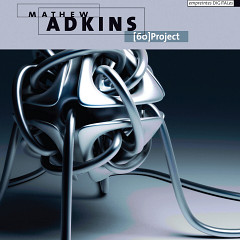
So when the electronic composer Mathew Adkins set out to make a 60th anniversary tribute to Schaeffer for the Huddersfield Festival of Contemporary Music, he had no trouble in finding willing collaborators. “My idea was to ask composers and sound artists from all round the world to contribute sound objects,” he said, “and to assemble these into a continuous piece.”
The result is a 60-minute piece in eight movements [[60]Project], some of which have very Schaeffer-ish titles like Urban Soundscape and Noise Study. The sounds have a smooth sophistication that contrasts hugely with the bumpy graininess of Schaeffer’s music, but Adkins still admires his pioneering experiments.
“When I heard this music as a student, it completely blew my mind. Schaeffer set me thinking about music in a completely different way, as something that creates an imaginary world. He’s not dogmatic, he doesn’t banish familiar sounds, he absorbs them into a new vision of what could be created in sound.”

![Jean-François Denis [Photo: Brad Ardley (SOCAN), Toronto (Ontario, Canada), September 17, 2025]](https://res.electrocd.com/image.php/image/d/denis_je_15346.jpg?width=n2&cropratio=1:1)