electrocd

Blog

115 results
  • 3
  • 4
  • 5
  • 6
  • 7
  • 8
  • 9
  • 10
  • 11
  • Les arbres in Blow Up

    “Recensione”, Stefano Isidoro Bianchi, Blow Up, no. 124, September 1, 2008
    Monday, September 1, 2008 Press

    Nato dalla collaborazione col visual artist Urban9, Les arbres del canadese Nicolas Bernier parte su toni soffusi e malinconici per field recordings, pianoforte, chitarra, vibrafono, fisarmonica e archi appenna accennati, sfiorati con timidezza e ritrosia. La poesia dei primi brani si carica poi di soffici nubi jazz e rumorismi gentili che adombano atmosfere leggermente più disturbate pur mantenendo sempre un mood profondamente nostalgico e struggente. È una soundtrack carica di sentimento, che ti entra nella pelle per non uscire più. (7)

    È una soundtrack carica di sentimento, che ti entra nella pelle per non uscire più.
    7

    Lieu-temps in Touching Extremes

    “Review”, Massimo Ricci, Touching Extremes, September 1, 2008
    Monday, September 1, 2008 Press

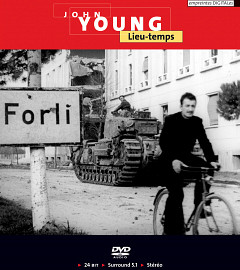
    As soon as the sign “Forlì” was spotted on the cover I got curious, as understanding the perpetual attraction of distant visitors for that socio-cultural quagmire called Italy — by far one of the most overrated countries in the globe in every sense, except perhaps the splendour of some of the landscapes and a few historic/artistic sites — keeps making a living as a perplexing matter in my mind. Still, this audio DVD is much more significant than that type of scrutiny, depicting how the shock of war (in this case, WWII) and the might of an everlasting reciprocal devotion often intertwine branches. John Young’s father Alex was in that city in 1944, a soldier in the New Zealand contingent of anti-German allies. Right there he met Tarcisia Fariselli — “love at first sight”, as Alex himself explains — who became his wife, following him after the end of the conflict. The crossroads of these destinies is movingly portrayed by a son who, admirably, devoted a huge endeavour to the circumstances during which his parents began to share a life. In Ricordiamo Forlì, Young utilized their voices, tapes of onsite reports from that era’s transmissions (from the archives of BBC and Radio New Zealand) and extraordinary field recordings of the city, the most frequent being the tolling bells of the churches, which the composer feels as “something permanent, yet alive” communicating a strong emotional message to a man who had listened to these recollections since he was a kid but only in 2002 was able, together with dad, to inhale the air of the place where it all happened. The set’s design, despite its intensely dramatic suggestions, sounds at times like an amazing fairy tale (also due to the essential presence of Franco Bianchini’s narrating voice) as Young magnificently delivers the blend of complementary sensations underlying the account through a vast range of breathtaking sonic structures, so striking that the great amount of spoken word segments never challenges our endurance; on the contrary, one’s impatient to know “what happens next”. The piece emerges as an intense acousmatic journey, utterly worthy of the 1st prize won at the Bourges International Festival in 2007. Another affecting composition for small orchestral group and electroacoustics, Arrivederci, closes the record with a touch of class by the Stroma ensemble, whose responsive reading of the score meshes with the ever-present sound of a bell — processed or less — closing a circle where grieving memories seem to claim the protagonist’s role, even when love is central in the unfolding story. Tangible mournfulness in a next-to-masterpiece oeuvre.

    Tangible mournfulness in a next-to-masterpiece oeuvre.

    Environs in Touching Extremes

    “Review”, Massimo Ricci, Touching Extremes, September 1, 2008
    Monday, September 1, 2008 Press

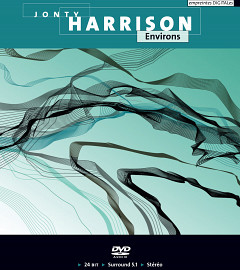
    In presence of records such as Jonty Harrison’s Environs one is tempted to leave the leaf totally bare, with the exception of a solitary word: listen. The English composer and director of Birmingham’s BEAST fully deserves to be put side by side with the Ferraris and the Parmegianis of the world, that’s for sure. Few recent acousmatic releases have succeeded in keeping my interest levels persistently high, a program length of circa 76 minutes notwithstanding. Yet it’s right there, on the long distance, that we’re in the condition of sizing up the diverse abilities of those who play in the electroacoustic ground. While most of them need to methodically slice, glue, juxtapose and reinvent their sonic clothes only to sound more or less musty at the end, Harrison focalizes his awareness on the purest elements of life, both from a biotic point of view and the perspective of personal experience. He constructs amazing pieces entirely based on aquatic constituents which, contrarily to many bathed-in-obviousness mélanges, appear psychologically overwhelming to the extent of making us literally feel like drowning (Undertow). Otherwise, he stitches together car engines and other means of transportation to engender a whole range of inner-city rhythms and patterns (Internal combustion). The last track Afterthoughts is built upon “sounds of a suburban garden in early summer”, yet it resembles an alarming sequence of snapshots of disheartening isolation, the human factor all but absent in favour of intimidating roars, sharp clangour and ominous crescendos of insurmountable metropolitan unease. The whole toughened by superlative skills in the assessment of timbral structure and a sense of architectural symmetry that not many names operating in this area can challenge.

    The whole toughened by superlative skills in the assessment of timbral structure and a sense of architectural symmetry that not many names operating in this area can challenge.

    Les arbres in Sonomu

    “Review”, Stephen Fruitman, Sonomu, August 28, 2008
    Thursday, August 28, 2008 Press

    A real coffee-table book of a package. Housed in its handsome slipcover are a slim CD case and six quality postcards, each featuring a montage by visual artist Urban9, with its title on the back.

    Each title naturally corresponds to a complementary track by composer Nicolas Bernier. The idea behind this project was to collaborate over disciplinary boundaries, allowing the images to inspire the music and the music aid in assembling the visuals. If I understand correctly, this give-and-take process went back and forth through to a final revision.

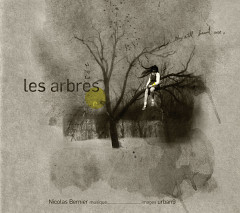
    The montages of Urban9 are composed on grey on grey backgrounds with patient balance and painful symmetry, which becomes all the more apparent the deeper you look into each image. At the centre of each but one stand photographs of children, removed from their original context in some family album from the Victorian age or the 1940s, to judge by their clothes. In some, faces shine brightly, even preternaturally, while in others they are partially or wholly obscured. Gazing deeper into the frame there are the eponymous trees, of course, featured in every piece. But the trees are uniformly denuded, bereft of leaves and possibly also of life. Gaze even deeper and you find ghost writing, flower X-rays, an owl, and other eggingly incongruous elements, all drawn together to form a very cohesive whole. If I had to pick a favourite, it would be the second image, // This Is a Portrait, with its young schoolboy cradling a lamb in his arms, unexpressive eyes fixed directly on the photographer’s lens, impatient to get this over with.

    I am also very attracted by the music for this piece, which features longtime Bernier collaborator Delphine Measroch on accordion and cello with Bernier on guitar and “audio transfiguration.” This piece is as truly murky and deep with layers as Urban9’s visuals.The strings and accordion even add a hint of French-Canadian folk music, if only by mere presence rather than express style.

    With his computerized hammer and chisel, Bernier has sculpted each piece out of sparse instrumentation — a guitar or two, some brass, piano, strings and the above-mentioned squeeze-box.

    At times his interpretations are much more literal — “sound-effect-y,” if I may coin an unwieldy term — than expected, or necessary. When this happens it appears that more restraint at the computer keyboard would have been preferred.

    However, most of the time his electronics complement his acoustics admirably, lending them just the righ patina. Les Arbres is gloomily enchanting, for example // Piano, where the thoughtful depression of a deep piano note is allowed to swell and subside before venturing a new one. // Bora, an “audio bricolage” according to the composer, is not my favourite track — too much of the sound-effectery mentioned before — but the foghorn rumble he has his sampled trombones emitting is almost physically seductive. The sentimenal violin of Pierre-Olivier Gaudreau on the closing track (perversly titled // Ouverture) is peppered with very unsentimental electronic debris but this sonic juxtaposition only works to enhance the feeling of oneness between the visual art with its layered depth and the musical art’s similarly stratified sonic geography.

    An exciting, possibly even profound work from a young composer, and an introduction to the work of one very interesting visual artist.

    A real coffee-table book of a package. Housed in its handsome slipcover are a slim CD case and six quality postcards…

    Les arbres in Radio 6

    “Kritiek”, Arno Peeters, Radio 6, July 29, 2008
    Tuesday, July 29, 2008 Press

    Drie nieuwe releases van over de hele wereld: frisse elektronica op de EP Stunt van de Italiaan Giuseppe Ielasi, strijkers en klanklagen van de Japanner Yasushi Yoshida op Little Grace en tot slot ambient van de Canadees Nicolas Bernier van zijn CD Les arbres.

    […]

    De derde nieuwe release is die van de Canadees Nicolas Bernier; hij maakt zijn debuut met een mooi gevarieerd album op het NoType-label: van subtiele glitches tot monumentaal klinkende klankvelden en ijle klanken, gepareerd door krakerige laptop-patches: Bernier weet er raad mee.

    Bernier weet er raad mee.

    Les arbres in Nonpop

    “Wie aus Laptop und Kammerorchester ein Baum wird”, Michael We, Nonpop, July 8, 2008
    Tuesday, July 8, 2008 Press

    Nicolas Bernier fiel schon in der Schule durch seine Leidenschaft für musikalische Experimente auf. Den Frankokanadier, der mit dem französischen Komponisten des 18. Jahrhunderts einen berühmten Namensvetter hat, zeichnete ein starker Forscherdrang aus. Vor allem untersuchte er zahllose Möglichkeiten der digitalen Klangerzeugung. An der Universität studierte der 1977 geborene Bernier zunächst Marketing, stürzte sich dann als Programmierer auf visuelle Themen wie Grafikdesign, um sich in den vergangenen Jahren endlich doch seiner ersten und größten Liebe zuzuwenden: Unter der Anleitung diverser namhafter Videokünstler und Komponisten machte er an der Hochschule in Montréal seinen Abschluss in ‘Elektroakustischer Musik’. (Der Begriff ‘elektroakustisch’ wurde im vergangenen Jahrhundert eingeführt, hauptsächlich in Abgrenzung zur elektronischen Popmusik. Außerdem deutet er an, dass auch in der ‘ernsten’ elektronischen Musik immer wieder akustische Instrumente Verwendung finden.)

    Große Erfolge feierte Bernier in jüngster Zeit mit der Kombination seiner erlernten und erforschten Fähigkeiten, also einer Mischung aus Bild und Ton, die gemeinhin als ‘Videokunst’ bezeichnet wird. Seine Installationen gewannen auf Festivals rund um die Welt, etwa in Japan, Belgien, Kanada oder auch Deutschland (“Transmediale”), viele Preise. Die audiovisuellen Ideen entstehen häufig in Zusammenarbeit mit Delphine Measroch, einem Ex-Kommilitonen, mit dem er vor vier Jahren deshalb das Duo Milliseconde topographie gründete, das sich auf die Mischung aus Video und Klang spezialisiert hat. 2006 vereinte der damals gerade 29-jährige Bernier weitere Freunde und -kollegen unter dem Namen Ekumen; ein loses Kollektiv, das im Moment aus sieben jungen, kanadischen Künstlern besteht. Diese Gruppe fügt sich nahtlos ein in das Bild einer sprudelnden, agilen Szene kanadischer Elektronik-Bastler, über die wir schon ab und zu berichtet haben. Zu Ekumen gehört auch Urban9, ein Bildender Künstler, der in einer Mischung aus Malerei und Fotografie die sechs Postkarten gestaltet hat, die Les arbres beiliegen.

    Wenn es hauptsächlich um Musik geht, verwendet Bernier seinen eigenen Namen, unter dem er bereits mp3-Alben und CD-Rs veröffentlicht hat. Mit Les arbres (‘Die Bäume’) präsentiert er seine erste offizielle CD.

    Auf vielfältige Weise schafft der kanadische Komponist in 43 instrumentalen Minuten die Kombination verschiedener Ebenen, die sonst unabhängig voneinander existieren, sich hier aber ganz selbstverständlich ineinander schlingen wie DNA-Stränge. Bernier findet zuallererst eine Balance zwischen elektronischer und akustischer Musik. Noise meets Sigur Rós meets Neoklassik. Oder verspielt wie TThe Notwist. Oder auch ganz anders. Eben noch zischt, fiept, pfeift und schleift es, dann gehen die Elektrosounds in Piano, Cello, Geige, Vibraphon oder Akkordeon über, nahtlos, als ob sie schon immer miteinander verbunden gewesen wären. Hier die typisch digitalen Geräusche, dort einzelne, in ihrer Bedächtigkeit umso organischere Töne. Auch unter Bezug auf den Titel, die Bäume, können trefflich sich vereinende Gegensätze in die Musik hinein interpretiert werden: Digital werden die Geräusche nachgebildet, die raschelnde Blätter, knackende Äste hervorrufen können. Akustisch sind es die von Bäumen ausgelösten Emotionen: Kindheitserinnerungen, bestimmte Gerüche, der Wunsch nach Schutz, die Bewunderung von Erhabenheit. Und zuletzt natürlich vereint die CD, wie schon angedeutet, Musik und Bilder, denn die sechs Karten von Urban9 nehmen das Thema und die von Melancholie durchzogenen Klanglandschaften auf und bearbeiten kahle Bäume in Grautönen. (Ein Beispiel ist am Ende des Textes zu sehen.)

    Zart und filigran ist Les arbres meist, die leisen Töne überwiegen und weben ein Netz, das beim Versuch, sich fallen zu lassen, aber auch zerreißen könnte. Denn überraschend bleibt die Musik immer, häufig verliert sich ein Rhythmus schon nach ein paar Tönen, um hinter dem nächsten Ast verändert wieder aufzutauchen. Trotz durchweg hoher Qualität herausragend ist // This Is a Portrait (2), entnommen aus einer Arbeit von Milliseconde topographie. Das Stück beginnt rein elektronisch, verdichtet sich zwischendurch zu einem rauschenden Digital-Sturm und fädelt mittig in die intensive akustische Wärme eines Minimal-Orchesters aus Klavier und Akkordeon ein. Diese Intensität verliert auch nach mehrfachem Hören nichts. Ein ebenso genialer Streich lässt im letzten Stück traurige Trompeten blasen zwischen aufblinkenden Beeps, die ein Computerspiel aus den 1980er verloren hat.

    Eine gesunde Skepsis ist beim weiten Feld der ‘Neuen Musik’ anzuraten; zu viele groteske Experimente finden sich darunter. Dieses hier ist allerdings äußerst gelungen und wird hoffentlich um weitere Versuchsreihen ergänzt.
    Dieses hier ist allerdings äußerst gelungen und wird hoffentlich um weitere Versuchsreihen ergänzt.
  • 3
  • 4
  • 5
  • 6
  • 7
  • 8
  • 9
  • 10
  • 11