electrocd

Blog

115 results
  • 5
  • 6
  • 7
  • 8
  • 9
  • 10
  • 11
  • 12
  • 13
  • Casse-tête in Voir

    “Critique”, Réjean Beaucage, Voir, June 5, 2008
    Thursday, June 5, 2008 Press

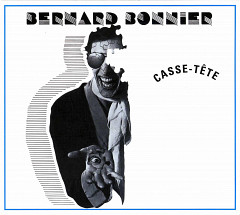
    L’étiquette montréalaise Oral poursuit dans la voie des rééditions d’enregistrements de «pionniers» de l’électroacoustique au Québec en proposant ces enregistrements parus en 1984 (mais qui datent de 1979). Bonnier (1952-1994) fut l’assistant de Pierre Henry au début des années 1970 et on pourra trouver une certaine influence du maître dans le mélange pop-électronique de Bonnier, qui passe encore très bien la rampe aujourd’hui. L’excellente Soldier Boy fut même enregistrée au studio d’Henry, et Bonnier y défrichait le chemin à beaucoup de ce que l’on entend aujourd’hui de la part de jeunes artistes branchés. Heureusement qu’il y en a pour remettre les pendules à l’heure.

    Bonnier y défrichait le chemin à beaucoup de ce que l’on entend aujourd’hui de la part de jeunes artistes branchés.

    Robert Normandeau in Le Lien multimédia

    Robert Normandeau pense l’ambiophonie”, Le Lien multimédia, June 5, 2008
    Thursday, June 5, 2008 Press

    Professeur en électroacoustique à l’Université de Montréal, Robert Normandeau s’interroge sur la distribution spectrale d’un son dans l’espace. C’est à ce niveau qu’est maintenant rendue la recherche en musique électroacoustique. Le département de musique de l’Université de Montréal construit d’ailleurs un dôme ambiophonique où seront distribués 32 haut-parleurs. Le professeur était de passage à la SAT dans le cadre de la conférence Interface[s] son et musiques numériques. […]

    Robert Normandeau s’interroge sur la distribution spectrale d’un son dans l’espace.

    Exils in Touching Extremes

    “Review”, Massimo Ricci, Touching Extremes, June 1, 2008
    Sunday, June 1, 2008 Press

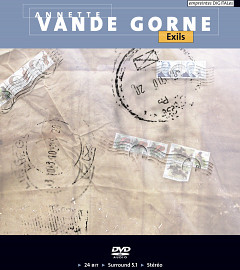
    Belgian acousmatic composer Vande Gorne (Charleroi, 1946), who studied musicology and electroacoustic composition with Guy Reibel and Pierre Schaeffer, was attracted many years ago by the music of François Bayle and Pierre Henry, and also by “the revolutionary nature of this art form”. Question: is this really valid in 2008? Are we still able to get enthused by a kind of expression that keeps wandering around the same coordinates, although in different contexts? Exils replies both yes and no. The audio DVD lasts over 80 minutes, which in itself could be a problematic factor, if one that can be eliminated when the addressees are well prepared. Yet there is a fair chance of cutting out the majority of a potential audience by introducing extremely long pieces — mainly built upon spoken segments — and placing them smack dab in the middle of the program, which happens here with Fragments de lettre… and Exil, chant II, the latter based on texts by Saint-John Perse. As intellectually challenging as they might be, listening becomes a pretty heavy task after a while: 35 minutes of theatrically recited voices (although with background treatments) are almost a record in the record, a bit strident when compared with the brisk pace and colourful variety of the other tracks. In truth, Vande Gorne is very good in assembling snippets and mutating them into scarcely recognizable entities (another voice-related track, Vox Alia, is one of the disc’s most absorbing sections) but, above all, she has an evident penchant for indefinite abstraction, a field where her studio mastery shines brightly, just check the gorgeous spectra of Figures d’espace. I’d like sound artists to concentrate on the essence of the audio materials, not so much on the academic aspects, provided that sonic exploration is really their core interest. This would have been a great edition if only a little more concise and, in a way, less “literate”. As it stands, it remains an interesting testimony of this author’s vision.

    Vande Gorne has an evident penchant for indefinite abstraction, a field where her studio mastery shines brightly, just check the gorgeous spectra of Figures d’espace.

    Mâts in Touching Extremes

    “Review”, Massimo Ricci, Touching Extremes, June 1, 2008
    Sunday, June 1, 2008 Press

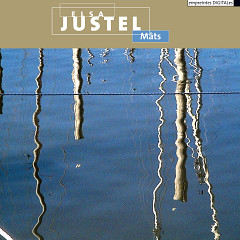
    Elsa Justel (Mar del Plata 1944) is an Argentine electroacoustic composer whose work I had never met before. On the press release, Horacio Vaggione correctly describes her music as “canvases made of minuscule yet consistently varied sounds”. While it’s true that the same could be told about the majority of the names active in the acousmatic field, this is a case in which the expert listener will likely detect new intriguing factors in apparently common structures. One of these elements is Justel’s prowess in choosing an efficient spatial collocation for every sonic event: each sound seems to possess a life of its own, even independent from the context of the composition, albeit that span is usually very short. The amorphous resonances found in the more percussively fragmented pieces — such as Puntos, comas y refritos — are sufficient in themselves to establish an aura of mystery in pieces whose architecture had already been planned amidst manifold shades and shapes. My favourite ones are Midi de sable, a study on the modification of the timbre of recorders (played by Joan Izquierdo in their alto, tenor, basset and contrabass versions) and Au loin… bleu, entirely based on processed and juxtaposed vocal snippets. Episodes that size up the real possibilities of a talented, if pretty much obscure artist who deserves to gain some notoriety in a rather overcrowded sector that often features people who destroy the beauty of a regular emission by transforming it into an insignificant crumble of noise. On the contrary, Justel appears as still interested in forms of elemental purity, and that’s a major plus.

    Justel appears as still interested in forms of elemental purity, and that’s a major plus.

    Louis Dufort in Musicworks

    “Music is Movement”, Gayle Young, Musicworks, no. 101, June 1, 2008
    Sunday, June 1, 2008 Press

    [Article Summary] Louis Dufort’s videomusic piece Épochè, presented at Montréal’s Elektra Festival in 2008, encapsulates his experience of sound as duration and movement in space. The video, created in 3D programming, and presented on a huge screen, features music comprising transformed and abstracted brass sounds, sometimes massive and sometimes ethereal. His newest recording, Matériaux composés, is a DVD-Audio disc featuring 5.1 surround sound, which provides a three-dimensional listening space for the home listener. Dufort has collaborated with choreographer Marie Chouinard, creating major works which have received international recognition. He is also a member of Montréal Sound Matter, an artist collective that has produced several concerts and sound installations. He increasingly feels drawn to the sounds of acoustic instruments, inviting musicians to record in his studio. He has composed works for Quatuor Bozzini, Quasar saxophone quartet, and Ensemble de flûtes Alizé, among others. For Dufort, music is an aural and experiential phenomenon with links to the oral tradition of story.

    For Dufort, music is an aural and experiential phenomenon with links to the oral tradition of story.
  • 5
  • 6
  • 7
  • 8
  • 9
  • 10
  • 11
  • 12
  • 13