electrocd

Blog

64 results
  • 3
  • 4
  • 5
  • 6
  • 7
  • 8
  • 9
  • 10
  • 11
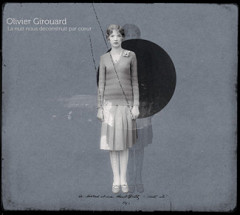
  • La nuit nous déconstruit par cœur in EtherREAL

    “Critique”, Fabrice Allard, EtherREAL, January 24, 2010
    Sunday, January 24, 2010 Press

    Olivier Girouard, canadien, est comme Nicolas Bernier membre du collectif Ekumen que nous évoquions il y a quelques semaines avec Sur Fond Blanc, album de Nicolas Bernier et Jacques Poulin-Denis. Au sein du collectif, il travaille à la promotion d’évènements liés aux musiques contemporaines et produit des pièces pour des vidéastes, plasticiens ou chorégraphes. C’est dans ce dernier registre que se situe La nuit nous déconstruit par cœur, premier album de l’artiste composé de pièces écrites pour Beside Me, un spectacle de la chorégraphe Kate Hilliard.

    La chorégraphe avait travaillé sur ce spectacle en hommage à un ami disparu trop tôt d’un cancer. De la même façon, Olivier Girouard s’est inspiré de la poésie et du journal de Marie Uguay, emportée en 1981 par un cancer alors qu’elle n’avait que 26 ans. Ainsi, les titres des cinq morceaux qui composent ce mini-album sont extraits des écrits de la poétesse canadienne, illustrant tous la peur de l’absence et de la solitude. Pour notre plus grand plaisir, le travail d’Olivier Girouard est dans la lignée de ce que fait Nicolas Bernier, avec des collages sonores d’une incroyable finesse, une parfaite maîtrise du tempo et de ses variations, et un goût certain pour les belles sonorités. L’album s’ouvre sur les souffles et nappes inquiétantes de ici seule, ponctué de bleeps électroniques et bruitages granuleux pour une atmosphère sombre et futuriste. On navigue ensuite dans un quotidien évanescent puisque l’artiste incorpore mélodie de guitare sophistiquée et field recordings de rue sur song for no one qu’il semble concasser un peu plus loin via des effets de hachage, syncope et crépitements sur le superbe ne me laisse pas ici, certainement le titre le plus proche d’une electronica laptop/click’n cut. Petit à petit la musique semble disparaître, et où il n’y a personne est tout simplement atone sur son introduction faite de claquements, souffles, chuintements, coups sourds et mécaniques, respirations-frottements jusqu’au piano dont on entend le marteau frapper les cordes sans que le moindre son n’en sorte. Un voyage en apnée qui se solde finalement par la libération d’un piano lumineux. L’album se termine avec d’autre que moi, doux et poétique, semblant croiser guitare et ukulélé, le tout enveloppé de cordes soyeuses et crépitements chaleureux.

    Un album à la fois court et dense, riche et poétique, d’une ambient contemporaine et humaine.

    Jean-François Denis, empreintes DIGITALes in Tokafi

    “empreintes DIGITALes: Label Profile”, Tobias Fischer, Tokafi, January 22, 2010
    Friday, January 22, 2010 Press

    Labels come and go. But even within this fast-changing world, where everyone with internet access can set up a record company and start releasing music, some outfits have proved more valid, relevant and meaningful than others. On January 31st, Canadian imprint empreintes DIGITALes will celebrate its 20th anniversary as one of the world’s leading label for electroacoustics and true to its title, it has certainly left some fascinating fingerprints.

    As artistic director Jean-François Denis recounts, the world was a different one when he published the first four albums all the way back in 1990 and the notion of devoting a label entirely to a music so far away from mainstream sensibilities and obvious medial tangents must have appeared wildly optimistic. And yet, Denis’ brainchild got off to a remarkable start and quickly started extending beyond its homebase of Montréal into an international platform for ambitious Composers and Sound Artists.

    Over the years, empreintes DIGITALes has not only developed a recognisable musical style, but also been at the forefront of technological development, switching to the multichannel possibilities of DVD-Audio in 2005. Its visual taste has been of an equally tasteful quality and today expresses itself in elegant cardboard boxes with extendable trays. By Spring of 2009, its catalogue had grown to include over 450 works by more than 90 composers from over 20 countries, on almost 100 releases. As easy as it may be to set up your own record company in the digital age, today’s record companies have a long road ahead of them to match that.

    The past twenty years in a nutshell

    We started in 1989 in a bid of making the music available for a first release in January 1990. Our plan was to begin with 4 discs; we did not want to be another 1-disc label. We selected the compact disc for its better sound quality and longer duration as the only medium for our releases. At that time many people were suggesting that we also release on cassettes! In 20 years we saw different audio formats come. and go almost completely.

    In 1990, there was basically no independent record label specializing in electroacoustics. The first years proved to be a greater success than expected, probably because we simply did not have any real idea about the “commercial” or medial potential for such discs; the novelty dimension, the great quality and variety of local, national and international composers, the sound quality of the discs, the bilingual, French — English liner notes, the packaging, for which we used the conventional jewel case until 1996, then our first deluxe carboard box until 2000 and since then our current cardboard box… all of this contributed to the excitement.

    By the late 1990s, the situation had stabilized. Many more labels were founded around the Western world; compact disc production was simpler and more affordable — and the supply was thus bigger.

    In 2000 we changed some of our production methods and invested more energy into our web site, which was started in 1995, by refocusing it and automating it. The Internet was growing and “net labels” started to appear, meaning the supply was even bigger. In 2005, we selected a better-sounding disc format, the DVD-Audio, as our main format.

    Since 2000 an important shift towards digital compressed audio format happened in the popular music industry, namely in 2001-03 with the iPod and later, the iTunes Music Store. While this change of access to music and “attitude” towards the disc had a great impact on the whole, “specialized” music remained somewhat protected, at least for a while. We only started to feel a change, a decrease in impact, in sales, over the past 3-4 years.

    About serving the download market

    I do not surf the Internet looking for “mp3” of works available on empreintes DIGITALes, nor any other audio files for that matter. So I do not know for sure. My guess is that someone somewhere most certainly has “ripped” works from our discs, converted them in lower or medium grade mp3 and has placed those in peer-to-peer networks.

    We are now living in a time where the music on empreintes DIGITALes has to also become available as digital files, authorized so far composers may get some fruits out of this activity. For the last 3 years we are seeking methods to make high-definition (HD) audio files available. Unfortunately we have not yet found an aggregator — as digital wholesalers are now called — that does.

    About the process of getting press coverage, radio play and concert opportunities

    The advantage of being a “niche” is that people in a niche tend to build networks, groups, magazines, events. In 1990 we had to learn everything, and we naturally discovered networks. In 2009 I’d say the same thing. Some networks have came and gone, newer ones, newer platforms were created.

    There is less and less (conventional) radio airplay time for experimental- and contemporary music; most larger national broadcasters are pulling back from curious, avantgarde, exploratory music.

    Generally in concerts electroacoustics tend to have a wider reach. More and more soloists and small ensembles tour with some mixed and/or live works, including those in programmes with instrumental repertoire. Concerts with acousmatics are slightly different. But in the very recent past I have witnessed sizable crowds attending concerts of acousmatics within the context of festivals of live electroacousitcs or even electronic music (the term understood under its current usage).

    About artistic changes and constants

    As an artistic director, the notion of a “living room listening experience” has always been important to me. The refocusing within electroacoustics to acousmatics was made in order to improve the listening dimension. (Acousmatics on disc is the work “itself”; while mixed and live — or other “recorded” — music is a “documentation” of the work.)

    But your question refers to the aesthetic level and in that respect I cannot say that within the last 20 years the genre has been substantially “revolutionized.” The means of production / composition have change greatly to extremes, from hard-to-access studios in institutions to domestic laptop computers, but thinking has evolved just as naturally. Listening to Portrait d’un visiteur by Christian Calon is just as great as a musical experience today as it was when first presented in public 25 years ago.

    About the relationship between the label and its homebase of Montréal as well as its composers

    Our relationship with the city is symbiotic. Because of my role with the label and, until recently, my role with a concert organization in Montréal, one could feed the other, and vice versa. But in my view the label has never been a Montréal.label, it was simply based in that city. Within only 4 years the offer quickly became international with discs by composers from France, UK and Belgium.

    A personal relationship with composers is very important. Trust and sharing of visions; understanding and acting upon our interacting roles. Working on the long term with, where/when possible, several releases in mind. As to my reasons for releasing something or not, I often say that I need to grasp/feel the integrity of the composer process, but there are of course several other factors, including timing, economical and legal ones.

    About the future of the label and acousmatics

    The goal was foremost to make the music available. With today’s possibilities empreintes DIGITALes is far from the only means for such a goal. But however easy it is to get one’s music on the Internet via one’s own website or even via well-organized outlets (such as CDBaby, for instance), the role of channeling, organizing, presenting of a specialized “label” will be required with or without physical discs.

    Younger generations of composers are exploring the genre, naturally evolving it. So there is a future. There is a future for creation, invention, daring propositions…

    There is a future for creation, invention, daring propositions…

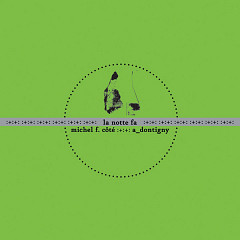
    La notte fa in The Muse in Music

    “Find of the Week”, Fred, The Muse in Music, January 20, 2010
    Wednesday, January 20, 2010 Press

    We keep telling you: we don’t make the news. We just run it through Babelfish. Fatti maschi, parole femmine. All this is to say that La Notte Fa is a beguiling 2008 release, courtesy A_dontigny and Michel F Côté. The former is Aimé Dontigny of Napalm Jazz, and the latter, the gentleman pictured just left. […] This is tinkery and inspired brain food, light on its feet, somewhere between sherry and chablis. […]

    This is tinkery and inspired brain food, light on its feet, somewhere between sherry and chablis.

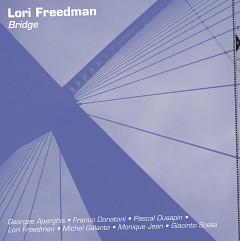
    Bridge in Voir

    “Critique”, Réjean Beaucage, Voir, January 14, 2010
    Thursday, January 14, 2010 Press

    On connaît bien la clarinettiste Lori Freedman, l’une des musiciennes les plus actives sur la scène montréalaise des musiques improvisées. On sait aussi, pour l’avoir vue à la SMCQ, avec l’ensemble Transmission, ou ailleurs, qu’elle peut avec la même extraordinaire aisance interpréter les œuvres les plus exigeantes du répertoire contemporain. Elle nous offre les deux ici, interprétant des œuvres de Michel Galante (avec la pianiste Brigitte Poulin), Pascal Dusapin, Giacinto Scelsi, Franco Donatoni, Georges Aperghis et Monique Jean, et improvisant en studio trois «ponts» reliant le tout. Qu’elle joue de la bonne vieille clarinette en si bémol, de la basse ou de la contrebasse, elle étonne par sa virtuosité et les sonorités surprenantes qu’elle tire de ses instruments. (3,5/5)

    … elle étonne par sa virtuosité et les sonorités surprenantes qu’elle tire de ses instruments.
  • 3
  • 4
  • 5
  • 6
  • 7
  • 8
  • 9
  • 10
  • 11