electrocd

Blog

55 results
  • 1
  • 2
  • 3
  • 4
  • 5
  • 6
  • 7
  • 8
  • 9
  • Mistpouffers in Vital

    “Review”, Frans de Waard, Vital, no. 1153, October 15, 2018
    Monday, October 15, 2018 Press

    […] Of course eRikm, as he loves to spell his name, is someone who is no stranger to these pages, ever since he first surfaced as a turntablist in the mid 90s. He works as an improviser, expanded to using vinyl, CD, mini discs and finds his own narrative, which is not unlike that of say Luc Ferrari. A particular highlight was his LP L’Art de la fuite (Vital Weekly 1000), even when that was an earlier work. The three pieces here deal with the past, his own past, in Switzerland, which he calls ‘his other homeland’, but also using a traditional Icelandic text in the first piece Draugalimur, meaning ‘phantom limb’. In that piece eRikm combines field recordings with text and with some instrumental sounds, while in Poudre he uses many recordings of new year’s fireworks in Berlin, with it’s many reflections of the buildings and perhaps also from history. In the third piece, L’aire de la Moure 2 there is also a text, by Paul Eluard and I must admit reading the description didn’t make things clearer for me. Here there are quite a few field recordings, mainly birds I believe, along with insects and wind, with what seems to me a minimum of processing here and there, but not a lot, or at least: not throughout the entirety of the piece. eRikm doesn’t follow Ferrari’s more linear approach to the use of field recordings but it seems to me it is all bit more of an anarchist approach; see where sounds fit and then use them accordingly, which I would think is the best approach. This too is not really the sort of things one expected from Empreintes Digitales, and for instance more at home on Gruenrekorder, but here too I thought the label does a smart move and venture into something new. In the past I may have been a bit (too) sceptical, but with these two the label is back on track. For eRikm I would say this is another highlight.

    … I would say this is another highlight.

    Troubles in Badd Press

    “Review”, Kevin Press, Badd Press, October 15, 2018
    Monday, October 15, 2018 Press

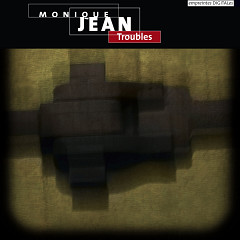
    Montréal-based composer Monique Jean’s take on electroacoustic music has been described as “engaging a present that happens now.” Credit François Couture with that sharply written phrase. Indeed, there is an abrasiveness to her work that feels urgent and forceful. Her new release Troubles features two vivid examples.

    The first is T.A.G. The title is an acronym for trottoir, asphalte, goudron, which translate as sidewalk, asphalt, tar. The 2013 composition is a study of demonstrators and the dynamics of crowds.

    Unlike Amethyst Seer’s excellent 2017 work Protest, this doesn’t feature an actual recording of a demo. Instead, Jean interprets the subject matter. In doing so, she delivers a more accessible piece of music.

    All the tension and fluidity of motion you’d expect from a protest-themed work is there. But its relatively vague reference points encourage appreciation of the work on a more emotional level. This is a consequential, timely effort — one that resonates even more deeply four years after its composition.

    The second half of the album features Jean’s 2009/2011 piece Out of Joint. In the album’s notes, she describes it as “an essay in sound hybridization on Shakespeare’s Macbeth and the various silver screen adaptations, stagings and rewrites it inspired through time.”

    Again, her decision to avoid a literal interpretation serves to broaden the work’s appeal. Yes it is about Macbeth. But it also works as a piece about iterations or interpretations.

    Big themes. But they’re all within Jean’s reach. Her work has an outsized quality that — with a bit of promotion — could have influence beyond the confines of electroacoustic fandom.

    Her work has an outsized quality…

    Troubles in Vital

    “Review”, Frans de Waard, Vital, no. 1153, October 15, 2018
    Monday, October 15, 2018 Press

    Since more than twenty-five years Empreintes Digitales is probably the leading label when it comes to computer based electroacoustic music, mostly composed and performed by conservatorium skilled composers. Oddly enough I don’t see a reference to those in the short biography that is printed on the cover of the album by Monique Jean. She was selected by several competitions (which I think is THE thing in this musical area) and played international concerts and festivals. She has here two pieces of which the first, T.A.G., which stands for ‘trottoir, asphalte, goudron’ (sidewalk, asphalt and tar) is inspired by “crowds of demonstration” and she says that sounds are “mainly synthesized”, which I found hard to believe. I was more thinking about heavily processed field recordings, certainly in the opening section of the piece that sounded like car tyres screeching. I might be wrong of course. As the piece evolved it became more obvious that there are indeed synthesized sounds used and even some more orchestral ones towards the end. It’s a massive piece, crowded with many sounds, as crowded as the pavement of the inner city perhaps. This is quite a powerful piece of music. The other piece here is Out Of Joint, and it is a “sound hybridization on Shakespeare’s Macbeth and the various silver screen adaptations, stagings and rewrites it inspired through time” — whatever that means but “what I am trying to do instead is to develop a form that operates through grafts of time, interpretations, meanings and references”. Which I guess wasn’t helpful either. Here the piece is also computer based I would think as well as dense, slightly distorted from time to time, a massive narrative perhaps; again I could have been fooled it included field recordings as I distinctly heard some birds. Both pieces are quite good and seemed removed from the more usual glissandi approach that was common with releases on this label some years ago. Either the composers have moved on, or the label did. […]

    This is quite a powerful piece of music.

    Mistpouffers in Toneshift

    “Review”, TJ Norris, Toneshift, October 6, 2018
    Saturday, October 6, 2018 Press

    Mistpouffers is a selection of three compositions completed between 2014-16, composed by French artist and improviser eRikm. Each piece runs approximately 17-18 minutes in length with two based on 8-channel fixed medium and one in stereo. Opening with Draugalimur where, poof like smoke, the setting is a quiet distant storm, some electronic squiggles and free-floating static. This is eRikm working in an atmosphere where a pin could be heard dropping, that is until a narrator like a public radio host, in French, reads from a text. The wind howls and electro-waves are emitted. While listening I gaze upon the cover image of a cliffside that starts to resemble a human skull. No you are not seeing things, like a mirage — it’s an in-situ illusion, only emphasized by a military jet flying past, from ear to ear as someone gasps for air. This dichotomy between air space and breathlessness is likely key to the narrative. The eerie unexpectedness here is quite palpable.

    Sonic boom? By occupying the space with layered field recordings, simple thing like chewing, and rummaging — with a silky drone and changing percussive parameters eRikm has developed a psycho-social space that is as inventive as it is cinematic. The whispers, the hive drone, the bouncing punctuation, all make his acoustic theatrics rife for live presentation, and perfect for visual listeners. Moving on to Poudre, which opens in darkness to creaking of chairs, or perhaps thunderclap or is it fireworks, or gunfire? The question mark here is the tension. With even the slight laughter heard int he mostly engaged crowd scene it would be menacing one way, and exhilarating another. But it seems to walk that fine line. The title translates to powder (and in gun powder) and this work does seem to float on air with the spirit of a nighttime curfew. It’s singular shots are disarming so to speak — “the bombs bursting in air” and so on. In wartime these echoes have a cerebral resonance that is unmistakable.

    Just after midpoint this layered field recording sounds like either a grande finale or a full-on battle. It’s actually quite disturbing, it’s chaotic imprint, relentless. At one point it’s literally just a wash of savage white noise. But the reverie switches up its candor on L’aire de la Moure 2. There are shadows of a dark kingdom interrupted by a happily chirping winged beast. The intermittent grey drone casts and draws as these treated bird samples are deployed like abstract illusions. eRikm has concocted a blend of granular electronics, a female narrator and low flying planes that zoom from air shot. The tingling microsound invades as though it’s evaporating over the spoken word.

    It’s an atonal radio play that seems to be collecting data in a laboratory. Small actions like pulling a topper from a cask, as well as elongated high tones create a focused format for deep listening — all ears on the speaker, and though I do not speak much français my ears can translate this as a scanner of the mind. Static like fire, and a series of slingshot thwapping are a peculiar combination alongside a deep bird caw. With so many constant variables you’d think this recording would be a schizo delusion but it’s not at all, it keeps your minds ear constantly pricked within this composer’s cosmic adventure.

    The tingling microsound invades as though it’s evaporating over the spoken word.

    Grains in Badd Press

    “Review”, Kevin Press, Badd Press, October 5, 2018
    Friday, October 5, 2018 Press

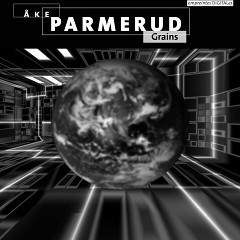
    Sweden’s Åke Parmerud has assembled four acousmatic works dating between 1990 and 1995 on a must-have collection of out-of-print recordings. (Acousmatic is an electroacoustic subgenre composed for presentation with speakers rather than live instruments.)

    These powerful, sometimes disturbing recordings all date back to the mid-1990s. Thematically and artistically, each has maintained extraordinary relevance.

    Grains of Voices came out of an invitation to produce a piece of music drama for Swedish Radio. “I decided to make a composition concerning the human voice, its symbolic implications and its musical applications,” writes Parmerud in the album’s notes. “The sound of the voice is a striking symbol of the unity of mankind.”

    He recorded the voices in-person, inviting speakers and singers to share anything they wished. “This way I did not (with a few exceptions) control what went into the composition, only what came out.” Parmerud describes the 31-minute work as “a multilayered, cross-cultural hybrid piece of sonic art.”

    Jeux imaginaires (or Imaginary Games) was inspired by the 1992 World Chess Championship match between Anatoli Karpov and Garry Kasparov. Aside from a middle section that sounds like a frenetic game of park chess, the work is a study of the parallels between the game and composing music.

    “Every night after ending my composing session in the studio I played the game (or maybe only a few moves) on my portable chessboard. Apart from it being a nice way to turn my attention away from pure musical problems for a while, I found that playing the game made me more and more aware of the likeness between chess playing and composing. … [P]laying the game as a small ritual every night released new musical ideas and composing energy without necessarily creating detectable parallels between the music and the game itself.”

    Les objets obscurs (Hidden Objects) is a musique concrète piece in four parts. Or more precisely, a meta-musique concrète piece.

    We’re presented with riddles (in French) having to do with the source of the sounds used. The answers are offered musically. “In the end of the last movement the ‘solution’ of all the riddles is presented. These answers, however, set up a new ‘inner’ riddle, to which no answer is given.”

    Finally, Alias explores “the duality of outer and inner existence, here interpreted through the life, music and destiny of the Renaissance composer Carlo Gesualdo da Venosa (1560-1613).”

    Gesualdo is a controversial 16th/17th century figure. As a composer, he’s considered to have been hundreds of years ahead of his time. As a human being on the other hand, he’s remembered for the gruesome double murder of his wife and her lover.

    Alias is not, however, an attempt to illustrate the shifting identities of Gesualdo,” writes Parmerud, “but is rather, in a wider sense, inspired by thoughts on the relationship between the artist and the work of art.”

    That being said, it’s difficult not to let the mind wander over the course of these two dramatic movements. Like the others on this important new compilation, it is a powerful work.

    … it is a powerful work.

    Petites étincelles in The Sound Projector

    “Tampura Timbres”, Ed Pinsent, The Sound Projector, July 29, 2018
    Sunday, July 29, 2018 Press

    Last heard from English composer Manuella Blackburn with 2012’s Formes audibles, apparently her debut release, where Stuart Marshall was very taken with her “fresh and authentic… manner of articulation.” Today’s excellent release on the same label is Petites étincelles (empreintes DIGITALes, IMED 17147), and surveys five works dated from 2012 to 2017, each one evidence of a very sensitive and intelligent approach to sound manipulation and highly respectful of the source objects she’s captured them from.

    Take Javaari, based on samples from sitar playing. She’s homing in on particular details of the physical instrument (the bridge, the buzzing sound of the strings), and creating a kaleidoscopic arrangement to highlight these aspects that interest her. This is based on her understanding of the culture of the instruments and the musicians that play it, even if the results are so heavily re-ordered to sound like no sitar music ever heard before. It’s a bold coup to create such a radical reinvention of Indian music, yet without once departing from its core truths.

    Ice breaker, derived from the sound of ice cubes dropping into water, is likewise founded on a firm understanding of physics and what actually happens, scientifically speaking, for the ice to create that cracking and popping effect. Starting from these basic facts, Blackburn is very clear about what sound she wants to capture, what phenomenon she wishes to demonstrate. The overlays of bubbling and fizzy liquids are used to underscore this fact, and are not simply there for decoration. Net result, one of the most “realistic” sound-portraits of ice and water yet to be heard; which takes some doing, given how over-used this trope has been in the field of electroacoustic composition.

    Then there’s Snap happy, the most recent piece on this set, created from the sounds of cameras. One of Blackburn’s interests is in “the miniature”, by which she means small sounds and events which are barely perceptible; she doesn’t boast about the power of her microphones or the technology needed to capture such things, but she does discourse like an expert about different makes of vintage cameras, in one compacted paragraph of notes. The old Kodak Brownie from the 1940s had “much heavier clicks and clunks” than more recent cameras, and she seems to be very conversant with these internal mechanisms. You get the feeling she could understand any given device by opening it up and examining it, probing with inquisitive fingers. She likes the way old cameras used mechanics to wind on the film, and these sounds feature heavily here. This piece also muses on the way that modern digital cameras use sound effects to mimic these old sounds, even though there’s no need for them to do so (Come to that, why don’t word-processors imitate the sounds of a typewriter?).

    Also here, Time will tell, derived from clocks and continuing the theme of miniatures, Newtonian mechanics, and interest in common domestic objects; and New Shruti, another composition starting from knowledge of classical Indian music and this time exploring the shruti box / tampura. Here, as throughout the entire album, Manuella Blackburn’s skills in assembling microscopic fragments of sound into a coherent whole are evidence of her genius; there’s craft and skill in her mosaics, but also much instinct, and the aim is to create beautiful music rather than simply demonstrate digital techniques. Blackburn seems to have a profound understanding of things, of objects; is able to apprehend their inner workings with precision and accuracy; and this skill may in turn help her to decode other signs, to understand something about the workings of the world. A truly excellent set which I recommend.

    Manuella Blackburn’s skills in assembling microscopic fragments of sound into a coherent whole are evidence of her genius…
  • 1
  • 2
  • 3
  • 4
  • 5
  • 6
  • 7
  • 8
  • 9