electrocd
  • This website is also available in English.

Blog

2899 results
  • 163
  • 164
  • 165
  • 166
  • 167
  • 168
  • 169
  • 170
  • 171
  • Les arbres in bodyspace.net

    “Review”, Ian Hawgood, bodyspace.net, December 1, 2008
    Monday, December 1, 2008 Press

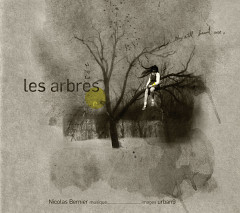
    I first came across Nicolas’s work at the superb German label 12rec. What first caught my attention (as is often the case) was the unique and visually arresting artwork by Urban9 (who I then asked to do the artwork for my own 12rec release!). The album, entitled Objet Abandonne En Mar, was made with the guitarist Simon Trottier in 2007, and was the first net release I heard (as a relative newbie) that not only hit the expected high standard of releases I expect if I am to listen to over again and again, but surpassed it, becoming one of my favourite releases of 2007. The thing about Nicolas’s work is how unique it is, it really is like nothing else out there. He keeps detailed and very delicate micro-elements in control, making it sound flawlessly simple when in fact it is anything but. He uses grainy elements and distortion better than anyone else I have heard before, timing the movement changes to absolute perfection. Les Arbres is a fantastically developed work, with amazing string sections coming in with lightly moving beats and micro-rhythms on a bed of beautiful noise. Its impossible to define the work (both solo and collaborative) he does, but this only adds to the excitement of future releases. I am left with little doubt that Nicolas is fast developing into one of the most important producers/artists around today.

    I am left with little doubt that Nicolas is fast developing into one of the most important producers/artists around today.

    La notte fa in Blow Up

    “Waves”, Stefano Isidoro Bianchi, Blow Up, no. 127, December 1, 2008
    Monday, December 1, 2008 Press

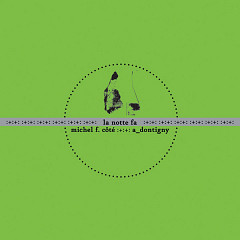
    Aimé Dontigny è il turntablist del duo morceaux_de_machines (con Érick d’Orion), Michel F Côté è il batterista dei Klaxon Gueule; gli ospiti del loro disco sono Bernard Falaise e Alexandre St-Onge, rispettivamente chitarra e basso degli stessi Klaxon Gueule, Alexander MacSween dei Foodsoon (batteria aggiunta in un brano) e Jean René (viola in un brano). Chi segue le vicende dell’impro-rock canadese sa che abbiamo a che fare con un grumo di musicisti che si collegano, scambiano e ritrovano in mille dischi diversi con formidabili capacità camaleontiche e dissimulatorie: in pratica riescono a suonare letteralmente di tutto e lo fanno con estrema nonchalance. Stavolta la coppia Côté-Dontigny propone un suono sfasciato e destrutturato — la masterizzazione è dell’esperto Paul Dolden: a quando un nuovo disco suo? — ma solidamente ancorato a una visione da ‘track’ ampia e accogliente, aperta ad input diversi e de/strutturata cum grano salis, facendo in modo cioè che restino linee maestre come se si trattasse della scrittura di autentiche ‘canzoni’. Tutto si basa nell’interazione di batteria-percussioni e cut-up da dischi e computer: Ritmi di oggetti, Jumping Off Minoru Yamasaki’s Building e Target=”blank_” con l’impeto di grooves ottusi e nebbiosi, Unlisted Card Number come dialogo elettronico di glitch e microwaves, Paxil Origami Club e Naines qui gesticulent in astrazioni di breakbeat e galleggianti tastiere spacey, Bounce dat ARN e The Book Burner come impossibili out-funk alla Super_Collider, Lube liqueur e Visiones nocturnae disperdendosi in sublimi scie di filamenti jazz.

    Un’operazione che può ricordare DJ Shadow in una visionaria versione impro-jazz-rock e senza la passiva dipendenza da culto del vinile: i cut-up sono sempre funzionali a se stessi e non meri ammenicoli da esporre con matematico scientismo, strumenti puri d’arrangiamento all’interno di un raffinatissimo modello di scrittura ri/creativa che ruota come una girandola mostrando sempre nuove facce e dettagli infiniti a ogni ascolto. Tenuto e trattenuto insieme dal collante di un’intesa perfetta e di una comunicativa a tratti persino vagamente ‘pop’, La notte fa è l’ennesima conferma di due talenti — e con loro di un’intera comunità di musicisti — dalle possibilità pressoché infinite.

    La notte fa è l’ennesima conferma di due talenti — e con loro di un’intera comunità di musicisti — dalle possibilità pressoché infinite.

    [60]Project, Monty Adkins, Pierre Schaeffer in The Telegraph

    “The night France tuned in to clank and clatter — and a new music was born ”, Ivan Hewett, The Telegraph, November 20, 2008
    Thursday, November 20, 2008 Press

    Ivan Hewett looks at the origins of musique concrète, revisited in a 60th anniversary tribute to Pierre Schaeffer

    Sixty years ago, on the evening of October 5, 1948, the homes of thousands of Frenchmen and women were invaded by ghostly aliens. It happened at 9pm, when these unsuspecting music-lovers switched on to Radio France, the state broadcasting company.

    They were hoping for “normal” music, but instead they were assailed with weird noises; hissing steam engines, the clanking of iron wheels and the clatter of pots and pans. Mixed in with these were the sounds of a piano playing stridently modernist music, and even — horror of horrors — an amateur orchestra tuning up.

    The effect wasn’t quite the mass panic brought on by Orson Welles’s famous War of the Worlds radio broadcast in the USA. But it wasn’t far off. The letters pages of French newspapers buzzed for days with expressions of outrage, mingled with a few dissenting approvers.

    This concert de bruits was a red-letter day in the annals of modern music. It was the moment when musique concrète — made from sounds recorded out in the world, rather than musical notes — came out from the laboratory and into public view. The man behind it was a quiet, intense telecommunications engineer turned composer named Pierre Schaeffer. For months he had been working in the radio station’s studio, shaping the sounds he had recorded into a musical form.

    The results were a series of Études de bruits (Sound Studies), which included Étude pathétique [Étude aux casseroles], based on saucepans, and another made of railway noises entitled Étude aux chemins de fer.

    It sounds like “mad professor” music, but there was nothing eccentric or dotty about Schaeffer. He had a rare combination of hands-on practicality, visionary genius, and philosophical rigour. He must have had charm and persuasiveness too. In 1942, with Paris under Nazi occupation, he somehow convinced the state broadcasting company that the time was ripe to put money into an acoustical research institute, with himself as director.

    By then, aged 32, he had decided that the aural world had been fundamentally changed by the advent of recording. When a violin note, a bird call and the sound of a foghorn are recorded and played back through a loudspeaker, they are hurled together into the same democratic space of the imagination, which Schaeffer dubbed “the acousmatic realm.” Sounds are severed from their causes, and become “sound objects,” which we listen to for their own sound qualities, just as we view abstract paintings without asking what they represent.

    This view required a new way of thinking. Traditional music moves from a musical score to performance; Schaeffer’s new “concrete music” moves from sounds to their organisation. But this bright new vision proved difficult to put into practice. Equipment was primitive and until the advent of the tape recorder in the late 1940s, the only way Schaeffer could capture his sounds was by cutting directly on to a steel disc with a lathe. Modifying the sounds was a trial-and-error business of speeding or slowing up the disc, or playing it backwards.

    Schaeffer was determined to bring this bewildering new world of sound to order and produced his Treatise of Musical Objects in 1966.

    Schaeffer’s experiments were the beginning of a trend which quickly gained support. His name may not be as notorious as Stockhausen’s, but within the new music world he is revered. “Sound Art” is now a genre in its own right, and the influence of Schaeffer can be heard in film scores and pop genres such as electronica.

    So when the electronic composer Mathew Adkins set out to make a 60th anniversary tribute to Schaeffer for the Huddersfield Festival of Contemporary Music, he had no trouble in finding willing collaborators. “My idea was to ask composers and sound artists from all round the world to contribute sound objects,” he said, “and to assemble these into a continuous piece.”

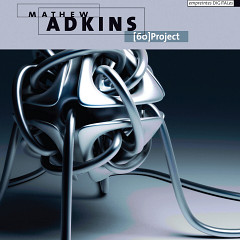
    The result is a 60-minute piece in eight movements [[60]Project], some of which have very Schaeffer-ish titles like Urban Soundscape and Noise Study. The sounds have a smooth sophistication that contrasts hugely with the bumpy graininess of Schaeffer’s music, but Adkins still admires his pioneering experiments.

    “When I heard this music as a student, it completely blew my mind. Schaeffer set me thinking about music in a completely different way, as something that creates an imaginary world. He’s not dogmatic, he doesn’t banish familiar sounds, he absorbs them into a new vision of what could be created in sound.”
    The sounds have a smooth sophistication that contrasts hugely with the bumpy graininess of Schaeffer’s music, but Adkins still admires his pioneering experiments.

    Les arbres in Goûte mes disques

    “Critique”, Simon, Goûte mes disques, November 5, 2008
    Wednesday, November 5, 2008 Press

    Décrire un disque comme Les arbres a tout d’un exercice fastidieux. On commencera par dire qu’il s’agit là d’une collaboration entre le producteur originaire de Montréal Nicolas Bernier et son compère Urban9, ce dernier œuvrant comme artiste visuel. Mais au-delà des mots, Nicolas Bernier tend à créer une véritable machine de sentiments, rendant la tentative de justification de mon engouement vaine et presque inutile. Coincé entre une musique acousmatique abyssale et une dérive des matériaux électroniques les plus divers, Les arbres se dégage rapidement des schémas souvent froids et monochromes imposés par la musique concrète.

    C’est que l’ensemble est sûrement trop bien pensé et orchestré pour y avoir quoi que ce soit à redire. Basé sur de longues envolées solitaires d’un piano qui s’abandonne à des improvisations presque aléatoires, les titres composés par Nicolas Bernier dessinent avec lenteur des paysages désertés, rongés par la vermine. De plan séquence en plan séquence, on découvre un savoir-composer hors norme, bien souvent mis en pratique par des glissements abrupts, des ruptures qui nous ouvrent subitement les portes d’un autre théâtre, ou se joue une autre fin du monde. Ces pianos mélancoliques ne seraient bien évidemment rien sans l’orchestration minimaliste qui les entoure: grésillements électriques, vibraphones, guitares et cuivres en tous genres font dévier ces lignes mélancoliques de leur tentation sentimentaliste pour mieux orienter l’auditeur vers une introspection inévitable et douloureuse.

    À ce titre, la prose de Nicolas Bernier n’a rien de féérique, il travaille sur le plan de la finalité bien humaine qui le compose en s’assurant de vider sa musique des vieilles composantes ésotériques qui mineraient le sérieux du propos. Les six pistes de ce projet colossal abordent des ambiances violentes par leurs pouvoirs d’évocation, par l’interaction sensée de leurs composantes. Et dès que tout aura fondu à vos côtés, vous pourrez apprivoiser la bête et jouer avec à découvrir les plaines et montagnes d’un monde où se côtoient fourmis mécaniques, ombres fantomatiques, geysers émotionnels et autres escaliers de cordes déchirantes. Pas étonnant alors qu’on parle de photographie sonore, de captation, de fixation, de réformation sonore, de bricolage ou encore d’archivage au sein de cette superproduction.

    C’est que finalement, Nicolas Bernier est un maître en la matière, un élève appliqué qui, plein de références dans les poches, retranscrit avec passion l’enseignement du savoir que renferme la musique électroacoustique qui lui a été inculqué à l’Université de Montréal. Mais au-delà des schémas carrés et coincés que peuvent renfermer un cursus universitaire, Nicolas Bernier explose littéralement en proposant une perle electronica / concrète / classique / ambient / noisy dont le retentissement a une portée universelle. Un disque qui laissera très certainement des traces à tous ceux qui auront le bonheur d’y laisser traîner une oreille. Passionné et passionant. 9 / 10

    … l’ensemble est sûrement trop bien pensé et orchestré pour y avoir quoi que ce soit à redire.
  • 163
  • 164
  • 165
  • 166
  • 167
  • 168
  • 169
  • 170
  • 171