electrocd
  • This website is also available in English.

Blog

2899 results
  • 173
  • 174
  • 175
  • 176
  • 177
  • 178
  • 179
  • 180
  • 181
  • Miroirs obscurs in Sonoloco Record Reviews

    “Review”, Ingvar Loco Nordin, Sonoloco Record Reviews, April 3, 2008
    Thursday, April 3, 2008 Press

    Andrew Lewis (1963) read music at the University of Birmingham, UK, from 1981 — 84. He went on to study composition with Jonty Harrison, receiving his doctorate in 1991. Since he was in place in Birmingham during the formation of BEAST — The Birmingham Electroacoustic Sound Theatre — it is no wonder that he was one of the original members. Although his output is predominantly acousmatic, he also composes for conventional, or should I say classic, setups, like chamber groups, orchestras and vocalists. Andrew Lewis is a professor at Bangor University in Wales since 1993, as well as the Director of their Electroacoustic Music Studios.

    Most of the music on this audio DVD is fresh and new, from 2002 to 2007, with the exception of one work from 1999.

    Track 1. Penmon Point (2002 — 03) [15:26] To Maurice Lock.

    Andrew Lewis has written a poetic text on location at Penmon Point, Wales, in December 2001, dedicated to Maurice Lock, which is included in the liner notes of this piece on Lewis’ website:

    “A cold, clear Advent day. In the distance, snow-capped mountains appear still and at peace, yet close by the sea relentlessly pounds the Point on three sides. The steep pebble beach is drawn by waves that crackle and seethe with the mass of moving stone, while frozen pools on the shore splinter and craze in joyful counterpoint. Half a mile distant an island rises up, almost touchable — Seiriol’s island, home of the hermit, now lifeless yet still echoing with ancient worship. Even the lighthouse, beacon of guidance, tolls in ceaseless praise, as if to continue the songs of men who now sing before God.”

    Lewis explains that his piece merges three aspects of this place, which he claims holds extraordinary sights and sounds: Musica Mundana, which defines “the ceramic, roaring scintillation of the waves” over the pebbles with “the splintering of ice, the cries of birds and the acoustic ambience”; Musica Humana, represented by the Priory Church, here exemplified by the 7th century plainchant hymn Conditor Alme Siderum, and Musica Instrumentalis, in which Lewis allots the lighthouse and its bell an instrumental role, which has already been done very successfully before, by Alvin Curran in his wonderful suite of pieces called Maritime Rites, in which he, among other sound sources, uses the foghorn of the lighthouse Portland Head in Maine. Lewis points out the periodicity of all three aspects of this geographic place in Wales, such as “the ebb and flow of the waves, the rise and fall of voices and [the] regular tolling of the bell”.

    The first thing that strikes me is how cleverly the real breaks into the unreal, and the other way around, as when the swell of the sea grows into and through a clearly artificial standing wave of white noise, claiming its real rights in un unreal world. This happens gradually when it happens, in a way that gives you a chance to switch, time unit by time unit, back and forth between natural and artificial, or from artificial to natural, also getting a taste of the similarity between what is and what isn’t: it’s almost the same!

    The second thing that strikes me becomes more obvious the more I listen to Andrew Lewis’ music: the elegance and sophistication. Much of his music shines like hardwood and polished metal — or like the brittle and fragile, light vulnerability of soap bubbles or Christmas tree balls. I’m usually not very fond of too polished electroacoustics, but it’s a bit different in the case of Andrew Lewis. He has a way of spraying grainy properties across the evenness of the elegance, allowing for disparate and thorny qualities in the interface of elegance and crudeness. This is part of his compositional secret, saving him from the hell of too tidy, neat and clean audio!

    The Penmon Point piece falls right in line with my sentiments above. It has the clarity and purity and chastity of an impenetrable sphere of stubborn innocence floating in a space of sin and guilt, but its vicinity is full of wild dreams that cannot be tamed, far beyond the concept of righteousness and iniquity. Soon the air is permeated with clouds of irregular fragments of the future, and chanting priests are barely detected from a vague, indefinite place in the room. Their voices merge with the electroacoustic filtering which mixes the properties of human voices and the metallic ringing of bells — until a cruder and more straightforward ambience suddenly wakes you up like rain on your face when you’ve fallen asleep in a meadow on a warm summer day. Reality can be stunning.

    The sea rolls in, thunders over the cliffs, and seagulls call out in the salty air, in a recollection rolled up in the 11 dimensions of the binaries of this disc. A star crushing thunder swells, carrying sharp and smooth audio, high and low pitches, far and wide and closed and crowded, in a jingling, soaring, wheezing, bubbling and chanting maze that slowly dissipates in a semi-transparent mist of sounds, through which more solid blocks of audibilities tumble like cubes of ice and dices, in a magnificence of a mudflow of the entirety of the moment; sounds brought forth by gravity and friction and an enormous release of pressure.

    In the following stillness: a tingling sensation and the inward chanting of monks, but only as a brief, temporary deviation from the constant rumble of a tumbling sea at Penmon Point and the ocean of time in eternity.

    Track 2. Llanddwyn Skies (2003) [14:49] To Christian Calon

    The composer says he tried to “capture the solitude and stillness of dawn in Newborough Forest and […] Llanddwyn Island”. He felt that there was a perfect equilibrium at the time and place ‘tween “day/night, sun/moon, sea/sky, birds/planes…” Lewis masters the art of ecoacoustics in electroacoustics better than anyone I’ve heard before, even though some composers set out to specifically do ecoacoustic recordings. Andrew Lewis manages to wave a tapestry of the nature of synthetics with the nature of the naturalistic, enhancing both aspects. I say ‘aspects’, because the synthetic as well as the naturalistic exist in our universe, and are, by virtue of that, in fact both very much natural. It is just in a sphere of limited awareness that one can distinctly separate the one from the other. Everything is. In Andrew Lewis compositions everything is. It’s marvelous!

    With a crawling, twisting motion in space, Llanddwyn Skies extends down the duration, forcefully and mighty at first, in the manner of a huge bell being struck, where after the sound slowly, very slowly dissipates — but in Lewis’ sound burst, a mass of sounds of many origins explode gradually like slow light out of a prism across a white table cloth. When the sounds have almost dissolved from space into time, another world is uncovered, discovered, recovered; a world which stays to itself, making no fuzz, not trying any publicity pranks; just existing in the back of everything: a sunny meadow, surrounded by a coniferous forest, songbirds twittering in an absentminded moment in the sun, crows arguing as they flap clumsily between treetops, moss on ice-age rocks, ants hauling pine needles to their hill. Jetliners streak through the timeframe like somebody stepping out of an oil painting in a gallery, joining the visitors, paint dripping, like blood from a gun shot victim entering the ER. Narrow-minded messages are drawn across heaven by glossy fuselages from Boeing and McDonnell Douglas, the scraping sound sawing through the bold pates of old-timers who care none about a melting icecap.

    Suddenly an ice castle appears out of the air right in front of you, like a sobering hallucination, and you know not where to turn inside your musical dream. The scenery changes faster than the ice can melt or your opinions might change, while somewhere inside a memory, birds chirp. Marsh fluid gases bubble up your throat like methane burps. The motion is an outward one, away from the centre, facing the stars. Out of nothing: something. Out of something: everything. Out of everything: not much. And most of it all faces the other way, in this turned-away world, as you hear your body breathe inside this music, while passenger jets force themselves from one horizon to the next.

    Track 3. Benllech Shells (2003) [8:33] To Esme.

    Andrew Lewis begins his introduction of this piece with a remark that is very interesting, since it sort of shows what electroacoustics is all about — or almost all about! —, by referring to an experience that we all have; that of putting a sea shell or some other hollow object to our ear, observing the change in ambience, which fuels our auditive imagination, too, with the consensus that we hear the sea in the shell. This is quite wonderful, since it explains so much about this art form and about how much our own imagination fuels it. Lewis also says that his work Benllech Shells “employs computer technology to much the same end, lending an extraordinary aspect to ordinary and familiar sounds; those of a crowdy beach in high summer”.

    The music begins with the extremely clean, coppery sound of a percussive attack, which extends elastically, swelling, like fluid from a toppled glass across an oilcloth that exaggerates the surface tension. The sounds are tremendously filling, to your ears what thick, dark chocolate or whole, hardboiled eggs are to your mouth. Thus the music is also bursting at its seams with sparkling and roaring energy.

    When the sounds of this beach that floats in a bubble in our recollection gradually emerges between our ears (if heard through earphones) or perfectly panned out around our listening space (in a nicely furnished room with giant speakers and a surround system), clothed in bird song and the happy sounds of playing children (behind the filter of electroacoustic time!), they come with a slight tint of dreaminess, of nose tip hypnosis, rendering them that extra glow that we often overlook when the time is here and the place is now! Maybe hereby we, the listeners and the dreamers, get closer to that elusive state we call reality? Perhaps, by putting this shell to our ear, we understand the makeup and the significance of the ocean and the concept of ocean better? I’m sure art puts as right online with the center of ourselves, which is the center of everything, and which is situated everywhere! All times are now! All places are here!

    Lewis shows a cunning wizardry when it comes to mixing the so-called reality with the so-called unreality (which both are just as unreal or real, really!) — and keeping things clean in the process. His sounds are so very beautiful, even through complex processes and extremely delicate and complicated mixes. This is unusual, to this extreme extent. Nothing ever blurs! The slightest smidgen of sound is clean and clear and shiny, even when a gull flies by at close range, calling out in its shrill and scraping voice inside an enormous soundscape of electroacoustics that has just built up like a thunderhead full of meteorological violence and the fatal approach of razor-sharp hail. Impressing! I’m also surprised at the ease with which the composer seems to handle children’s voices when he swings them around in serpentines that bring with them so much of a fairytale ambience that you almost feel like a soaring Peter Pan yourself. Magic! This shows what a master of the art can do with the best tools available. This fairly short piece is one of the most beautiful electroacoustic works I’ve heard.

    Track 4. Cable Bay (1998 — 99) [10:04] To Francis Dhomont.

    It is revealed that this piece is inspired by the North Wales seascape, and the sea sounds are recorded at a location called Cable Bay.

    Lewis opens this piece too with a glary, clean bang, albeit a shade more muffled — and then he rattles jewelry like the Royals did for John Lennon. This tinkling jewelry percussion spreads its crystal daylight all through the thudding, flowing and extending sonorities, like melting water of spring finding its way through sand and gravel. It’s a miniature world of grains of sand, and a star spangled world of galaxies standing in space. Sometimes I hear the tutti of a starry orchestra hiding behind interstellar clouds of dust and gas, its sonic light illuminating the Veil of Maya — while on Earth the midday thaw of an April day drops into a bucket with an erratic but inevitable rhythm. This is a life of non-local connections. Andrew Lewis’ music tells this tale, as wave upon wave move over the sand of the shore, withdrawing and recurring, while the ringed plover and the little ringed plover move nervously back and forth close by…

    Tracks 5 — 13. Danses acousmatiques (2007) [35:45]: Section 1: Vacuum (la scène vide); Danse des coups (solo); Shoal / Section 2: Torquetum (pas de cinq); Danse atomique (pas de deux); Flock (pas d’action); / Section 3: Swarm; Nebulum; Danse des gestes (pas de trois)

    The composer deliberates on the aspect of spatialization in acousmatic music, and observes that this property not always receives the attention it’s worth, but oftentimes merely appears as an effect. I might insert that one composer dealt feverishly with spatialization; Professor Karlheinz Stockhausen. It was always hugely interesting to listen to him talk about this aspect of music and have him give sounding examples from his own compositions. Anyhow, Andrew Lewis wrote his Danses acousmatiques “in response to this state of affairs”, where “Danses acousmatiques represents a quest for creative, musically significant and ‘perceptible’ use of the spatial aspect of acousmatic music”. The music, in the form of a suite with nine movements divided into three main parts, moves “from the atomic to the cosmic”. Section 1 deals with “stars, planets, the music of the spheres”, section 2 with “the natural world, especially emergent flocking behaviors”, while Section 3 works with “the human world — dance and choreographic movement”.

    After hearing these 35 minutes straight through, I can attest to the fact that this work, although being the longest and maybe — probably — the most worked-through on this audio DVD, is not the most artistically significant at all. It is amazing and astounding, yes, hilarious, by virtue of the insane motion of sound, the vanishing and appearing, the exploding, the imploding, the panning and the madly panning, the circulations and the spiralings, the meanderings and the slurping away, the cascading and the merging, the diminishing and the swelling, the contracting and the expanding, the thudding and the slithering — wow! Even though the sounds are just as clean and shiny and brilliant as in his other works here, the artistic aspect, which has rendered Andrew Lewis a lot of credit on the other tracks, lacks on Danses acousmatiques. This work becomes a catalogue composition, exemplifying all the various possibilities of motion and space in sound, and as such, it is fantastic, perhaps groundbreaking! I feel, though, that the composer also wanted to express his artistic vision, but in that case this particular work is lost in the cataloging… This doesn’t matter, though, because if you hear this as a catalogue of sounding motion and motion in sound, you have a masterwork — and all the other works on here are brilliant artistic expressions, such as rarely heard.

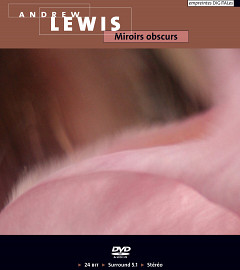
    … if you hear this as a catalogue of sounding motion and motion in sound, you have a masterwork — and all the other works on here are brilliant artistic expressions, such as rarely heard.
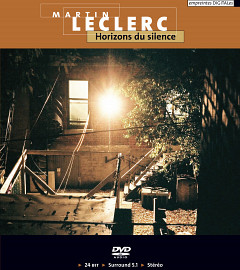
    Horizons du silence in Mouvement

    “En bref”, Mouvement, no. 47, April 1, 2008
    Tuesday, April 1, 2008 Press

    Repère important dans le domaine des musiques électroacoustiques, le label québécois empreintes DIGITALes a comme particularité de publier — depuis 2005 — ses disques sous forme de DVD-Audio afin de leur faire bénéficier d’une qualité sonore optimale. Ce parti pris trouve sa pleine justification avec l’album Horizons du silence, qui regroupe six pièces du jeune compositeur Martin Leclerc et dénote une approche très cinématographique du matériau sonore. Au travers de ces pièces aux recoins multiples, fourmillant de détails (voix, instruments et autres bruits) et de trouvailles, transparaît un remarquable sens de l’espace, rehaussé d’un appréciable sens de la narration et d’un moins appréciable sens de l’humour.

    Au travers de ces pièces […] transparaît un remarquable sens de l’espace, rehaussé d’un appréciable sens de la narration…

    Mâts in Terz

    “Made My Day”, Honker, Terz, April 1, 2008
    Tuesday, April 1, 2008 Press

    Dass es eine Frau ist, welche die derzeit lebendigste und intelligenteste Elektroakustik macht, muss man nicht erwähnen, kann man aber. Genauso wie ich die konzeptionelle Klarheit und spontane Lebendigkeit von Kaffe Matthews schätze, frage ich mich, warum es doch immer wieder Frauen sind, die den musikalischen Platzhirsch einfach nicht brauchen und sich im Hier und Jetzt ganz konkret und sinnlich auf die Töne konzentrieren können. Justel hat genug Erfahrung und Meriten, sie ist ein wahres Avantgarde-As — aber es ist vor allem die direkte, lebendige und unprätentiöse Vermittlung ihrer Musik, die sie auszeichnet. Die 8 Stücke von 1996 bis 2004 loten Gegensätze durch temporäre Verbindungen aus, die in ihrer Unberechenbarkeit zunehmend kräftiger und stabiler werden. Tiefe, Oberfläche, Struktur, Freiheit, Impuls, Intelligenz. Die Stücke haben Historie und Tiefe, aber es braucht sie nicht für die aktuelle Transformation, das aktive Hören in der Gegenwart. Jede Sekunde geschieht die Verwandlung. Sagenhaft.

    Jede Sekunde geschieht die Verwandlung. Sagenhaft.

    Geisteswissen­schaften in Liability Webzine

    “Critique”, Fabien, Liability Webzine, April 1, 2008
    Tuesday, April 1, 2008 Press

    Depuis qu’on l’avait rencontré au sein de Morceaux_De_Machines, A_Dontigny était resté assez discret. Du moins pour nous. Aujourd’hui c’est son premier album en solitaire qui paraît et force est de constater qu’en deux ans l’homme n’a rien perdu de ses talents de manipulateur sonore. Déjà habitué à travailler avec Paul Dolden, Diane Labrosse (qui était déjà présente sur l’album de Morceaux_De_Machines) et Jon Vaughn c’est tout naturellement qu’on les retrouve ici, maltraitant la matière en ne se donnant aucune limite. Ainsi entre efforts électroacoustiques, sampling, explorations synthétiques et digressions guitaristiques A_Dontigny et ses camarades nous offrent une leçon de déstructuration musicale du plus bel effet. Certes, il n’est pas toujours facile de les suivre mais malgré la difficulté de l’œuvre on reste attiré par ce disque intransigeant et fort bien produit. Dans tout ce magma, où le contre-pied musical est roi, il y a une certaine forme de clarté qui émerge mettant en exergue une volonté tenace de ne respecter aucun code. On n’entendra alors ici aucune cohérence dans l’approche structurelle des morceaux mais c’est aussi ce qui fait sa force et sa capacité à surprendre.

    Ainsi Geisteswissenschaften laisse son auditeur toujours en éveil. Jamais il ne sera en situation de confort et devra être attentif à cette révolution permanente, aux changements de couleurs, de rythmes et, finalement, de direction. A_Dontigny (Aimé pour les intimes), aurait pu jouer l’outrance et le grand n’importe quoi pourvu que le trouble soit jeté. Au contraire on sent dans Geisteswissenschaften, malgré l’absence de règles, une tentative de ne pas sombrer dans un chaos total. Dans son apparente anarchie ce disque est bien plus subtil qu’il n’y paraît et dénote une liberté totale dans la manière d’aborder la musique, de la modeler et de lui donner un sens. Écouter ce disque n’est pas aussi surhumain que cela. Il suffit juste de porter sa curiosité un peu au-delà de ses habitudes et de l’ouvrir gracieusement à cette vision musicale hors normes.

    Geisteswissenschaften laisse son auditeur toujours en éveil. Jamais il ne sera en situation de confort et devra être attentif à cette révolution permanente, aux changements de couleurs, de rythmes et, finalement, de direction.

    Exils in Tokafi

    “Never seperates text from context: Vande Gorne uses the human voice as an orchestra.”, Tobias Fischer, Tokafi, March 30, 2008
    Sunday, March 30, 2008 Press

    While writing an article on “The Art of Sounds”, a recent documentary on Pierre Henry, I was once again impressed by the power of ballet. Through the symbiosis of sound and dance, the idiosyncratic noises of the French pioneer were suddenly transcended into very concrete, unashamedly emotional, immediately physical and occasionaly even sexual movements. In short, into something a wide audience could relate to. Annette Vande Gorne, whose contact with Henry proved to be pivotal in her development as an artist, makes use of the same mechanism by integrating human voice and speech into her music.

    I should actually specify that by saying that Vande Gorne’s music uses the human voice as an orchestra and carefully places spoken word contributions into the texture of compositions with a strong spatial component. In her œuvre, the word comes first and everything else follows in its wake — rather than the other way round. For better judgement’s sake, too, one should replace the term composition with a comparison to radio plays and audio books, subtracting logical causality and adding timbral transfomations, colourful abstractions and surprising juxtapositions.

    Quite obviously, then, we are dealing with a highly personal form of expression here, which has found its place in between the arts of poetry and music. A poem by Saint-John Perse is the backbone to the 22-minute wordscape Exil, chant II. Snippets from the lyrics are presented against a fluent backdrop of digital squealing, tortured frequencies, processed sounds of nature as well as pure field recordings of waves breaking against cliffs and bird song. Fragments de lettre à un habitant du Centre leaves aside all concrete references, providing only a touchwood of textural metaphors through which the voice of Éveline Legrand struggles in vain in search for a centre, a focal point and a conclusion.

    Vande Gorne never seperates text from context. Her utmost desire seems to be a state in which what is written is transformed into an autarcic world in the very moment it is uttered. In Fragments, this means that every second of the piece is built from samples of the original lecture, with Legrand’s narrative firmly in the limelight. Text, reader and music are inseperably connected. Each version of the piece creats itself entirely from scratch through the parameters of vocal delivery, influencing not only the interpretation of the poem, but also the music accompanying it.

    Just as Henry did with patterns of dance, she arrives at a space where several senses are addressed at the same time — and where their interaction awards them a more universal and accesible quality. Through this technique, Vande Gorne is capable of inferring a dadaistic kind of meaning in places where there would otherwhise be nothing but feeling one’s way forward in the dark. She is not making a definite point, though. Rather, vocals in her pieces are like candles, which provide a welcome sense of security in a terrain which often appears alien and impenetrable. What lies beyond their glow, however, is anybody’s guess.

    Quite obviously, then, we are dealing with a highly personal form of expression here, which has found its place in between the arts of poetry and music.

    Les ponts de l’espace in Sonoloco Record Reviews

    “Review”, Ingvar Loco Nordin, Sonoloco Record Reviews, March 25, 2008
    Tuesday, March 25, 2008 Press

    Laurie Radford (1958) is a new name to me, but probably just because of my ignorance. Now I get the chance to become acquainted with his sound art on this Audio DVD from empreintes DIGITALes; a label which not only is the foremost label for electroacoustic music, with its own distinct style, but which also is one of the most prolific labels in the genre, with a host of new Audio DVDs and the occasional CD out this winter and spring.

    Radford works in a diverse compositional realm, with various combinations of instruments and voices, electroacoustics, and performers interacting with computer-controlled signal processing. He is currently teaching electroacoustic music and composition at London’s City University, UK.

    Track 1. Verb Tales

    (2002) [5:01]The composer explains that the origin of this brief piece were the reverberant tails of a variety of vocal recordings. The start of the recording, though, to me, resembles a group of Tibetan lures, sounding fervently out of the pre-oppression days of the Potala, through the clear air of the high plateau. Synchronicity has it that I hear these cumulating Tibetan trumpets as I get a email urging me to sign a petition for the Tibetan people and the plight of the Dalai Lama, which I do — giving Laurie Radford’s first piece on the DVD a deeper significance.

    Wheezing, appearing and disintegrating sounds move in between the trumpet congestions that hammer gold through the chilly moments of high altitudes. At times I do also recognize the faint connection with words; thus verbs, but that is really very distantly associated. Longer, droning, but sort of slowly swelling sonorities, shape a sonic elasticity beneath the tack-hammering gold trumpets. Original!

    Tracks 2 — 7. les ponts de l’espace I (2001) [7:14]: line I / triangle / point I / circle / point II / line II

    The composer explains that the short pieces each are miniature studies of two compositional processes. In each piece Radford explores spatial sound motions within geometrical shapes, which explains the titles. These are also studies of environmental recordings integrated with sounds from the studio. More explicitly, some of the sounds derive from an instrument built by Tom Nunn, called Primordium. These sounds are set up to form relationships with unprocessed takes on a wintry urban streetscape.

    As I start to listen I get a sense of reality flushing through a number of quantum dimensions; situations, one after the other, for the current situation, for the swirling pattern of cars and birds and human anatomies down the mystery of space and time and whatever else is deciding our elusive lucidity in the dubious state of matter, which Michio Kaku in his spellbinding scientific TV programs have me marvel at, while I realize that anything that shows up in front of me, from coffee cups to galaxies, are mere patterns in space.

    Laurie Radford’s investigations of moving sound placed in geometrical situations further enhances my ever deeper identification with all and ever, in an existence of non-local connections and vibrating patterns that can make sense and no sense of everything.

    The sounds in a musical consideration are exciting and beautiful as well. You can listen without getting into philosophy and physics, and evolution is fast and charmingly witty in these flurries of spiraling grains and lofty passages through parks and across pedestrian crossings, as the wind carries children’s voices and spectacular, rustling and punching events are mirrored in mirror turning and tumbling through the void between time and space, between here and now.

    Tracks 8 — 13. les ponts de l’espace II (2003) [12:01]: point I / triangle / line I / grainDrone / line II / circle+point

    Laurie Radford continues his investigations of raw environmentals and studio produced sonorities. Some of the concrete sounds are brought in from a gallery opening in Ljubljana, Slovenia, and from a traditional bell ringing in Bresovica, also in Slovenia. He also brings back some of the electroacoustic sounds from a choice of his own earlier mixed compositions.

    This set begins with a truly elegant twitch; a tilted hat over half-hidden, smiling eyes and teeth glaring like white pearls out of the composer’s grin. Coin-twisting sounds at hilarious rotations breeze by and up, out into space, while other sounding motions crash down well within earshot. Lots of patterns exchange information about position, density, inertia and so forth, all inside a realm of style and grace! This is music made from creep-resisting alloy.

    Applause splash in like rain, or rain spreads like applause across the bleachers. Sharp, extremely close steel insect sounds move knifing antennae. Eleven dimensions of curly candy sonorities hide behind traditional ways of thinking. Right in a placement of dispersed squirts, people make themselves known through voices. Shadowy realities flutter by in wind instruments and shreds of ambient spaces; quite peculiar — and too much, really, to put your finger on. As soon as you stretch your finger to pinpoint something in this music, something else is there, which might not even be remotely related. This music calls for a kind of up-scaled acceptance that isn’t common. Squirts in buckets — perhaps a cow being milked — is mixed with a child happily and playfully calling Mommy, and spiraling, tight electronic ribbons turn through younger years. A jolly market place accordion is cut up like sound poetry, and you almost feel the wind coming down off the mountain. When the Bresovica bells are introduced, they appear in their afterglow at first, without the attack, folding out beautifully down an artificially extended duration, panning above lumpy, dark sounds of clay clod character — or these clods could be slowed-down echoes of steps through a tunnel. The bell afterglow deepens in the pitches to serious, stern, opaque veils of impermeability, forming deep blue and purple chords, like those steady, long La Monte Young chords from the Dream House on Manhattan “bent out of shape by society’s pliers” into wobbly bands approaching their breaking point. An acceleration and escalation is relieved into a calming, unifying bell chord, and things get more relaxed and unreal, enchanted — lost in a sonic fairytale of magic whistles — which in turn swoop down into a smaller crowd of familiarity; people who talk friendly without tenseness. Time hovers in a rumble, not knowing which way to go.

    Track 14. à la cire perdue (2004) [15:27]

    The composer explains the title: “Cire perdue is a time-honored sculptural technique still in use today. It involves the covering of an initial sculptural model with wax prior to casting the object in bronze. During the casting, the wax melts and disappears, is lost, leaving the finished bronze statue as the final reflection of the artist’s work.”

    Radford uses this description as a metaphor for the way he utilizes the source sounds — his own instrumental music — in the piece.

    With a candy wrapping paper crackle and a copper insect flyby, the piece opens into a tumbling rumble magnificence, like deep brown chocolate filling through the cracks of the sense of taste. The last and farthest reverberation of a voice aaahs in pannings across the perimeter. Mist hovers across the wetlands, against the bleak light of a promising spring morn. Inside your mind slowed-down rotor blades beat the air. Electronic birds chirp in circular motions while wastepaper oceans heave through the civilizations of this planet, visible in the eight-minute light.

    There is a slightly withheld force at play in à la cire perdue, and a tight, elegant kinetic energy; an inkling of much more power in store, the way you feel on your racing bike when you cycle fast and smooth and know that you have much more to give, stored in your amassed training and your muscles and your mental resources.

    Distant, panning nightjar prayer beads are thumbed through the obscurity of pine tree hideouts, deep inside the music. An ocean rises inside the sounds as I come to grips with perspectives and realize it might be a closely miked glass of an alcoholic beverage with ice cubes, tilted and twirled in a ring-marked female hand at an upper-class party in Mayfair in 1966, reflecting light blue velvet and golden frames around the walls, Mick Jagger’s dynamic mouth moving about in his face as he bespeaks a young Marianne Faithful

    Yes, visions supersede each other when you let Laurie Radford’s music take hold, not without pleasure!

    Track 15. Mining Inference (2003) [3:05]

    This is a variation of interferences III (1983-IV), composed by the Canadian-Argentinean alcides lanza. It begins with the distribution of short, rhythmicized portions of sound, which are repeated and developed in an almost shortwave static manner. The sounds which to begin with are gray and bland and anonymous bucket-in-the-shed finds, after a while give way to shreds and recollections of instrumental, almost identifiable sounds from a world that once was called real… Nowadays we know that all we see is just patterns of atoms, which themselves do not really exist either, disappearing into the flux of existence/nonexistence; a bewildering state of vibration — so we’d better just enjoy the music!

    Rickety oralities start to emerge like gnats in between sparse but decisive piano tones, panned madly, and a humming machine sits heavily backstage.

    A lovely miniature, which the composer has worked hard with. Very nice; a treat!

    Track 16. Terms of Occupancy (2004, 05-06) [10:08]

    Laurie Radford explains that this work began as an 8-channel variation and extension of à la cire perdue.

    The immediate impression as the music kicks off is that of a flock of jackdaws and crows stirring and flying up, perhaps at the sneaky arrival of a black-and-white cat with sharp claws and supple moves! As the musical motion spirals upwards like a beanstalk in a fairytale, silvery dust falls all around, sonically, each little speck reflecting everything and all. Whistling and chirping trajectories rise and fall, and somewhat denser areas begin to take shape, appearing as thuds or local percussive events. For a while things gear up to an extent that makes analogies to Stockhausen’s Sirius spacecraft viable. This tight-knit motion upwards is brutally cut, as brief silences and choppier sounds tumble in, like rock gardens in an emotional ambience; like cruel recollections when you wake up in your body. Things keep changing too fast to keep up, while associative visions spread out their sheets in the wind before you. The sky is no limit. Angelic choirs soar out all across the horizon in a Gustave Doré setting. Little whirlwind sonorities dance across the West Texan lowlands like Persian Surgery Dervishes while the dead are swept in the color blue.

    Yes, visions supersede each other when you let Laurie Radford’s music take hold, not without pleasure!
  • 173
  • 174
  • 175
  • 176
  • 177
  • 178
  • 179
  • 180
  • 181