electrocd
  • This website is also available in English.

Blog

2899 results
  • 289
  • 290
  • 291
  • 292
  • 293
  • 294
  • 295
  • 296
  • 297
  • All Your Dreams Are Meaningless in Tandem News

    “Review”, Chris Twomey, Tandem News, June 8, 2003
    Sunday, June 8, 2003 Press

    The 20th century European avant garde form of “musique concrète” is alive and well in the hands of this West Coast duo (Emma Hendrix & Graeme Scott) who just took part in the No Type label’s showcase at the prestigious Mutek festival in Montréal. Since recording tape allowed composers to bring natural sounds to the concert stage, experimenters have explored a brave new world of texture and form. Today samplers make things easier to mix and manipulate, so the art is in arranging unique sounds into potent impressionistic pieces. On their debut Coin Gutter launch themselves with an ambitious 36-minute piece Lift With the Knees that is like a meeting of Merzbow style power electronics and Hafler Trio-type subtleties. Human voices are also part of their sound, as spoken word and female operatic singing find places in their accomplished sequence of pieces.

    Jalons in Ici Montréal

    “Compact!”, François Couture, Ici Montréal, June 5, 2003
    Thursday, June 5, 2003 Press

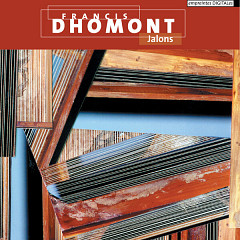
    La plupart des amateurs d’art électroacoustique ne jurent que par Pierre Henry, Bernard Parmegiani ou Luc Ferrari. Mon héros à moi, c’est Francis Dhomont. Sa musique possède une grâce et une force émotive unique dans les limites de la musique académique. Jalons rassemble des œuvres composées entre 1985 et 2001 qui n’avaient pu s’insérer dans les cycles précédents (comme Cycle du son ou l’inoubliable Forêt profonde) et qui étaient apparues sur des albums compilations ou tombées dans l’oubli. Moins marquant, il vaut quand même le détour, ne serait-ce que pour l’élégance plastique de Vol d’Arondes, le cri humaniste de Lettre de Sarajevo ou l’humour tendre du clip L’électro. 8/10

    Mon héros à moi, c’est Francis Dhomont.
    8

    petits Big Bangs, Marcelle Deschênes in Musicworks

    “Creating and Contributing: The Expansive Spirit of Marcelle Deschênes”, Rosemary Mountain, Musicworks, no. 86, June 1, 2003
    Sunday, June 1, 2003 Press

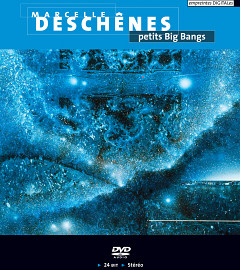
    […] (Deschênes) can shape any and all sounds exactly to match whatever form or phrase she envisions. Her compositions are truly expressive of human emotions rather than being explorations of sound, and she avoids the common pitfall of creating dizzying configurations in surround sound, despite the context of the early of-art images used in works like Écran Humain (with Paul Saint-Jean) and Lux (with Renée Bourassa). […]

    Her compositions are truly expressive of human emotions…

    Aenviron: one, Isostasie, flume ridge.halifax.lisbon, Relisten, Birds and Reeds, Train de nuit (Noord 3-683), The Animals in These Cages Are Injured in Some Way and Would Probably Die If Released, Into India, Natasha Barrett, John Hudak, V. V., Hildegard Westerkamp in electrocd.com

    “Sounds Around: Field Recordings in Electroacoustics”, David Turgeon, electrocd.com, June 1, 2003
    Sunday, June 1, 2003 Press

    Field recordings have always fascinated electroacoustic composers, ever since Pierre Schaeffer’s Cinq études de bruits (1948), featuring processed train sounds. With R Murray Schafer’s Vancouver Soundscape 1973 (1972-73), these everyday sounds are articulated around a discourse which will be termed “sound ecology,” whereby sounds keep their original meaning, and no longer serve as anecdotic content to be used and abused at the composer’s whim. Jonty Harrison synthesises these two approaches in his short text {cnotice:imed_0052-0001/About Évidence matérielle/cnotice}.

    Actually, every composer seems to have their own unique approach towards field recordings. If sound ecology has seen the burgeoning of microphone artists such as Claude Schryer and of course Hildegard Westerkamp and her famous {cpiste:imed_9631-1.3/Kits Beach Soundwalk/cpiste} (1989), sound travels such as French duo Kristoff K Roll’s CD Corazón Road (1993) are, in this respect, closer to the art of documentary film. Meanwhile, Brooklyn-based composer Jon Hudak starts off with an extremely minimalist palette so as to seek out the “essence” of sounds, which, to the listener, translate into soft, dreamy soundscapes. A student of the aforementioned Jonty Harrison, Natasha Barrett conceives beautiful landscapes of sounds with very discreet field recordings, that retain an aesthetic likeness to the acousmatic tradition.

    Many young composers settle into this landscape (of sound…) and their work is of such interest to us, it would be a shame not to let them be heard. We shall first mention the California-based V. V. (real name Ven Voisey), who organises his found sounds into an architecture reminescent of “old school” musique concrète—doing so, he uncovers a previously unheard aesthetic affinity between Schaeffer and Merzbow… With Relisten, Austrian composer Bernhard Gal guides us through his carefully selected episodes of “found musics” (that is, musical structures that preexist within the environment.) Finally, because of its numerous ideas and its incredible pacing, the surprising flume ridge.halifax.lisbon (2001) from Montréal composer Cal Crawford will undoubtedly seduce listeners looking for unheard acousmatic grounds.

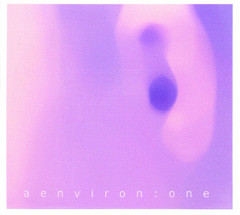
    Two small treats to end with. First, the pretty Aenviron: one mini-CDR is a simple thread of five pure field recordings (with no processing!). After all, if there is such a thing as cinema for the ear, why shouldn’t there be a photo album for the ear! And to close the loop, may we also suggest to make a stop at Lionel Marchetti’s recent mini-CD with the evocative title, Train de nuit (Noord 3-683) (1998-99). This work for one loudspeaker, dedicated (couldn’t you guess?) to Pierre Schaeffer, remind us again of the ever renewed importance of environmental sources in feeding the electroacoustic ocean.

    Isostasie in Audion

    “Review”, Alan Freeman, Audion, no. 48, June 1, 2003
    Sunday, June 1, 2003 Press

    This one sounds like a mixture of digital “granular” synthesis and all sorts of concrete manipulation. It’s a mass of sonic swarms and textures that scatter and dive around, sometimes in big churning fabrics (kinda Stockhausen like) and sometimes in sensory collages (Redolfi and Zanési realms). The resultant album is one that tends to zoom through its 77 minutes without getting too engrossing, thus I’m unable to say much more!

    … a mass of sonic swarms and textures that scatter and dive around…

    La limite du bruit in Audion

    “Review”, Alan Freeman, Audion, no. 48, June 1, 2003
    Sunday, June 1, 2003 Press

    A New Zealand electroacoustic artist, who currently resides here in Leicester, he surprised me when he came into the UT shop, as I had no idea that Leicester’s De Montfort University had an electronic music studio. Of course, I asked him if he knew Denis Smalley (another New Zealander resident in the UK) which — of course — he did. Naturally we also discussed how bizarre it is that the only label around willing to issue his CD hails from Canada!

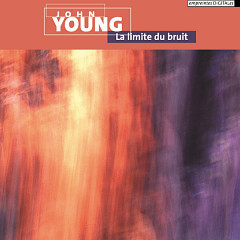
    Anyway, on to the review: “The Edge of Noise” is an apt title for something that starts off sounding like the sounds of someone decorating or building, as we have clanks and scrapes, things being scoured and ripped, and all manner of what the French call “bruitism” the art of “sound as art”. How it goes on, becoming ever more extreme when more processing is added. Compression, distortion, granular chopping up and reconstruction, all make for an uncompromising and highly creative mixture. However, the absence of musical references make it a diffcult listen, it tends to all get a bit overwhelming.

    … an uncompromising and highly creative mixture.
  • 289
  • 290
  • 291
  • 292
  • 293
  • 294
  • 295
  • 296
  • 297