electrocd
  • This website is also available in English.

Blog

2899 results
  • 312
  • 313
  • 314
  • 315
  • 316
  • 317
  • 318
  • 319
  • 320
  • The Freest of Radicals in Desiderata

    “Review”, B Wildered, Desiderata, no. 11, July 1, 2002
    Monday, July 1, 2002 Press

    “Bait” disk: rumbling low end drones from Le Chien Borgne, which I found pleasing, and drawn in to the gently grinding noises contained within. James Schidlowsky’s Radio Collision seems like the logical progression on the previous piece. Nz-style drones swell & throb, with some scraping interjections. Tomas Jirku uses a pretty much unchanging relatively conventional beat with some sounds going on in the background, not enuff to pique my interest. Speech.Fake contrasts that with a piece of separated, more minimalistic audio artifact sounds that does a good job of impelling consideration on its own terms. Relatively quiet, and compellingly arranged, with lots of space between the sounds, with a nice somewhat louder part near the end. Julie Rousse mixes bell-tones, digital pops & more layers of sound to create an off-kilter feeling, and adding some surprising movements, very nice. The salvaged sound aesthetic continues with Eucci, with torn pieces of mangled sources juxtaposed to find another askew place. I am enjoying the somewhat abstact direction of this disk, continued by the almost out-of-control short piece of distortion by Viratone Ballad. Magali Babin contributes a piece with recognizeable dropping small objects and metal resonances, which I find oddly comforting and familiar by now. Some broken beats & ringing hi end tones by Camp, which seemed somewhat minor in this context. Claudia Bonarelli also uses fractured beats, and seems pretty tame in comparison to the earlier sound experiments. Ja_dijiste brings in an scratchy vinyls sound and other sources that skirt around the edge of expectations. A quiet, unsettling, insistently emerging mix. Next is Napalm Jazz, who raise stakes with an aggressive electronic assault. An enjoyable and well-placed contrast with its instrumental ensemble approach in the midst of this disk. Backstreet Noise sounds like someone working next door, so it is like they are playing on your wall, with the possibility of them or their tools emerging thru the room boundaries seems imminent. The use of muffled, distorted shards of voices adds to this effect. A joint piece by N.Kra & Em follows, evoking the leakage of otherworldy properties thru the hole opened previously. They’re here… Will they notice us? Jon Vaughn steps up to defend the gates with a peeling sheets of noise supported by a frontal rhythm. Gets a little same-y after awhile, after a promisingly threatening start. Interesting buildup from playfully busted up sonic debris to a strong rhythm by 833-45, monolithic rather than monotonous, and broken up by the more abstract, possibly found sounds. An unexpected instrumental piece by Kanovanik, using a conventional combo sound which doesn’t really seem to fit here. This would be the answer to the “which of these is not like the others” singsong query. It is a modestly tuneful jazz-imprv-y sounding tune, but why? Idmonster continues in the “band” mode with a bass guitar-heavy piece with backwards guitar, that again, seems lost or misplaced on this comp. V. V. ends the disk with a live-sounding piece comprised of percussive events, what sounds like a sheet-metal being bowed, small chimes, and progressing into unrecognizeability and sheer sound, with a “room” sound apparent during the quiet parts, overcome by cascades of white noise during the louder movements.

    “Switch” disk: was impressed with the brief piece by Kalx, a rousing whit-ish noisey piece. Then depressed abruptly by the idm beats of Oeuf Korreckt, which was good, for idm, if u like that kind of thing. Sluts On Tape were an editing amalgamation that was darker and more varied… Loved the last 50 seconds or so. Octopus Inc bring it back to a more abstract setting, with what sounded like highly edited acoustic events. An intriguing piece, makes me curious for more (time to go download some mp3s?)… Alphacat realigns the stream to beats, with much reverby ambience circulating around the thumpisms, very atmospheric. Books On Tape present a piece with beats, but they are made out of pretty noisy sounds, and they keep things moving. I can imagine someone trying to dance to this, but… Good luck. A complex arrangement, with some somewhat predictable pacing. Someone passing by just said “pretty psychedelic music there” as morceaux_de_machines’ piece erupted from the speakers. Good stuff, hard to breathe, tho, its so densely packed… Claustrophobic. Hmm, and I have their full-length on tap for review next issue. Amazing piece, dense, metallic, onrushing, voices murmering things I am not sure I want to understand. Then we get to Martindx, an appropriately-placed respite of a piece which nonetheless takes us into a levitating plane, using common-sounding elements in a very peculiar and effective style- another winner. Dick Richards brings us back to earth with a less warped perspective on digital-sounding composition. Small sounds abound, placed repetitiously and layered intricately. Very subtle & effective… Chris Degiere was a kind of nondescript broken beats piece. Headphone Science continues the well-paced sequencing with its deliberate, somber, constrasts of slow tones and slippery rhythmic crunchies… Mmm, tasty, pass the milk. The interestingly named Gimp Gadget Oscillation are next with 6 minutes of modest mid-range beats. Themoonstealingproject… a little difficulty, I have to set aside a poor interpersonal experience with this guy… Mostly backwards sounds with some strange lo-fi loops off in the periphery, doesn’t really go anywhere for me. Time-stretched sonic mini-diorama from Diablatomica, very minimalistic, makes you listen for the slight variations, very nice, a standout. Kalx returns with another, more beat-oriented piece, which I found less striking than Soundtest which opened this disk. Infoslut comes in with a piece incorporated some serious sequencing, resulting in a majestic electronic orchestral arc-ing effect. After a 20 second pause (to set it apart?) N.Kra concludes the disk with a relentlessly concussive percussion & distorted sequences that were reminiscent of (a perhaps drived from?) the preset demos in cheap keyboards. Is Metroid a video game?

    Mmm, tasty, pass the milk.

    Chemin de fer in Desiderata

    “Earpeace: Audio Review”, B Wildered, Desiderata, no. 11, July 1, 2002
    Monday, July 1, 2002 Press

    This CD consists of a series of compositions created by handling various found metallic objects and recording the results, then “extracting” the results thru the “anvil or forge” of the studio. The results are akin, yet different from, the work of Seth Nihil, in that you are brought into an interior environment. As if your ear were pressed up against the objects and hearing their resonance as they are stroked, struck, used as sound and electrical conductors in various ways. Which makes for a very intimate audio setting, not immediately accessible as “music”… It is more of an artificial ambience, a created introjected universe.

    Now the question becomes is this of value to you as a listener, to spend your time listening either intently or distractedly to these scrapings, buzzings, etc. I would have to presuppose that you have listened to a lot of recordings, and have become bored with various regurgitations of pop muzak formuli, & have embarked on a search for new ways to appreciate the possible worlds of organized sounds. If so, there are very few more original and thoughtfully-considered works than this one. The 6th track, L’entonnoir, stood out in its building of heavy motive-type sounds which resolved into a small rolling trickle. The collaboration Jogging dans la maison hantée appears to represent a step in the microsound electronic motif i have become somewhat familiar with, in its electronic chirps & extended heavily-reverbed metallic sounds, and its more extreme dynamics. “Pluie de homards” concludes this cd with a caustic, cutting series of sounds, effectively building to a tangled jungle of a resolution.

    … there are very few more original and thoughtfully-considered works than this one.

    Podweek, Oeuf Korreckt in Nightlife

    “Musique de chambre”, Sarah Lévesque, Nightlife, no. 36, July 1, 2002
    Monday, July 1, 2002 Press

    Montréal ne détient pas le monopole de la musique électronique au Québec. À partir de la Vieille Capitale, Oeuf Korreckt assure une IDM gentille, pointue, rigolote et inventive. L’histoire des sons créée dans une chambre, faite pour un salon…

    Bien que Frederick Blouin apprécie l’anonymat derrière le nom étrange d’Oeuf Korreckt, il se risque aujourd’hui au jeu des questions-réponses. Surprise… Le chercheur sonore s’avère volubile, partageant sans réserve ses procèdés créatifs. Vécu en 1992, le coup de foudre pour les ordinateurs et leurs logiciels le consume encore. De cette liaison, Frederick n’éprouve aucune vanité mais un sentiment de contrôle envers ses machines. «Maintenant, je sais comment aller chercher une tonalité grasse ou délicate. Et aussi, je me concentre beaucoup plus sur les sons, alors qu’avant je passais plus de temps sur les mélodies. Quand les technologies ont évolué, elles ont permis une plus grande manipulation du son par rapport au simple clavier qui était plus mélodique. J’ai sauté les pieds joints.» Tellement que Frederick n’a pas hésité à flirter avec plusieurs genres, touchant au hardcore et à la transe, en passant par la techno, la musique pour jeu vidéo et en s’arrêtant longuement sur l’IDM.

    Ces multiples embrassades de style s’entendent quelque peu sur son tout premier album, Podweek. Quinze morceaux ont ici été regroupés par No Type, un label dedié à la diffusion de MP3 expérimentaux et qui essaie depuis quelques mois le format CD. Fait étrange pour une première galette, l’album se veut une compilation des meilleurs moments d’Oeuf Korreckt, de 1995 à aujourd’hui. Podweek était le nom que je donnais à mes premiers démos, explique Frederick, et plusieurs pièces se sont retrouvées sur ces cassettes. La seule exception serait le morceau Podweek Theme, qui est devenu un succès internet. En fait, mon entourage a réellement créé des pressions pour que ce matériel voit le jour officiellement.» Il est facile d’en cerner la raison. Le passionné conserve précieusement des centaines de CDs ne comprenant que ses compositions.

    Le voyage dans le temps se réalise agréablement, sans descente abrupte inexplicable, même si les finales d’Oeuf Korreckt sont très séches, même rapides. Comment l’expliquer? Oeuf Korreckt pond sans grande couvaison. «Ouand je m’installe et que je fais de la musique, ça va toujours très rapidement. La plupart du temps je produis toujours mes tracks en 45-90 minutes, ce qui est assez rapide. C’est sûr que ce que je fais n’est pas toujours assez bon pour être sur un disque. Je ne fignole jamais les tracks qui ne sont pas intéressantes pour les améliorer et les rendre meilleures. Et ca prend autant de temps faire une bonne pièce qu’une mauvaise. C’est une question d’occasion, d’inspiration et de situation.»

    L’inventivité et la recherche motivent chaque élan de ces productions qu’il nomme amicalement des «versions bedroom». Pendant qu’il s’affaire à parfaire un nouveau pouls mécanique, Oeuf Korreckt pimente inconsciemment la vie de Ouébec. «Il est vrai que la scène électronique de Québec est très faible. Mais c’est un terrain grandissant. Le public se déplace puisqu’il n’est pas saturé comme à Montréal. On y voit donc des individus appartenant à plein de milieux différents dans une rave puisque la scène est trop petite pour avoir ses cliques. Je te le dis. Si Autechre venait à Québec, même ma mère irait.»

    Podweek d’Oeuf Korreekt se trouve sur la maison de disques No Type.

    … Oeuf Korreckt assure une IDM gentille, pointue, rigolote et inventive.

    Podweek in Voir

    “Critique”, Voir, June 27, 2002
    Thursday, June 27, 2002 Press

    Très active depuis 1998, l’étiquette montréalaise No Type se spécialise dans l’expérimentation électronique. Oeuf Korreckt en représente assez bien la démarche avec son petit cabaret chimique qui, dès les premiers sons, possède la propriété de faire fuir votre chat sous un divan, avant que des rythmes plus dansants ne viennent modérer le paysage sonore. Podweek, qui couvre le travail depuis 1995 avec des techniques faussement démodées, rappelle tantôt Autechre, tantôt Chris Clarke, et si la chose manque parfois de personnalité, on peut encore beaucoup attendre de cet œuf déjà fort correct. ★★★

    ★★★

    Humeur de facteur in Ampersand Etcetera

    “Review”, Jeremy Keens, Ampersand Etcetera, no. 2002_8, June 20, 2002
    Thursday, June 20, 2002 Press

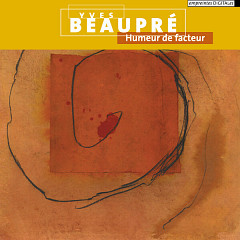
    Beaupré’s is an album of harpsichord music, but composed from sounds recorded while he makes them (percussive, plucking, planing and so on) processed and constructed electroacousticly. Not surprisingly it is a complex album, which hardly ever really reveals its origin. Prélude démesuré rumbles, twitters, tinkles loops, percusses, sirens and fades. More fragments in La Beauséjour including some string strums, then looped rhythms, dits, soft tones, some voicey propulsion; strings looping and light hammering; tones chits and more voices, relaxed ratchets, computer boobles; building light percussion, the strums return manipulated, loose and stretched, whispering end. The other tracks are similarly eclectic — more angular in La Laurendeau with a loop that sounds like ‘into the car’ (unlikely as it is) and percussive, La Pelots Point is abstract and dramatic, with a plucked melody which leads to the still heart of the album, tones and scrabbly voices, very lovely. After which the piece rebuilds with some computer bubbles — the samples have been processed — keening tones. More little noises and melody in La DDB with swirls tones and processed voices (was Baupré talking to himself? The clittery clatter drones tones and more of Péroraison provide an rhythmic and lovely conclusion. Neither academic nor unapproachable, this is a delightful album of sounds which have been recorded selected processed and sequenced with an ear to the delicate and fascinating relationships that can be created through them. Begun in the labour of wood and metal work this is a grounded and delightful album.

    … a delightful album of sounds which have been recorded selected processed and sequenced with an ear to the delicate and fascinating relationships that can be created through them.

    Cycle du son in Ampersand Etcetera

    “Review”, Jeremy Keens, Ampersand Etcetera, no. 2002_8, June 20, 2002
    Thursday, June 20, 2002 Press

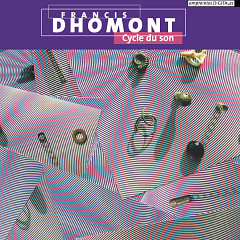
    Born in 1926, Dhomont is the oldest artist on the impressive empreintes DIGITALes catalog (most were born in the 50s and 60s). His experience and ease with the language of musique concrète/electroacoustic writing is demonstrated clearly on this understated but compelling collection of pieces from 1998, incorporating works from 1989 and 1996. As one of the founders of the field, he originally worked with magnetic wire (the original tape) and since 1963 has produced only works for tape. This combination of experience and medium creates a more measured music without some of the fragmented flourishes that computers can bring to the form.

    This disk is something of an homage to Pierre Schaeffer, and incorporates sounds from his Étude aux objets, amongst other musicians and ‘celebrates sound and musique concrète.’ My musical education is lacking, and I can’t recognise all the references, but it is a pleasure none the less. In Objets retrouvés we have a warm, analogue introduction that slowly flows as mysterious noises emerge in volleys, hovering on the edge of recognition. AvatArsSon is in six parts, and dedicated to ‘the inventors of the treasure’ (some of whom are named) and traverses ‘some of the stages of the sound odyssey.’ Each part is distinct in structure and method: Paysages opens with a naturalistic sampled village then shifts into manipulation, Voix is not surprisingly a complex voiced based piece while Avatars is buzzy dits and electronica and À suivre… takes long tones and buzzing. A fascinating journey which those more knowledgeable can mine. There seem to be two modes in Novars — one is lyrical ringing tones with washes and a pulsating cloud, while the other is more percussive, swirling, more effected. The two forms alternate, flirting with recognisability and dancing away in this light duet. Finally Phonurgie is more dense with hollow sounds, whistles, bleeps, fluttering wings and a darker feel created from similar sounds to those which have come before. Distorted strings, voices a light swirl and fade. A classic(al) musique concrète album, very listenable and endlessly satisfying.

    A classic(al) musique concrète album, very listenable and endlessly satisfying.
  • 312
  • 313
  • 314
  • 315
  • 316
  • 317
  • 318
  • 319
  • 320