electrocd
  • This website is also available in English.

Blog

2899 results
  • 318
  • 319
  • 320
  • 321
  • 322
  • 323
  • 324
  • 325
  • 326
  • Podweek in Blow Up

    “Recensione”, Nicola Catalano, Blow Up, no. 49, June 1, 2002
    Saturday, June 1, 2002 Press

    Dopo circa un lustro di intensissima attività di pubblicazioni esclusivamente online, l’etichetta canadese No Type (www.notype.com) è recentemente passata al supporto termoindurente (leggi CD) con la formidabile doppia compilation The Freest of Radicals e l’album di debutto della compositrice elettroacustica Magali Babin.

    La terza produzione in catalogo è firmata dal venticinquenne Frédérick Blouin in arte Œuf Korreckt ed è una raccolta di composizioni concepite dal giovanissimo autore quebecoise nell’arco degli ultimi sei-sette anni. E se alcuni materiali risultano decisamente caotici e datati (i compressi ritmi hardcore techno stile Rotterdam di King of the Elephants del ’95, ad esempio), è nelle più recenti realizzazioni che si apprezzano nettamente le capacità di Blouin di dar corpo a configurazioni electroniche meno spigolose, dove astrazione e melodia trovano opportuna calibratura e giusta dose di giocosità in un eccellente ibrido tra Autechre e scuola di Colonia. (7/10)

    7

    The Freest of Radicals, Chemin de fer in Rumore

    “Recensione”, Nicola Catalano, Rumore, no. 125, June 1, 2002
    Saturday, June 1, 2002 Press

    Abbondanza di accostamenti di tal tipo la si trova nella doppia compilation The Freest of Radicals edita dall’etichetta canadese No Type, finora attivissima come label online con eccellenti MP3 scarcabili dalla rete (www.notype.com). In oltre due ore e mezza questa sorta di manifesto della nuova elettroacustica casalinga (con digressioni più o meno prevedibili: i contributi di Idmonster e Kanovanik flirtano, ad esempio, con la ballata rocks) allinea soluzioni di ispirazione quanto meno variegata, passando dal dub soffocato e soffocante del genietto Tomas Jirku alle croccanti textures di chitarra preparata, onde radio e strumenti non ortodossi di James Schidlowsky, passando per la proto-electronica di Camp, le delicate melodie di clicks di Claudia Bonarelli e gli intoppi microsonici di Dick Richards. Per la stesso marchio di Montréal esce anche Chemin de fer dell’autrice elettroacustica Magali Babin. Trascorsi nel gruppo femminile d’improvvisazione Les Nitroglycérins e collaborazioni con nomi del calibro di Tétreault e St-Onge, la Babin edifica pregnanti sculture sonore, pellicole acustiche contrappuntate da dettagli e risonanze timbriche ottenute con l’impiego esclusivo di oggetti metallici riciclati o reinventati.

    Podweek in Incursion Music Review

    “Review”, Vils di Santo, Incursion Music Review, May 27, 2002
    Monday, May 27, 2002 Press

    Once you get past the torrid package design of this release, you will find a pleasing array of upbeat, knotty little tracks from Québec’s Frédérick Blouin. The mood is light and quirky, with softly crunching beats backing effortless melodies and layered syncopations. The disc is a collection of tracks recorded between 1995 and 2001, and as such, could be construed as some sort of “historical” release. But on listening to the disc, you will find that there is a sense of timelessness about the pieces here. They may very well have been recorded some years ago, but they still sound freshly constructed, and rival a good number of electro artists’ releases from today. Perhaps it is the premise of keeping things simple that engages, or perhaps the fact there are no real musical “trends” prevalent in the music here, just well-formed and entertaining compositions to reach your ears. A very worthwhile release, from beginning to end.

    … well-formed and entertaining compositions… A very worthwhile release, from beginning to end.

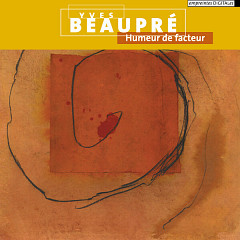
    Humeur de facteur, Yves Beaupré in Brainwashed

    “Review”, Graeme Rowland, Brainwashed, May 26, 2002
    Sunday, May 26, 2002 Press

    Yves Beaupré beavers away in his workshop building a hundred harpsichords. As he hammers and strings and flexes the things he records the sounds of the instruments’ birth pangs. Lucky for our ears, he stitches the recordings into acousmatic soundscapes that are mysterious, evocative and plain beautiful. Any clot who thinks electroacoustic music has become irredeemably entrenched in the same old gestures and routines should open their ears to this stunning debut from a composer possessed of genius who is going to have a (sur)real challenge surpassing such a masterpiece. This is a richly transporting transparent journey into the guts of the creation process. Images pour from the darkened room into the minds eye of wood and varnish and nails and strings swirling about in a void and accreting magically into a heavenly harpsichord which looms ever larger as I shrink to dust mote size. Boxed inside the vintage contraption, rhythmic structures unfold and coalesce and drone visions of eighteenth century time locks emerge. Historic and modern worlds collide in the computer as small planks become dense forests. And all this without the aid of hallucinogens!

    Any clot who thinks electroacoustic music has become irredeemably entrenched in the same old gestures and routines should open their ears to this stunning debut from a composer possessed of genius…

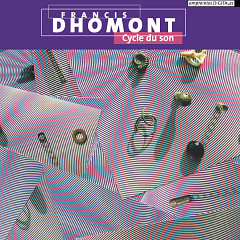
    Cycle du son in Vital

    “Review”, Frans de Waard, Vital, May 23, 2002
    Thursday, May 23, 2002 Press

    Canadian composer Francis Dhomont, whose previous work has been released by the same label, thought it to be about time to pay hommage to 50 years of musique concrète. That is around 1998, because three out of four works were composed then and it has been then 50 years ago that Pierre Schaeffer composed his first work using daily sound material (a.o. derived from sounds from trains in his Cinq études de bruits (Five Etudes of Noise)). Dhomont harks back to the same sound materials for all four pieces as Schaeffer used. Of course through the use of the new techniques it all sounds very different. Whereas the original “Five Etudes” last 15 minutes or so, this CD takes up 50 or so minutes. In Novars Dhomont samples the sounds of Schaeffer and plays around with them, either by time stretching, filtering, looping etc. And this is what’s going on in the three other pieces as well. Dhomont has a very classical approach to the material, his approach is not very different or new then from most of the other composers on empreintes DIGITALes. Much reverb, oscillators and filters transform the sound in tumbling parts that fall over each other. Not a bad thing, but in every sense, classical.

    The Freest of Radicals, No Type in Earpollution

    “Review”, Mark Teppo, Earpollution, May 20, 2002
    Monday, May 20, 2002 Press

    It begins with a distant rumbling, like an earthmover firing up its large engines on the other side of the hill, the ground shaking slightly as the pistons start to move. This is Le Chien Borgne’s offering to the first No Type CD. Titled rho < 1 (rho a > rho), it drifts and rumbles, squeaks and threatens to have some rhythm, but never really becomes anything other than an environment. Welcome to the inscrutable sound of No Type.

    Founded in October of 1998, No Type was a child of the Internet — its product only available as downloadable MP3 files — and it trafficked in the digital. Over the next half-decade, No Type created a venue for aspiring digital artists to link their sounds and music with an eager digitally-aware audience. They did glitch; they did click ’n cut; they did microwave; they did electroacoustic; they did minimal techno; they did experiments with radio transmissions bounced off satellites; they found more life in the little “1” and “0” than anyone thought there could be. And to celebrate: they’ve gone physical.

    Teaming up with DIFFUSION i MéDIA, No Type is now releasing CDs — honest to goodness put it in your car stereo and think your car is about to fall about from the sounds that are coming out of your speakers kind of real discs. They’re starting you off with a two-CD set that encapsulates where No Type has been. Or, more appropriately, what sort of boundaries they don’t bother keeping to.

    The Freest of Radicals offers 36 tracks across the two discs and has a little something for everyone. It starts with the beatless atmosphere of Le Chien Borgne, wanders into a chamber where Tomas Jirku demonstrates his minimal techno rhythms for you. Speech.fake explores the realm of micro-tonal glitch with their clinically titled An Objection That is Immaterial After the Fact. Julie Rousse offers a very 4’33” sort of vision with her Une à six idées improvisées. Viratone Ballad breaks in on Eucci with their track, ouet3c-warm, making me think for a minute and 48 seconds that something in either my spleen or my speakers has ruptured. Napalm Jazz and Backstreet Noise deliver two tracks that perfectly fit their names. Oeuf Korreckt finds a way to generate a near pop song from a piece of outdated machinery, further demonstrating that sound and music can be found anywhere. Dick Richards does Berlin style minimal dub though he thoroughly coats his tweaks and notes with yet another layer of water dub before stuttering everything back at you. Chris Degiere demonstrates how random and chaotic generative systems have more appeal than anything found on a recent Autechre album. Speaking of IDM, Headphone Science’s Without Paper Basics is as good as anything off Warp or Rephlex in the last year. Alphacat offers Waveporn which is a soundtrack to a six minute film of modest neu-electro machine dance porn.

    It’s adventurous and experimental, and if you have the least curiosity as to what is being done in the realm of digital music, you should snap up this collection. Some of it makes me move, some of it make me flinch, some of it I can’t really hear over the sound of my computer or the traffic on the road outside, some of it makes me wonder if my stereo is about to explode and some of it makes me wonder what color the inside of a melody would have, but all of it makes me wonder how and why music can be heard. And, I think, that is all David Turgeon intended when he founded No Type back in 1998: to challenge our understanding of what is music and what is sound. He and the artists represented by The Freest of Radicals are not working to make pop songs, they are endeavoring to make you stop and consider what you hear.

    And, for the love of static in your speakers, get yourself to their website. There are only 155 minutes of sound on these two discs. Hundreds more minutes await you at notype.com.


    … a two-CD set that encapsulates where No Type has been. Or… what sort of boundaries they don’t bother keeping to.
  • 318
  • 319
  • 320
  • 321
  • 322
  • 323
  • 324
  • 325
  • 326