electrocd

Blog

2899 results
  • 322
  • 323
  • 324
  • 325
  • 326
  • 327
  • 328
  • 329
  • 330
  • Cycle du son in AllMusic

    “Review”, François Couture, AllMusic, May 1, 2002
    Wednesday, May 1, 2002 Press

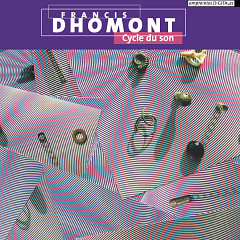
    Francis Dhomont’s first album since the critically acclaimed Forêt profonde in 1996, Cycle du son was released in late 2001 and consists of a cycle of four works premiered in 1998. At the time the composer was 72 years old. Taking a cue from the celebrations surrounding the 50th anniversary of the “advent” of musique concrète, he created a rich work that takes a look at the distance electroacoustic music has crossed during that time. But Cycle du son is not a historical overview. Instead it integrates concepts, forms and pet sounds from the main figures of the genre, all done with much subtlety. The roots of the work are found in part three, Novars. Created in 1989, it used sound sources from Guillaume de Machaut’s Messe de Nostre Dame and Pierre Schaeffer’s Étude aux objets. The cycle stemmed from this piece and all movements are interlocked with quotes and the use of similar sound sources and references. Objets retrouvés is a short re-reading of Schaeffer’s Étude aux objets, the first musique concrète “classic.” Its elegance tells much about Dhomont’s respect for the man. AvatArsSon is the strongest work here and ranks among the man’s best. Revisiting other composers, Dhomont actually offers a synthesis of his own music, from the formalism of his Cycle de l’errance to the dreamy confusion of Forêt profonde (it even includes speaking voices, a trademark of his own work). Phonurgie concludes the set with a look forward, avoiding nostalgic sentimentality. This album may not be as strong as some of his previous efforts, but it will still please fans of Dhomont and aficionados of electroacoustic music. His touch, so easily recognizable (in the movements, the colors, the narrative), remains strong.

    His touch, so easily recognizable (in the movements, the colors, the narrative), remains strong.

    Chemin de fer in Incursion Music Review

    “Review”, Richard di Santo, Incursion Music Review, April 29, 2002
    Monday, April 29, 2002 Press

    For the recordings of Chemin de fer, Montréal based sound explorer Magali Babin found inspiration in metallic objects of all shapes and sizes. Through improvisation, she brings out their sonorous qualities and created a series of dynamic sound sculptures; “sculpture” is a good term for this music (or, at least it’s a convenient term) because of its concrete qualities and strong textures. From deep gongs to light rustling, strange scrapings and various clamourous sounds, Babin keeps things dynamic and interesting, pursuing new ideas and sounds from different objects in each track. Very little, if any, digital processing was used in the making of these recordings. An intriguing buzzing drone pulses through the piece Monsieur et madame Watt. A beautifully rich scraping texture can be found on L’entonnoir, a relatively short piece with such an intense character. This is followed by short “chirps” dominating the following track. The diversity of sounds and intriguing arrangements notwithstanding, the listener is able to understand from the first couple of tracks the general tone and approach to the work as a whole. This is not to say that the music is predictable; but one picks up its “language” quickly. As a result, I found myself more interested in the first twenty or so minutes of listening, finding my curiosity and attention gradually waning after a while. Still, it’s an intriguing release, full of unusual tones, resonances and strikes; in short, a compelling introduction to Babin’s unique world of sound.

    From deep gongs to light rustling, strange scrapings and various clamourous sounds, Babin keeps things dynamic and interesting…

    Chemin de fer in Ici Montréal

    “Critique”, Catherine Perrey, Ici Montréal, April 25, 2002
    Thursday, April 25, 2002 Press

    La Montréalaise Magali Babin a presque le don d’ubiquité et est une véritable artiste bruitiste. Chemin de fer est sa première galette. On imagine bien sa collection de cossins sonores: batteur à mains, écumoire, immenses chaudrons, gros ressorts. On entre dans ce disque par une plongée en abysse, mêlant adroitement les sons de basse continue et les petits cliquetis. Le léger et le lourd sont opposés. La pièce suivante nous propose un travail autour de l’archet, frotté et manipulé dans tous les sens. Changement d’instrument, ensuite, pour nous amener sur un parcours aiguille de table-tournante. Variété de propos, intentions claires, loin du fouillis sonore ou de la surdose, les sons proposés par Magali Babin ont tous une définition de texture précise, claire, nette et sans bavure.

    Variété de propos, intentions claires, loin du fouillis sonore ou de la surdose…

    Chemin de fer in Voir

    “Critique”, Réjean Beaucage, Voir, April 25, 2002
    Thursday, April 25, 2002 Press

    On se souvient de Magali Babin à la guitare ultra-fuzzée avec le groupe Nitroglycérine. Il s’agit ici de tout autre chose. S’il y a de la guitare, on l’écoute à travers l’équivalent d’un télescope: on est à l’intérieur de la guitare et on entend davantage les craquements du manche ou les crépitements des pick-up que le grattement des cordes. Magali va «au son des choses», au cœur des bruits, des micro-bruits en fait, lesquels, amplifiés à l’extrême, deviennent les objets d’une expérimentation méditative et «bruissent, chuintent, brillent, crissent, tintent, tremblent, grondent…», comme l’écrit le réalisateur Mario Gauthier. Des méditations qui sont courtes et sans véritable développement cependant.

    Magali va «au son des choses», au cœur des bruits…

    The Freest of Radicals, No Type in Voir

    “Critique”, Étienne Côté-Paluck, Voir, April 25, 2002
    Thursday, April 25, 2002 Press

    Après quatre ans de production en MP3, l’étiquette de disques québécoise No Type (http://www.notype.com/) fait son entrée dans le format plus traditionnel du disque compact. Sa première carte de visite, The Freest of Radicals, laisse donc entendre sur deux disques la panoplie d’artistes électroniques expérimentaux du label. Cet éclectisme ne possède aucune ligne directrice et reflète ainsi parfaitement l’esprit de No Type, qui tente d’exploiter le côté démocratique du Web. Les pièces répétitives d’inspiration techno (Tomas Jirku) ou plus proches de la musique concrète (morceaux_de_machines) amènent plus souvent qu’autrement l’utilisation de la plus rationnelle des machines (l’ordinateur) vers la sensibilité du chaos. Des pièces créées sans facilité qui tentent de pousser les limites de la musique.

    Des pièces créées sans facilité qui tentent de pousser les limites de la musique.

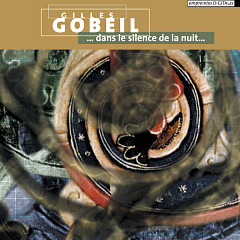
    … dans le silence de la nuit…, La mécanique des ruptures in microsound

    “Commentary”, Andrei, microsound, April 20, 2002
    Saturday, April 20, 2002 Press

    Date: Sat, 20 Apr 2002 02:58:28 -0400
    To: microsound <microsound@hyperreal.org>
    From: Andrei <andrei@w…>
    Subject: Gilles Gobeil

    I picked up the two Gilles Gobeil CDs on empreintes DIGITALes last week and I have to say they are excellent. Some of the most satisfying electronic music I’ve heard in a while. Really seamless blend of subtle processing and all sorts of field recordings (lots of klangy sounds and factory/machinery type sounds). Very tastefully done, never falls into that contemporary electroacoustic trap where it’s like “great, here’s lots of granular synthesis.” His music seems to be guided a lot more by his vision rather than by technology. There are actually lots of moments in his music which remind me more of things like David Jackman’s Organum rather than “academic” electronic music. There’s a very “isolationist” vibe to his music.

    His more recent pieces, which are featured on … dans le silence de la nuit…, seem to revolve a lot more around a quiet stillness which is upset by bursts of activity. I was kind of surprised by Traces a piece from ’85 on the older CD is a great sort of old school concrete type piece with lots of jarring juxtapositions.

    I’m very happy to find that empreintes DIGITALes is proving wrong my long held, but kind of uninformed opinion that there hasn’t really been any good academic electronic music since the 70’s. And the electrocd.com site is really great. So many audio samples to check out. I probably wouldn’t have picked up the Gobeil discs if I hadn’t been able to check out the samples on their site.

    Some of the most satisfying electronic music I’ve heard in a while.
  • 322
  • 323
  • 324
  • 325
  • 326
  • 327
  • 328
  • 329
  • 330