electrocd

Blog

2899 results
  • 369
  • 370
  • 371
  • 372
  • 373
  • 374
  • 375
  • 376
  • 377
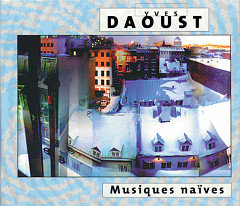
  • Musiques naïves in Array Online

    “Review”, Ian Whalley, Array Online, November 9, 2000
    Thursday, November 9, 2000 Press

    The opening CD notes give Yves Daoust’s biography that includes a background in piano performance and an early interest in cinema and theatre. The composer’s track notes, particularly those on the third track, provide the best insight into what is being attempted here, and François Guérin’s analysis of works in the CD notes give an overview of the composer’s main stylistic traits.

    The opening track Impromptu is based on the composers MIDI recording of Chopin’s Fantasie-impromptu in C sharp minor (Op. 66). Key motives are then extracted to form the basis of ‘Chopin sound objects’ that are manipulated well beyond the physical limits of the piano. Ideas freely collide in a mixture of the melodic and textural, yet the piece is carefully controlled structurally. The sense of momentum, particularly through the control of density and panning, is outstanding.

    Il était une fois… (conte sans paroles) is a sound collage inspired by stories the composer used to make up to put his daughter to sleep. Like a bedtime story, the work inhabits a twilight world between reality and dreams, and the structure is accessible. The result is surreal, evocative and haunting, with the specific and vague trading places for attention in the texture.

    Small ‘fetish’ sounds are the basis of the short work Mi bémol. The composer indicates that the piece is a concentrate of his style and mains means of articulation. This includes confrontation of heterogeneous materials, overlapping textures, anecdotal material, and vacillation between musical and documentary approaches. This condensed work is tightly controlled and the material is finely balanced.

    Résonances was composed from bell sound samples. Attacks and resonance are treated separately then blended into an atmospheric piece that has many subtle layers of engagement. The effect is swirling and full of unexpected turns. The careful juxtaposition and balance of the known with the surreal here continually captures ones interest.

    Water Music; I initially played with some trepidation because the subject matter has been so overworked in electroacoustic music it seem difficult to find an original angle. The results here are anything but disappointing. Again, the balance of material, careful control of texture and shape, and sense of development are a tribute to the composer’s mastery of the idiom. The use of speech in this context, particularly childrens voices, is an inspired touch.

    The CD concludes with Fantaisie, a work commissioned by Société Radio-Canada and based on samples from the radio sound archives. The composer aimed to create a collage of memories from radio and express the power of the sound beyond the referential significance of the material selected. Alluded to throughout is Schubert’s Fantasie in F minor (Op. 103). The work unfolds slowly as the listener is drawn in. The journey is rambling and drifts from the actual to the imaginary as material is transformed.

    This CD illustrates an astonishing array of generation techniques, and is particularly imaginative in balancing the musical and documentary approach. Underpinning this is a solid yet subtle sense of structural control, and a clear sense of artistic purpose. Deceptively conservative, one is left with the sense of a series of parables allowing the material to be read on a number of levels.

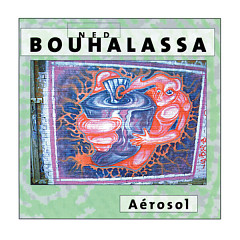
    Aérosol in Array Online

    “Review”, Ian Whalley, Array Online, November 9, 2000
    Thursday, November 9, 2000 Press

    Montréal based composer Ned Bouhalassa specializes in acousmatic works and his teachers included Kevin Austin and Francis Dhomont. Various sources influence his work including cinema, contemporary visual art and science fiction. Bruce Gottlieb’s notes also indicate diverse influences of: volatile popular music like Nirvana, Sonic Youth and Public Enemy; academic and underground venues; and the sophistication of the commercial music production. The composer has worked in a variety of media, including cinema, television, the internet, and techno-derived styles.

    CD notes indicate that his acousmatic work attempts to balance structural with emotional and poetic concerns. Jets is the opening offering, a dynamic and energetic work using jet-shaped materials that moves freely in the piece with at times wild abandon. The result is eerie and angular, and the sonic metaphors are strangely mixed in parts. A sense of spontaneity is balanced with interesting textures, and pace balanced with unity. The sense of timing is outstanding.

    Constamment (autoportrait) is autobiographical in five sections, skimming a variety of musical influences. Sonically it lacks cohesion despite the interesting byways that vary in quality from the sublime to the mundane. The techno sections in particular are less convincing.

    The CD notes describe Attraction as the composer’s ‘nihilistic apogee including magnetic impulses that collide violently or hurtle away’. Composer notes indicate that the piece ‘consists of various representation of the energy that is build up and released in many types of attractions’: the result being a series on non-recurring and complex gestures. The work mixes musique concrète techniques and analog synthesis with digital transformation. In context, it sounds dated, yet the work has enough internal interest to keep the listener dramatically involved.

    Move 1 is a poetic study of abstract representations of human and animal movement. The composer constructed a MIDI data generator that alters a variety of controllers each time a sample is played. A flowing, complex and yet homogeneous texture results, with a great sense of discipline.

    Bouffée délirante is Bouhalassa’s first attempt to realise ‘cinema for the ear’. It also represents the composer’s initial exploration of montage and the ‘sudden jump-cut gesture’. The subject matter is one of personal introspection leading to madness. In context, the control of discontinuity is superb, drawing the listener into an increasing sense of fragmentation.

    The CD in total achieves the composer’s aim of balancing the spontaneous and poetic with the control of form and content. The variety of techniques and control of diverse genres is impressive, as is the control of sonic metaphors. Perhaps more interesting is the balance of the best new and old techniques, and the familiar with the unfamiliar. This allows the composer to create within tested methods, yet also to reinvent and create within them. The edgy style constantly keeps one interested, and the sheer variety of material leaves one with the sense that this disk will be often revisited.

    empreintes DIGITALes in SOCAN — Paroles & Musique

    “L’année en édition musicale”, Dominique Nadeau, SOCAN — Paroles & Musique, no. 7:6, November 1, 2000
    Wednesday, November 1, 2000 Press

    Les mélomanes férus de musique électroacoustique sont bien servis cette année grâce aux maisons d’éditions YMX MéDIA et YUL MéDIA, lesquelles ont édité plusieurs œuvres des compositeurs canadiens Robert Normandeau, Daniel Leduc, Randall Smith, Marc Tremblay et Louis Dufort. Les créateurs étrangers ne sont pas en reste, les œuvres du Français Kristoff K.Roll et de l’Allemand Hans Tutschku venant compléter cette liste déja fort bien remplie. À noter que l’ensemble des ces créations ont été gravées grâce à l’expertise de la maison de disques empreintes DIGITALes, de Montréal.

    Les mélomanes férus de musique électroacoustique sont bien servis cette année…

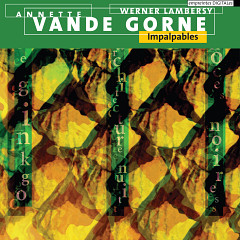
    Impalpables, Annette Vande Gorne in Sztuka Fabryka

    “Review”, Geert De Decker, Sztuka Fabryka, November 1, 2000
    Wednesday, November 1, 2000 Press

    Now some music from a citizen of our country, Annette Vande Gorne she lives in the French part of Belgium while we live in the Flemish speaking part. empreintes DIGITALes is from Québec a part of Canada where they speak almost French. Therefore you hear a lot of French on their releases, are the booklets in French and English and have they contacts with French speaking artists from other countries. Annette Vande Gorne has put her music on poems from Werner Lambersy, a poet who lives also in the French part of Belgium. The poems are therefore in French, but the enclosed booklet, 45 pages, gives us a complete translation of all texts that are read in the compositions. In the first composition Annette creates with waves an atmosphere that goes close to the poem, it is of a man that makes a journey, to himself. She is able to create with ambient tunes the feelings that the man encounters through his journey. The following composition is more chaos, this time no ambient tunes but random sounds and various of tunes is the music. This time it is also not the music that follow the words, but the words of the poem receives also a random attitude. Words are read loud, quick, slow, calm and not only one by one but several sentences are read at the same time. In this composition no waves as in the first composition. Waves return in the third composition but on a more dramatic way, it follows the way the poem is performed, slowly and dramatic. Reading the explanation in the booklet you know why. It is a poem (black wedding) about a person who meets the feeling of death that is approaching . Soft and dramatic sounds and tunes comes over you, it is a composition that takes more then 34 minutes. This album is far out the most best record available where music and spoken word is mixed. You do not to know French to like this CD, because the large booklet gives you full translation and information about each composition, while French itself has a poetic beauty.

    … the most best record available where music and spoken word is mixed.

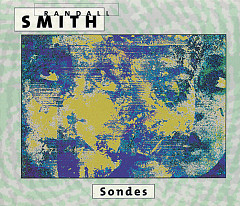
    Sondes in The Sound Projector

    “Review”, Ed Pinsent, The Sound Projector, no. 8, November 1, 2000
    Wednesday, November 1, 2000 Press

    To be perfectly honest I normally avoid these empreintes DIGITALes releases like the Hounds of Hell — they seem a tad too tasteful and nowhere near radical enough for me, but this one by Toronto composer Randall Smith is commendable. On this showcase of his works realised between 1995 and 1999, he works extensively with acoustic instruments. Liquid Fragments 1 is one interesting hybrid… half of it was composed for double-bass and flute, and the other hatf of it is tapework — studio manipulations of his own recordings. The sensual way he mixed the two together, ‘pouring’ the sounds into different channels of the studio mixer, makes the prospect for the listener as delicious as the preparation of a chocolate cake. Smith enjoys his work as much as a chef enjoys doling out the cake barter into his awaiting baking trays. The later work ‘InsideOut’ also uses famiiiar instruments from the orchestra, but he’s reprocessed them to such an intensive degree that very little trace of their original acoustic qualities remain. Yet the music he makes out of it is still somehow very ‘tuneful’, and certainly won’t set your alarm bells ringing if you mistrust modern composition because you think it’s a discordant, shapeless din. By the time we get to Continental Rift, he’s concentrating on a single instrument — Paul Widner’s cello. This virtuoso cellist is required to play short pastiches of classical music signatures, borrowings from Bach and Beethoven, in snippets composed by Randall Smith — only to have his work melted in the crucible of the electroacoustic studio. Smith deploys one of his trademark sounds here, the exhilarating rush like a helicopter ascending which he probably achieves by turning his ring-modulator dial up to 11. This work is norhing less than a philosophicai meditation on the evolution of the earth’s geographical outlines; but despite its metaphysical ambitions it’s still rather lightweight and somehow falls short of the profundity of La création du monde, Parmegiani’s take on the same subject.

    … as delicious as the preparation of a chocolate cake.

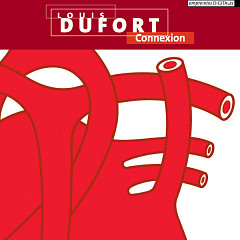
    Connexion in Sztuka Fabryka

    “Review”, Geert De Decker, Sztuka Fabryka, November 1, 2000
    Wednesday, November 1, 2000 Press

    This release [Louis Dufort’s Connexion] contains 4 tracks of strange and difficult music. You have got to take time and attention while listening to this music. Let us call the tracks again compositions.

    The compositions are made of a secure mix of sounds who all create a various atmospheres. The atmosphere can go from ambient towards electronic worlds. The use of silence is also explicit in the compositions, the sounds are mostly not mixed. A certain sound comes up and slowly creates an atmosphere and then the mood of the music transforms from one second to another. Electronic worlds are created with noisy and high tune sounds that are tickering around, music transforms quickly and a flood of sounds comes to you. Moments of silence build up the atmosphere and creates a very strong tension in the compositions. Strong electronic music full of tension.

    Strong electronic music full of tension.
  • 369
  • 370
  • 371
  • 372
  • 373
  • 374
  • 375
  • 376
  • 377