electrocd
  • This website is also available in English.

Blog

2899 results
  • 377
  • 378
  • 379
  • 380
  • 381
  • 382
  • 383
  • 384
  • 385
  • Bruit-graffiti in Sztuka Fabryka

    “Review”, Geert De Decker, Sztuka Fabryka, July 1, 2000
    Saturday, July 1, 2000 Press

    Marc Tremblay sounds as the William S Burroughs of the acoustic material. For his compositions he collects audio-material connected to a choosen theme and starts to cut-up and combines them. The result is a collage of edited and repeated audio-material that creates several kind of compositions. For Cowboy Fiction for example, pieces of old western-movies were collected, glued preciously in an ambient background and a Mexican guitarplay highlights the Western atmosphere. Vroum on the other side, is completely different. It tells us about the car and this composition sounds as the effects in a comic-movie: ‘vroum — vroum — tuttut — yepie yeah — tuttut — vroum — bang — bang — …’ It is a mix of repeated sounds connected to the car, sometimes edited sometimes a constantly bombardment of car sounds. The compositions of Marc are of a big variety, while the collage of acoustic-material is constantly present in his work.

    … sounds as the William S Burroughs of the acoustic material.

    Aérosol in Sztuka Fabryka

    “Review”, Geert De Decker, Sztuka Fabryka, July 1, 2000
    Saturday, July 1, 2000 Press

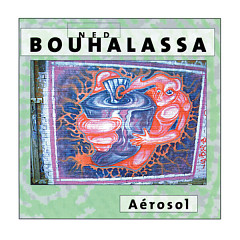
    The CD brings us 5 compositions, composed by Ned Bouhalassa from 1992 towards 1998, which shows us the progress in his acoustic work. Each compositions can be seen as collage work for fantastic movies played internal in the subconscious of your brain. The best is to put your CD Walkman on, close your eyes and browse through his acoustic compositions. The music will overwhelm you with collages of recorded sounds and fresh sounds that tickers around. He does not creat music that starts and develops towards an end, no it is a constant flood of combination of sounds that creates several levels and a big variety within the compositions. Sometimes the compositions makes you sleeply, a few minutes later the very strong use and combination of sounds and collage can drive you into hypnotisation and even a psychose. In his later work he used mostly the collage technic of recorded sounds while in his earlier work the use of created sounds overwhelms. The composition is not music ‘as such’ but is the reflection of stories in sounds as an opera in the digital age. That is maybe also why the tracks are long — 8:22 is the shortest track. The reflection of the stories is the main reason for these compositions, a very difficult task for a single person, but Ned Bouhalassa succeeds in his task.

    The music will overwhelm you…

    Rendu visible in Sztuka Fabryka

    “Review”, Geert De Decker, Sztuka Fabryka, July 1, 2000
    Saturday, July 1, 2000 Press

    This CD is just wonderful, that is the only way how we could start this review.

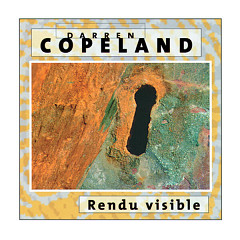
    Darren Copeland’s compositions are made entirely from environmental sounds. Which results in atmospheric music. Five compositions are there on the CD, sometimes you wonder to be in a somehow dark atmosphere surrounded with the sound of extincted annimals. A soon later you are in the middle of a beautifull nature with full of tranquillity. Sounds from nature comes and go combined with unknown sounds that all brings an other dimension in the atmospheric compositions.

    This CD is just wonderfull, that is the only way how we can end this review.

    This CD is just wonderful…

    Moment in Incursion Music Review

    “Review”, Richard di Santo, Incursion Music Review, no. 005, June 28, 2000
    Wednesday, June 28, 2000 Press

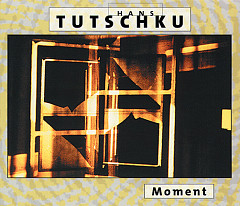
    Born in Weimar in 1966, Hans Tutschku has been studying, composing and performing electroacoustic music for a number of years with various groups and institutions. He has an impressive CV of compositions and multimedia productions to his credit. Moment presents 5 compositions dating from 1991 to 1998. Each of these pieces can be seen as an exercise in integrating vocal and instrumental sounds into electroacoustic compositions, done — in Tutschku’s own words — “with the esthetic concern to maintain the cultural context of the source”. The first, extrémités lointaines, uses recordings he made during a concert-tour of Asia, of city sounds, the music of churches and temples and children’s songs. Presented with “these unexpectedly rich sound worlds… “the intensity of the impressions experienced during the trip has resulted in a dense compositional structure”. This density has been achieved with stunning results, the sound manipulations are incredibly complex and delicate, and these qualities can be found throughout these recordings. The second work, … erinnerung… is based on a poem written and performed by Spanish author Antonio Bueno Tubia. The recording of the reading “forms the starting point for acousmatic transformations.” What results is a “musical translation” of the poem, created by first cutting up the sounds of the poem into minute pieces and played back “polyphonically to create dense sound textures”. The fourth piece, Sieben Stufen, is one of the most notable compositions here. It is based on the poem Verfall by Georg Trakl (1887-1914), and uses two readings of the poem (spoken by four different voices) as its sound sources. The four key words of the poem, Verfall/ruine/decline, Abend/au soir/evening, Glocken/cloches/bells and Vögel/oiseaux/birds, are sung in fourteen pitches (seven in German, seven in French). The results of Tutschku’s acousmatic treatments are truly remarkable, haunting and mysterious. The compositions on this disc each have their own intense structural constraints, almost all with numeric fixations. Les invisibles is based on the number five (5 parts, each divided into 5 subparts, the harmonic material based on 5 chords of 5 notes each), and Sieben Stufen is based on the number 7 (seven sections, compression of the piece into 49 seconds, two sets of vocals in seven pitches each). These works are structural marvels. Also, the sound-sculpturing and production work here are of superb; the sounds breathe a life and dimension of their own, and seem to crawl out of the speakers and into the space around you. Highly recommended.

    … the sound-sculpturing and production work here are of superb; the sounds breathe a life and dimension of their own, and seem to crawl out of the speakers and into the space around you. Highly recommended.
    Bruit-graffiti in CFLX 95.5 FM

    “Délire actuel: Review”, François Couture, CFLX 95.5 FM, May 1, 2000
    Monday, May 1, 2000 Press

    Marc Tremblay teaches in Matane (Québec). He first studied percussion at the Chicoutimi conservatory and then studied electroacoustic music in Montréal. He has collaborated with Michel Ratté and Martin Tétreault and is currently working on a western film project with writer Gilles Arteau.

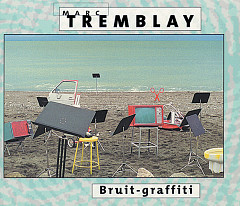
    Bruit-graffiti is his first record. Marc Tremblay approaches electroacoustics from a “popular” or “vernacular” angle. Bruit-graffiti offers six works based on everyday soundsand noises. This is not musique concrète, as the listener easily recognizes the sound sources. In fact, the identification process is part of the listening pleasure in this case. Tremblay is a quoter.

    The first track, Vroum, opens with a “Beep Beep” sampled from The BeatlesDrive My Car. The tone is set. This piece explores the sonic possibilities of the automobile — a nice concert of horns. In Conte sous la lune (Tale under the moon), Tremblay taps in his childhood — excerpts of Canadian children shows resurface here and there. Cowboy Fiction is the best work on this disc. It is constructed from two western movies (El Dorado and The Searcher) and various related sound sources like samples of Hank Williams. The atmosphere of these movies is brilliantly rendered. «… Ceci est un message enregistré…» (This is a recording) digs into the world of communication through the telephone and it leaves room to erotic phone calls. L’argent… toujours l’argent! (Money… always money!) reminds us of what makes the world go round. All these pieces run between 10 and 15 minutes long. Résidus (clip dadaïste) (Waste), is a 5-minute dadaist clip and the most disgusting piece of electroacoustics I ever heard. A tribute to Marcel Duchamp’s Fontaine, this piece uses noises heard in a public restroom. Very graphical, this work leaves no room to the imagination. The first two minutes are funny, but then I start to get sick. Still, interesting in a very weird way. Bruit-graffiti doesn’t belong to the same realm of electroacoustic art than Francis Dhomont’s poetry. More popular, graphic and accessible, even funny at times, it’s easy to listen to and has many surprises. I liked it a lot.

    Very strongly recommended ★★★★

    Plus populiste, mais en même temps plus accessible, voire rigolo… s’écoute facilement, sans effort et réserve plusieurs surprises …
    ★★★★

    Île bizarre in Nightwaves

    “Review”, Gary Flanagan, Nightwaves, no. 6, May 1, 2000
    Monday, May 1, 2000 Press

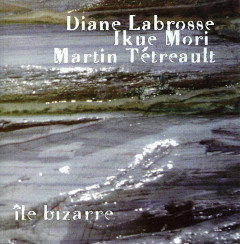
    Promotional material for this album described it as “cinema for the ear”, and that is a pretty accurate description. This is “sound as art” in the truest sense of the term. Grinding, whirs, buzzes, snaps and bangs are all brought together to create a suggestive sonic soundscape. Diane Labrosse (samples), Ikue Mori (electronic percussion) and Martin Tétreault (turntables) have created a work which achieves an almost organic quality from the most inorganic resources. if you are looking for something that is daring and goes nowhere near the mainstream, then this is for you. Most of the moods captured on this disc are stark and hollow, giving the listener a true taste of coldmetal machinemusic. One could almost subtitle this “Symposium for Junkyards”. If you enjoy the true industrial approach (ie Einsturzende Neubauten), then you will undoubtedly love the challenge of this work. One suggestion: Île Bizarre must be heard on the best possible sound system that you can get access to. Sound enthusiasts will love turning track two (Ad Ventum Capere Grandes Machinae) up as loudly as their stereo systems will permit!

    This is “sound as art” in the truest sense of the term.
  • 377
  • 378
  • 379
  • 380
  • 381
  • 382
  • 383
  • 384
  • 385